


This article was automatically translated from the original Turkish version.
+1 More
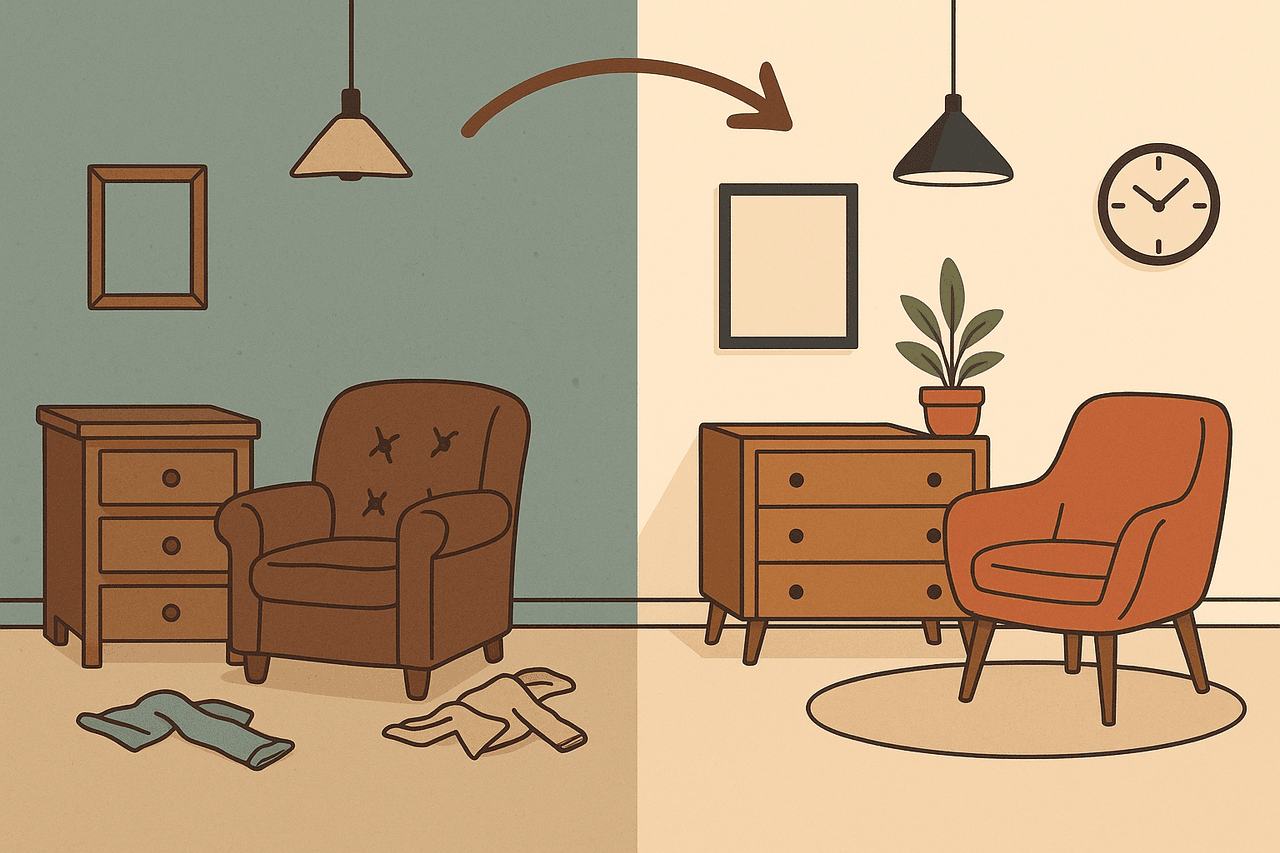
(Generated by artificial intelligence)
Diderot Effect
Origin(s) | Denis Diderot's 1769 text titled 'The Regret of the Old Robe' | ||||||||
|---|---|---|---|---|---|---|---|---|---|
Key Features | Search for Aesthetic and Cultural Compatibility, Chain Consumption Behavior, Consumption through Identity Representation | ||||||||
Results | Impulsive Spending, Consumption Pressure, Emergence of Counter-Movements Such as Minimalism | ||||||||
Application Area(s) | Marketing Digital Sales Strategies Advertising | ||||||||
The Diderot Effect is a consumption behavior model in which an individual, after acquiring a new object, becomes aware of aesthetic, functional, or symbolic inconsistencies between this object and others in their environment, and subsequently develops a tendency to acquire additional products to restore harmony. This model reveals that consumption is not merely driven by necessity but is also a cultural, emotional, and identity-based practice. Individuals seek to construct a lifestyle, aesthetic coherence, and social position through the objects they possess. In this sense, the Diderot Effect is one of the invisible yet decisive influences of contemporary consumer culture on the individual.
The Diderot Effect is based on an essay by Denis Diderot titled “The Regret of the Old Robe.” The newly gifted, ornate robe clashed with his previous simple way of life. This discrepancy was not merely an aesthetic mismatch but also a conflict of belonging and lifestyle. Diderot’s inner unease drove him to replace other items in his home to align them with the new robe. This narrative represents an early observation of how consumption decisions are triggered in a chain reaction.
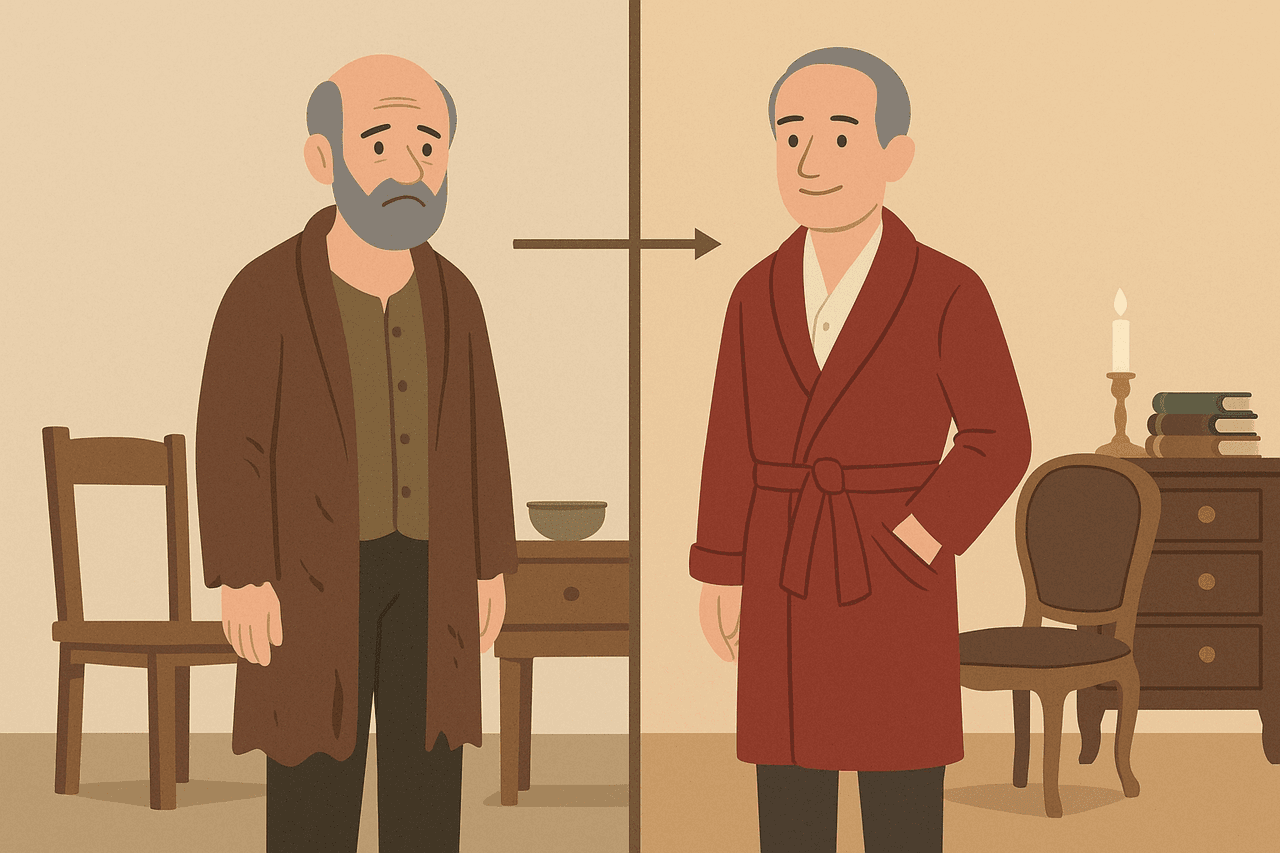
Simulated Illustration of the Essay “The Regret of the Old Robe” (generated by artificial intelligence)
Individuals tend to seek consistency not only among the objects they own but also among the values, identities, and lifestyles these objects represent. The Diderot Effect is an expression of this desire for coherence.
When a new product stands outside or disrupts the existing order, the individual experiences an internal sense of imbalance. This imbalance manifests as a psychological state that can be described as “cognitive dissonance.” This tension does not remain confined to the new product alone but extends to all areas of the person’s life. As a result, the individual enters a process of reconstruction by transforming other objects to achieve harmony.
Consumers use the objects they possess to communicate who they are to society. Clothing, household items, and digital devices are not merely functional tools; they are elements of personal identity expression.
The Diderot Effect emerges directly from this relationship between objects and identity. A new product is perceived as a new layer of identity, and other items that fail to align with it are deemed inadequate in the individual’s eyes. In this context, consumption ceases to be merely an act of acquiring goods and becomes a practice of establishing and preserving identity coherence.
Although the purchase of a single product may appear to be an isolated decision, it often triggers the acquisition of additional items. For example, someone who buys a new sofa may eventually notice its incompatibility with other furnishings and feel compelled to replace the rug, curtains, and table to create harmony. This chain reaction leads to unplanned expenditures.
The individual is drawn not only into material consumption but also into mental and emotional consumption. Over time, this dynamic combines with feelings of economic pressure, regret, or dissatisfaction, binding the individual more tightly to the consumption cycle.
Although the Diderot Effect manifests at the individual level, it also provides a conceptual framework for understanding collective consumption trends in society. In modern societies, consumption serves not only to satisfy needs but also to gain status, secure social approval, and reinforce a sense of belonging.
Individuals wish to feel part of a community through the products they consume. When viewed alongside concepts such as social class, lifestyle, or cultural affiliation, the Diderot Effect reveals itself as a phenomenon deeply embedded in social structures.
Many marketing strategies grounded in consumer psychology consciously leverage the Diderot Effect. Tactics such as “complementary product recommendations,” “bundle campaigns,” “package sets,” or “discounts for bundled purchases” appeal directly to the consumer’s desire for consistency and coherence.
Brands aim to touch the individual’s symbolic world by presenting a product not in isolation but as part of a broader concept or lifestyle. Thus, the product is purchased not only for its function but for its place within a cohesive aesthetic system. This perception of unity can encourage consumers to spend more—and even deviate from planned shopping.
In today’s world, the influence of digital platforms and social media has made the triggers of the Diderot Effect more visible and systematic. Particularly on visually oriented digital platforms, individuals are exposed to specific lifestyle aesthetics. These images—of harmonious home interiors, fashion styles, or vacation experiences—create in individuals a desire to achieve similar coherence.
Algorithm-driven recommendations such as “Customers who bought this also bought this” facilitate the direction of this desire. The consumption chain is shaped not only by individual will but also by the deliberate guidance of digital systems.
In response to the consumption pressure generated by the Diderot Effect, alternative approaches such as minimalism and sustainable living have come to the forefront. These lifestyles advocate reducing the number of possessions and establishing a need-based order.
Here, the pursuit of aesthetic and cultural coherence is achieved not through acquiring new products but through simplifying and reinterpreting existing ones. In this way, the individual seeks to free themselves from the consumption chain and attain material and mental lightness. This highlights that the Diderot Effect must be examined not only through the consumption behaviors it triggers but also through the conscious lifestyle choices developed in opposition to it.
The Diderot Effect possesses a multilayered structure that reveals both the psychological and sociocultural dimensions of the modern individual’s relationship with consumption. This effect, by intertwining with factors such as self-presentation, aesthetic pursuit, and social belonging, offers a powerful explanatory model for how contemporary consumer culture is constructed. Consumption has become not merely a process of acquiring goods but a reflection of the individual’s relationship with themselves, society, and the digital world. Therefore, the Diderot Effect enables analysis not only of individual preferences but also of the deeper structural, cultural, and technological dynamics underlying those preferences.
Gürdin, Bahar. “Zeigarnik ve Diderot Etkilerinin Yeni Ürün Alımında Tüketiciler Üzerindeki Etkisi.” Çankırı Karatekin Üniversitesi Sosyal Bilimler Enstitüsü Dergisi. Accessed July 20, 2025. https://dergipark.org.tr/tr/pub/jiss/issue/54441/667548
Kara, Şeyma, and Diker, Ersin. “Diderot Etkisi Bağlamında Reklamlardaki Sembolik Tüketimin Anlamlandırılması: Televizyon Reklamları Üzerine Bir İnceleme.” Intermedia International E-Journal. Accessed July 20, 2025. https://www.academia.edu/105391726/Diderot_Etkisi_Ba%C4%9Flam%C4%B1nda_Reklamlardaki_Sembolik_T%C3%BCketimin_Anlamland%C4%B1r%C4%B1lmas%C4%B1_Televizyon_Reklamlar%C4%B1_%C3%9Czerine
Toku, Aslı Burcu. “Diderot Etkisi Perspektifinden Pazarlama İletişimi Elemanlarının Anlamlandırılması.” Öneri Dergisi. Accessed July 20, 2025. https://dergipark.org.tr/tr/pub/maruoneri/issue/79116/1260823

(Generated by artificial intelligence)
Diderot Effect
Origin(s) | Denis Diderot's 1769 text titled 'The Regret of the Old Robe' | ||||||||
|---|---|---|---|---|---|---|---|---|---|
Key Features | Search for Aesthetic and Cultural Compatibility, Chain Consumption Behavior, Consumption through Identity Representation | ||||||||
Results | Impulsive Spending, Consumption Pressure, Emergence of Counter-Movements Such as Minimalism | ||||||||
Application Area(s) | Marketing Digital Sales Strategies Advertising | ||||||||
Historical Background
The Search for Cultural Consistency
The Symbolic Role of Objects
Chain-Reaction Purchasing Behaviors
Social Orientations
Use of the Diderot Effect in Marketing Strategies
Visual Triggers in Digital Consumption
Critical Lifestyles in Response to the Diderot Effect