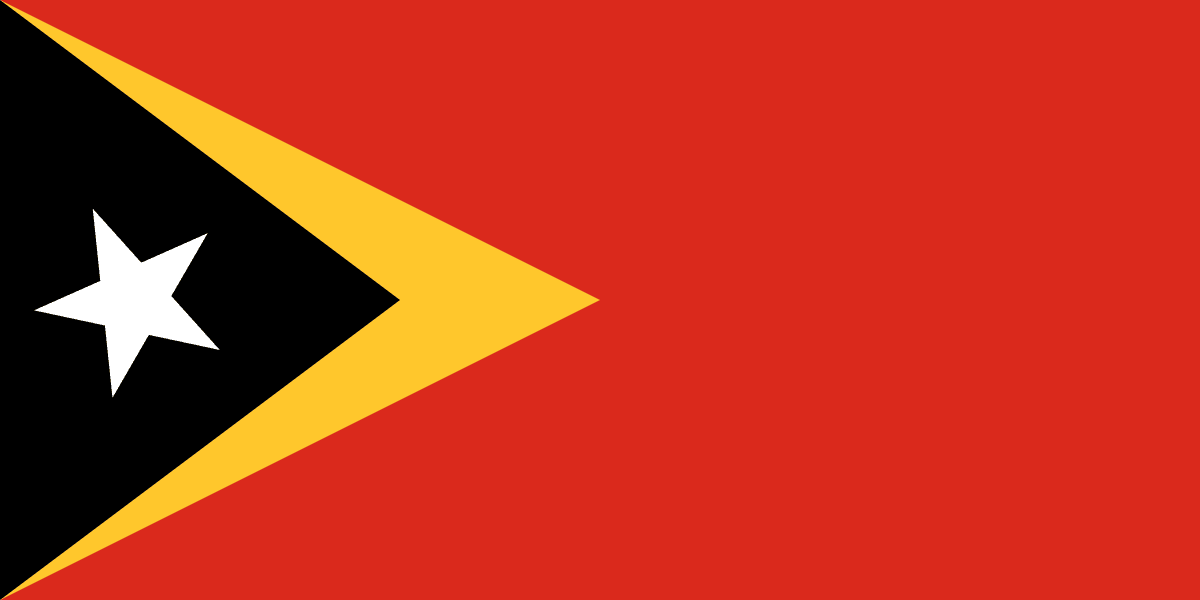


This article is not approved yet.
+1 More
Democratic Republic of East Timor
Religion(s) | 97% Catholic Small proportions Protestant Muslim and traditional beliefs | ||||||||
|---|---|---|---|---|---|---|---|---|---|
Climate(s) | Tropical | ||||||||
Capital(s) | Dili | ||||||||
Population(Text) | Approx. 1.3 million (2023) | ||||||||
GDP (2022) | Approximately USD 2.0 billion | ||||||||
GDP Per Capita | ~1,500 USD | ||||||||
Time Zone | UTC +9 (Timor-Leste Standard Time) | ||||||||
Telephone Code | +670 | ||||||||
Internet Extension | .tl | ||||||||
Important Export Products | Crude Oil Natural Gas Coffee | ||||||||
Independence History | 20 May 2002 (from Indonesia) | ||||||||
Management Style | Semi-Presidential Republic | ||||||||
Surface Area | Approx. 15.007 km² | ||||||||
Languages Spoken | Tetum Portuguese (official languages) English and Indonesian (working languages) | ||||||||
Continent | Asia | ||||||||
Official Languages | Tetum - Portuguese | ||||||||
The Democratic Republic of East Timor is a young state in Southeast Asia, located in the eastern half of the island of Timor and generally considered to belong to the South Pacific. The country, officially the Democratic Republic of East Timor, was also called "Timor Lorosa'e" by the Timurids. This island country, where Portuguese and Tetum languages have official status, gained its independence in 2002 after a long period of Portuguese colonisation and subsequent Indonesian occupation.
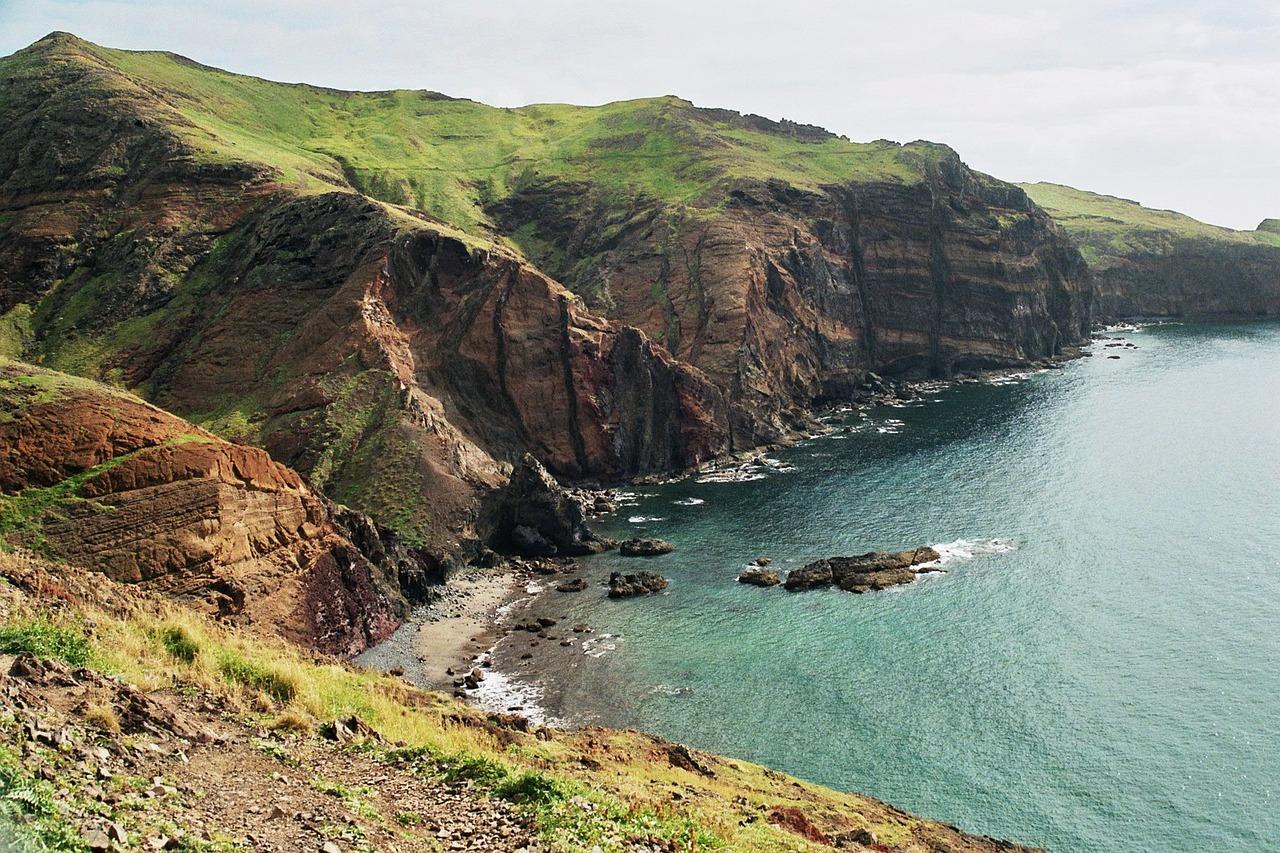
Democratic Republic of East Timor (Pixabay).
The history of East Timor has been shaped by centuries of colonialism, occupation and struggles for independence. Due to its strategic location, the island has been the centre of attention of different powers throughout history.
Timor was discovered by the Portuguese in the early 16th century. Portugal captured the eastern part of the island, while the western part came under Dutch control. The eastern part, known as Portuguese Timor, became one of Portugal's important trading bases in Southeast Asia. Portuguese rule spread Catholicism on the island and established a number of administrative structures. However, throughout colonial rule there was a significant impact on the local population and cultural integration was limited. Until the mid-20th century, East Timor remained under Portuguese control until the Carnation Revolution in Portugal, which led to self-determination.
In 1975, following the Portuguese withdrawal from East Timor, Indonesia occupied the island. Indonesia annexed East Timor as its 27th province. This occupation was widely condemned internationally and was not recognised by the United Nations. During the Indonesian occupation, the people of East Timor suffered gross human rights violations and widespread violence. According to estimates, between 100,000 and 250,000 East Timorese have died during the occupation. Resistance movements such as Fretilin (Frente Revolucionária de Timor-Leste Independente) waged armed struggle against the Indonesian occupation. During this period, leaders such as José Ramos-Horta and Xanana Gusmão became international defenders of the East Timorese cause.
In 1999, 78% of the East Timorese people voted in favour of independence in a referendum held under United Nations supervision. However, after the referendum, pro-Indonesian militias launched large-scale violence and thousands of people were killed or displaced. As a result of the international reaction to this crisis, INTERFET (International Security Force), established under the leadership of the United Nations, intervened in the country and ended the violence. Subsequently, the United Nations Transitional Administration (UNTAET) was established and the process of preparation for independence was carried out.
On 20 May 2002, East Timor was officially recognised by the international community as a fully independent state. The first president was Xanana Gusmão and the first prime minister was Mari Alkatiri. In 2006, the internal political crisis necessitated a renewed international intervention in the country; in this context, the ISF (International Stabilisation Force) was redeployed under the leadership of Australia.
In the post-independence period, the country faced structural problems such as infrastructure deficiencies, high poverty rates, unemployment and limited economic diversity. However, various reforms have been carried out on political reforms, development strategies and management of oil revenues.
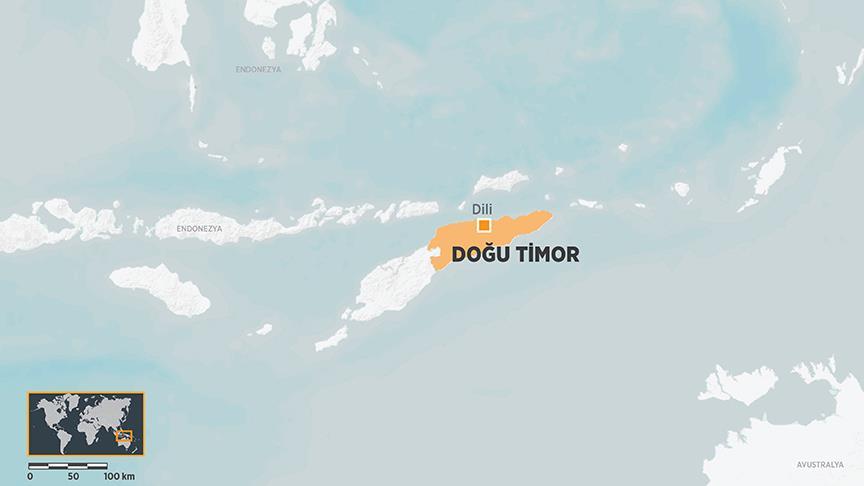
Democratic Republic of East Timor (AA).
East Timor consists of the eastern part of the island of Timor, the islands of Atauro and Jaco and an exclave within Indonesian West Timor known as Oe-Cusse Ambeno. The total area of the country is approximately 15,007 square kilometres. Geographically, it is located in a tectonic region where the Australian Plate and the Sunda Plate meet, causing the country to have a rugged topography.
East Timor's topography is characterised by pronounced mountainous regions, especially in the interior of the island. Mount Tatamailau (also known as Mount Ramalau) is the highest point in the country at 2,963 metres. These mountainous areas are cut by deep valleys and fast-flowing rivers. The country's major rivers are short and often seasonal, swelling during the wet season and decreasing significantly during the dry season. A narrow coastline runs along the north coast, while the south coast is flatter and marshy. These coastlines are surrounded by rich coral reefs, which are part of the Coral Triangle.
East Timor has a tropical climate. The climate is usually divided into two main seasons: The dry season, which lasts from April to November, and the wet season, which lasts from December to March. Average annual temperatures range between 20-30°C, with higher temperatures in coastal areas and lower temperatures in the mountainous interior. Average annual rainfall varies from region to region, but generally ranges between 1,000 and 2,000 mm. Hurricanes and tropical storms can affect the country from time to time. With climate change, there is an increase in the frequency and severity of extreme weather events.
Timor-Leste is home to a high biodiversity. The island is located in the biogeographic region called Wallacea. This region is characterised by the richness of endemic species, as it is at the crossroads of Asian and Australian faunas. The country's mountainous regions, tropical forests and coastal ecosystems are home to a variety of plant and animal species. East Timor is rich in bird species, such as the endemic Timor sparrow. Marine biodiversity is also important, with coral reefs providing important habitats for many species of fish, sea turtles and marine mammals.
Timor-Leste's population is approximately 1.3 million people as of 2023, and the country is characterised by a young population. More than 60 per cent of the population is under the age of 25, a result of high fertility rates and limited migration flows. This leads to a continuously increasing demand for education, employment and social services.
Population density is concentrated in coastal areas, particularly around the capital Dili. In the mountainous interior, the population is sparse and dispersed in small rural settlements. The proportion of the population living in rural areas constitutes approximately 65 per cent of the total population.
East Timor is home to various ethnic groups. Major ethnic groups include the Tetums, Mambailar, Bunaks, Galoli, Kemaks and Fatalukus. This ethnic diversity constitutes the cultural richness of the country. Tetum is the most widely spoken local language in the country and has official language status along with Portuguese. Indonesian was widely used during the period of Indonesian occupation and is still widely understood. English is also used, especially in tourism and business. This linguistic diversity reflects the country's interactions with different cultures throughout its history.
The vast majority of East Timorese people are Catholic. Approximately 97 per cent of the population is Catholic, 2 per cent Protestant and the rest Muslim or traditional. This is directly linked to the country's Portuguese colonial past. The Catholic Church has played an active role in both the anti-colonial resistance and the modern political organisation.
Timor-Leste's economy has become heavily dependent on oil and gas reserves in the post-independence period. The country faces challenges in getting out of poverty and building a sustainable economic development model.
East Timor has rich deposits of oil and natural gas in the Timor Sea. These resources account for a large part of the country's national income. Revenues from the oil and gas fields shared with Australia under the Timor Sea Treaty are managed through a fund called the Petroleum Fund. This fund is used to finance the future development of the country. However, the overdependence on oil and gas revenues makes the country vulnerable to fluctuations in international oil prices. Efforts to diversify economic management have therefore been prioritised.
Agriculture is still an important economic activity in Timor-Leste, providing employment for a large proportion of the population. The main agricultural products include coffee, rice, maize, cassava and vegetables. Coffee in particular is one of the country's major export crops and is usually grown using organic methods. Small-scale farming is common. However, productivity in the agricultural sector is low and lack of infrastructure makes it difficult for products to reach the market. The government is implementing various programmes to modernise the agricultural sector and ensure food security.
Timor-Leste has significant tourism potential with its pristine beaches, rich coral reefs and mountainous landscapes. In particular, the statue of Cristo Rei, Atauro Island and the country's natural parks are tourist attractions. Diving and eco-tourism are the main areas of the developing tourism sector. The government is investing in developing tourism infrastructure and promoting the country's natural beauties. However, issues such as further investment, marketing and security need to be addressed for the sector to reach its full potential.
In the post-independence period, Timor-Leste has struggled with infrastructure deficiencies. While there have been significant improvements in basic infrastructure, such as roads, the electricity grid, water and sanitation services, there are still significant needs. The country receives substantial development assistance from international aid organisations and bilateral donors. This aid is used to finance education, health and infrastructure projects. Development objectives include poverty reduction, improving access to health services, increasing the quality of education and ensuring sustainable economic growth.
Tajuddin, Azlan. "Potentials for Democratic Development in Timor-Leste: A Critical Modernist Perspective." Journal of Global South Studies 33, no. 1 (Spring 2016): 25-50. Accessed 4 July 2025. https://journals.upress.ufl.edu/JGSS/article/view/12
Republic of Turkey Ministry of Foreign Affairs. “'East Timor's Political Outlook.”' Ankara: Republic of Turkey Ministry of Foreign Affairs. Accessed 4 July 2025. https://www.mfa.gov.tr/dogu-timor-siyasi-gorunumu.tr.mfa
Republic of Turkey Ministry of Foreign Affairs. “'Country Identification.”' Ankara: Republic of Turkey Ministry of Foreign Affairs. Accessed 4 July 2025. https://www.mfa.gov.tr/dogu-timor-kunyesi.tr.mfa
Lopes, H., et al. Timor-Leste to Graduate from LDC Category and Beyond: Through Structural Transformation and Economic Diversification. Bangkok: United Nations ESCAP, 2021. Accessed 4 July 2025. https://repository.unescap.org/handle/20.500.12870/3689
Lopes, H., et al. Timor-Leste: Structural Transformation and Economic Diversification towards a Sustainable Graduation from LDC Category. Bangkok: United Nations ESCAP, 2023. Accessed 4 July 2025. https://repository.unescap.org/handle/20.500.12870/6844
Heinrich Böll Foundation Southeast Asia. “'The Stagnant Policy Context of Economic Diversification in Timor-Leste.”' Bangkok: Heinrich Böll Stiftung. Accessed 4 July 2025. https://th.boell.org/en/2023/11/28/stagnant-policy-context-economic-diversification-timor-leste
Birleşmiş Milletler ESCAP. Doğu Timor En Az Gelişmiş Ülke Kategorisinden Çıkıyor: Beklentiler ve Zorluklar. Bangkok: UN ESCAP, 2021. Erişim Tarihi 4 Temmuz 2025. https://th.boell.org/en/2023/11/30/timor-lestes-economic-diversification-challenges-and-way-forward
Heinrich Böll Vakfı Güneydoğu Asya. '‘Doğu Timor'da Ekonomik Çeşitlendirmeye Yönelik Kurumsal Kısıtlamaların Ele Alınması’' Bangkok: Heinrich Böll Stiftung Derneği. Erişim Tarihi 4 Temmuz 2025. https://th.boell.org/en/2023/11/27/institutional-constraints-economic-diversification-timor-leste
Heinrich Böll Vakfı Güneydoğu Asya. '‘Doğu Timor'da Altyapı ve Ekonomik Çeşitlendirme’' Bangkok: Heinrich Böll Stiftung Derneği. Erişim Tarihi 4 Temmuz 2025. https://th.boell.org/en/2023/11/29/infrastructure-and-economic-diversification-timor-leste
Pixabay. “ Doğu Timor bayrak Cumhuriyet ülke JPG.” Pixabay. Erişim Tarihi 4 Temmuz 2025. https://pixabay.com/tr/vectors/do%C4%9Fu-timor-bayrak-cumhuriyet-%C3%BClke-26837/
Pixabay. “Madeira doğu kıyısı manzara okyanus JPG.” Pixabay. Erişim Tarihi 4 Temmuz 2025. https://pixabay.com/tr/photos/madeira-east-coast-manzara-okyanus-103235/
Anadolu Ajansı. “Doğu Timor.” Anadolu Ajansı. Erişim Tarihi 4 Temmuz 2025. https://www.aa.com.tr/tr/ulke-profilleri/dogu-timor/925390

Democratic Republic of East Timor
Religion(s) | 97% Catholic Small proportions Protestant Muslim and traditional beliefs | ||||||||
|---|---|---|---|---|---|---|---|---|---|
Climate(s) | Tropical | ||||||||
Capital(s) | Dili | ||||||||
Population(Text) | Approx. 1.3 million (2023) | ||||||||
GDP (2022) | Approximately USD 2.0 billion | ||||||||
GDP Per Capita | ~1,500 USD | ||||||||
Time Zone | UTC +9 (Timor-Leste Standard Time) | ||||||||
Telephone Code | +670 | ||||||||
Internet Extension | .tl | ||||||||
Important Export Products | Crude Oil Natural Gas Coffee | ||||||||
Independence History | 20 May 2002 (from Indonesia) | ||||||||
Management Style | Semi-Presidential Republic | ||||||||
Surface Area | Approx. 15.007 km² | ||||||||
Languages Spoken | Tetum Portuguese (official languages) English and Indonesian (working languages) | ||||||||
Continent | Asia | ||||||||
Official Languages | Tetum - Portuguese | ||||||||
No Discussion Added Yet
Start discussion for "Democratic Republic of East Timor" article
History
Colonial Period (16th century - 1975)
Indonesian Occupation (1975-1999)
Referendum and Transition (1999-2002)
Post-Independence
Geography
Topography and Hydrography
Climate
Biodiversity
Demographics
Ethnic groups and languages
Religion
Economy
Natural resources and energy
Agriculture
Tourism
Infrastructure and Development
This article was created with the support of artificial intelligence.