


This article was automatically translated from the original Turkish version.
+2 More
Unmanned Aerial Vehicles (UAVs) have a broad range of applications in both military and civilian domains today. These systems play critical roles in missions such as reconnaissance, logistics, emergency situation response, and border security. With increasing digitalization, they are becoming more vulnerable to cyber security threats. The cyber security of UAVs is directly linked to threats such as GPS spoofing, data communication disruptions, authentication attacks, and software vulnerabilities.
UAVs consist of three main components: physical components, communication systems, and software infrastructure.
The ad-hoc networks in which UAVs operate, such as MANET (Mobile Ad-hoc Network) and VANET (Vehicle Ad-hoc Network), require advanced encryption methods and network monitoring systems for security.
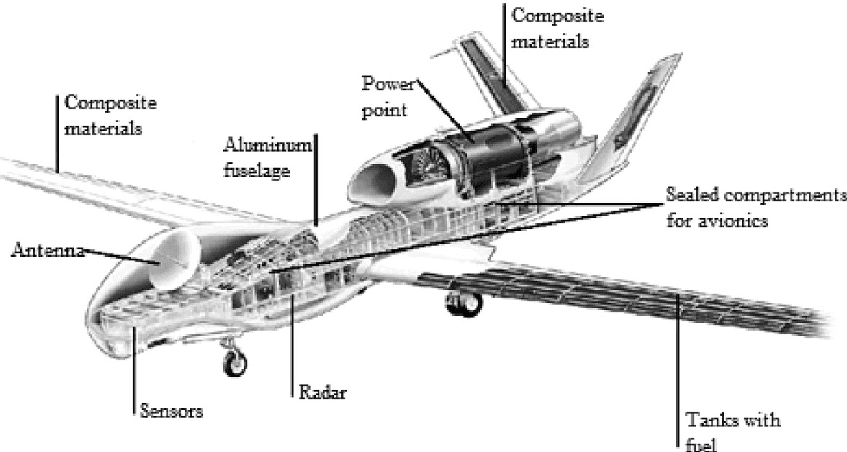
The general structure of unmanned aerial vehicles, Research Gate
Major cyber attacks threatening UAV security include signal jamming, authentication breaches, data interception, and system manipulation.
GPS spoofing causes UAVs to receive incorrect position data, leading to navigation errors. For military and civilian UAVs reliant on GPS data, this threat poses a risk by directing them onto false routes through deceptive signals. Additionally, jamming attacks, which use powerful radio signals, can disrupt the UAV’s control link and cause loss of communication.
Image and flight data transmitted by UAVs can be intercepted through Man-in-the-Middle (MitM) attacks. For military reconnaissance UAVs, this threat can lead to the leakage of classified information. Brute force attacks can crack passwords in UAV control systems, enabling unauthorized access by attackers.
When software updates and security patches are inadequate in UAV systems, attackers can exploit vulnerabilities to infiltrate the systems. Ransomware can seize control of UAVs, lock flight systems, and demand payment from operators.
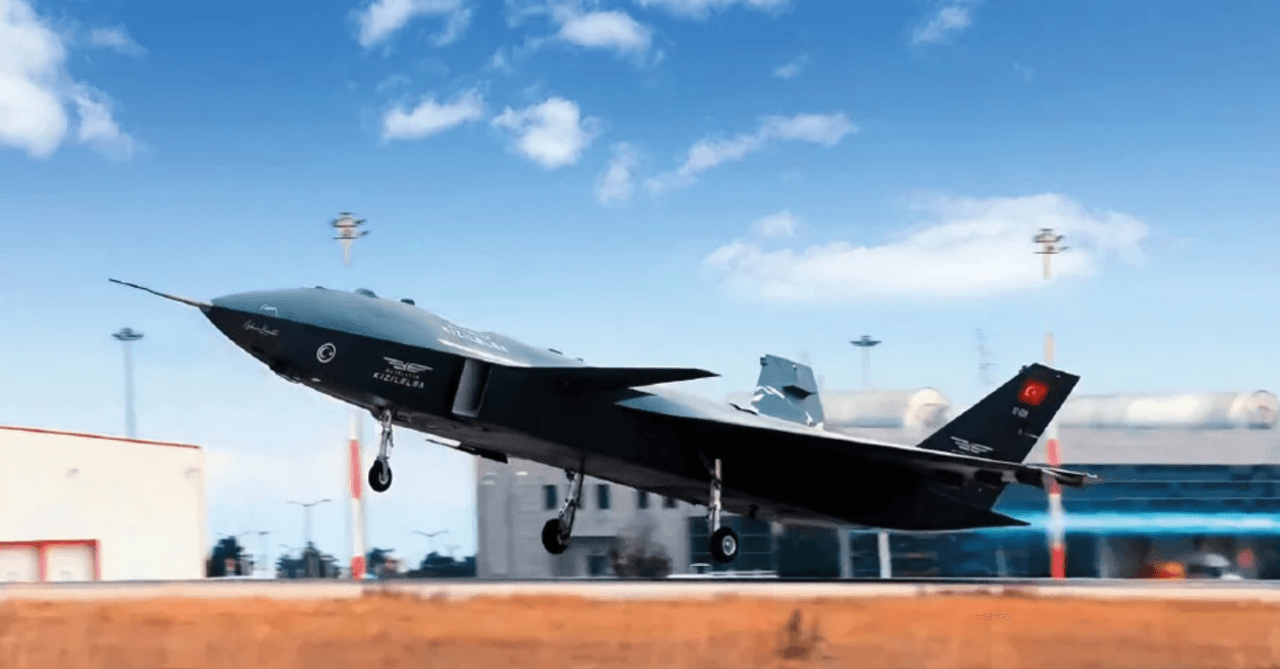
Kızılelma meets the sky, Milli Müdafaa
Using strong encryption methods such as AES-256, RSA, and quantum encryption in UAV communication systems reduces the likelihood of successful cyber attacks. Additionally, blockchain-based data storage systems can provide immutable and secure storage of flight data.
Two-factor authentication (2FA) and biometric verification methods can prevent unauthorized access to UAV systems. Military UAV systems can mitigate potential threats by employing advanced access controls and encrypted flight data transmission.
Artificial intelligence-based firewalls and intrusion detection/prevention systems (IDS/IPS) that analyze UAV network traffic can detect abnormal data flows and prevent attacks.
To protect UAVs against jamming attacks, encrypted GPS systems and multi-frequency signal transmission technologies can be employed. These alternatives enable high-reliability protection of UAV software.

Representative image of encrypted communication, generated with artificial intelligence.
Coşar, Mustafa. "Cyber Attacks on Unmanned Aerial Vehicles and Cyber Security Measures." The Eurasia Proceedings of Science, Technology, Engineering & Mathematics (EPSTEM), (2022). Accessed February 27, 2025.Accessed adresi.
Hartmann, Kim., & Giles, Keir. "Assessing the Impact of Aviation Security on Cyber Power." International Conference on Cyber Conflict, (2016). Accessed February 27, 2025.Accessed adresi.
Krishna, Leea., and Murphy, Robin. "A review on cybersecurity vulnerabilities for unmanned aerial vehicles." IEEE, (2017). Accessed February 27, 2025.Accessed adresi.
Tang, Anthony. "A Review of Cybersecurity Vulnerabilities for UAM." NASA, (2023). Accessed February 27, 2025.Accessed adresi.
İrtifa Havacılık. *İnsansız Hava Araçları Güvenliği*. (2024). Accessed February 27, 2025.Accessed adresi.

No Discussion Added Yet
Start discussion for "Cybersecurity of Unmanned Aerial Vehicles (UAVs)" article
Structure and Technologies of UAVs
Cyber Security Threats and Attack Methods Targeting UAVs
GPS Spoofing and Jamming Attacks
Data Interception and Authentication Attacks
Software Vulnerabilities and Ransomware
Measures to Ensure UAV Cyber Security
Encryption and Data Protection
Strong Authentication and Access Controls
Anomaly Detection and Firewalls
Anti-Jamming and Signal Enhancement Solutions