


This article was automatically translated from the original Turkish version.
+1 More
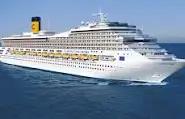
Costa Concordia Disaster
Length | 290 M | ||||||||
|---|---|---|---|---|---|---|---|---|---|
Date | 2012-01-13 | ||||||||
Place | Toskana İtalya Giglio Adası açıkları | ||||||||
Number of Deaths | 32 | ||||||||
Cause of Accident | Rotadan kasıtlı sapma (sail-by salute) ve karaya çarpma | ||||||||
Costa Concordia Disaster, the Costa Concordia passenger ship running aground and capsizing off the coast of Italy’s Giglio Island on 13 January 2012. The accident resulted in the deaths of 32 people and is recorded as one of the most prominent safety violations in modern maritime history. The disaster revealed not only a navigational error but also a series of systemic failures related to organizational improvisation, authority failure, human factors, and inadequate safety culture.
Costa Concordia was a luxury cruise ship operated by Costa Crociere, a subsidiary of Carnival Corporation. The 290-meter-long vessel was carrying 1,023 crew members and 3,206 passengers on the night of the accident. While en route from Civitavecchia to Savona, Captain Francesco Schettino ordered an unauthorized “sail-by salute” maneuver, deviating from the planned course, causing the ship to strike rocks off Giglio Island. The collision created a 53-meter-long tear in the hull, flooded the engine room, and disabled the electrical systems.
The evacuation was delayed; for the first hour, the captain told passengers and authorities that an electrical fault had occurred. The evacuation lasted approximately six hours and became chaotic due to poor organization. Captain Schettino abandoned the ship before the evacuation was complete. A total of 32 people lost their lives in the disaster.
The wreck of the Costa Concordia is being removed (Youtube)
Academic analyses have assessed the Costa Concordia disaster not merely as an individual error but as a case of organizational improvisation—a phenomenon involving deliberate deviations from established rules, simultaneous planning and execution, and the conscious circumvention of procedures.
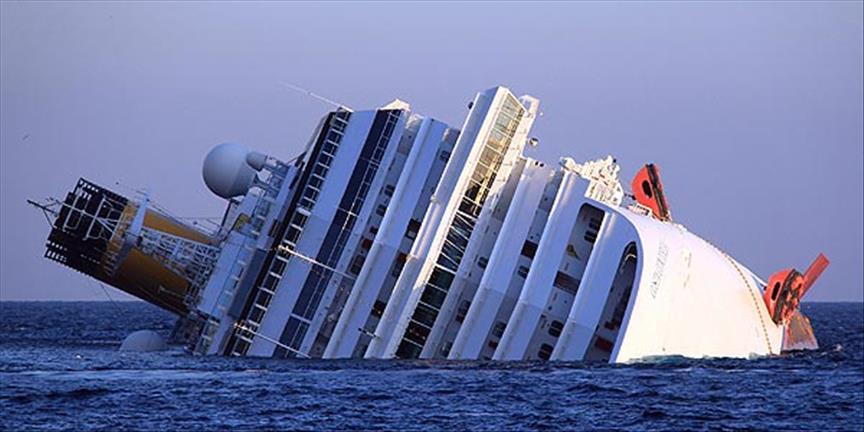
Yan Yatan Gemi (AA)
This situation exposes the dark side of improvisation: the superficial adherence to formal rules while effectively hollowing them out from within. This case demonstrates that even in high-reliability organizations, improvisation can lead to catastrophe.
Post-accident investigations revealed that the Costa Concordia disaster was not merely a chain of individual errors but the result of layered failures including institutional blindness, erosion of standards, inadequate oversight, and risky organizational improvisation. The incident underscored the urgent need to rebuild safety culture in the maritime industry. Subsequent investigations and legal proceedings ultimately resulted in Captain Schettino being sentenced to 16 years in prison.
Anadolu Ajansı. "Costa Concordia Davası Başladı." AA.com.tr, July 17, 2013. Accessed April 25, 2025.https://www.aa.com.tr/tr/arsiv/costa-concordia-davasi-basladi/378942.
BBC Türkçe. “Costa Concordia Faciası: Kaptan Schettino'nun Cezası Onandı.” BBC News Türkçe, May 12, 2017. Accessed April 25, 2025. https://www.bbc.com/turkce/haberler-dunya-39906715.
Euronews Türkçe. "Costa Concordia'nın Enkazı Kaldırılıyor." YouTube video, 1:26. September 17, 2013. Accessed April 25, 2025. https://www.youtube.com/watch?v=G8ArHJ4loH4.
Giustiniano, Luca, Miguel Pina e Cunha, and Stewart Clegg. "The Dark Side of Organizational Improvisation: Lessons from the Sinking of Costa Concordia." Business Horizons 59, no. 2 (2016): 223–232.
Schröder-Hinrichs, Jens-Uwe, Erik Hollnagel, and Michael Baldauf. "From Titanic to Costa Concordia—A Century of Lessons Not Learned." WMU Journal of Maritime Affairs 11, no. 2 (2012): 151–167.

Costa Concordia Disaster
Length | 290 M | ||||||||
|---|---|---|---|---|---|---|---|---|---|
Date | 2012-01-13 | ||||||||
Place | Toskana İtalya Giglio Adası açıkları | ||||||||
Number of Deaths | 32 | ||||||||
Cause of Accident | Rotadan kasıtlı sapma (sail-by salute) ve karaya çarpma | ||||||||
No Discussion Added Yet
Start discussion for "Costa Concordia Disaster" article
Technical Details and Accident Summary
Causes of the Accident: The Dark Side of Organizational Improvisation
Key Contributing Factors:
Consequences