This article was automatically translated from the original Turkish version.
+2 More
Founder(s) | Anatolian Seljuk Sultan Kilij Arslan | ||||||||
|---|---|---|---|---|---|---|---|---|---|
Location | Çorum | ||||||||
Defensive Elements | Four circular-plan main bastions at the corners and square and rectangular support towers along the curtain walls | ||||||||
Building Material | Local rubble stone, cut stone, and ancient recycled architectural elements from the Roman and Byzantine periods (spolia) | ||||||||
Architectural Plan | A topographically flat area with a structure having a nearly square rectangular plan | ||||||||
Construction Period | Between the 11th and 13th centuries (Seljuk period) | ||||||||
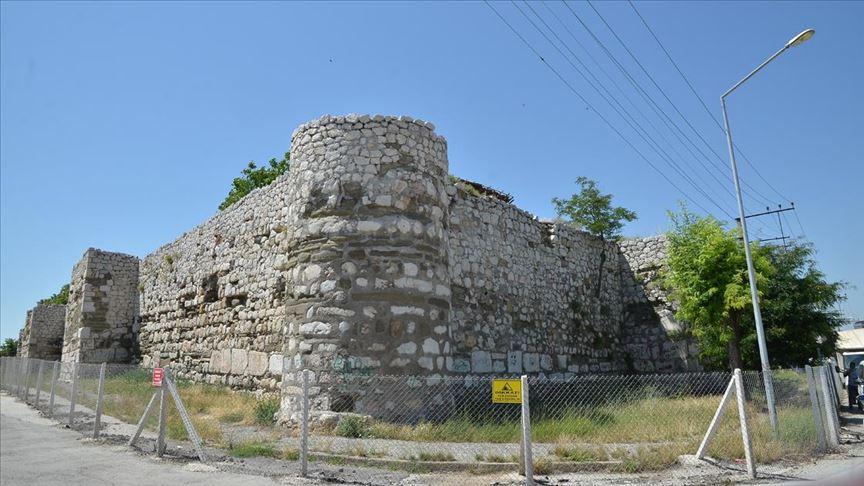
Çorum Castle is a historical defensive structure located in the center of Çorum, dated to the Seljuk period based on its architectural features. Although no inscription providing a precise construction date has survived to the present, the structure is assessed to have a history spanning a millennium.【1】 The renowned Ottoman traveler Evliya Çelebi, in his work Seyahatname, states that the castle was commissioned by the Anatolian Seljuk Sultan Kilij Arslan.【2】
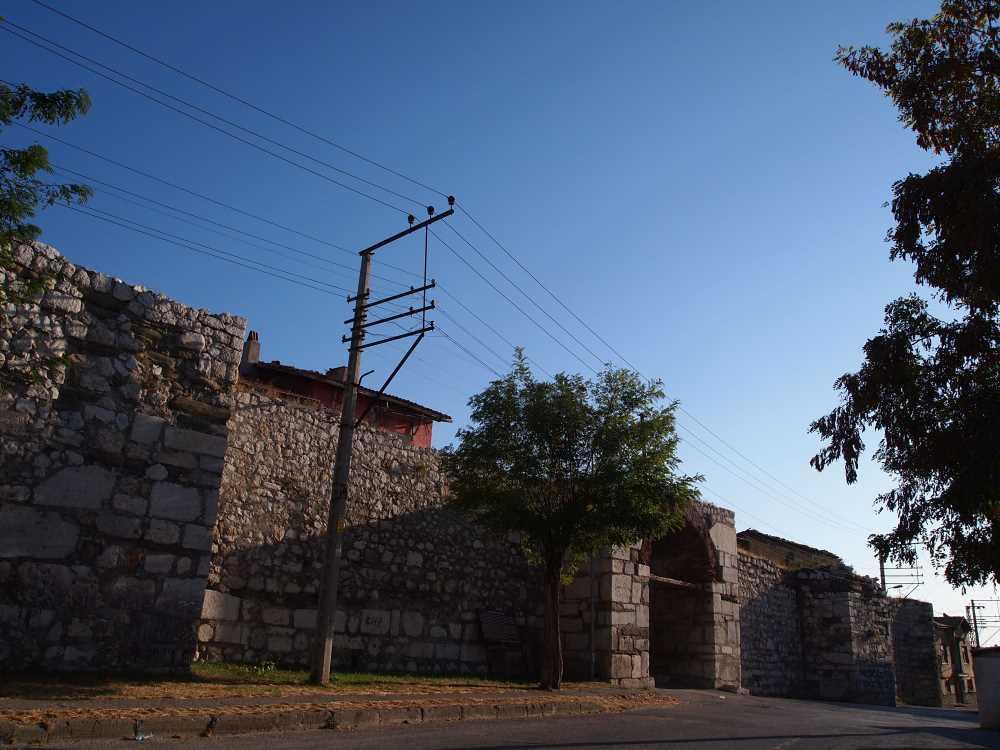
Çorum Kalesi (Kültür Portalı)
Çorum Castle has a plan close to a square rectangle and was constructed using rubble stone, cut stone, and spolia materials from earlier periods.【3】 The presence of ancient architectural elements from the Roman and Byzantine periods in the curtain walls indicates that earlier civilizations also existed in the region.【4】
To strengthen its defensive system, circular-plan main towers have been placed at each of the four corners of the castle.【5】 In addition to these main towers, square and rectangular support towers have been constructed at regular intervals along the curtain walls.
Throughout its historical development, Çorum Castle was not solely maintained as a military garrison; over time, a civilian neighborhood developed within its walls. Inside the ramparts, a total of forty-two civilian dwellings are located alongside a small castle mosque that served the religious needs of the local population; three of these houses have been officially registered.【6】
Today, the Çorum Municipality is implementing a comprehensive project to highlight the castle’s historical identity and integrate it into cultural tourism. As part of this urban transformation initiative, the civilian structures within the castle are planned to be expropriated and vacated with a budget of approximately fifteen million Turkish liras, followed by restoration of the ramparts in accordance with their original form.【7】
Ceylan, Kemal. "Tarihi Çorum Kalesi Turizme Kazandırılacak." Anadolu Ajansı, July 4, 2020. Accessed April 30, 2026. https://www.aa.com.tr/tr/turkiye/tarihi-corum-kalesi-turizme-kazandirilacak-/1901268
T.C.Çorum İl Directorate of Culture and Tourism. "Kuleler Kaleler." Accessed April 30, 2026. https://corum.ktb.gov.tr/TR-58709/kuleler-kaleler.html
Türkiye Kültür Portalı. "Çorum Kalesi." Kültür Turizm Bakanlığı. Accessed April 30, 2026. https://www.kulturportali.gov.tr/turkiye/corum/gezilecekyer/corum-kalesi
[1]
Kemal Ceylan, "Tarihi Çorum Kalesi Turizme Kazandırılacak," Anadolu Ajansı. Erişim Tarihi 30 Nisan 2026. https://www.aa.com.tr/tr/turkiye/tarihi-corum-kalesi-turizme-kazandirilacak-/1901268.
[2]
Türkiye Kültür Portalı. "Çorum Kalesi," Erişim Tarihi 30 Nisan 2026. https://www.kulturportali.gov.tr/turkiye/corum/gezilecekyer/corum-kalesi.
[3]
Türkiye Kültür Portalı "Çorum Kalesi," Erişim Tarihi 30 Nisan 2026. https://www.kulturportali.gov.tr/turkiye/corum/gezilecekyer/corum-kalesi.
[4]
Türkiye Kültür Portalı. "Çorum Kalesi," Erişim Tarihi 30 Nisan 2026. https://www.kulturportali.gov.tr/turkiye/corum/gezilecekyer/corum-kalesi.
[5]
Türkiye Kültür Portalı. "Çorum Kalesi," Erişim Tarihi 30 Nisan 2026. https://www.kulturportali.gov.tr/turkiye/corum/gezilecekyer/corum-kalesi.
[6]
Türkiye Kültür Portalı. "Çorum Kalesi," Erişim Tarihi 30 Nisan 2026. https://www.kulturportali.gov.tr/turkiye/corum/gezilecekyer/corum-kalesi.
[7]
Kemal Ceylan, "Tarihi Çorum Kalesi." Anadolu Ajansı. Erişim Tarihi 30 Nisan 2026. https://www.aa.com.tr/tr/turkiye/tarihi-corum-kalesi-turizme-kazandirilacak-/1901268.

Founder(s) | Anatolian Seljuk Sultan Kilij Arslan | ||||||||
|---|---|---|---|---|---|---|---|---|---|
Location | Çorum | ||||||||
Defensive Elements | Four circular-plan main bastions at the corners and square and rectangular support towers along the curtain walls | ||||||||
Building Material | Local rubble stone, cut stone, and ancient recycled architectural elements from the Roman and Byzantine periods (spolia) | ||||||||
Architectural Plan | A topographically flat area with a structure having a nearly square rectangular plan | ||||||||
Construction Period | Between the 11th and 13th centuries (Seljuk period) | ||||||||
Architectural Structure and Planning Features
Interior Spatial Fabric and Tourism Development Project