This article was automatically translated from the original Turkish version.
Type | Technology Company | ||||||||
|---|---|---|---|---|---|---|---|---|---|
Establishment | 1871 | ||||||||
Place of Establishment | Hanover, Germany | ||||||||
Initial Products | Rubber products, Hard rubber, Rubberized fabric | ||||||||
Testing Infrastructure | Contidrom | ||||||||
Product Groups | Tires, Industrial rubber products, Vehicle components | ||||||||
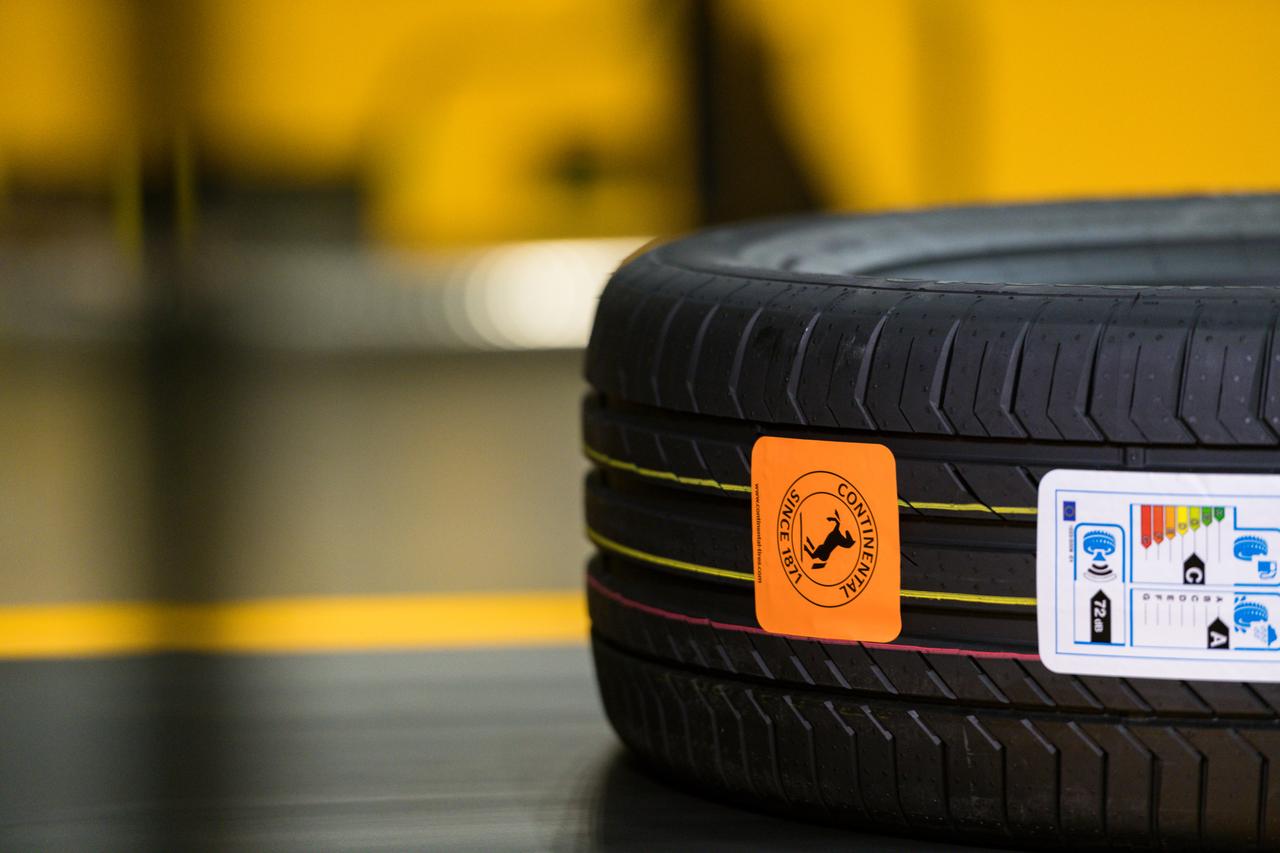
Continental Lastik (Continental)
Continental, a technology company founded in Hannover in 1871, began with rubber-based production and has since expanded into tire technologies automotive components and mobility solutions.
Since the late 19th century Continental has played a pivotal role in shaping mobility technology. Since its founding the company has evolved into an institution that has significantly influenced the technical infrastructure of transportation through products and systems developed across diverse fields. Production initiated in Hannover in 1871 gradually expanded from rubber-based products to encompass tire technologies testing systems automotive components sensor applications agricultural equipment and driving safety solutions. Continental’s corporate development has progressed across a broad spectrum from symbolic transformations reflected in its logo to methodologies used in test vehicles and the emergence of its international production network.
Established in 1871 in Hannover as the Continental-Caoutchouc und Gutta-Percha Compagnie the company initially produced soft rubber-based products. These included raincoats hot water bottles rubber-coated fabrics and hard rubber tires for bicycles and horse-drawn carriages. From the mid-1870s product diversity rapidly increased as the company leveraged rubber’s flexibility and durability to develop numerous technical components. This period demonstrates that the company was already working on mobility-related materials well before the automotive industry emerged.
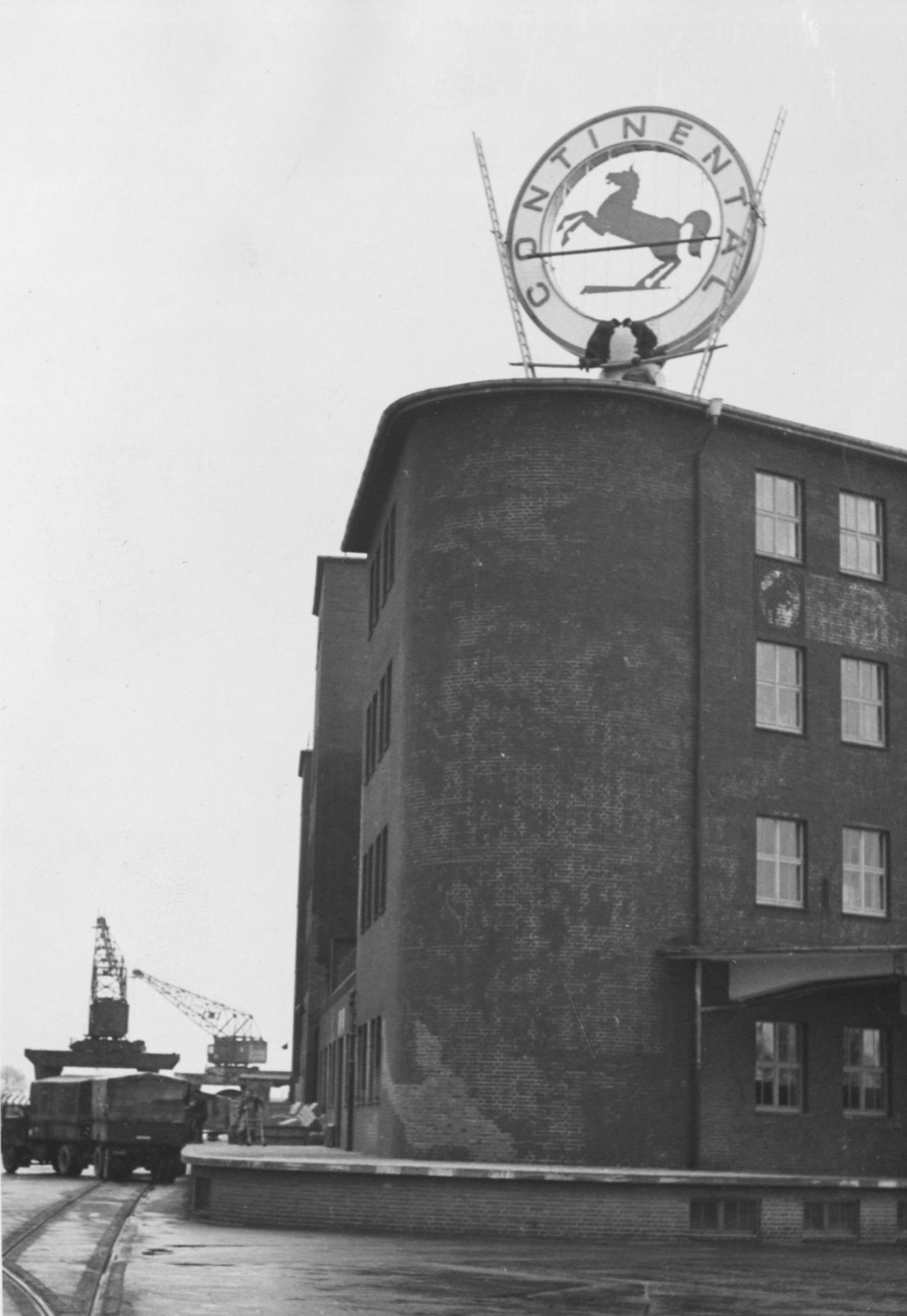
Installation of the New Neon Sign at the Factory Building in Hannover-Stöcken, December 1949 (Continental)
In 1875 the company added hoof buffer pads designed to prevent horses from slipping on icy surfaces to its production portfolio. This product gave rise to the earliest examples of the horse motif later adopted in the Continental logo. Throughout the 1880s as the product range expanded Continental became one of the earliest major rubber processing manufacturers in Germany.
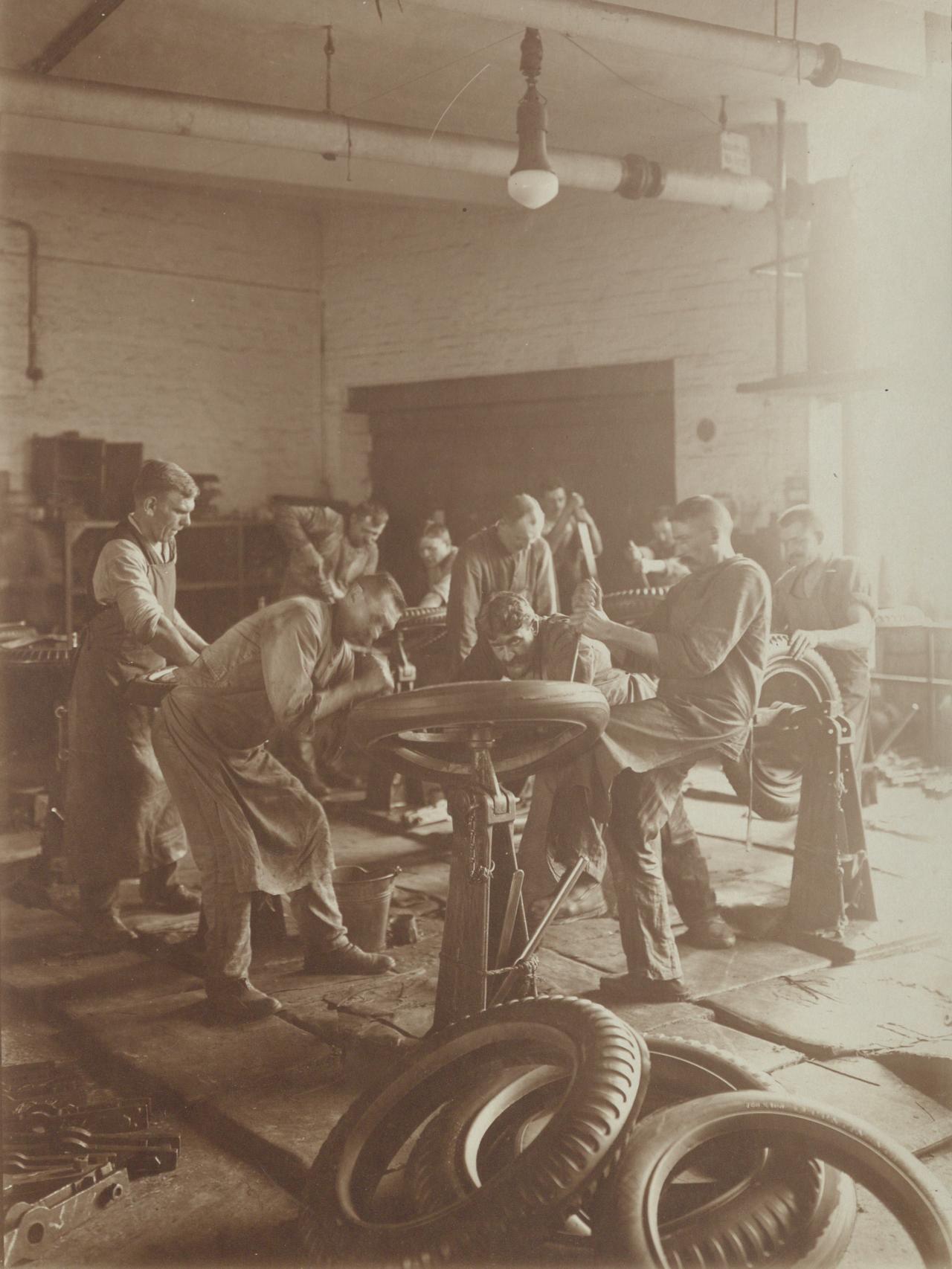
Hannover-Vahrenwald Fabrikasında Lastik Üretimi, 1921 (Continental)
The rearing horse featured in the Continental logo has its origins in 1875. Two distinct factors contributed to its adoption. The first was the horse symbol on the rubber hoof buffer developed by veterinarian Hartmann. Continental took over the production and distribution of this product and the symbol became embedded in the company’s visual identity.
The second factor relates to the historical symbols of the Hannover region which since the 14th century had traditionally used the horse motif in the coat of arms of the Dukes of Brunswick-Lüneburg. Continental’s founding in Hannover facilitated the adoption of this symbol into its corporate identity and in 1882 the horse motif was officially registered as the company’s trademark. Although the logo has undergone numerous formal changes over subsequent decades the horse motif has retained its symbolic integrity.
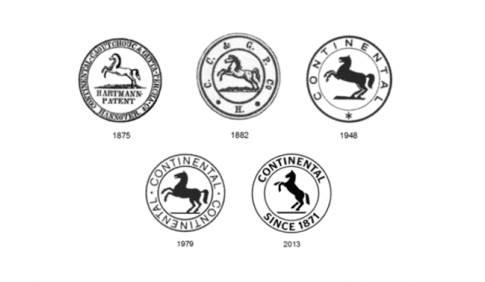
Continental Logo Evrimi (Continental)
Continental’s first major step in pneumatic tire technology came in 1892 when it became the first company in Germany to produce air-filled tires for bicycles. The use of pneumatic tires in the cycling culture of the 1890s was seen as a major advancement and Continental’s “Continental Pneumatic” tires were quickly favored by athletes. These tires were used by renowned racers such as Lucien Petit-Breton of France and contributed to his two victories in the Tour de France significantly boosting Continental’s recognition.
With the rise of the automobile industry in the early 1900s Continental began producing smooth-surfaced automobile tires in 1900. In 1904 it manufactured the world’s first automobile tire with a patterned tread surface. In 1905 and 1908 it developed studded anti-skid tires and removable rims specifically designed for sedans. These innovations shortened tire replacement times and improved maintenance convenience. In 1909 Continental’s rubber-coated fabric was used in Louis Blériot’s aircraft that crossed the English Channel demonstrating the company’s technical expertise in rubber-coated textiles on an international scale.
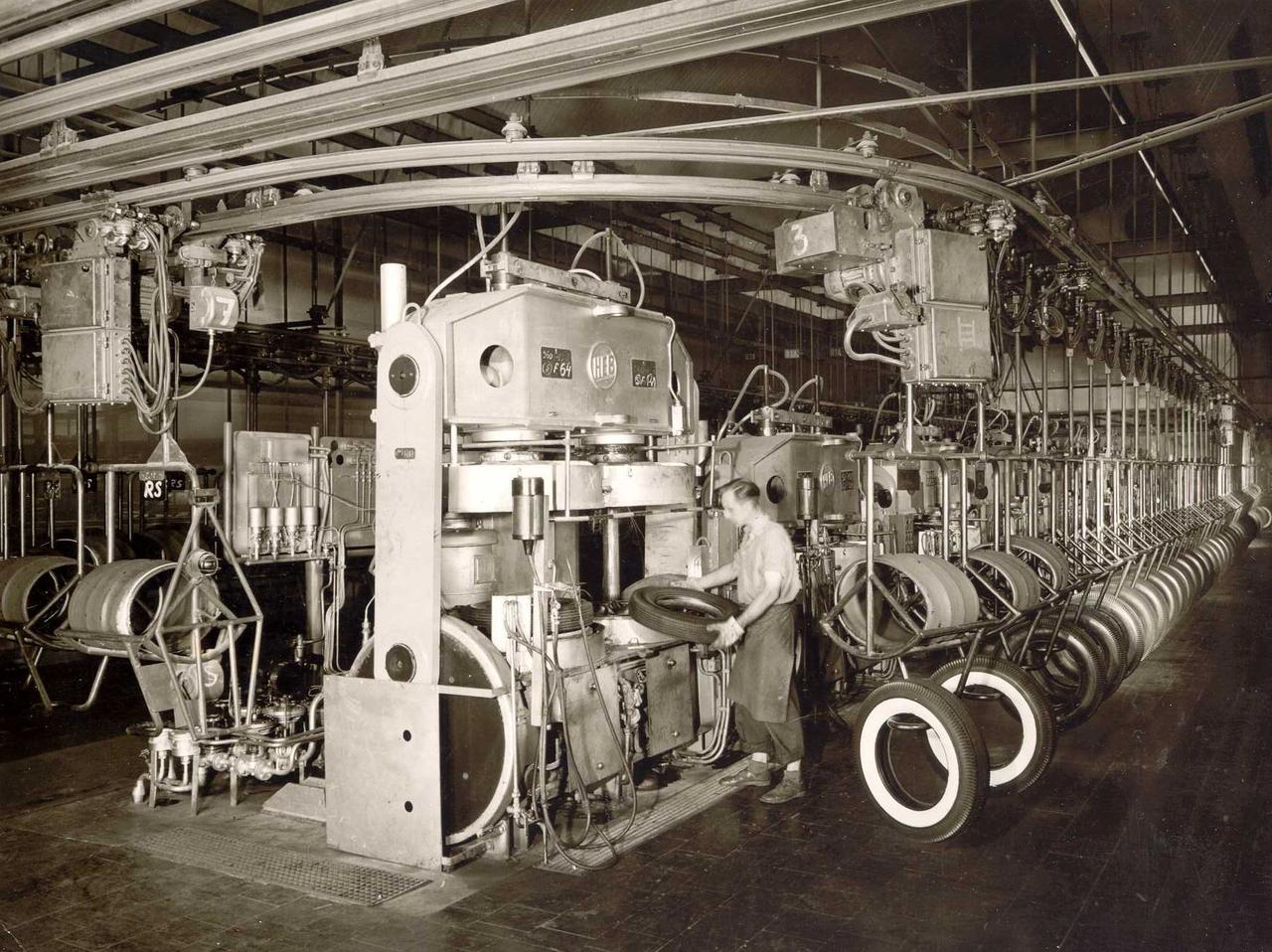
Rubber Production in Hannover, 1958 (Continental)
Throughout the 1910s Continental’s product diversity increased and in 1921 on the occasion of its 50th anniversary it introduced Germany’s first cord tire. Cord tires offered greater flexibility compared to the cotton fabric used in earlier tires. During the same period the development of large pneumatic tires for commercial vehicles brought about fundamental changes in heavy-duty transportation.
In 1926 carbon black was introduced as a material in tire production enhancing wear resistance. In the following years Continental merged with other German rubber industry enterprises to form Continental Gummi-Werke AG. This merger expanded production facilities to include sites in Hanover-Limmer and Korbach.
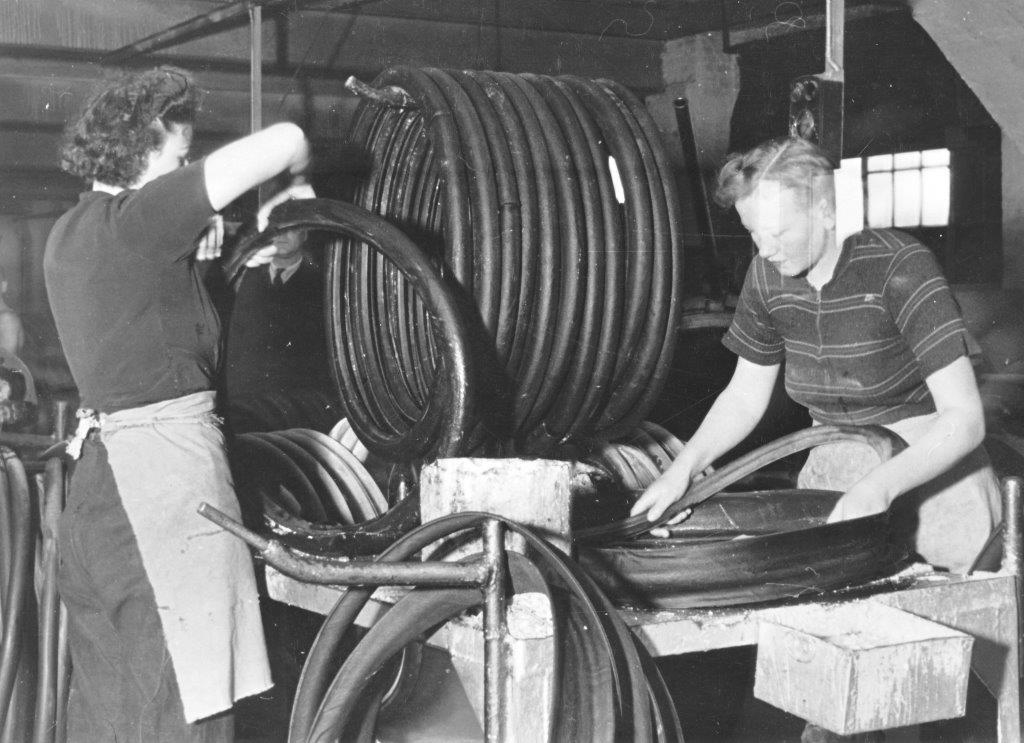
Korbach Fabrikasında Lastik Üretimi (Continental)
Between 1933 and 1945 Continental transformed into an enterprise producing for the war industry under the influence of Germany’s political climate. During the war production was oriented toward military needs with vehicle tires aircraft components and other rubber-based technical parts becoming priorities.
After 1945 production facilities resumed operations under British administration. The 1950s marked a period of renewed growth for Continental with the development of racing tires winter tires (marked M+S) and tubeless automobile tires. Successes achieved by brands such as Mercedes and Porsche using Continental tires in racing vehicles helped reestablish the company’s technical reputation.
In the 1960s Continental established the Contidrom test center in the Lüneburg Heath region to systematically conduct tire research and testing. Opened in 1967 the facility enabled measurements of tire behavior under varying road surfaces and climatic conditions. The center generated scientific data for both speed tests and braking performance.
In 1968 Continental engineers developed an electronically controlled driverless automobile to standardize testing procedures. Dubbed the “Ghost Car” in the press this vehicle detected magnetic field signals from a wire embedded in the road surface using sensors and autonomously adjusted its direction. It moved along the magnetic guidance wire maintaining constant speed and direction. This system enabled the measurement of tire performance without human influence and represented some of the earliest examples of principles now used in autonomous driving technologies.
In the mid-1970s Continental introduced the Conti-Contact winter tire without studs. During the same period rising automotive production in Europe led to increased demand for diverse tire types and Continental expanded its testing capacity to meet these needs. In 1979 Continental acquired Uniroyal’s European tire operations and in 1987 it acquired General Tire thereby becoming a company with an international production and sales network.
During this period expansion also occurred beyond tire manufacturing. Rubber-metal components engine mounting systems and advanced plastic products were consolidated under the ContiTech brand. Throughout the 1980s tires and industrial rubber products were developed for diverse markets.

Shift Change at the Hannover-Stöcken Factory in 1965 (Continental)
With the 1990s Continental focused on developing tire technologies addressing environmental impact and fuel efficiency. The eco-friendly ContiEcoContact tire was one example of this trend. In addition in 1997 the newly established Automotive Systems division began operations in vehicle electronics safety systems and powertrain management.
The 2000s were years of expansion for Continental in electronics and automotive systems. The acquisition of Siemens VDO Automotive AG in 2007 elevated Continental to the top tier of global automotive suppliers. This acquisition provided significant capabilities in driver assistance systems in-vehicle electronics sensor technologies and digital interfaces.
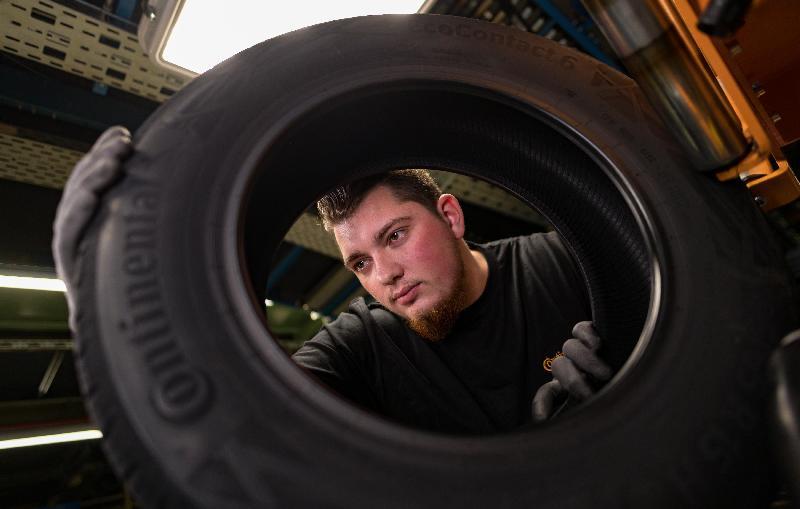
Tire Production at Continental's Korbach Plant (Continental)
Continental’s products in agriculture have demonstrated wide variety since its founding. The hoof buffer developed in the late 19th century was among the earliest examples in this field. In the early 20th century the company developed rubber gaskets for milk cans knee pads for farm workers and various hose systems. In 1928 the production of pneumatic tires for tractors expanded the company’s product range for agricultural machinery.
From the 1930s onward the company produced rubber-based components for inclined conveyor belts drive belts and equipment such as combine harvesters. The mechanization process following World War II increased the number of tractors and broadened the use of Continental products in agriculture. Today some agricultural machinery manufacturers use Continental’s air springs hose systems belts and sensor-enabled components.
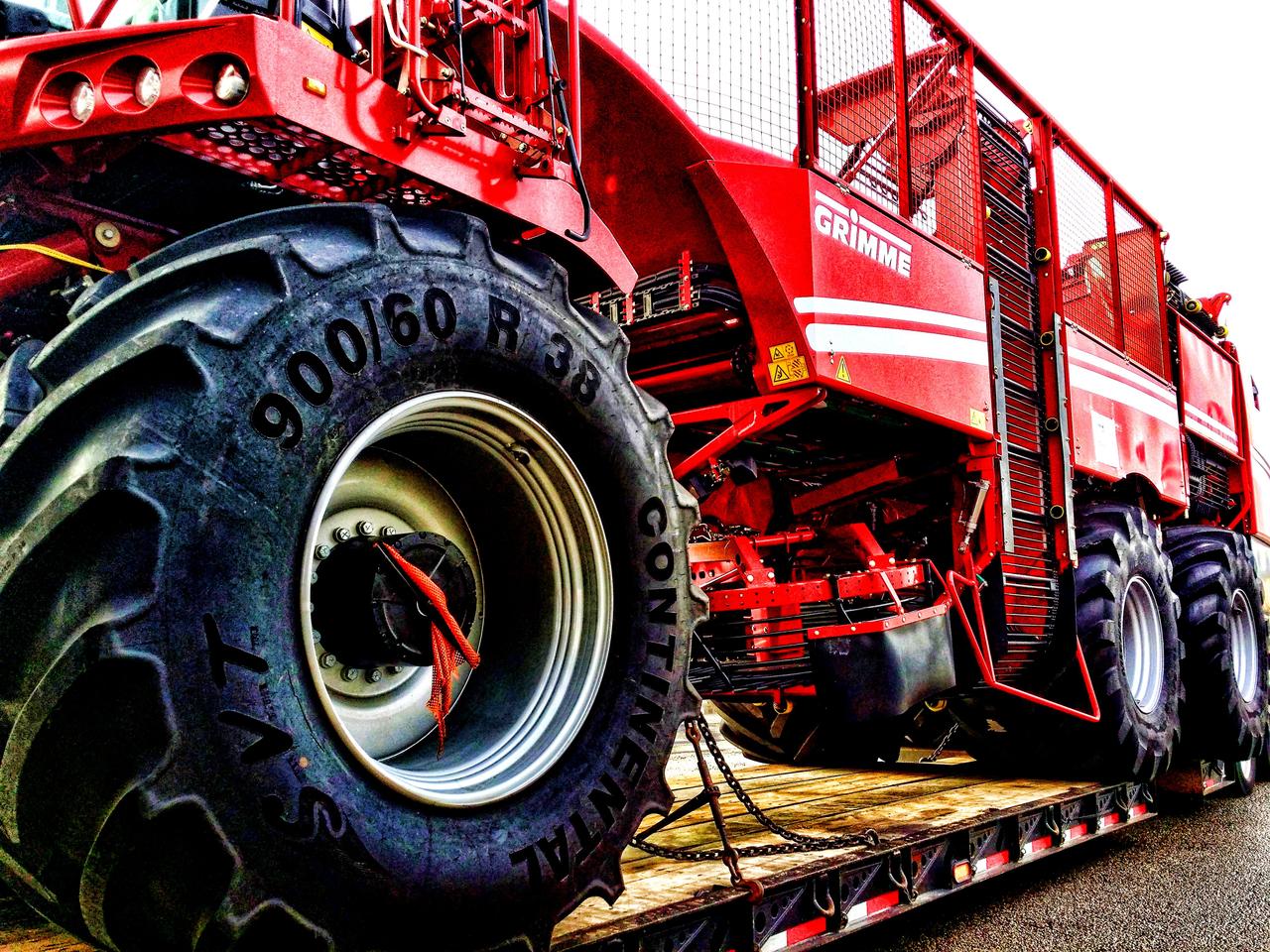
Grimme (Flickr)
The Volkswagen Type 2 T1 microbus launched in 1950 became one of the symbols of Germany’s economic transformation. Continental along with VDO and Teves which were independent entities at the time produced tires brake systems instrument components and various parts for the T1 model. The evolution of the microbus over the decades from an analog design to the digital ID. Buzz model illustrates Continental’s ability to follow this transition through both mechanical and electronic components.
The historical development of windshield wipers began with the first patent granted in 1903 to Mary Anderson of New York. Continental entered wiper production in 1926 and incorporated the product into its portfolio two years later. Subsequent years saw technical improvements to wiper systems and in the current era the AQUACTRL2 model is offered with flexible mounting systems tailored to different vehicle models. Continental combines rubber technology with mechanical motion systems to enhance the functionality of wiper mechanisms.
The tachograph developed under the VDO brand later integrated into Continental became a device for recording driving times in commercial vehicles. The Autorex clock developed by Kienzle Uhrenfabrik in 1923 is considered the first example of this system. The first tachograph model was produced in 1927 and the calibrated TCO 2 model was introduced in 1933. In 1952 the TCO 8 model presented speed indication on an expanded scale and versions capable of recording a full week’s data were developed.
In 1974 the first tachograph compliant with European Economic Community regulations the TCO 1311 was produced. In the 1990s the device’s panel structure was modernized. Starting in 2006 digital tachographs (DTCO series) were introduced enabling digital data storage via driver cards. In 2019 a GNSS-enabled “smart tachograph” was put into use. In 2023 the DTCO 4.1 model added automatic recording of border crossings and new logistics functions. The production center for these products is located in Villingen.
The electronically controlled driverless vehicle developed by Continental in 1968 contributed significantly to the scientific methodology of tire testing. The vehicle was guided by a magnetic wire system. Over time this system was refined and automation techniques were applied to eliminate human influence in tire testing.
Since 2012 automated braking tests independent of weather conditions have been conducted at Contidrom using the AIBA Automated Indoor Braking Analyzer. In 2018 the CUbE autonomous test platform was developed enabling testing of urban autonomous mobility solutions. In Uvalde Texas fully driverless tire test vehicles have been deployed. This process represents the continuation of a technical evolution that began with the development of the first driverless vehicle in 1968.
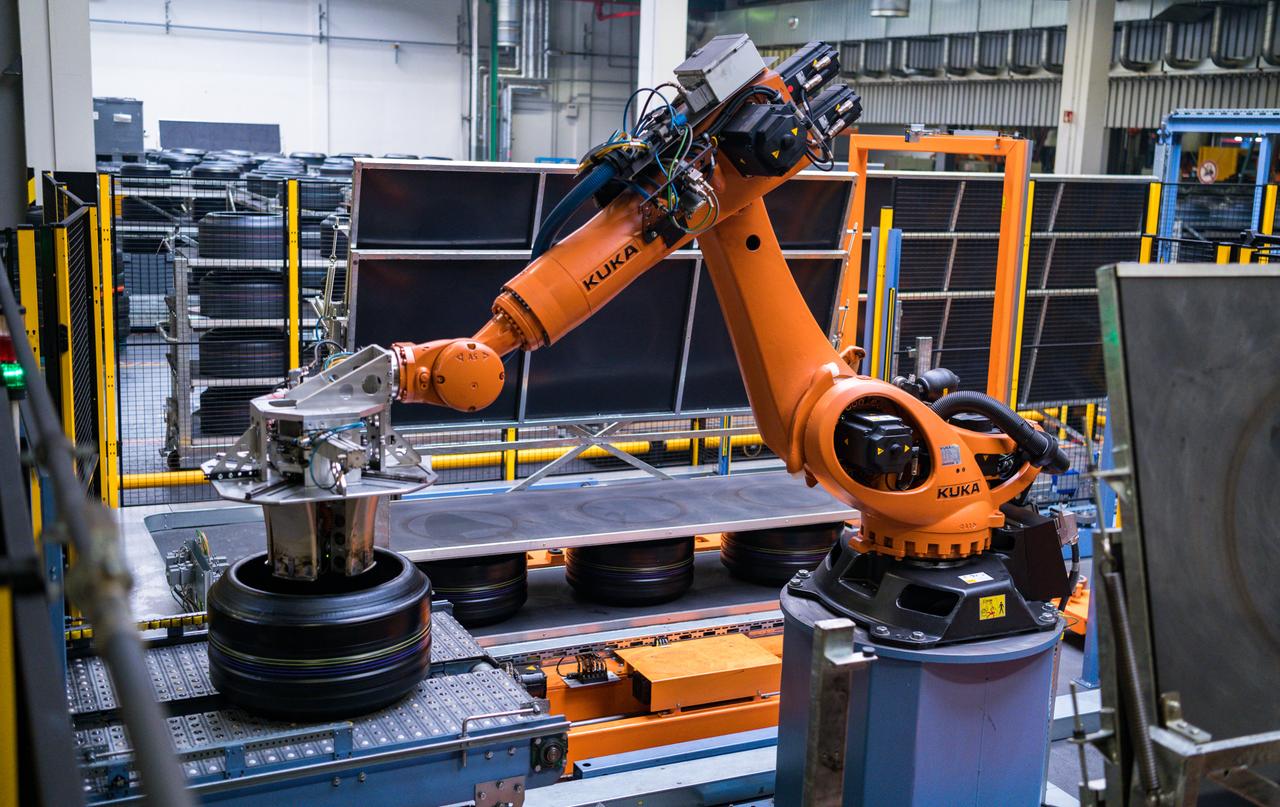
Tire Production at Continental's Korbach Plant (Continental)
At the 1905 Berlin International Automobile Exhibition Continental presented its tire tread patterns and removable rims. This exhibition enabled the company to showcase its early mobility-related technical solutions to an international audience. Throughout the 20th century balloon tires large pneumatic tires zeppelin tires and technologies enhancing road safety were exhibited at these events. Continental’s participation in IAA events has provided a chronological record of its product development trajectory.
Continental celebrated its 150th anniversary in 2021. Starting with approximately 200 employees at its founding the company now employs tens of thousands globally. In 2023 the Artificial Intelligence Lab opened in Berlin serving as a center for research in automation connected vehicle systems and big data analytics focused on mobility.

Kıta Genel Merkezi, Hannover (Continental)
In 2025 the company’s automotive division is planned to be restructured as a separate entity under the name AUMOVIO. Continental will continue its operations as a tire manufacturer and industrial solutions provider.
Continantal. "Continental Headquarters." Press. Accessed November 14, 2025.https://www.continental.com/en/press/media-library/continental-headquarter/.
Continental AG. "100 Years Tachograph." Company History. Accessed November 14, 2025.https://www.continental.com/en/company/history/100-years-tachograph/.
Continental AG. "120 Years of Windscreen Wipers." Company History. Accessed November 14, 2025.https://www.continental.com/en/company/history/120-years-of-windscreen-wipers/.
Continental AG. "Advancing Innovation in Agriculture for More Than 150 Years." Company History / Agricultural Products. Accessed November 14, 2025.https://www.continental.com/en/company/history/products-for-agriculture/.
Continental AG. "Company History: Milestones." Company History. Accessed November 14, 2025.https://www.continental.com/en/company/history/milestones/.
Continental AG. "Continental and the Microbus Model Line – an Association Dating Back More Than Seven Decades." Company History. Accessed November 14, 2025.https://www.continental.com/en/company/history/vw-t2-bulli/.
Continental AG. "Continental at the IAA Since 1905." Press / Fairs & Events. Accessed November 14, 2025.https://www.continental.com/en/press/fairs-events/iaa-history/.
Continental AG. "Erich Maria Remarque at Continental." Company History. Accessed November 14, 2025.https://www.continental.com/en/company/history/erich-maria-remarque/.
Continental AG. "History." Company History. Accessed November 14, 2025.https://www.continental.com/en/company/history/.
Continental AG. "The ‘Ghost Car.’" Company History. Accessed November 14, 2025.https://www.continental.com/en/company/history/the-ghost-car/
Continental AG. "Tire Production." Press. Accessed November 14, 2025.https://www.continental.com/en/press/media-library/production-at-continental/tire-production/.
Continental Tires. "150 Years of Continental." Press. Accessed November 14, 2025.https://www.continental.com/en/press/media-library/150-years-continental/.
Continental Tires. "A Class of It's Own Continental Tires." Continental Tires / About Us. Accessed November 14, 2025.https://www.continental-tires.com/my/en/about-us/
Continental Tires. "French Cyclist Lucien Petit-Breton on Continental Tires." Company History / Tour de France. Accessed November 14, 2025.https://www.continental.com/en/company/history/tour-de-france/.
Continental Tires. "Why the Horse? Continental Tire Logo Dates Back to 1875." Continental Tire / Logo History. Accessed November 14, 2025.https://continentaltire.com/learn/why-horse-continental-tire-logo-dates-back-1875.
Flickr. "Grimme." Raymondclarkeimages. Accessed November 14, 2025.https://www.flickr.com/photos/rclarkeimages/15384006837/.

Type | Technology Company | ||||||||
|---|---|---|---|---|---|---|---|---|---|
Establishment | 1871 | ||||||||
Place of Establishment | Hanover, Germany | ||||||||
Initial Products | Rubber products, Hard rubber, Rubberized fabric | ||||||||
Testing Infrastructure | Contidrom | ||||||||
Product Groups | Tires, Industrial rubber products, Vehicle components | ||||||||
Founding Period and Initial Production Activities
Symbol and Corporate Identity: The Emergence of the Horse Motif
Emergence of Bicycle and Automobile Tires (1892–1914)
Technological Expansion Before World War I
War Periods and Restructuring (1933–1955)
Development of Testing Technologies and Contidrom (1960–1970)
Expansion of Product Development into New Areas (1970–1990)
Digitalization Vehicle Electronics and New Partnerships (1990–2010)
Product Development in the Agricultural Sector
Long-Term Collaborations in Vehicle Components: The Microbus Series
Continental in Windshield Wiper Technology
Tachograph Technology
Transformation of Scientific Measurement Methods and Autonomous Test Systems
Continental’s Historical Presence at IAA Exhibitions
150th Anniversary and Current Corporate Structure