


This article was automatically translated from the original Turkish version.
+1 More
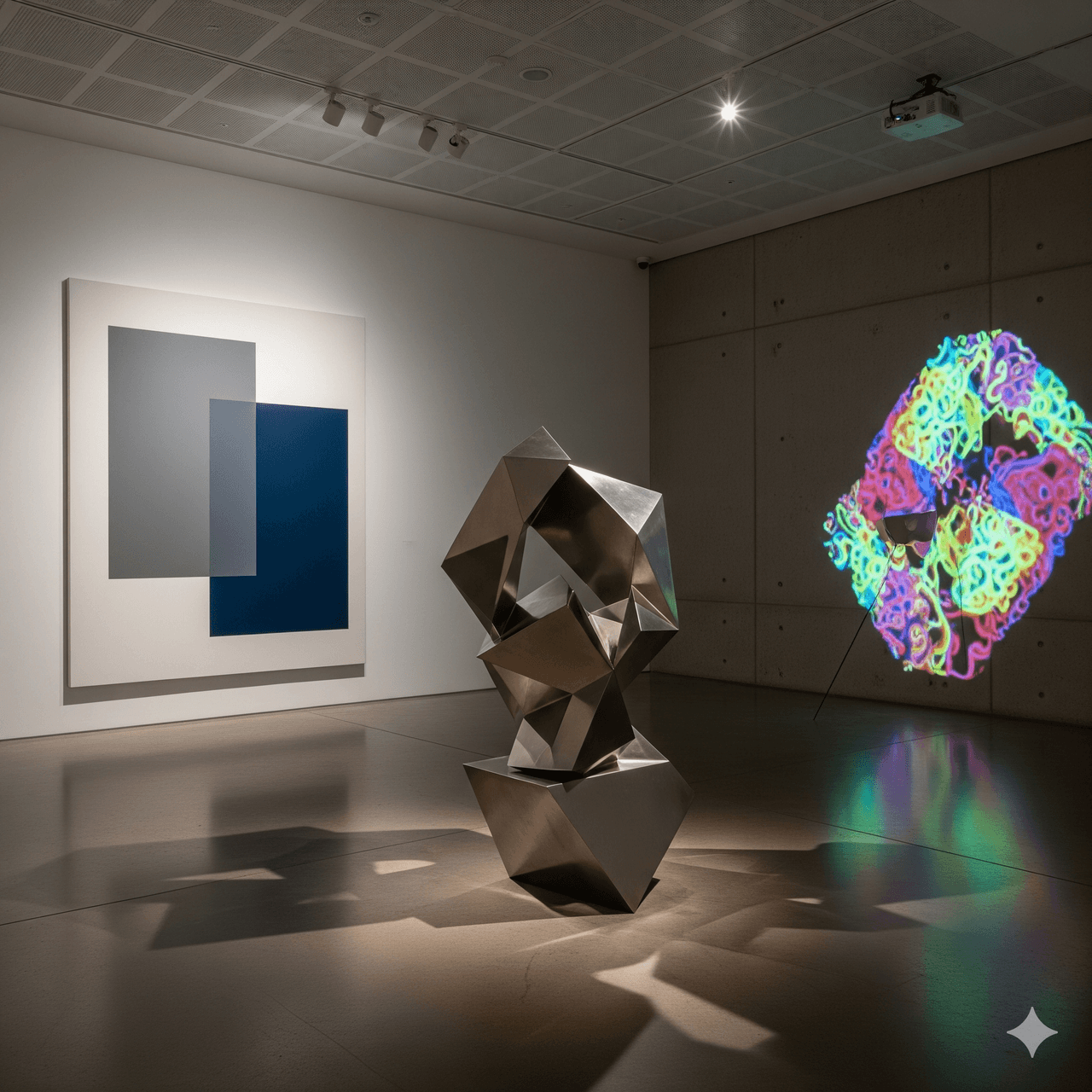
Contemporary Art (Generated with Artificial Intelligence)
Emergence | The 1960s and Beyond (After World War II) | ||||||||
|---|---|---|---|---|---|---|---|---|---|
Focus Point | Concept; Idea and Process | ||||||||
Basic Feature | Social and Political Sensitivity Material Variety Viewer Interaction Interdisciplinarity | ||||||||
Related Approaches | Conceptual Art, Performance, Installation, Relational Aesthetics, Digital Art | ||||||||
Important Theorists | Nicolas Bourriaud, Terry Barrett, Larry Shiner | ||||||||
Contemporary art is a term used to describe an artistic approach that emerged after World War II and became institutionalized especially from the 1960s onward, characterized by a critical stance toward traditional artistic norms. In Turkish art circles this concept is often used synonymously with “modern art,” but some critics argue that there are nuances between the two terms and therefore advocate for the preference of the term “contemporary art.” This artistic approach signifies a shift away from modernism’s rigid structures based on movements and manifestos, pointing instead to a phenomenon in which artistic disciplines intermingle, material possibilities become increasingly diverse, and continuous new debates about the nature of art are generated.
Contemporary art practice encompasses not only traditional forms such as painting and sculpture but also diverse modes of expression including installation, performance, video, photography, and digital art. This diversity compels artists to pay attention not only to aesthetic qualities but also to the social, cultural, and political contexts of their time. Particularly from the second half of the 20th century onward, social movements, identity politics, environmental concerns, and global justice debates have become central themes in contemporary art. Thus, artworks are positioned not merely as products of individual innovation but also as part of social discourse and critique.
One of the defining features of contemporary art is the shift of focus from the aesthetic object to thought and the conceptual dimension. In this context, artworks aim to make visible a specific idea, concept, or critical perspective. The viewer moves beyond being a passive observer and assumes an active role in interpreting and completing the meaning of the work. This participatory stance gains particular importance in works addressing social issues. Artists continuously expand the field of artistic expression by drawing on a wide range of materials, from everyday objects to high-tech products.
Interdisciplinarity is one of the most characteristic features of contemporary art. Relationships established between art and fields such as technology, science, philosophy, and sociology diversify both modes of expression and subjects of discussion. Thus, contemporary art emerges not merely as an aesthetic production field but as a cultural practice that reflects, questions, and generates intellectual impact on the dynamics of contemporary society.
Contemporary art has a multifaceted and dynamic structure that resists being confined to a single definition. Unlike modernism, which was shaped around specific rules and manifestos often ending in “-ism,” contemporary art lacks such rigid constraints. Therefore, it is more accurate to evaluate it not through a single tendency or a unified manifesto but through the sensitivities, discourses, and practices that emerged in different periods. At the core of contemporary art lies a tendency to question historically established rules, aesthetic criteria, production practices, and market mechanisms of art.
The distinguishing features of contemporary art can be grouped under several main headings.
Contemporary art goes beyond classical disciplines such as painting, sculpture, and photography, embracing numerous practices including installation, performance art, video art, digital art, land art, and street art. These practices are not only used independently but sometimes intertwine within the same work to create hybrid forms. Artists explore new modes of expression by stretching or eliminating boundaries between disciplines, thereby increasing the formal diversity of art.
Another important feature of contemporary art is the prioritization of the underlying idea and conceptual framework over the physical appearance or aesthetic qualities of the work. In this approach, the artwork is regarded not merely as a visual object but as a vehicle for a specific idea or critical perspective. The artist, in this process, invites the viewer not only to observe the work but also to think about, question, and engage in dialogue with the intellectual context it presents.
Many contemporary artworks are considered incomplete without the participation of the viewer. The viewer’s physical or intellectual engagement is seen as an essential element that reinforces the meaning of the work. This condition is explained by the concept of “relational aesthetics” developed by French curator and art theorist Nicolas Bourriaud. Relational aesthetics emphasizes that art is not merely an individual mode of expression but also a space for interpersonal encounters, social bonds, and dialogue. Thus, the artwork gains value through social interaction.
Contemporary artists are attuned to the issues and agendas of their time. Themes such as human rights violations, migration, identity politics, the effects of globalization, climate change, social inequality, and technological surveillance systems are among the most frequently addressed subjects in contemporary art. For this reason, contemporary art often functions not only as an aesthetic production field but also as a form of activism or a tool for social critique.
Another prominent feature of contemporary art is the diversity of materials used. Alongside traditional materials such as paint, canvas, marble, and bronze, everyday objects, industrial waste, the human body, light, sound, moving images, and digital data have become tools of art. This situation contributes to the blurring of boundaries between art and everyday life and continuously expands the scope of the concept of “artwork.”
The acceleration of globalization since the 1990s has significantly influenced the directions and institutions of contemporary art. Globalization has become a decisive factor not only in economic and political spheres but also in cultural production and circulation processes. The increasing number of anonymous, transient, and identity-less spaces—termed “non-places” by anthropologist Marc Augé—such as airports, highways, and shopping malls—parallels art’s own entry into a similar process of circulation and anonymization. This period hastened the transformation of the artwork from an aesthetic and conceptual object into a commodity that can be bought and sold on a global scale. The market value of artworks has at times overshadowed their artistic value, creating a new hierarchy within the art market.
In this context, contemporary art has been redefined since the end of the 20th century as part of a global network. As critic Rafet Arslan emphasizes, with the end of the Cold War, global capital discovered new cultural markets in regions such as the Eastern Bloc and the Balkans. The art scene supported in these regions through funding mechanisms sometimes led to the emergence of an “accelerated” contemporary art scene. This process brought with it a structure in which locally recognized cultural elements were blended with a global aesthetic understanding, while simultaneously foregrounding identity politics and politically correct ethical approaches.
Türkiye did not remain outside this process; beginning in the 1990s, it began shaping its own contemporary art scene under the influence of globalization. Relationships established between local capital and multinational corporations have directed the development of art institutions and events. International-scale initiatives such as the Istanbul Biennial have integrated Türkiye’s contemporary art scene into global circulation. In addition, the establishment of private museums, the organization of art fairs, and the emergence of independent art initiatives are directly linked to the art market created by globalization.
This new structure has fundamentally changed the ways in which art is produced, exhibited, and circulated. Biennials, international exhibitions, art fairs, and global museums have emerged not merely as venues for displaying artworks but as the most important actors within the global network. Thus, while contemporary art continues to draw from local contexts, it has become a multilayered practice that circulates internationally.
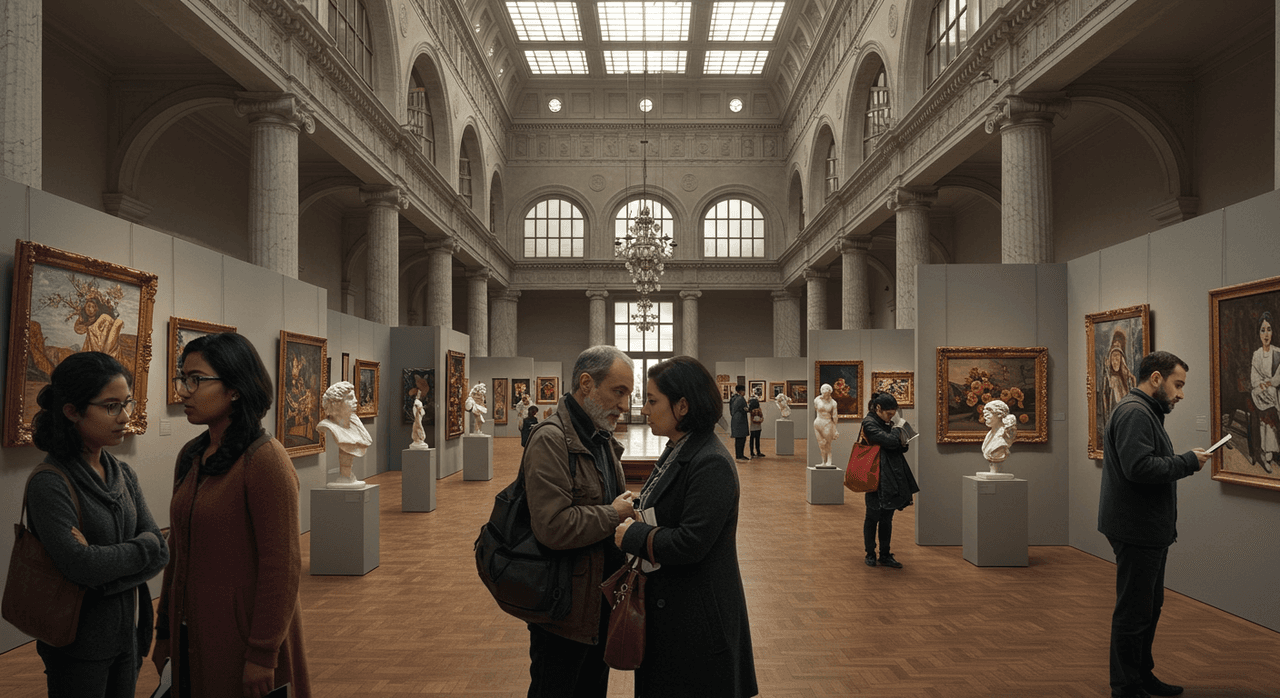
Contemporary Art Gallery (Generated by Artificial Intelligence.)
The development of contemporary art in Türkiye is closely linked to the country’s social, economic, and cultural transformations. Rapid urbanization dynamics, industrialization processes, and technological innovations since the 1950s prompted artists to pursue new modes of expression. However, the real momentum was gained in the 1990s and 2000s with the strengthening of integration into the global art world. During this period, the opening of private museums, new-generation art galleries, independent art initiatives, and regularly held international biennials significantly increased both the production capacity and the national and international visibility of contemporary art in Türkiye.
The institutionalization of contemporary art in Türkiye has been shaped by museums, art centers, and research institutions established in different cities. Istanbul holds a pioneering position in this field, but significant developments have also occurred in cities such as Ankara, İzmir, Mardin, and Bayburt.
İstanbul Modern: Founded in 2004, İstanbul Modern is recognized as Türkiye’s first museum dedicated to modern and contemporary art. In 2023, it moved to a new building designed by Renzo Piano, gaining recognition for its architecture reflecting contemporary museological approaches. Alongside its collection exhibitions, it has achieved international recognition through recurring exhibitions that bridge contemporary technology and art.
Arter: Arter, an institution affiliated with the Vehbi Koç Foundation, began operations in its new building in Dolapdere in 2019. Rather than continuously displaying its collection, Arter engages the public through long-term exhibitions shaped by conceptual and curatorial frameworks, offering an experimental and research-oriented approach to contemporary art.
Salt: Operating in Beyoğlu and Galata, Salt is not merely an exhibition space but an institution focused on research, archiving, and public programs. It has hosted comprehensive exhibitions shedding light on the history of conceptual art in Türkiye and made visible the works of artists such as Gülsün Karamustafa, İpek Duben, and Handan Börüteçene at an archival level.
Pera Museum: Affiliated with the Suna and İnan Kıraç Foundation, Pera Museum presents exhibitions by internationally renowned contemporary artists alongside its traditional art collections. Personal exhibitions by artists such as Grayson Perry and Etel Adnan illustrate the museum’s approach of bringing together the traditional and the contemporary.
Baksı Museum: Founded in Bayburt by Professor Dr. Hüsamettin Koçan, Baksı Museum stands out as an “eco-museum” model. It seeks to reduce migration in the region and encourage artistic production by integrating local traditional practices such as weaving and pottery with contemporary art practices.
Biennials are among the most important vehicles for integrating contemporary art in Türkiye into international circulation. These events connect artists’ works with international curators and audiences while strengthening Türkiye’s position on the global art map.
İstanbul Biennial: Held since 1987, the İstanbul Biennial is among the world’s leading contemporary art events. Occurring every two years, the biennial brings together artists, curators, and art professionals from diverse global regions, establishing İstanbul as a major center in the international art world.
Mardin Biennial: Launched in 2010, the Mardin Biennial aims to connect the city’s cultural and historical fabric with contemporary art, offering a new artistic perspective to the region. It is notable for creating a space of interaction between local communities and international artists.
Çanakkale and Kommagene Biennials: These biennials, held in different regions of Anatolia, integrate the historical and cultural contexts of their host cities with contemporary art. Thus, they contribute to the expansion of art beyond central cities and the emergence of new art environments at a regional level.
Contemporary art brings together diverse aesthetic and conceptual approaches on a global scale. Artists focus not only on aesthetic concerns but also on social, political, cultural, and personal issues. In this context, prominent figures have played a decisive role in shaping the global language of contemporary art.
Ai Weiwei (b. 1957): Chinese artist, activist, and intellectual Ai Weiwei foregrounds the social function of art. His works draw attention to universal issues such as refugee crises, freedom of expression, state repression, and human rights. By transforming traditional Chinese ceramics through methods such as breaking or painting, his pieces represent the convergence of reinterpretation of historical heritage and contemporary political critique. His artistic practice is directly linked to activism and frequently places him at the center of political debates.
Yayoi Kusama (b. 1929): Japanese artist Kusama is known for her polka dots, repetitive patterns, and use of mirrors. Her “Infinity Mirror Rooms” installations immerse viewers in an experience of boundless space. Kusama’s works are nourished by her own mental health experiences; she transforms her hallucinations into art, elevating personal psychology to a universal realm of experience. Her pieces provoke inquiries into the relationship between the individual and society.
Olafur Eliasson (b. 1967): Eliasson transforms natural phenomena into the subject of art, producing sensory experiences through light, fog, water, and color. His installation The Weather Project (2003, Tate Modern) is one of the works that address both individual and collective perception. The artist also focuses on climate change and sustainability, inviting viewers to reconsider the relationship between nature and humanity.
Marina Abramović (b. 1946): A pioneer of performance art, Abramović uses her body both as a tool and a boundary field. Her works explore themes such as endurance, pain, time, and viewer participation. In her performance The Artist is Present (2010, MoMA), she sat silently for days, engaging in eye contact with visitors to create a mutual experience. This performance is regarded as one of the landmark examples transforming the artist-viewer relationship.
Damien Hirst (b. 1965): British artist Hirst is one of the most recognized figures of the 1990s “Young British Artists” (YBA) group. He is known for his animals displayed in formaldehyde and medicine cabinets. His works open discussions on death, consumer culture, scientific aesthetics, and market relations. Hirst’s record-breaking sales in the art market have contributed to debates on the economic dimensions of art.
Jeff Koons (b. 1955): American artist Koons brings kitsch aesthetics and icons of popular culture into the art world. His stainless steel sculptures covered in bright colors, such as “Balloon Dog,” question the relationship between art and consumption. Koons’s works are significant for challenging the boundaries between “high culture” and “popular culture.”
Anish Kapoor (b. 1954): British artist of Indian origin Kapoor is known for his monumental sculptures based on void, surface, space, and perception. His work Cloud Gate in Chicago has enabled a new way of experiencing public art. Kapoor has also expanded the formal and conceptual possibilities of sculpture through the use of diverse materials such as pigment, stone, and metal.
Cindy Sherman (b. 1954): American artist Sherman is known for her photographic works. Her most famous series, “Untitled Film Stills” (1977–1980), consists of self-portraits in which she assumes various female roles to construct fictional scenes. Through this method, Sherman critiques social gender, identity, representation, and the female image constructed by media. By using photography as a “self-representation tool,” she blurs the boundaries between the subject and object of art.
Bruce Nauman (b. 1941): American artist Nauman employs multiple disciplines including sculpture, video, neon installation, and performance. His works investigate the relationships between body, space, language, and perception. His neon text pieces contain social critiques delivered in both humorous and provocative language. Nauman’s productions strongly reflect the interdisciplinary nature of contemporary art.
Tracey Emin (b. 1963): Another key figure of the “Young British Artists” group, Emin places personal experience at the center of her art. One of her most famous works, My Bed (1998), brought her into the public eye by presenting her unmade bed as an artwork. Her works openly address themes such as sexuality, the female body, trauma, and personal memory. In Emin’s art, subjective experience becomes a public topic of debate.
Shirin Neshat (b. 1957): Iranian artist Neshat is known for her photographic, video, and film works. She focuses particularly on female identity, Islamic culture, migration, and power relations. Her black-and-white photographic series, inscribed with Persian poetry on the female body, make visible the tension between the individual and social structures. Neshat’s works contribute globally to discussions on both personal and cultural identity.
Antwi, Emmanuel. “The Unintended Consequences of Normalisation: Analysing the Long–Term Negative Effects of Artistic Practices That Normalise Abnormalities.” *Journal of Fine and Studio Art* 12, no. 1 (January–June 2025): 1–13. Accessed September 6, 2025.https://academicjournals.org/journal/JFSA/article-full-text-pdf/373F9FF73126.
Chen, Feiran. “A Case Study in Participatory Environmental Art.” *Highlights in Art and Design* 7 (September 27, 2024): 62–65. Accessed September 6, 2025.https://doi.org/10.54097/df74w925.
De la Calleja, Elsa, and Roberto Zenit. “Fractal Dimension and Topological Invariants as Methods to Quantify Complexity in Yayoi Kusama's Paintings.” arXiv, 2020. Accessed September 6, 2025.https://arxiv.org/abs/2012.06108
Ponzanesi, Sandra. "The Art of Dissent: Ai Weiwei, Rebel with a Cause.” *Culture, Citizenship and Human Rights*, 2019. 215-236. Accessed September 6, 2025.https://doi.org/10.4324/9780429198588
Suma, K. V., S. Chandran, and T. S. Sathyanarayana Rao. “The Princess of Polka Dots: Using Art as a Medium to Cope with Hallucinations.” *Indian Journal of Psychiatry* 60, no. 1 (January–March 2018): 156–158. Accessed September 6, 2025.https://doi.org/10.4103/psychiatry.IndianJPsychiatry_149_18.
İstanbul Modern. "History." İstanbul Modern Sanat Müzesi. Accessed September 6, 2025.https://www.istanbulmodern.org/en/corporate/history

Contemporary Art (Generated with Artificial Intelligence)
Emergence | The 1960s and Beyond (After World War II) | ||||||||
|---|---|---|---|---|---|---|---|---|---|
Focus Point | Concept; Idea and Process | ||||||||
Basic Feature | Social and Political Sensitivity Material Variety Viewer Interaction Interdisciplinarity | ||||||||
Related Approaches | Conceptual Art, Performance, Installation, Relational Aesthetics, Digital Art | ||||||||
Important Theorists | Nicolas Bourriaud, Terry Barrett, Larry Shiner | ||||||||
Key Features
Interdisciplinarity
Conceptual Focus
Viewer Engagement
Social and Political Sensitivity
Material Diversity
Globalization and Contemporary Art
Contemporary Art in Türkiye
Institutions and Spaces
Biennials and Events
Internationally Significant Artists