


This article was automatically translated from the original Turkish version.
In the aviation sector, safety is considered one of the most important factors. Although modern aircraft are designed to withstand various weather conditions, their aerodynamic structures, engine efficiency, and electronic systems are carefully evaluated especially under extreme cold weather conditions. These tests are conducted to prevent potential accidents and injuries, minimize operational risks, and maximize flight safety. The goal of the tests is to mitigate adverse conditions on the aircraft and reduce risks to the lowest possible level.
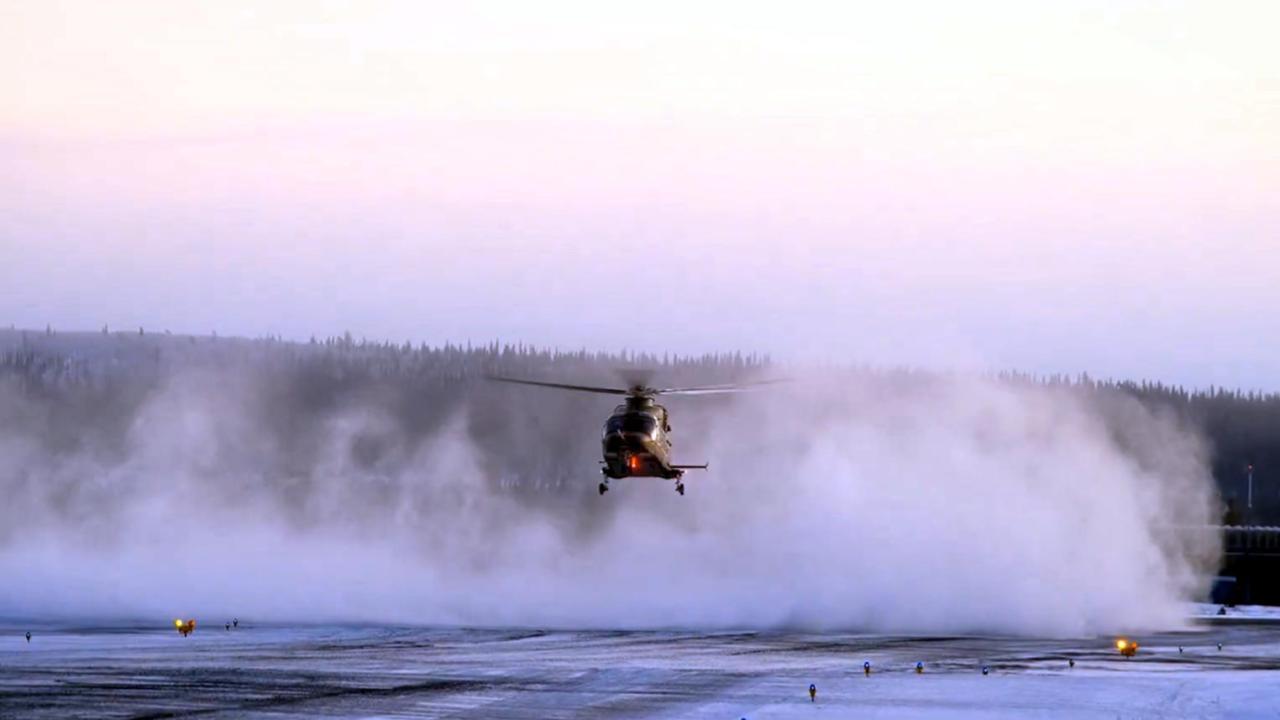
Source: Presidency of Defense Industries
Some aviation companies and testing organizations use specialized facilities to conduct low-temperature tests under controlled conditions. In these facilities, temperature, wind, humidity, and icing conditions can be artificially created.
McKinley Climate Laboratory (USA, Florida)
This laboratory, operated by the United States Air Force, is used to test aircraft under extreme cold and hot weather conditions. Aircraft and their systems undergo comprehensive testing in this laboratory, which can reach temperatures as low as -65°C.
Airbus Climate Test Center (Germany, Hamburg)
Airbus uses its specialized test center in Hamburg to evaluate the cold weather performance of its aircraft. Here, freezing conditions, icing, and hydraulic system durability are tested.
Some aircraft manufacturers and airlines prefer to conduct tests in extreme cold regions to evaluate performance under real world conditions.
Yellowknife (Canada)
The city of Yellowknife in northern Canada is a frequently used location for extreme cold weather testing. Major manufacturers such as Airbus and Boeing conduct tests here to evaluate engine starting, icing, and system durability of their aircraft.
Ivalo Airport (Finland)
Ivalo Airport, located in northern Finland, is one of the key centers for extreme cold weather testing. Landing and takeoff performance, anti-icing systems, and braking tests are particularly conducted here.
Siberia (Russia)
Russia’s Siberian region is frequently chosen to test aircraft engines under extreme cold conditions. The winter durability of Russian-made aircraft and engines is specifically evaluated here.
The choice of testing method in cold weather evaluations depends on the test objective and the factors being assessed. Controlled laboratory tests provide more reliable and repeatable results due to the ability to adjust weather conditions. This method allows detailed testing of critical components such as icing, hydraulic systems, and fuel lines. However, it may not fully replicate real-world conditions and may not be suitable for large aircraft. Natural cold environment tests, on the other hand, offer advantages in observing how aircraft engines, electronic systems, and mechanical components respond under actual weather conditions. These tests provide realistic scenarios incorporating factors such as wind, snow, and icing. However, since weather conditions cannot be controlled, test durations may be extended and logistical challenges may arise. The optimal approach is to conduct laboratory tests for basic safety and performance assessments, followed by natural environment tests to verify the aircraft’s durability under real weather conditions. This ensures that safety standards are met and that aircraft operate reliably across diverse climatic conditions.
The T625 GÖKBEY general-purpose helicopter developed by Turkish Aerospace Industries (TUSAŞ) was tested under real conditions in Kiruna, Sweden.
During these tests, which lasted approximately one month, the helicopter’s performance and durability at temperatures as low as -30°C were evaluated. Over 600 test scenarios were applied during a total flight time of 60 hours.
Additionally, Türkiye’s domestic electric vehicle, TOGG, was subjected to cold weather tests down to -40°C. These tests were conducted to evaluate the vehicle’s battery performance and overall durability. TOGG’s cold weather tests were carried out at an accredited test center in Ushuaia, Tierra del Fuego, Argentina. During these tests, the vehicle was evaluated under harsh weather conditions reaching -40°C.
Airline Haber. (2024). "HÜRJET'in İkinci Prototipi Yeni Boyasıyla İlk Kez Havalandı!". Accessed February 20, 2025.Accessed Adresi.
Alagöz, Zöhre. (2025). "GÖKBEY, soğuk hava testlerini başarıyla tamamladı." İhlas Haber Ajansı. Accessed February 20, 2025.
Alemdar, Ahmet. (2022). "HÜRKUŞ HYEU için 'Tip Sertifikası' çalışmaları tamamlandı." Defence Turk. Accessed February 20, 2025.
Berber, Başak. (2025). "T625 Gökbey İsveç'te Soğuk Havaya Meydan Okudu". SavunmaSanayiST. Accessed February 20, 2025.
Gökhan, Mert. (2022). "TOGG'un soğuk hava testlerinden yeni görüntüler geldi". TR MOTOR. Accessed February 20, 2025.

No Discussion Added Yet
Start discussion for "Cold Air Testing in Aviation and in Our Country" article
1. Ice and Snow
2. Hydraulic and Mechanical Systems
3. Air Traffic Management and Delays
4. Cabin Temperature and Passenger Comfort
Where are cold weather tests conducted?
1. Special Test Facilities
2. Tests in Natural Cold Regions
Differences in testing methods
Türkiye’s preference for natural environment testing