


This article was automatically translated from the original Turkish version.
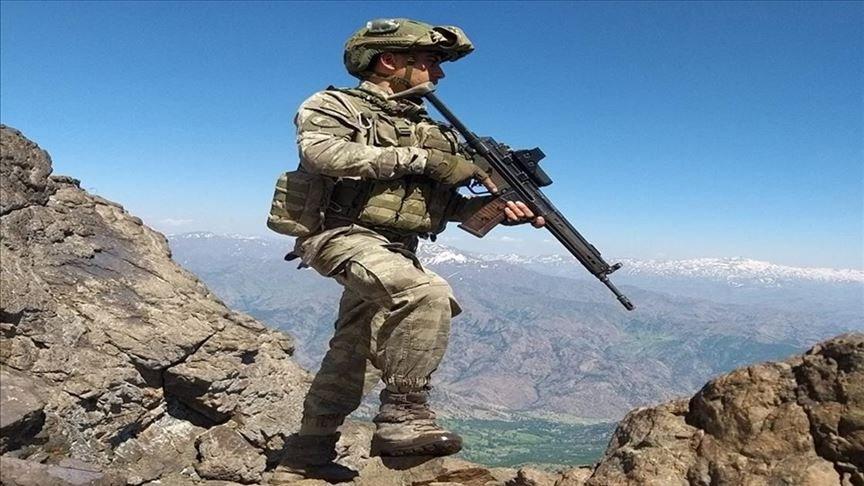
Claw-Lock Operation
Start Date | April 17, 2022 | ||||||||
|---|---|---|---|---|---|---|---|---|---|
General Strategy | It is implemented within the framework of Türkiye's adopted strategy after 2016 of 'Ensuring Security of Borders from a Distance and Eliminating Terrorism at Its Source' | ||||||||
Operation Claw-Lock is a cross-border military operation conducted by the Turkish Armed Forces (TAF) against elements of the PKK/KCK terrorist organization in northern Iraq. Launched simultaneously on 17 April 2022 in the Metina, Zap and Avaşin-Basyan regions of northern Iraq, the operation is part of Türkiye’s strategy of “eliminating terrorism at its source.”【1】
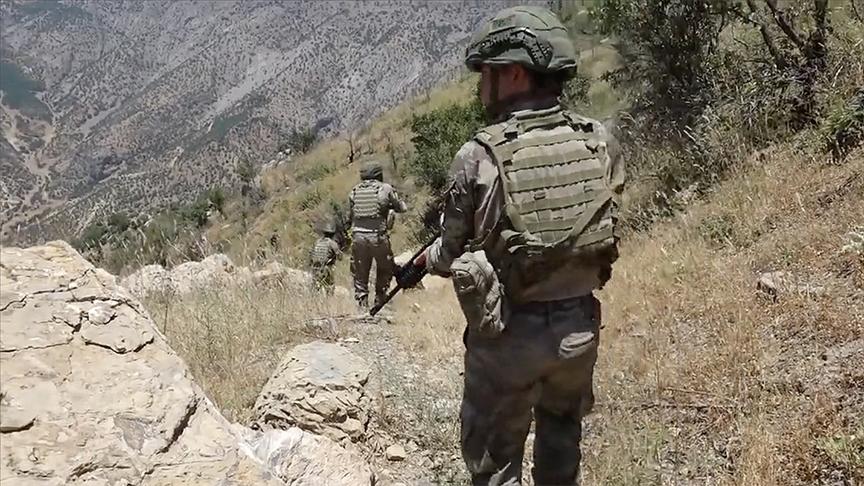
A View from the Claw-Lock Operation Area (AA)
The Claw series of operations conducted by the TAF in northern Iraq began on 27 May 2019 with Operation Claw-1, which targeted the Hakurk region. This was followed by expansions through Claw-2 and Claw-3. Subsequent operations included Claw-Lion (2020), Claw-Lightning and Claw-Thunder (2021).
Operation Claw-Lock is a continuation of these operations and aims to secure a 300-kilometer stretch along Türkiye’s northern border with Iraq and eliminate the presence of the PKK in areas it designates as its “Media Defense Zones.” In this context, the Zap, Metina and Avaşin-Basyan regions were designated as priority operational targets.
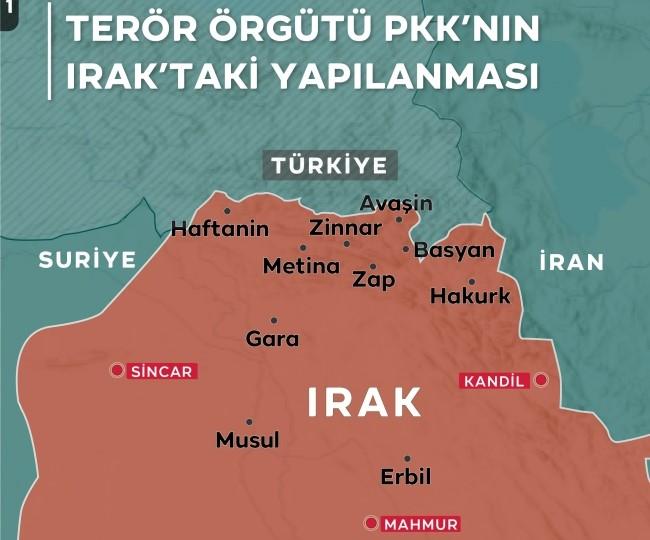
The PKK’s Infrastructure in Northern Iraq (TRT)
The primary objectives of Operation Claw-Lock are as follows:
Operation Claw-Lock commenced with intensive aerial bombardment by TAF air forces, followed by a multi-domain ground operation as ground units entered the area. During the operation, caves, shelters, weapons and ammunition depots were identified and rendered inoperable, and direct contact was established with PKK/KCK elements.
Despite challenging terrain and climatic conditions, the Turkish Armed Forces established forward operating bases to strengthen their permanent presence in the region. These bases were strategically positioned to control critical geographic chokepoints, particularly around the Zap Valley.
Footage from the Claw-Lock Operation (Ministry of National Defense of the Republic of Türkiye)
According to official statements by the Turkish Armed Forces, Operation Claw-Lock resulted in:
In addition, the National Intelligence Organization (MIT) conducted leadership decapitation operations that weakened the organization’s command and communication networks.
The operation was carried out in coordination with the Government of Iraq and the Kurdistan Regional Government (KRG). The establishment of long-term permanent bases by the TAF in the region has significantly reduced the operational space of the terrorist organization and diminished the cross-border terrorist threat. The losses suffered by the PKK in its “Media Defense Zones” have severely restricted its ability to move between Iraq, Syria and Türkiye.
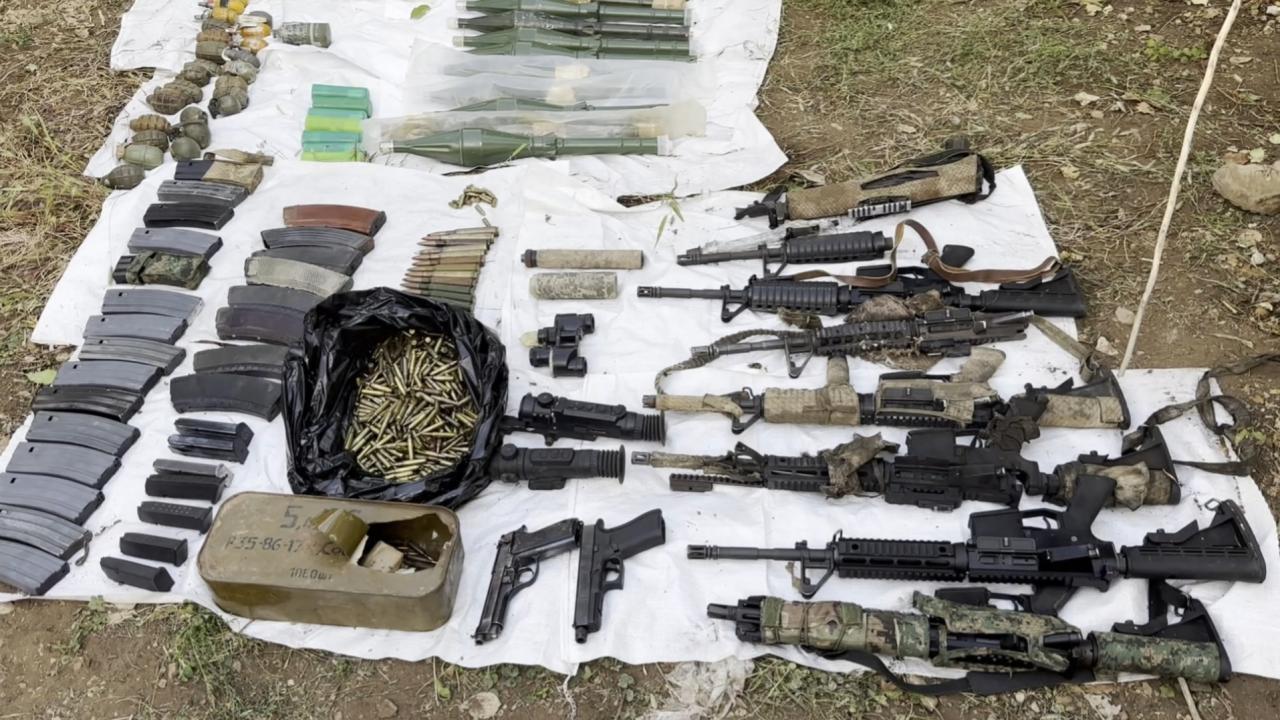
Weapons and Ammunition Seized During Operation Claw-Lock TRT)
During the operation, the PKK launched attacks against TAF forward operating bases. Some of these attacks exploited poor weather conditions and the use of populated areas as cover. In response, the TAF conducted punitive operations targeting the infrastructure and leadership assets of the organization.
In some of these attacks, weapons systems of U.S. origin, thermal and infrared detection systems, and advanced camouflage materials were identified among neutralized PKK members. A significant portion of these weapons is assessed to have been supplied to the YPG in Syria. The personnel and information exchange between the PKK and YPG is cited as the source of this weaponry and equipment.【2】
Türkiye conducts Operation Claw-Lock within the framework of the right to self-defense as defined in Article 51 of the United Nations Charter. The TAF’s activities in northern Iraq are aimed at safeguarding Türkiye’s border security, eliminating terrorist threats to civilians and preserving national security.
“Amaç ve Kapsam Bakımından Pençe Harekâtları.” TÜRKSAM. Accessed May 13, 2025.
“Pençe-Kilit Harekâtının Amacı ve Harekâtta Kullanılan Yöntemler.” SETA Vakfı,https://www.setav.org/video/pence-kilit-harekatinin-amaci-ve-harekatta-kullanilan-yontemler. Accessed May 13, 2025.
“Strategic Deadlock of the Terrorist Organization PKK in Northern Iraq.” SETA Vakfı. Accessed May 13, 2025.
[1]
Anadolu Ajansı, “Teröre Pençe-Kilit Darbesi,” AA, 29 Nisan 2022, https://www.aa.com.tr/tr/gundem/terore-pence-kilit-darbesi/2999666.
[2]
Can Acun, “Terör Örgütü PKK’nın Kuzey Irak’ta Stratejik Çıkmazı,” SETA Perspektif, 20 Nisan 2022, .

Claw-Lock Operation
Start Date | April 17, 2022 | ||||||||
|---|---|---|---|---|---|---|---|---|---|
General Strategy | It is implemented within the framework of Türkiye's adopted strategy after 2016 of 'Ensuring Security of Borders from a Distance and Eliminating Terrorism at Its Source' | ||||||||
No Discussion Added Yet
Start discussion for "Claw-Lock Operation" article
Background and Strategic Concept
Objectives
Execution
Outcomes of the Operation
Regional Implications
Threats and Responses to the Operation
International Law and Legitimacy