This article was automatically translated from the original Turkish version.
+1 More
Family | Lauraceae | ||||||||
|---|---|---|---|---|---|---|---|---|---|
Genus | Cinnamomum | ||||||||
Common Species | Cinnamomum Cassia (Chinese Cinnamon), Cinnamomum Zeylanicum (Ceylon Cinnamon) | ||||||||
Basic Component | Cinnamaldehyde | ||||||||
Characteristics | Antioxidant, Antidiabetic, Antimicrobial | ||||||||
Cinnamon (Cinnamomum species), a plant known for its aromatic and medicinal properties, belonging to the Lauraceae family. Typically obtained from its dried bark, cinnamon has been used for thousands of years in traditional medicine as a healing agent, in addition to its widespread use as a spice in cuisines around the world. The most commonly used varieties are Chinese Cinnamon (Cinnamomum cassia) and Ceylon Cinnamon (Cinnamomum zeylanicum), each containing distinct chemical components.
The use of cinnamon dates back to ancient civilizations in Mesopotamia, China, India, and Egypt. Known in China since around 2700 BCE, cinnamon was valued for its digestive and antiseptic properties. Ceylon cinnamon was cultivated in Sri Lanka by the Dutch in the 18th century. Today, cinnamon bark and oil are widely used in the food, cosmetic, pharmaceutical, and perfume industries.

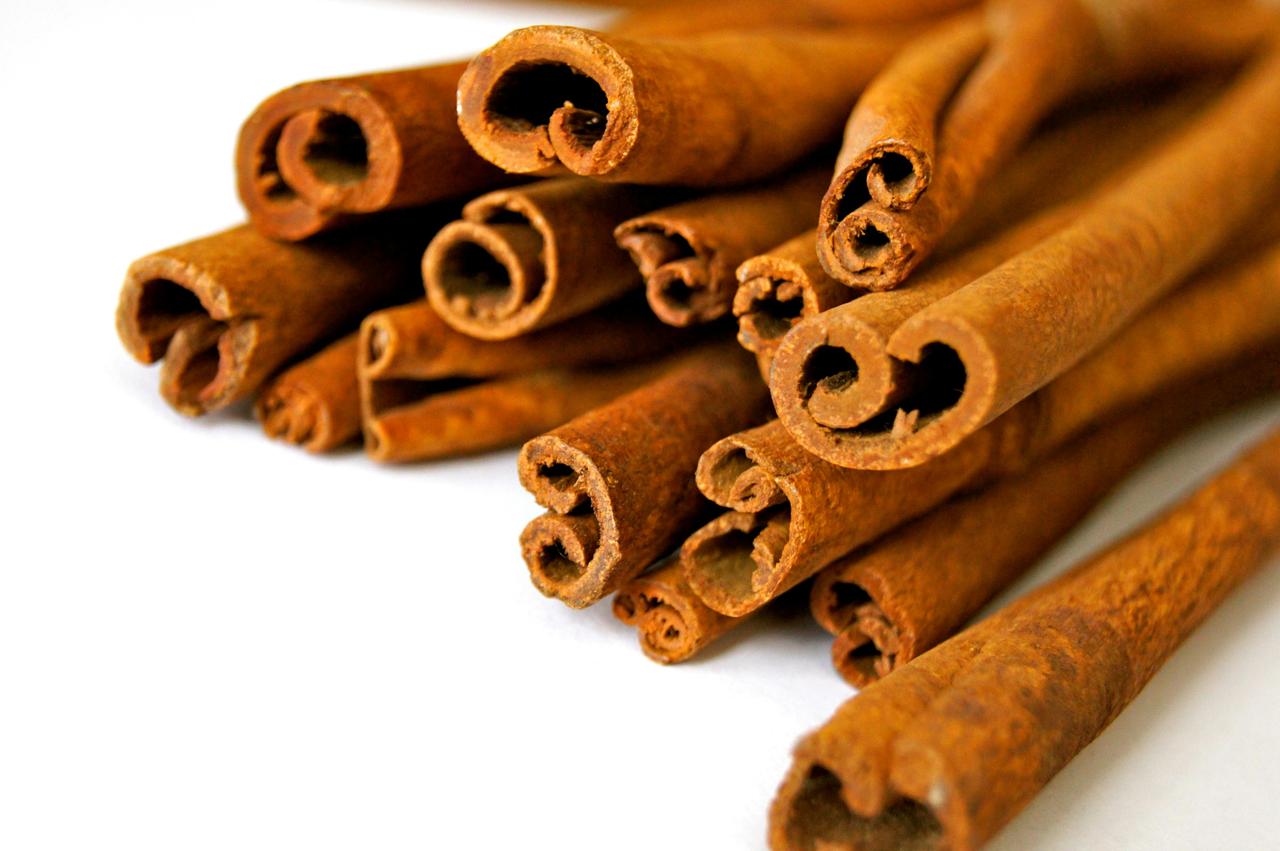
Cinnamon Sticks (Generated by Artificial Intelligence)
The main active compound in cinnamon is cinnamaldehyde. Other important components include eugenol, coumarin, proanthocyanidins, and volatile oils. These compounds confer antioxidant, anti-inflammatory, and antimicrobial properties to cinnamon. Additionally, cinnamaldehyde and eugenol found in cinnamon oil exhibit protective effects against infections and support cell regeneration.
Today, cinnamon is used as a natural preservative, sweetener, and pharmaceutical raw material. Thanks to new technologies and improved extraction methods, the active compounds of cinnamon can now be efficiently isolated. Modern analytical techniques such as hydrodistillation, supercritical CO2 extraction, and GC-MS like enable detailed analysis of these components.
Cinnamon has long held a place in both kitchens and medical practices throughout history. With its antioxidant, antimicrobial, and metabolic regulatory properties, it holds significant potential in modern medicine and the food industry. Research on cinnamon is contributing to the renewed interest in natural therapeutic approaches and a deeper understanding of its health effects.
Błaszczyk, Natalia, Angelina Rosiak, and Joanna Kałuzna-Czaplińska. "The Potential Role of Cinnamon in Human Health." *Forests* 12, no. 648 (2021).https://doi.org/10.3390/f12050648.
Gul, Shumaila, and Mahpara Safdar. "Proximate Composition and Mineral Analysis of Cinnamon." *Pakistan Journal of Nutrition*, no. 8 (9) (2009): 1456-1460.https://www.researchgate.net/publication/42973227_Proximate_Composition_and_Mineral_Analysis_of_Cinnamon
Gürson, Oğuzhan, and Gülbin Özçelikay. “Tarçın’ın Tarih Boyunca Ve Günümüzdeki Kullanımı Use of Cinnamon Throughout the History and Present”. *OTAM Ankara Üniversitesi Osmanlı Tarihi Araştırma Ve Uygulama Merkezi Dergisi* 18, no. 18 (January 2005): 171–83.https://doi.org/10.1501/OTAM_0000000388
Jakhetia, Vaibhavi, Rakesh Patel, Pankaj Khatri, Neeraj Pahuja, Sunil Garg, Anupriya Pandey, and Sonu Sharma. "Cinnamon: A Pharmacological Review." *Journal of Advanced Scientific Research* 1, no. 2 (2010): 19-23.https://sciensage.info/index.php/JASR/article/view/13
Pixabay. "Tarçın çubukları." Pexels. Accessed September 21, 2025.https://www.pexels.com/tr-tr/fotograf/tarcin-cubuklari-71128/

Family | Lauraceae | ||||||||
|---|---|---|---|---|---|---|---|---|---|
Genus | Cinnamomum | ||||||||
Common Species | Cinnamomum Cassia (Chinese Cinnamon), Cinnamomum Zeylanicum (Ceylon Cinnamon) | ||||||||
Basic Component | Cinnamaldehyde | ||||||||
Characteristics | Antioxidant, Antidiabetic, Antimicrobial | ||||||||
History and Uses
Chemical Composition
Effects on Health
Modern Applications