This article was automatically translated from the original Turkish version.
Subject(s) | Child Mental Health | ||||||||
|---|---|---|---|---|---|---|---|---|---|
Definition(s) | The ability to maintain psychological well-being and functioning in children and adolescents | ||||||||
Prevalence | Psychiatric disorders are observed at a rate of 9-21 percent. | ||||||||
Age Group | Childhood and adolescence (0-18) | ||||||||
Although I have arranged the bibliography in alphabetical order, it is still being disrupted; I would appreciate it if you could take this into account during your evaluation.
Child mental health is defined as the capacity of children and adolescents to achieve and maintain an optimal level of psychological well-being and to preserve their functioning. Mental disorders emerging during this period can negatively affect individual and social functioning by disrupting normal developmental processes.
The prevalence of psychiatric disorders during childhood and adolescence ranges approximately between 9% and 21%.【1】 These figures demonstrate that child mental health issues hold a significant place in public health. Moreover, a substantial proportion of lifetime psychiatric disorders are reported to originate during childhood and adolescence.
Child mental health is shaped by the interaction of biological, psychological, social, and cultural factors. The family structure, social environment, and cultural practices in which the child is embedded play a decisive role in this process. For example, the impact of certain cultural practices on child mental health can vary through social interpretations.
Childhood is a critical period during which the foundation of cognitive, emotional, and social development is laid. Mental problems emerging during this stage can affect not only current functioning but also future life stages. Therefore, early diagnosis and intervention are of great importance.
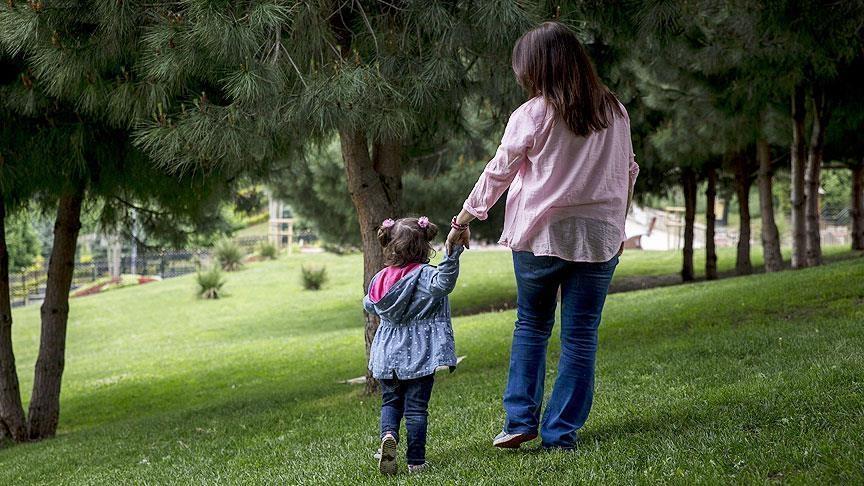
Mental Development(AA)
The diagnostic process in child and adolescent mental health involves various methodological challenges. Case definition, sample selection, and data collection and analysis are the primary sources of these difficulties. Structured and semi-structured interviews, along with various scales, are employed in diagnosis. These tools have been developed for both screening and diagnostic purposes.
In assessing child mental health, information obtained from parents, teachers, and the child themselves constitutes important data sources. However, consistency among these sources can be low, complicating the diagnostic process. In particular, self-reports from the child are often more decisive in cases of internalizing problems.
Some cultural practices to which children are exposed can have both positive and negative effects on mental health. These effects vary depending on how the practice is interpreted, the level of social support, and environmental factors.
Growing needs in child and adolescent mental health compel countries to develop policies in this area. Epidemiological data are accepted as the primary information source in formulating mental health policies. These policies play a crucial role in planning early detection, treatment, and prevention efforts.
Child mental health is a critical domain that forms the foundation of an individual’s lifelong psychological well-being. Early identification of problems during this period and appropriate interventions yield significant benefits at both individual and societal levels.
Accessed November 26, 2025. https://www.aa.com.tr/tr/kultur/ahlatta-acilan-kurslarla-geleneksel-tas-isciligi-yasatiliyor/3116279.
Dursun, Onur Burak, Taner Güvenir, and Aylin Özbek. "Çocuk Ergen Ruh Sağlığında Epidemiyolojik Çalışmalar: Yöntemsel Bir Bakış." Psikiyatride Güncel Yaklaşımlar 2, no. 3 (2010): 401–416. Accessed April 11, 2026.
Yavuz, Mesut, Türkay Demir, and Burak Doğangün. "Sünnetin Çocuk Ruh Sağlığı Üzerine Etkisi: Gözden Geçirme Çalışması." Türk Psikiyatri Dergisi 22 (2011). Accessed April 11, 2026.
https://depo.pegem.net/9786053186663.pdf
https://www.turkpsikiyatri.com/Data/UnpublishedArticles/78tba0.pdf
Çetinkaya, Bünyamin. Sağlıklı Aile Sağlıklı Çocuk: Çocuk Ruh Sağlığı. Ankara: Pegem Akademi, 2018. Accessed April 11, 2026.
[1]
Dursun, Onur Burak, Taner Güvenir and Aylin Özbek. “Epidemiological Studies in Child and Adolescent Mental Health: A Methodological Perspective.” Current Approaches in Psychiatry 2, no. 3 (2010): 401. Accessed 11 April 2026. https://dergipark.org.tr/en/download/article-file/115144

Subject(s) | Child Mental Health | ||||||||
|---|---|---|---|---|---|---|---|---|---|
Definition(s) | The ability to maintain psychological well-being and functioning in children and adolescents | ||||||||
Prevalence | Psychiatric disorders are observed at a rate of 9-21 percent. | ||||||||
Age Group | Childhood and adolescence (0-18) | ||||||||
No Discussion Added Yet
Start discussion for "Child Mental Health" article
Epidemiology and Prevalence
Factors Influencing Mental Health
Developmental Process and Mental Health
Assessment of Mental Disorders
Information Sources and Diagnostic Process
Impact of Cultural and Social Practices
Mental Health Policies and Their Importance