

`psychological-health` Related Article Results
 Ea
EaEating Disorders
Eating disorders are psychiatric conditions characterized by persistent and severe disturbances in eating behaviors together, along with distressing thoughts and emotions related to these behaviors. They can be serious enough to affect an individual’s physical, psychological and social functioning. These disorders are classified into various types, including anorexia nervosa, bulimia nervosa binge eating disorder avoidant/restrictive food intake disorder (ARFID) and other specified feeding or ea
EN
Esra Can

Child Mental Health
Although I have arranged the bibliography in alphabetical order, it is still being disrupted; I would appreciate it if you could take this into account during your evaluation. Child mental health is defined as the capacity of children and adolescents to achieve and maintain an optimal level of psychological well-being and to preserve their functioning. Mental disorders emerging during this period can negatively affect individual and social functioning by disrupting normal developmental processes
EN
Melisa Yıldırım
EaEating Disorders
Eating disorders are psychiatric illnesses characterised by severe and persistent disturbances in eating behaviour and disturbing thoughts and feelings related to this behaviour. Eating disorders can be so severe that they affect physical, psychological and social functioning. These disorders are divided into several types, including anorexia nervosa, bulimia nervosa, binge eating disorder, avoidant restrictive feeding disorder (ARFID), other specific feeding and eating disorders (OSFED), pica a
ENEsra Can
CaCarefree, Unbothered, Distressed
To avoid distress, do not fixate; to avoid fixating, do not care. Ideally, do not care at all; even if you do care, do not fixate. The path to distress begins with caring and continues with fixation. We must not care about certain things and must ignore them, so as to prevent the emergence of problems that could lead to distress. Even if problems have already arisen, to stop them from worsening, we must again refuse to care and refuse to fixate. In this way, we take the first step toward liberat
EN
Hilmi Onur Kaya
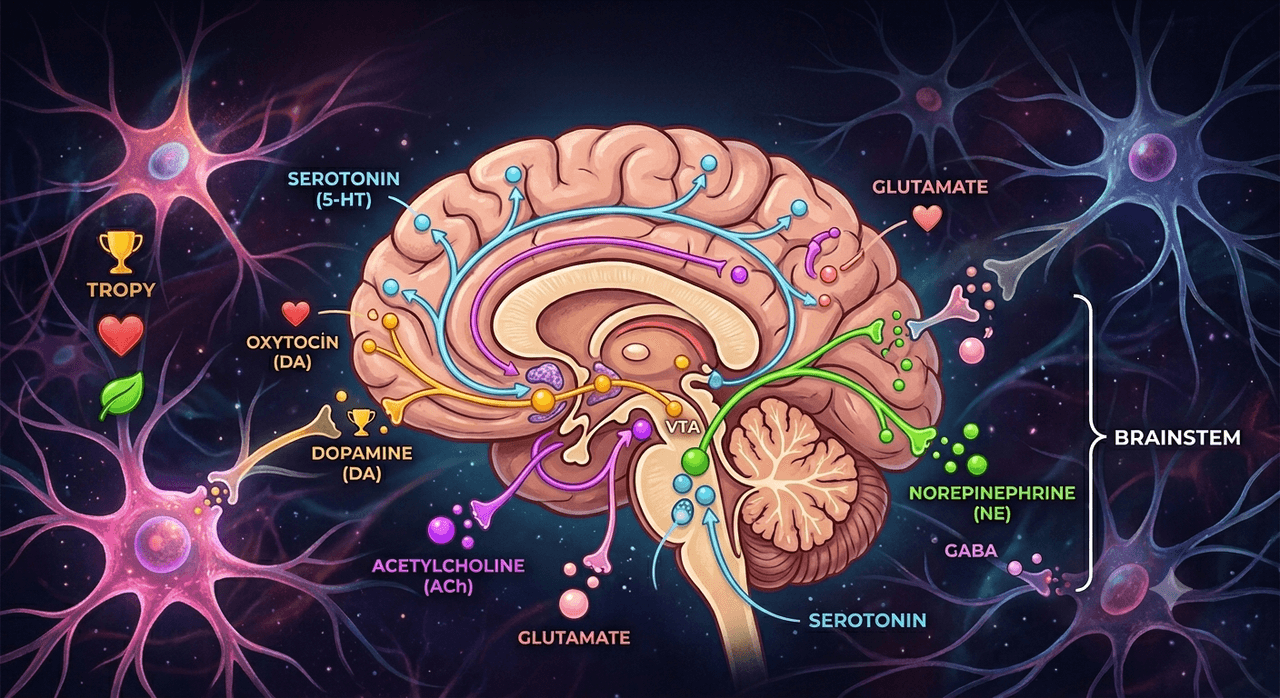
Why Do We Feel Happy, Sad, or in Love? The Role of Neurotransmitters
For much of our lives, we describe ourselves as being in various emotional states such as happy, sad, anxious, or in love. Often we notice that these emotions produce physical symptoms—for example, your heart racing the day before an important exam, or the physical pain you feel when you see the person you are in love with with someone else. Why do we experience these physical symptoms? What factors influence the formation and regulation of our emotions? The answer is not as simple as it may see
EN
Deva Yiğit