This article was automatically translated from the original Turkish version.
+1 More
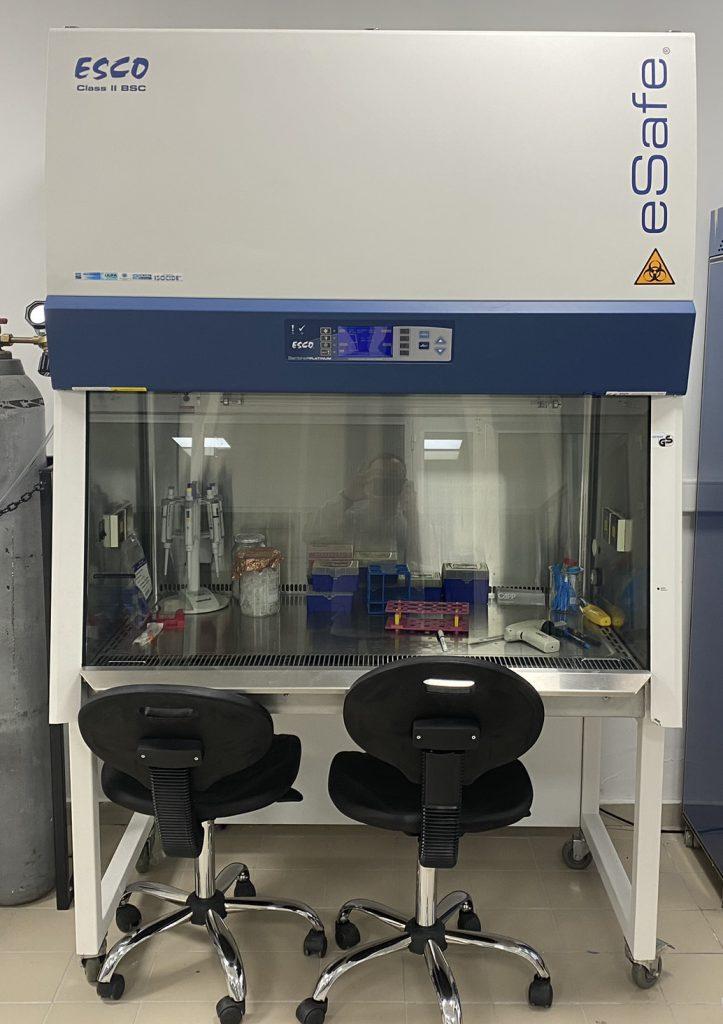
https://merkezlab.yildiz.edu.tr/hucre-kulturu-laboratuvari
Cell Culture
Definitions | Primary Culture, Continuous Cell Line, Culture Medium | ||||||||
|---|---|---|---|---|---|---|---|---|---|
Applications | Drug development Stem cell research Cancer biology Gene editing (CRISPR) | ||||||||
Advantage(s) | Reproducibility Cost-effectiveness High controllability | ||||||||
Cell culture is a fundamental laboratory technique at the heart of biological research, pharmaceutical development, and genetic engineering. It is based on the cultivation and proliferation of cells isolated from living organisms under controlled in vitro conditions. In biomedical applications, methods based on cell culture are reported to be used globally at a rate of 60%. This technique enables the isolation of cellular responses, genetic modifications, and the testing of novel therapeutic strategies.
The origins of cell culture techniques date back to 1907, when Ross Harrison successfully cultured neurons from a frog embryo. The establishment of the HeLa cell line in 1951 contributed to approximately 30% progress in cancer research and laid the foundation for modern cell culture methods. The widespread adoption of stem cell cultures in the 1980s enabled advances in regenerative medicine. Today, a wide variety of cell lines are developed using both animal and human cells.
Cell cultures are classified into three main categories:
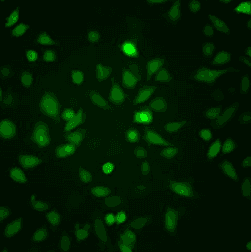
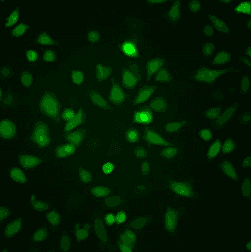
10X-Human Cervical Cancer GFP Fluorescence (2)
For cells to proliferate healthily, specific chemical and physical conditions must be maintained. Culture media are prepared to contain amino acids, vitamins, inorganic salts, glucose, serum (typically fetal bovine serum), antibiotics, and buffer systems. A typical culture is maintained at 37 °C, under 5% CO₂ concentration, and at a pH of 7.2–7.4. Sterility is ensured by working in laminar flow cabinets. In laboratories, contamination rates typically range between 1% and 5%, directly affecting the reliability of cultures.
Cell culture is used in a wide range of scientific and industrial applications:
Türkiye also has significant application areas. For example, Erciyes University’s GENKOK conducts intensive research on stem cell culture and gene therapy. Istanbul University’s Institute of Experimental Medicine works with continuous cell lines in the field of cancer biology.
Cell culture methods provide highly reproducible experiments and offer more cost-effective solutions compared to in vivo systems. However, their limitations cannot be ignored:
To overcome these limitations, three-dimensional (3D) cell culture systems are being developed, which enable more realistic modeling of cell behavior.
Ankara Üniversitesi. *Temel Araştırma Teknikleri - 1. ve 5. Hafta Ders Notları.* Accessed July 2, 2025. https://acikders.ankara.edu.tr/pluginfile.php/80060/mod_resource/content/0/Temel%20Ara%C5%9Ft%C4%B1rma%20Teknikleri-5.%20hafta.pdf
Bezmialem Vakıf Üniversitesi. "Hücre Kültürü." Accessed July 2, 2025. https://bezmialem.edu.tr/ilacarastirma/tr/Sayfalar/Hucre-Kulturu.aspx
Dergipark. "Hücre Kültürleri ve Uygulama Alanları." Accessed July 2, 2025. https://dergipark.org.tr/en/download/article-file/1761686
Dergipark. "Hücre Kültürlerinde Temel Kavramlar." Accessed July 2, 2025. https://dergipark.org.tr/tr/download/article-file/1060410
Erciyes Üniversitesi GENKOK. *Temel Hücre Kültürü Kursu Eğitim Kitapçığı.* 2024. Accessed July 2, 2025. https://genkok.erciyes.edu.tr/wp-content/uploads/2024/04/Temel-Hucre-Kulturu-Kursu-Egitim-Kitapcigi.pdf
Freshney, R. I. *Culture of Animal Cells: A Manual of Basic Technique and Specialized Applications.* 6th ed. Hoboken, NJ: Wiley-Blackwell, 2010. Accessed July 2, 2025. https://onlinelibrary.wiley.com/doi/book/10.1002/9780470649367
Istanbul University Experimental Medical Research Institute. "Hücre Kültürü Laboratuvarı." Accessed July 2, 2025. https://deneyseltip.istanbul.edu.tr/tr/content/birim-ve-merkezler/hucre-kulturu-laboratuvari
Millî Eğitim Bakanlığı (MEB). "Hücre Kültürü." MEGEP Modül Programı, 2022. Accessed July 2, 2025. https://megep.meb.gov.tr/mte_program_modul/moduller_pdf/H%C3%BCcre%20K%C3%BClt%C3%BCr%C3%BC.pdf
TÜBA Açık Course. "Konu 9: Hücre Kültürü." Accessed July 2, 2025. https://acikders.tuba.gov.tr/pluginfile.php/1104/mod_resource/content/0/konu9.pdf
Yıldız Teknik Üniversitesi. "Hücre Kültürü Laboratuvarı." *Merkez Araştırma Laboratuvarı Uygulama ve Araştırma Merkezi.* Accessed July 2, 2025. https://merkezlab.yildiz.edu.tr/hucre-kulturu-laboratuvari
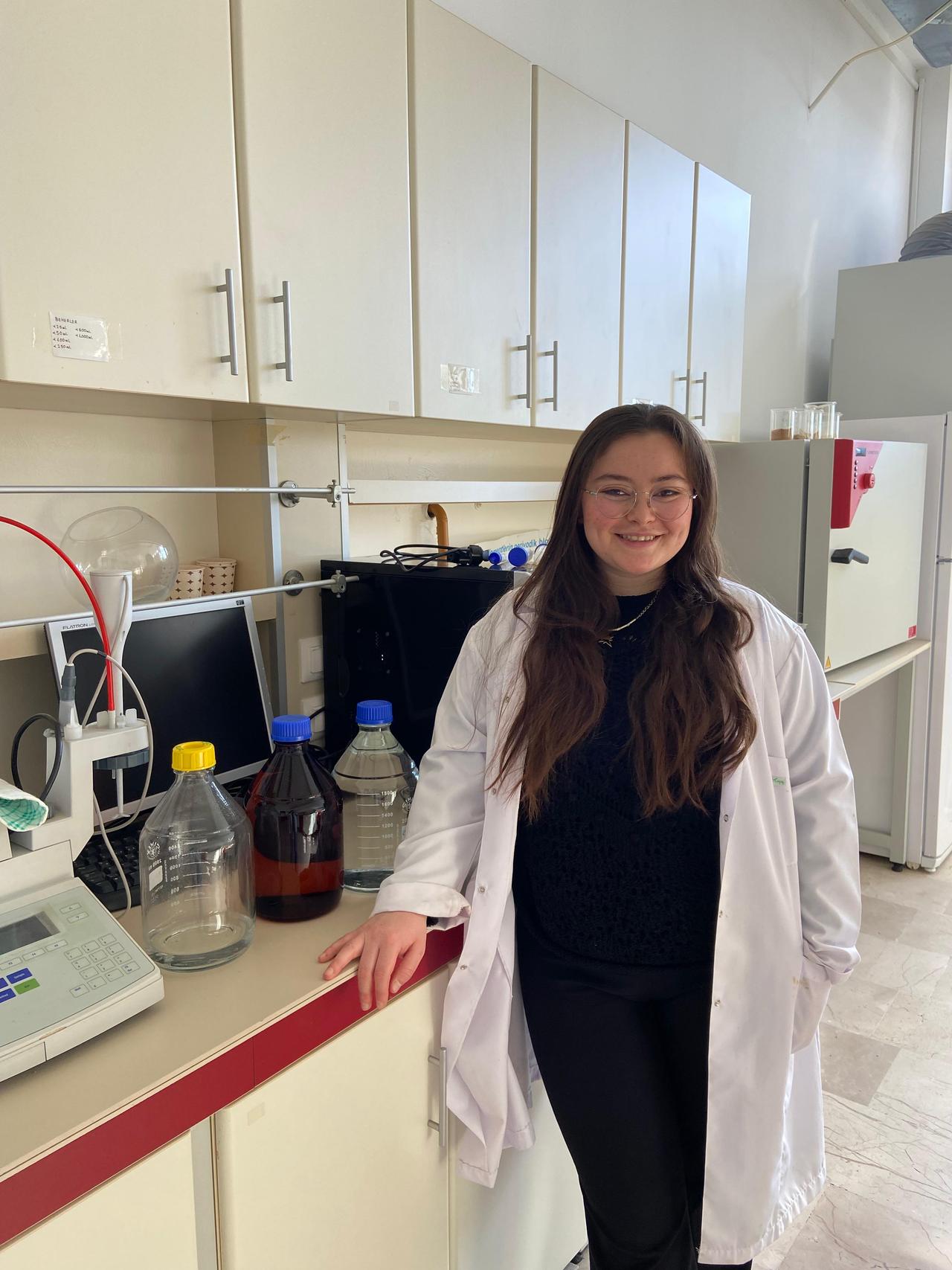
https://merkezlab.yildiz.edu.tr/hucre-kulturu-laboratuvari
Cell Culture
Definitions | Primary Culture, Continuous Cell Line, Culture Medium | ||||||||
|---|---|---|---|---|---|---|---|---|---|
Applications | Drug development Stem cell research Cancer biology Gene editing (CRISPR) | ||||||||
Advantage(s) | Reproducibility Cost-effectiveness High controllability | ||||||||
No Discussion Added Yet
Start discussion for "Cell Culture Science" article
History and Development
Types of Cell Culture
Culture Media and Conditions
Applications
Advantages and Limitations