Capybara
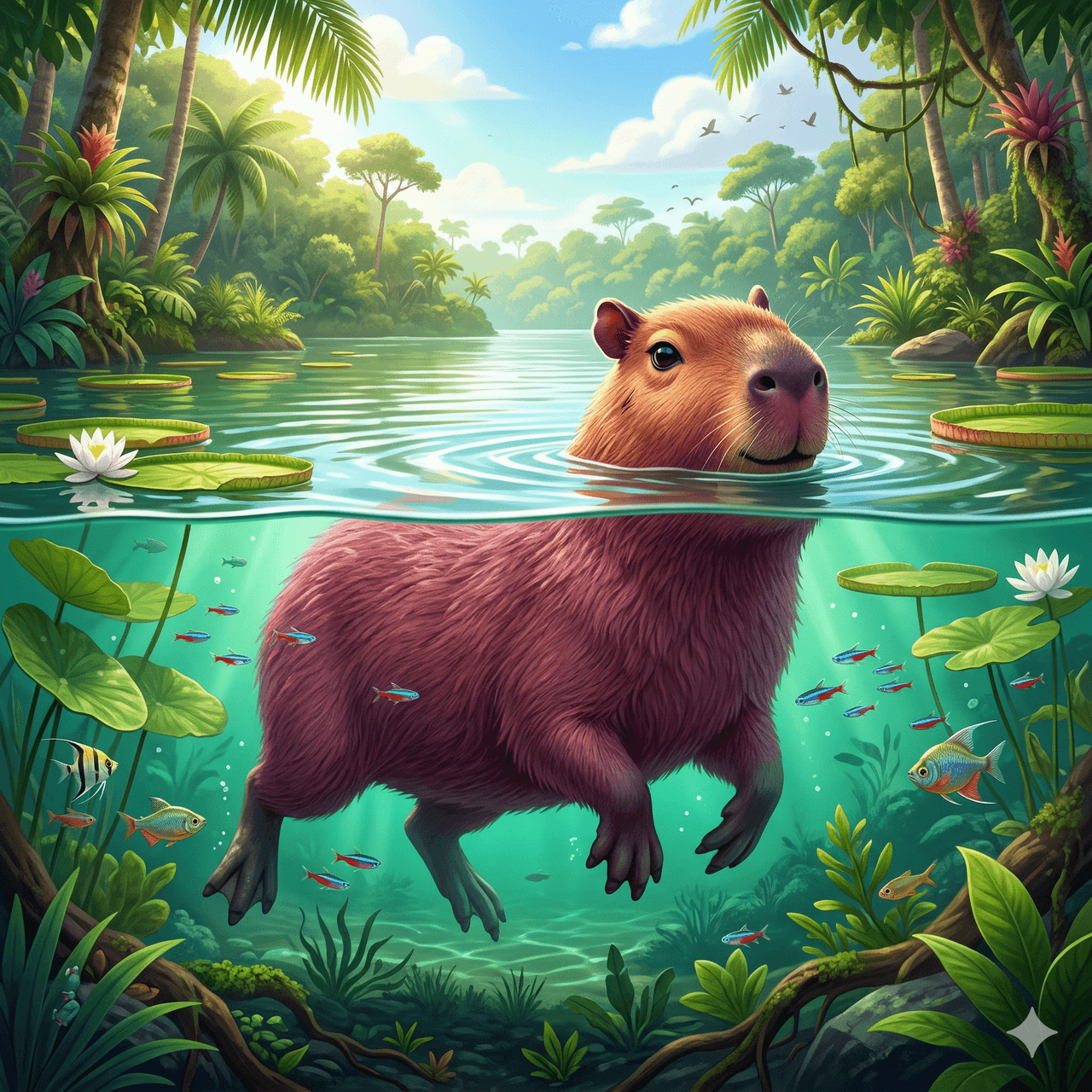
Capybara is a semi-aquatic animal known for its barrel-shaped body and charming face, and it is the largest living rodent in the world. Have you ever imagined an animal as large as nearly 1.3 meters long and weighing up to 79 kilograms? That is exactly what capybaras are, and they spend a large part of their day swimming. Let’s dive together into the delightful world of these cute and enormous creatures!
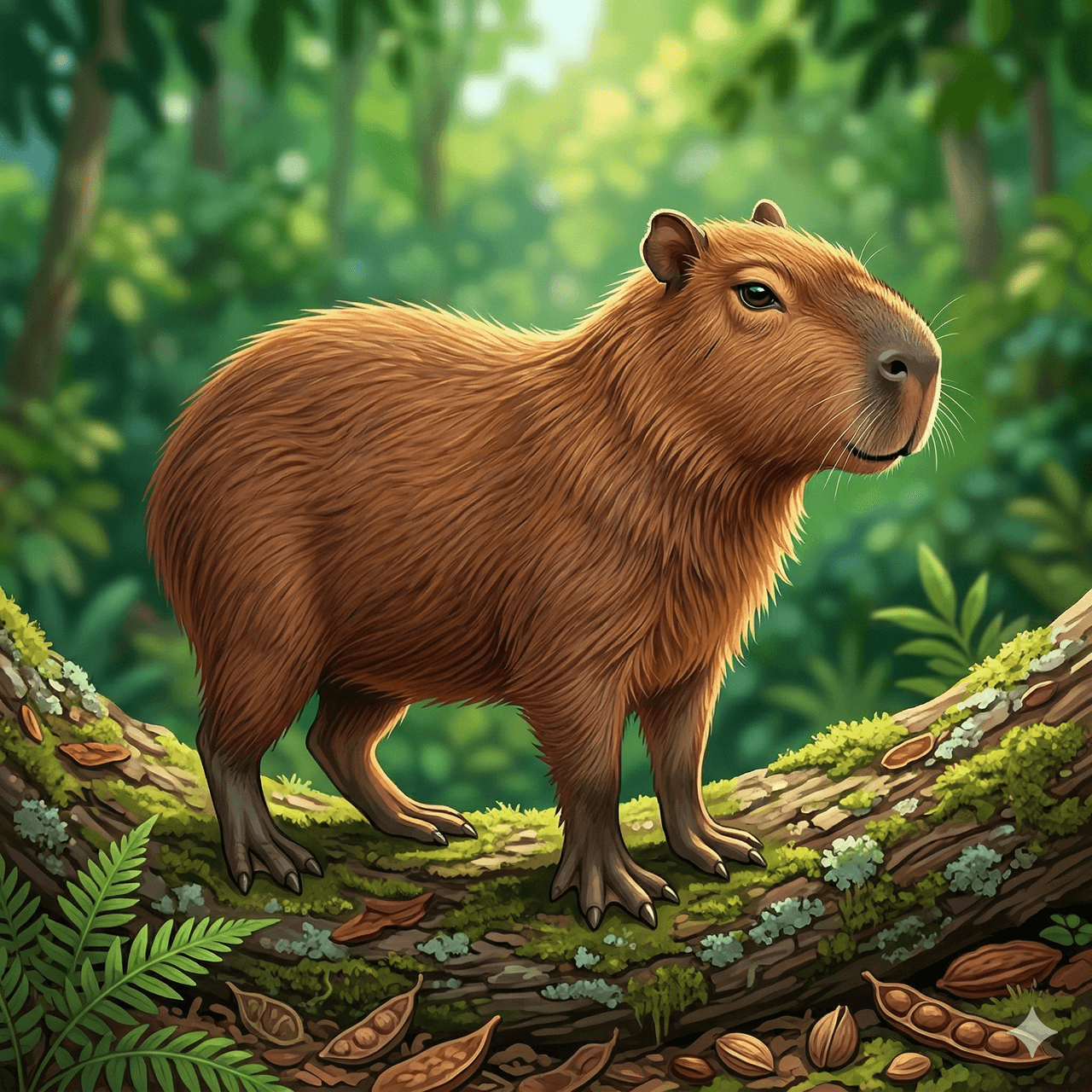
Capybara (Image Generated by Artificial Intelligence)
🌍 Where Do They Live and Why Do They Love Water?
Capybaras live in the warm regions of South America, along the edges of rivers, swamps, and lakes. Because their skin dries out easily, they must frequently enter the water to cool down and stay healthy. Their bodies are extremely robust, their hind legs are slightly longer than their front legs, and they have no tail at all.
There are two key secrets that make them such excellent swimmers. First, their toes are webbed like those of ducks. Second, their eyes, ears, and nostrils are positioned at the very top of their heads, just like those of hippopotamuses. This allows them to see their surroundings and breathe easily while their entire body remains submerged.
🥗 What Do They Eat?
Capybaras are entirely herbivorous, meaning they feed exclusively on plants. Their diet includes fresh grasses, aquatic plants, and sometimes delicious treats like melons and squash. An adult capybara can consume between 2.5 and 3.5 kilograms of fresh grass each day! They use their continuously growing large incisors to tear vegetation and chew their food side to side, much like camels.
Now for the surprising secret! To digest the tough grasses they eat, capybaras eat their own feces every morning. This may sound strange, but the beneficial bacteria in their droppings help their stomachs break down these difficult fibers much more easily.

Capybara and Her Young (Image Generated by Artificial Intelligence)
👨👩👧👦 Social and Noisy Herds
These animals hate being alone. They typically live in groups of 10 to 30 individuals, and during the rainy season, these groups can grow to as many as 40. Living in herds protects them from wild predators such as jaguars and anacondas. When danger strikes, they quickly leap into the water and can hold their breath for up to five minutes while hiding underwater.
Capybaras communicate with each other using a wide range of sounds including barks, whistles, chirps, and purrs. They love talking to one another so much that especially the tiny pups make noise almost nonstop.

Capybara Herd (Image Generated by Artificial Intelligence)
⏳ A Journey Through Time
Did you know that the extinct relatives of today’s capybaras, which lived millions of years ago, were twice as long and eight times heavier? In the past, there were far larger rodents roaming the Earth!