This article was automatically translated from the original Turkish version.
Alternative Name | Kantara Bridge Clandras Bridge Clandras Aqueduct | ||||||||
|---|---|---|---|---|---|---|---|---|---|
Type | Stone bridge / Water structure | ||||||||
Location | Karahallı district, Uşak province | ||||||||
River It Crosses | Banaz Creek | ||||||||
Dating | Ancient period (Roman era) | ||||||||
Construction Material | Cut stone | ||||||||
Architectural Feature | Single-arch structure | ||||||||
Protection Status | Has been evaluated as a cultural asset | ||||||||
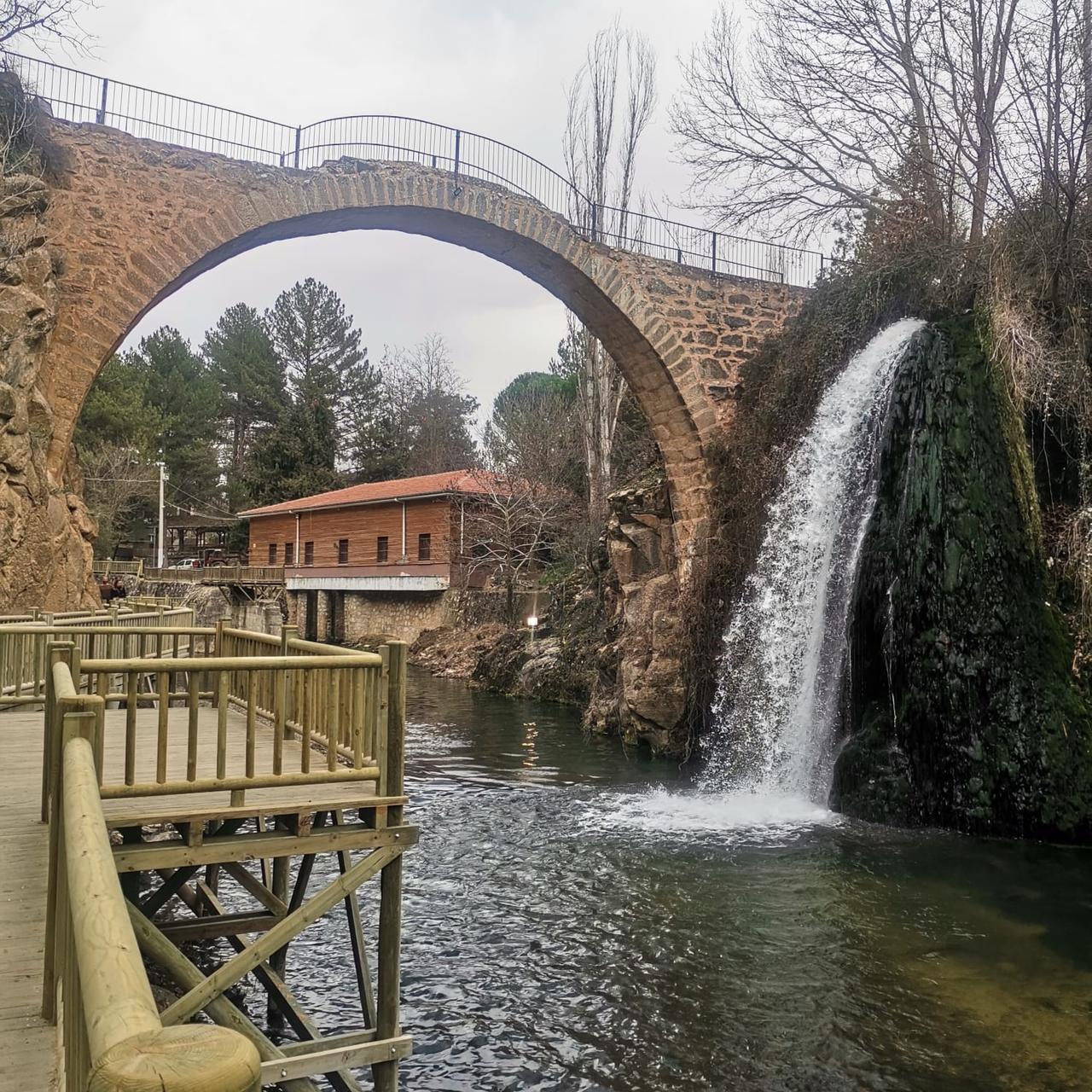
Çandır Köprüsü is a historical stone bridge located within the boundaries of the Karahallı district of Uşak province in Türkiye, spanning the Banaz Çayı. The structure is also referred to on various official and local administrative platforms as Clandras Köprüsü. 【1】 Today, the bridge is known as Çandır Köprüsü in connection with the nearby settlement. The bridge is among the historical infrastructure elements of the region.
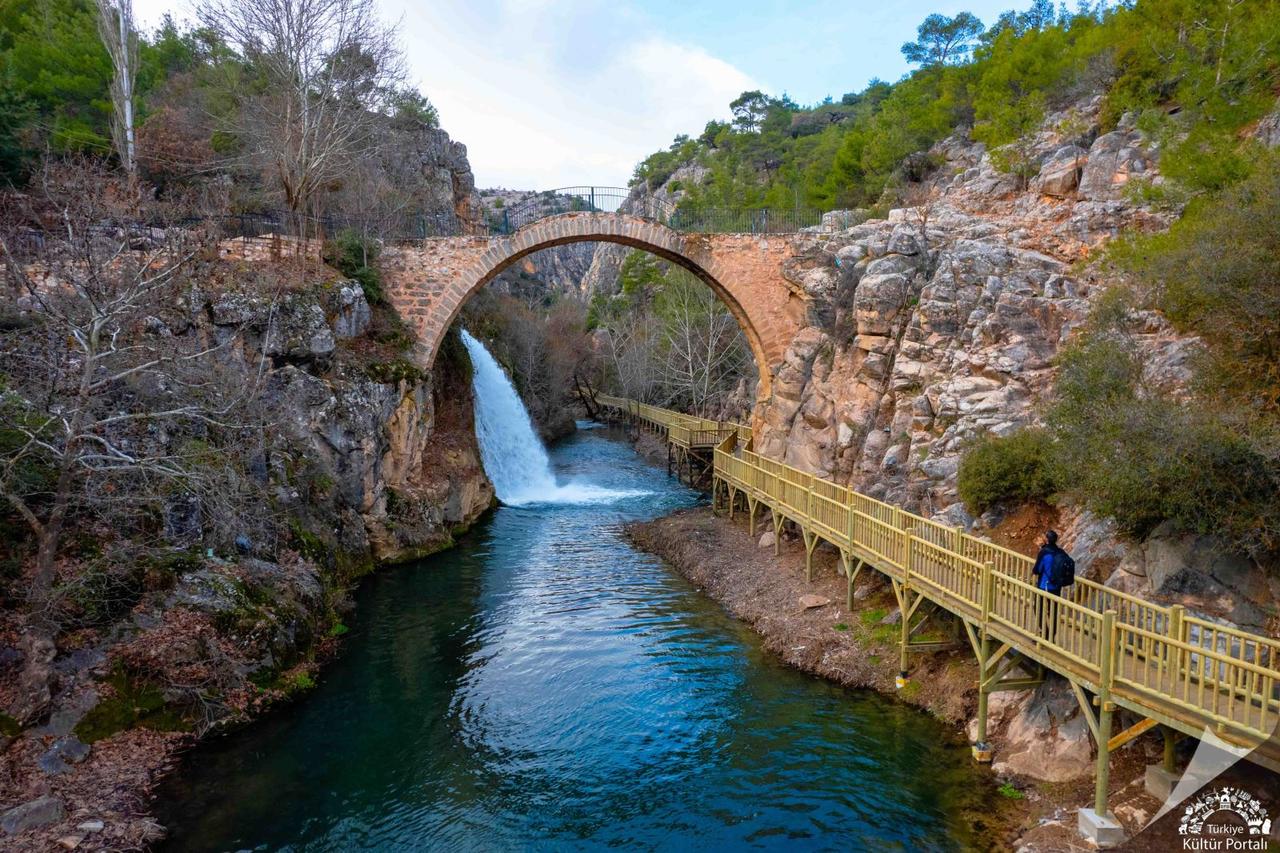
Çandır Köprüsü - (Kültür Portalı)
The bridge is situated near the settlement of Çandır in the Karahallı district, located southwest of the city center of Uşak. It was constructed over a narrow and rocky section of the Banaz Çayı. The area where the structure stands features a natural topography with valley characteristics. The bridge occupies a location that is evaluated in conjunction with its natural surroundings.
Çandır Köprüsü dates back to antiquity. It is associated with the Phrygian and Roman periods. 【2】 Throughout history, the bridge has persisted as part of the regional transportation and infrastructure systems. It is understood to have undergone repairs in various periods. Due to its long-term use, the structure remains a continuous architectural element within the regional historical context.
Çandır Köprüsü is a single-arch structure built using cut stone. The arch is designed to align with the flow of the Banaz Çayı. The piers of the structure are founded directly on natural bedrock. This feature forms one of the fundamental elements of the bridge’s load-bearing system. In terms of its overall form, the bridge exhibits architectural similarities with ancient stone bridges.
Historically, it served as a crossing structure. At the same time, on certain platforms, it is described as an element associated with water conveyance systems. This indicates that the bridge was not only considered for transportation but also within the broader context of infrastructure. The structure was used to serve the needs of nearby settlements.
Çandır Köprüsü is one of the historical structures evaluated under cultural heritage. The structure has been formally identified and registered on official administrative and cultural platforms. Today, the bridge is recognized as a historical monument requiring preservation alongside its natural environment. Its current condition is being addressed within the framework of cultural heritage management.
T.C. Ministry of Culture and Tourism. "Clandras (Çandır) Köprüsü."Türkiye Kültür Portal. Accessed December 24, 2025.
T.C.Karahallı Kaymakamlığı Governorship. "Clandras Köprüsü." Karahallı District Governorship Official Website. Accessed December 24, 2025.
T.C.Uşak Valiliği. "Clandras Köprüsü." Uşak Governorship Official Website. Accessed December 24, 2025.
Uşak Belediyesi. "Clandras Köprüsü." Uşak Municipality Official Website. Accessed December 24, 2025.
[1]
T.C. Kültür ve Turizm Bakanlığı. “Clandras (Çandır) Köprüsü.” Türkiye Kültür Portalı. Erişim tarihi: 24 Aralık 2025. https://www.kulturportali.gov.tr/turkiye/usak/gezilecekyer/cilandiras--koprusu
[2]
T.C. Kültür ve Turizm Bakanlığı. “Clandras (Çandır) Köprüsü.” Türkiye Kültür Portalı. Erişim tarihi: 24 Aralık 2025. https://www.kulturportali.gov.tr/turkiye/usak/gezilecekyer/cilandiras--koprusu

Alternative Name | Kantara Bridge Clandras Bridge Clandras Aqueduct | ||||||||
|---|---|---|---|---|---|---|---|---|---|
Type | Stone bridge / Water structure | ||||||||
Location | Karahallı district, Uşak province | ||||||||
River It Crosses | Banaz Creek | ||||||||
Dating | Ancient period (Roman era) | ||||||||
Construction Material | Cut stone | ||||||||
Architectural Feature | Single-arch structure | ||||||||
Protection Status | Has been evaluated as a cultural asset | ||||||||
Geographical Location
History
Architectural Features
Function and Use
Conservation Status