


This article was automatically translated from the original Turkish version.
+2 More
Location | Çimenlik Sk. 17100 Merkez/Çanakkale Fevzipaşa Mahallesi Yalı Caddesi | ||||||||
|---|---|---|---|---|---|---|---|---|---|
Establishment and Registration | It was established on March 18, 1982, under the name 'Military Museum Directorate' It was registered as a 'First-Class Military Museum' in 2002 | ||||||||
Total Area | It is built on a 2-dönüm plot of land | ||||||||
Visitor Statistics | The museum has an annual average visitor capacity of 450,000 | ||||||||
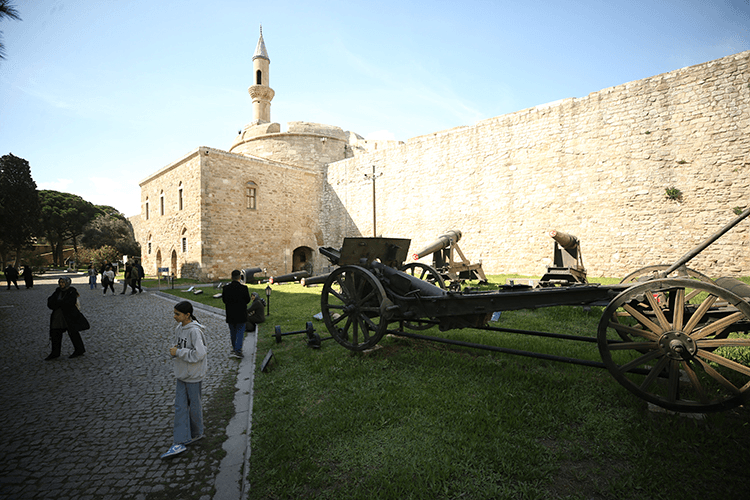
Çanakkale Naval Museum is a first-class military museum located on a 72-dönüm site in the center of Çanakkale. It encompasses the Çimenlik Kalesi, constructed between 1462 and 1463, and has been operating as a military museum since 1982, displaying artifacts related to Turkish naval history through scientific methods.【1】
Çanakkale Deniz Müzesi (Anadolu Ajansı)
Çimenlik Kalesi (Kala-i Sultaniye), one of the museum’s main components, was commissioned by Fatih Sultan Mehmet in 1462–1463 to defend Istanbul at the narrowest point of the strait. The structure underwent various renovations over time and was opened to the public on 18 March 1982 under the name "Military Museum Directorate." In 2002, the museum was officially registered as a "first-class military museum." Following a comprehensive renovation process that began after 2000, the museum was restructured using modern museological techniques and thematic exhibition layouts.【2】
The museum complex consists of four main sections: the entrance area, buildings reflecting early Republican-era architecture, Çimenlik Kalesi (inner fortress), the Nusret Minelayer, and the garden. The three-story building on the right side of the entrance was constructed in 1927 and bears inscriptions reading "Müteahhit Nafiz Nuri Mühendis 1927" and "Mimar Arif Süleyman 1927." After serving historically as the Command of the Fortified Position, the Command of Naval Units, and military quarters, this building was converted into exhibition space.【3】
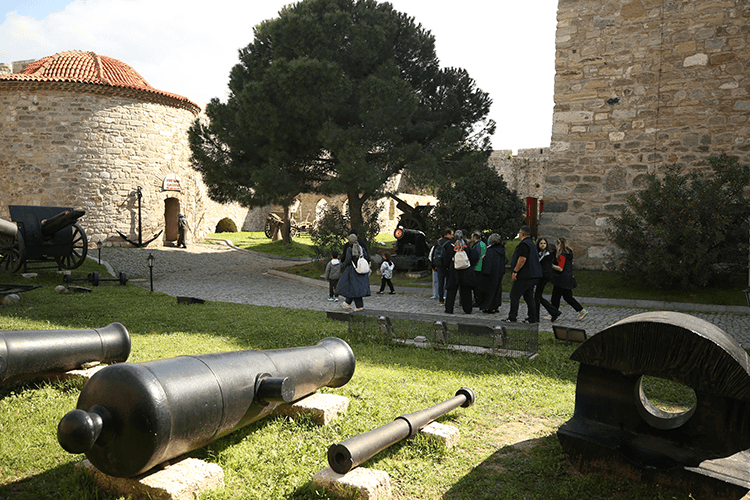
The museum’s inventory was assembled through surface surveys conducted on battlefields, artifacts collected from villages, and donations. Exhibition units feature artifacts related to Turkish naval history, Turkish naval commanders, the Çanakkale Naval Victory, and the Republican-era navy.
On the second floor of Çimenlik Kalesi, the stages of Turkish naval development are presented, from Emir Çaka Bey’s founding of the first Turkish fleet in 1081 to the proclamation of the Republic. A dedicated hall within the museum honors Kaptan-ı Derya Barbaros Hayrettin Paşa. Additionally, the Binbaşı Nazmi Bey Painting and Exhibition Hall, constructed in 1927, hosts thematic exhibitions on the "Republican Navy." On the second floor of this building, a collection of 97 paintings by Lieutenant Colonel Mehmet Ali Laga, who served as a war artist at the Çanakkale Fortified Position between 1914 and 1918, is displayed.【4】
Çanakkale Deniz Müzesi (Anadolu Ajansı)
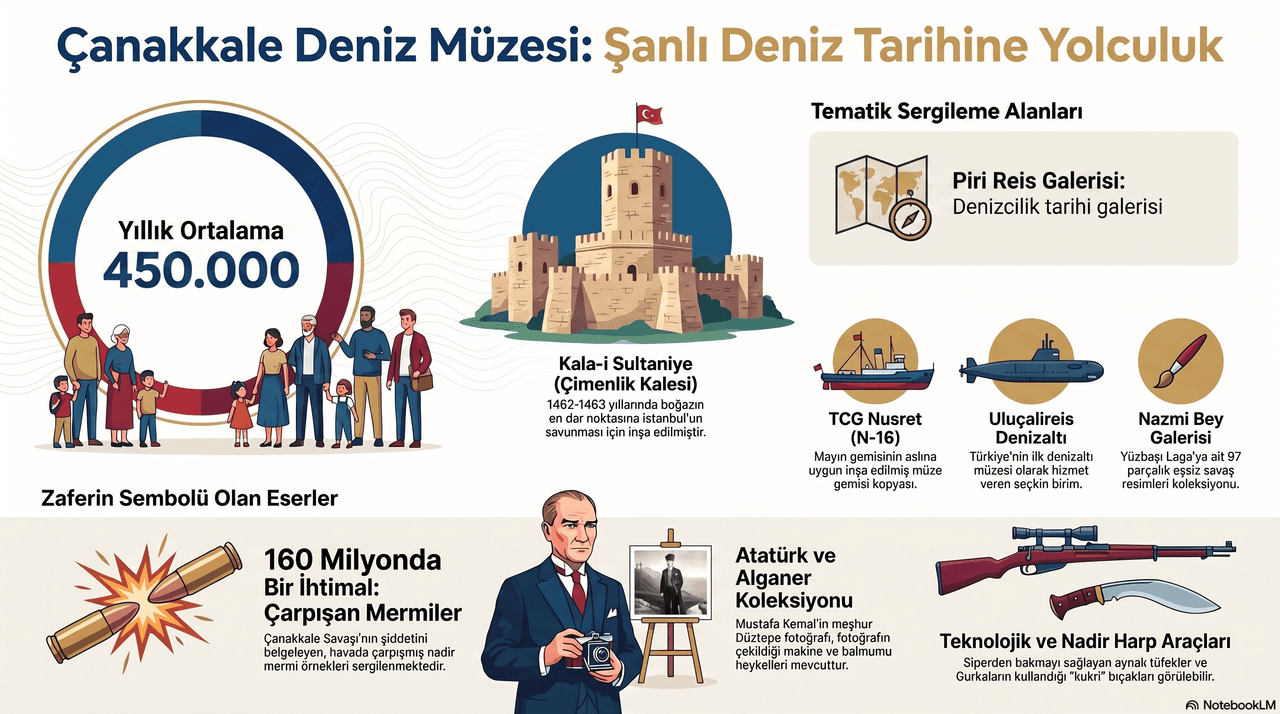
The museum displays specific objects of high historical value:
Çanakkale Deniz Müzesi İnfografik (Görsel Yapay Zeka ile Oluşturulmuştur)
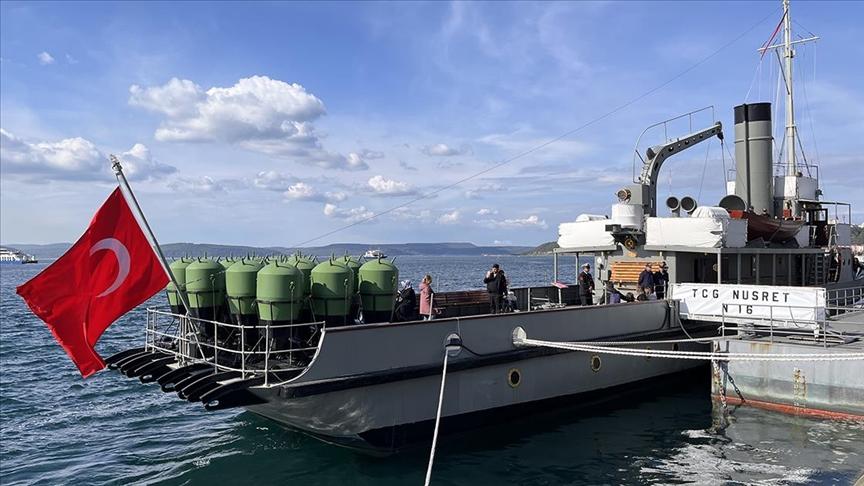
Symbolic elements of Turkish maritime history are displayed in the museum’s open-air exhibition areas. To honor the heroic Nusret Minelayer, the TCG Nusret (N-16), constructed between 2009 and 2010 at the Gölcük Naval Shipyard, is one of the museum’s key exhibits. Additionally, the Uluçalireis Submarine, Türkiye’s first submarine museum, along with Mustafa Kemal Atatürk’s Acar Botu and Kartal İstimbotu, are floating exhibits within the museum complex.【6】
The museum complex provides social amenities for visitors, including restrooms, a café, and a gift shop. The institution organizes concerts, exhibitions, lectures, and educational programs for children. With an annual capacity to accommodate approximately 450,000 visitors, the museum is located in close proximity to the Çanakkale Anatolian Hamidiye Battery and the Çanakkale War History Museum in the Marmara region.【7】
[1]
TRT Avaz. "Çanakkale Deniz Müzesi, yenilenen envanteriyle ziyaretçilerini zamanda yolculuğa çıkarıyor." Erişim Tarihi 10 Haziran 2026. https://www.trtavaz.com.tr/haber/tur/turkistandan/canakkale-deniz-muzesi-yenilenen-envanteriyle-ziyaretcilerini-zamanda-yolculuga/65f6e726823fa11f14cb0a87
[2]
TRT Avaz. "Çanakkale Deniz Müzesi, yenilenen envanteriyle ziyaretçilerini zamanda yolculuğa çıkarıyor." Erişim Tarihi 10 Haziran 2026. https://www.trtavaz.com.tr/haber/tur/turkistandan/canakkale-deniz-muzesi-yenilenen-envanteriyle-ziyaretcilerini-zamanda-yolculuga/65f6e726823fa11f14cb0a87
[3]
Türkiye Kültür Portalı. "Çanakkale Deniz Müzesi - Çanakkale." Erişim Tarihi 10 Haziran 2026. https://kulturportali.gov.tr/turkiye/canakkale/gezilecekyer/canakkale-deniz-muzesi
[4]
TRT Avaz. "Çanakkale Deniz Müzesi, yenilenen envanteriyle ziyaretçilerini zamanda yolculuğa çıkarıyor." Erişim Tarihi 10 Haziran 2026. https://www.trtavaz.com.tr/haber/tur/turkistandan/canakkale-deniz-muzesi-yenilenen-envanteriyle-ziyaretcilerini-zamanda-yolculuga/65f6e726823fa11f14cb0a87
[5]
TRT Avaz. "Çanakkale Deniz Müzesi, yenilenen envanteriyle ziyaretçilerini zamanda yolculuğa çıkarıyor." Erişim Tarihi 10 Haziran 2026. https://www.trtavaz.com.tr/haber/tur/turkistandan/canakkale-deniz-muzesi-yenilenen-envanteriyle-ziyaretcilerini-zamanda-yolculuga/65f6e726823fa11f14cb0a87
[6]
TRT Avaz. "Çanakkale Deniz Müzesi, yenilenen envanteriyle ziyaretçilerini zamanda yolculuğa çıkarıyor." Erişim Tarihi 10 Haziran 2026. https://www.trtavaz.com.tr/haber/tur/turkistandan/canakkale-deniz-muzesi-yenilenen-envanteriyle-ziyaretcilerini-zamanda-yolculuga/65f6e726823fa11f14cb0a87
[7]
Turkısh Museums. "Çanakkale Deniz Müzesi." Erişim Tarihi 11 Haziran 2026. https://www.turkishmuseums.com/museum/detail/22316-canakkale-deniz-muzesi/22316/1

Location | Çimenlik Sk. 17100 Merkez/Çanakkale Fevzipaşa Mahallesi Yalı Caddesi | ||||||||
|---|---|---|---|---|---|---|---|---|---|
Establishment and Registration | It was established on March 18, 1982, under the name 'Military Museum Directorate' It was registered as a 'First-Class Military Museum' in 2002 | ||||||||
Total Area | It is built on a 2-dönüm plot of land | ||||||||
Visitor Statistics | The museum has an annual average visitor capacity of 450,000 | ||||||||
No Discussion Added Yet
Start discussion for "Çanakkale Naval Museum" article
History and Administrative Structure
Location and Architectural Features
Exhibition Areas and Content
Important Artifacts and Objects
Ships and Submarine Museum Units
Social Facilities