This article was automatically translated from the original Turkish version.
+1 More
Architectural Style(s) | Classical Ottoman architecture | ||||||||
|---|---|---|---|---|---|---|---|---|---|
Building Materials | stone, wood, tile | ||||||||
Architectural Plan | Rectangular plan | ||||||||
Year of Construction | 1915 | ||||||||
Location | Uluborlu/Isparta | ||||||||
Patron | Alemdar Pasha | ||||||||
Architect(s) | Mustafa Mashar Bey Hacı İzzet Pasha family | ||||||||
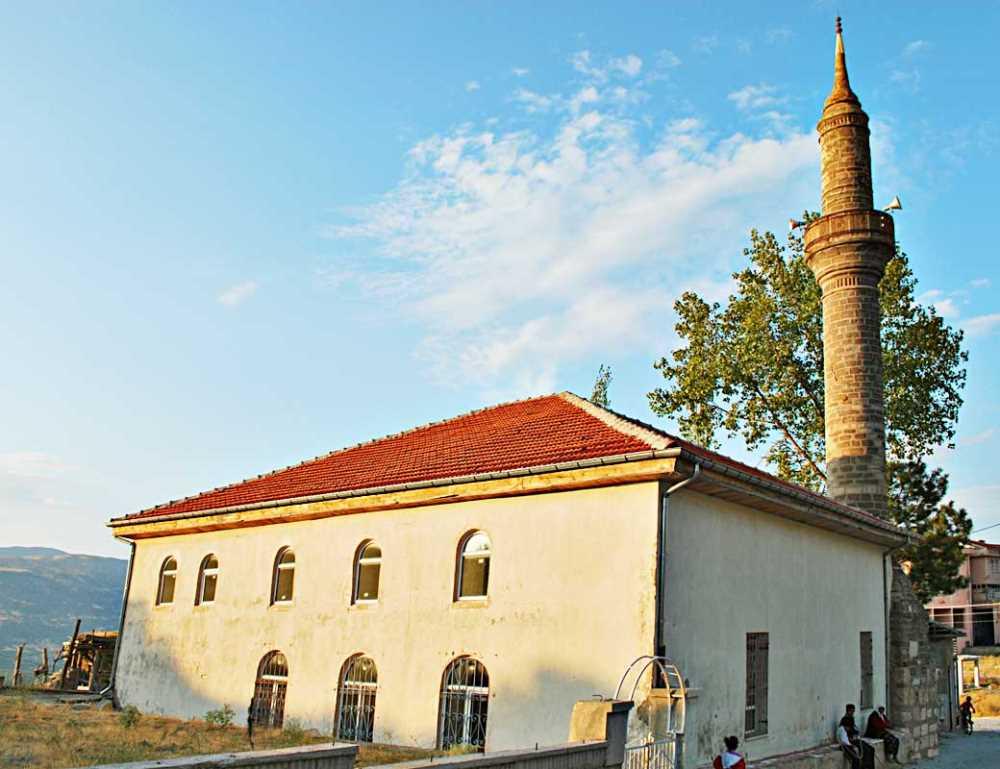
Located in the Uluborlu district of Isparta, the Bülbül (Alemdar) Camii is an Ottoman-period structure believed to have been constructed in the 16th century. It features a rectangular plan and a barrel-vaulted roof.
The Bülbül (Alemdar) Camii is situated within the boundaries of the Eski Kasaba locality in the Uluborlu district of Isparta province and is one of the representative examples of Ottoman religious architecture in the region. The building is currently owned by the General Directorate of Foundations and was registered as a second-degree monument by a council decision dated 07.09.1988. The popular name “Bülbül Camii” derives from the historical practice of selecting muezzins with particularly beautiful voices, in reference to the melodic quality of their calls.
Although the exact construction date of the mosque is unknown, its architectural features and material evidence suggest it was built in the 16th century. Over its historical course, the structure has undergone various repairs; while its main fabric has been preserved, the minaret and certain sections have been altered. In H. 1331 / M. 1915, the mosque underwent extensive restoration. During this period, while World War I was ongoing, the minaret was rebuilt under the direction of Mustafa Mashar Bey, then Head of the Military Branch. Records indicate that previously, at the same location, a minaret had been constructed by the Hacı İzzet Paşa family.
The mosque has a rectangular plan and a barrel-vaulted roof. The building is two stories high, with the upper level situated on the northern side. Originally, the entrance to the women’s gallery was from outside, but during later renovations, this entrance was sealed and the gallery was incorporated into the interior space.
The minaret, rising from the southeast corner of the structure, has a rectangular base and a cylindrical shaft. It was constructed using köfke stone, a material easily worked, and its top is designed in the shape of a conical cap. The restoration inscription on the minaret reads as follows:
“All that exists in the world is renewed through existence; what grace is this, that in this era, the beautiful name rises to the heavens as a pleasing work of God, inscribed with the name of Allah, described as divine. A pure date has come, its essence perfect; who made it flawless?”【1】
The mosque’s courtyard is located on the eastern side and is accessed through a round-arched gate. A significant quantity of reused materials was employed in the construction of the courtyard walls. Among these materials, ancient gravestones and Greek inscriptions have been identified. Adjacent to the northern wall of the mosque stands a ruin. The structure was once part of a larger religious complex that included zaviyes.
Isparta İl Kültür ve Turizm Müdürlüğü. "Camiler." Accessed April 23, 2026. https://isparta.ktb.gov.tr/TR-70964/camiler.html
T.C. Kültür ve Turizm Bakanlığı. “Bülbül (Alemdar) Camii.” Kültür Portalı. Accessed April 23, 2026. https://www.kulturportali.gov.tr/turkiye/isparta/kulturenvanteri/bulbul-alemdar-camii
Şentürk, Ayşegül, and Muzaffer Duran, ed. Tarihi, Mimarisi ve Sosyo-Kültürel Özellikleriyle Isparta. Ankara: Azim Matbaacılık, 2022. Accessed April 23, 2026. https://w3.sdu.edu.tr/SDU_Files/kitaplar/isparta-kitabi.pdf
[1]
T.C. Kültür ve Turizm Bakanlığı, “Bülbül (Alemdar) Camii,” Kültür Portalı, accessed 23 April 2026, https://www.kulturportali.gov.tr/turkiye/isparta/kulturenvanteri/bulbul-alemdar-camii

Architectural Style(s) | Classical Ottoman architecture | ||||||||
|---|---|---|---|---|---|---|---|---|---|
Building Materials | stone, wood, tile | ||||||||
Architectural Plan | Rectangular plan | ||||||||
Year of Construction | 1915 | ||||||||
Location | Uluborlu/Isparta | ||||||||
Patron | Alemdar Pasha | ||||||||
Architect(s) | Mustafa Mashar Bey Hacı İzzet Pasha family | ||||||||
No Discussion Added Yet
Start discussion for "Bülbül Camii / Alemdar Camii (Isparta)" article
Definition and Location
History and Restorations
Architectural Plan and Structural Features
Minaret and Inscription
Courtyard and Surrounding Elements