


This article was automatically translated from the original Turkish version.
Bosnian coffee is a type of coffee prepared and served in Bosnia and Herzegovina using traditional methods. Introduced to the region through Ottoman influence, this beverage has become an integral part of social life in Bosnian culture.
The arrival of Bosnian coffee in Bosnia and Herzegovina dates back to the Ottoman conquest of the region in 1463. During the Ottoman period, words such as “coffee,” “cup,” “cezve,” and “sugar” became embedded in Bosnian culture and formed the terminology associated with coffee. Over time, coffee evolved from being merely a beverage to a symbol of hospitality and social connection.
Bosnian coffee requires a specific preparation and serving process. The following steps are followed:
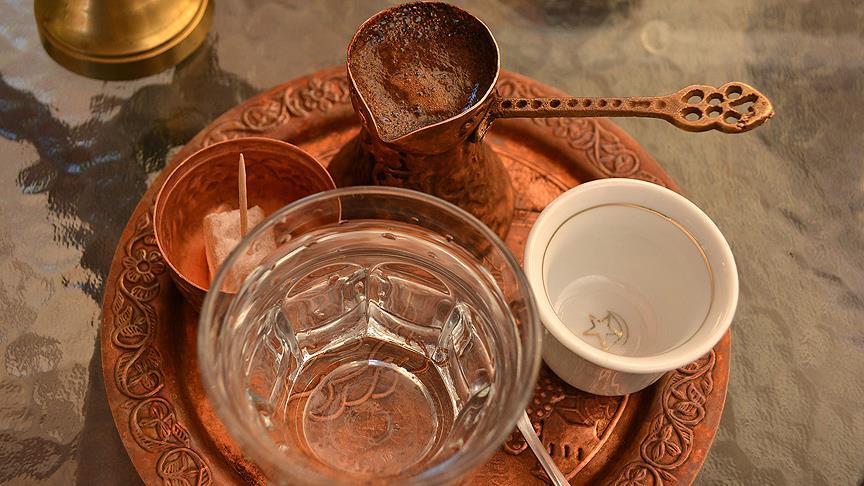
Bosnian Coffee (AA)
Bosnian coffee is an integral part of daily life and social interaction in Bosnia and Herzegovina. Especially consumed in the morning, it is also served during iftar openings in the month of Ramadan. The phrase “Let’s go for coffee” highlights coffee’s role as a tool for building social bonds. The tradition of preparing and drinking coffee is passed down from generation to generation, and this tradition is kept alive in historic areas such as the Baščaršija in Sarajevo. Coffee consumption is also associated with the concept of “ćejf,” which refers to personal enjoyment derived from life’s simple pleasures.
Although Bosnian coffee resembles Turkish coffee, there are notable differences. In Turkish coffee, coffee and water are mixed cold and then boiled, whereas in Bosnian coffee, the water is heated first and then the coffee is added. Additionally, Bosnian coffee is typically served in a copper cezve, which helps maintain its temperature. Turkish coffee, by contrast, is usually served pre-poured into the cup.
Bosnian coffee is widely consumed by the people of Bosnia and Herzegovina and is also appreciated by visitors as part of the country’s traditional coffee culture. In historic coffeehouses and especially in places like the historic Morića Han, coffee is prepared and served using traditional methods.
Anadolu Ajansı. "Mostar sokaklarını kahve kokusuyla buluşturuyor." Accessed December 6, 2024.https://www.aa.com.tr/tr/dunya/mostar-sokaklarini-kahve-kokusuyla-bulusturuyor/929921
BBC Travel. "The Complicated Culture of Bosnian Coffee." Accessed December 6, 2024.https://www.bbc.com/travel/article/20140707-the-complicated-culture-of-bosnian-coffee
KFP Bosnia Project. "Ćejf and Bosnian Coffee." KFP Bosnia Project. Accessed December 6, 2024.https://kfpbosniaproject.org/cejf-and-bosnian-coffee/
Meet Bosnia. "Bosnian Coffee." Meet Bosnia. Accessed December 6, 2024.https://meetbosnia.com/bosnian-coffee/#:~:text=Over%20the%20years%20the%20coffee,social%20life%20of%20the%20city
Nurduhan, Ahmet. "Bosna Hersek'in 560 Yıllık Geleneksel İçeceği: Boşnak Kahvesi." Anadolu Ajansı. Accessed December 6, 2024.https://www.aa.com.tr/tr/kultur/bosna-hersekin-560-yillik-geleneksel-icecegi-bosnak-kahvesi/2787463

History
Preparation and Serving
Cultural Significance
Differences from Turkish Coffee
Consumption Today