


This article was automatically translated from the original Turkish version.
Blisk, also known as bladed disk, is a high-engineering component central to modern aviation engines, manufactured as a single piece integrating the disk and rotor blades. In traditional rotor designs, the disk and blades are produced separately and mechanically assembled, whereas the blisk structure unifies these two components to offer a lighter, more robust, and aerodynamically more efficient solution. However, this integrated design brings extremely precise and high-tech requirements to manufacturing, machining, and quality control processes.
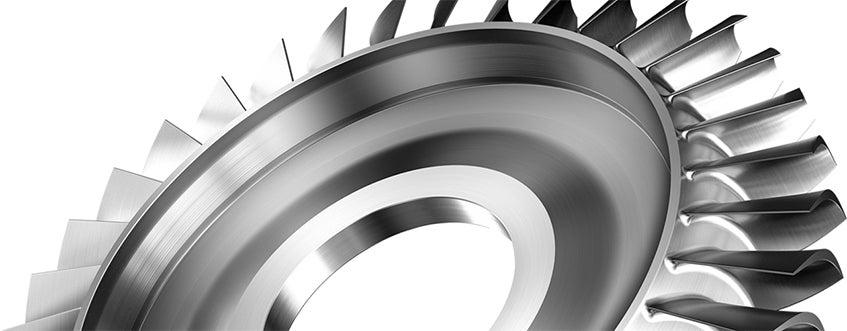
Blisk (Sandvik Coromant)
Blisks are typically manufactured from titanium alloys or heat-resistant superalloys (HRSA). Material selection is determined by the component’s position within the engine:
Machining these materials requires resistance to high temperatures, vibration, and cutter wear. Particularly, integrated blade geometries complicate cutter access. Therefore, production requires specialized methods such as:
Detailed simulations in CAM software are essential to select optimal tool paths, balance chip removal forces, and ensure surface quality. Otherwise, serious issues such as part deformation, surface damage, and time loss may occur.
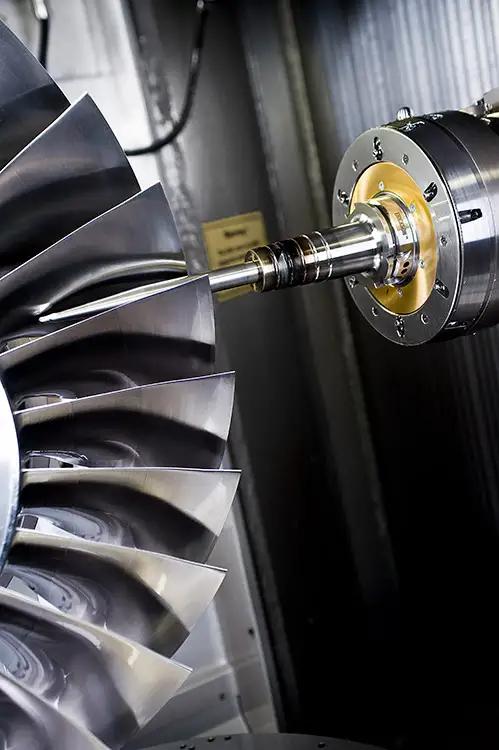
Blisk işleme (TEI)
Considering that blisks operate at very high rotational speeds, measurement and quality control processes are as critical as manufacturing. While traditional contact measurement methods offer precision, they may cause surface deformation. Especially on polished or coated surfaces, optical integrated measurement solutions are preferred.
Modern measurement systems combine contact and non-contact (optical) sensors to create a hybrid structure, enabling both high precision and rapid data acquisition without damaging the surface.
Specialized software developed for blisk measurements enables automatic analysis of:
These software tools can simulate measurement plans prior to production and reduce measurement time by up to 50 percent.
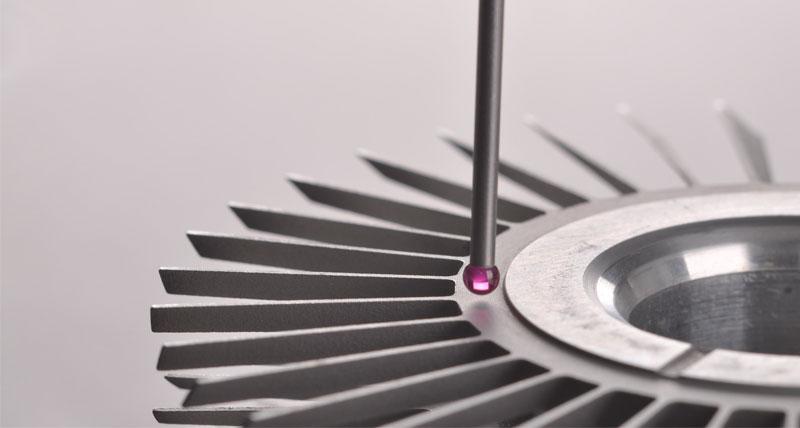
Blisk CMM ölçümü (HEXAGON)
The use of blisk technology offers significant advantages not only during manufacturing but also in MRO (Maintenance, Repair, Overhaul) processes. The single-piece structure minimizes issues such as loosening, fracture, and vibration. Additionally:
In particular, the adoption of blisks in new-generation civil and military jet engines supports both operational efficiency and environmental sustainability.
Blisk technology is positioned at the point where efficiency, durability, and aerodynamic performance in aviation are optimized. However, the production and inspection of these high-performance components are only possible with advanced engineering knowledge and high-precision systems. Both machining technologies and measurement systems provide blisk manufacturers with significant advantages in terms of time, cost, and quality.
In the future, AI-supported production control systems, automated defect detection, and the widespread adoption of digital twin models will make blisk manufacturing faster, more predictable, and more sustainable.
Hexagon. "Aero Engine Blisk Inspection." Accessed April 29, 2025.https://hexagon.com/resources/resource-library/aero-engine-blisk-inspection.
Sandvik Coromant. *Blisk – Machining Titanium in Aerospace Applications*. Accessed April 29, 2025.https://www.sandvik.coromant.com/tr-tr/industry-solutions/aerospace/titanium/blisk-titanium.
TUSAŞ Engine Industries (TEI). *Manufacturing Capabilities – Parts and Module Manufacturing*. Accessed April 29, 2025.https://www.tei.com.tr/en/activity-areas/parts-and-module-manufacturing/manufacturing-capabilities.
ZEISS. "Blisk: Precision Inspection of Bladed Disks in Aircraft Engines." Accessed April 29, 2025.https://www.zeiss.com/metrology/en/industries/aerospace/aircraft-engine/blisk.html.

Material Selection and Machining Challenges
Measurement, Inspection, and Quality Assurance Processes
Hybrid Measurement Systems
Automation and Software Support
Applications and Industrial Benefits