


This article was automatically translated from the original Turkish version.
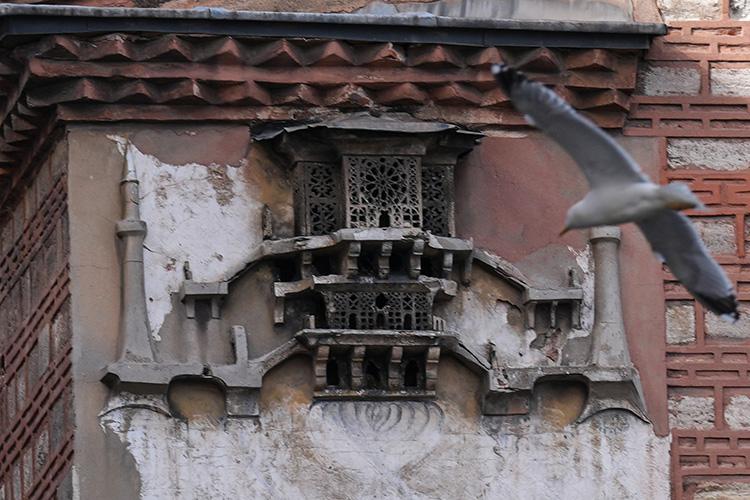
Bird House
Other Name | Serçesaray Kuş Köşkü | ||||||||
|---|---|---|---|---|---|---|---|---|---|
Architecture | Ottoman Architecture | ||||||||
Period | 13th–19th centuries | ||||||||
Material | Brick Stone Plaster Wood | ||||||||
Bird Houses are structures designed to provide shelter, nesting, and in some cases, feeding for birds. In Anatolia, these structures have become associated with Ottoman architecture and are also known by various names such as "kuş köşkü", "bird palace", "sparrow palace", or "pigeon house". While their primary purpose is to offer birds a secure refuge, they differ from pigeon houses, which are built primarily for the direct benefit of obtaining manure or meat.
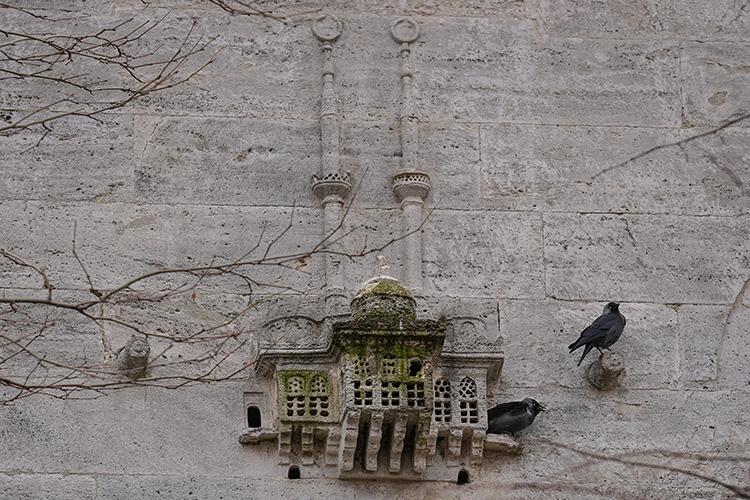
Valide-i Cedid Camii Kuş Evi - Anadolu Ajansı
The history of bird houses in Anatolia extends as far back as the 13th century, with examples found at the Sivas İzzettin Keykavus Hospital (1217–1218) indicating their presence during this period. Some sources suggest that bird houses found in a church in Karadağ Değle may be even older. It is stated that the first bird houses were constructed during the Anatolian Seljuk period, beginning in the 11th century.
The tradition of bird houses became widespread during the Ottoman period. The earliest examples are believed to have been built in Bursa, the capital of the early Ottoman state, and Edirne, its administrative center. While some bird houses found in structures from the Ottoman Founding Period (1299–1451) and the Classical Period (1451–1703) are original, others are thought to have been added later. Classical Period bird houses are typically simple, appearing as small openings on the building’s façade and of modest size. Bird houses can also be found in the works of Mimar Sinan (16th century).
The construction and variety of bird houses increased notably during the 17th and 18th centuries, particularly during the Tulip Era (1718–1730) and afterward. Bird houses built during this period were more elegant and shaped with greater aesthetic concern, acquiring rounded forms and curves under the influence of Baroque art. Most surviving examples date from the 18th and 19th centuries, with construction continuing into the late 19th century. The most numerous and architecturally diverse bird houses are found in Istanbul, especially in the neighborhood of Üsküdar.
The main motivations behind the construction of bird houses include compassion for animals and the desire to protect them. Additionally, religious and cultural beliefs played a role in the development of this tradition, such as the importance attributed to birds in Islamic faith and the pre-Islamic Turkic belief in the sacredness of birds under the Gök Tanrı tradition. Folk beliefs, such as the idea that storks visit holy places or that swallows protect homes from fire, are also part of the care shown toward birds.
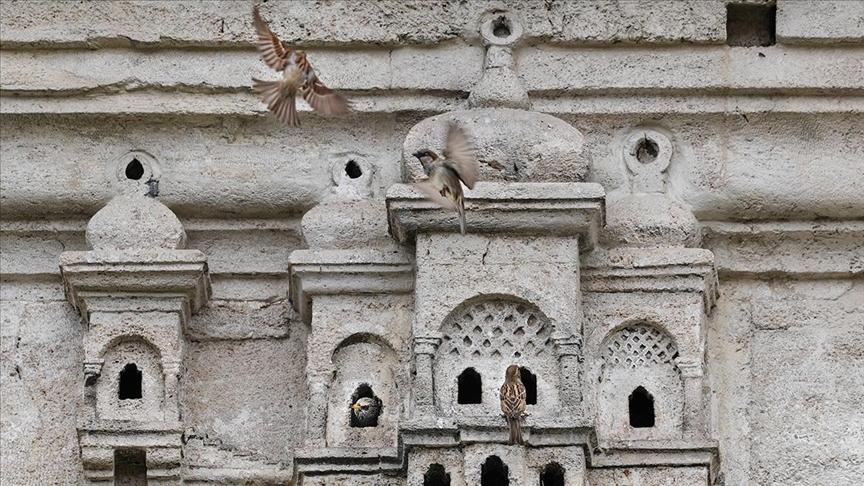
Osmanlı kuş sarayları 5 asırdır güzelliğini koruyor - Anadolu Ajansı
Bird houses have been constructed on the façades of many different types of religious and civil architecture, including palaces, mosques, houses, caravanserais, madrasas, libraries, tomb structures, bridges, and fountains. Their placement prioritized the safety and comfort of birds. Typically, they were installed on sun-exposed façades—usually south-facing—to avoid cold northern winds, and at heights inaccessible to humans, cats, and predatory birds. To protect them from rain, snow, and wind, they were often built beneath wide eaves, cornices, and brackets. Bird houses can also be found on window and door arches, minarets, weight towers, projections, cornices, and chimneys.
Bird houses were constructed using the same primary materials as the buildings they adorned: stone (kufeki stone, marble), brick, wood, or plaster. Kufeki stone was frequently used due to its ease of carving. Although wooden bird houses were common, fewer have survived to the present day due to fires and natural deterioration. Construction techniques include carving, chiseling, perforation, cladding, and plastering. Some bird houses are said to have originated from stonemasons repurposing broken or leftover stones during wall construction.
Formally, bird houses can be classified into two main categories:
The presence of bird houses in non-Muslim buildings in Istanbul, such as the Balat Ahrida Synagogue and the Fener Ayios Monastery, in Turkish architectural style, demonstrates the cultural exchange within the city.
Bird houses are more than mere shelters for birds; they are cultural heritage elements that reflect the architectural understanding, aesthetic sensibilities, artistic skill, and societal sensitivity toward nature and living beings of their time. These structures, which demonstrate the Ottoman emphasis on detail, are regarded as three-dimensional visual records of civil architecture, particularly residential façades. The influences of different architectural styles such as Classical, Baroque, and Rococo can also be traced in their designs.
Bird houses are considered a distinctive feature of Turkish architecture and a unique architectural form developed by Turkish art with its own characteristics. At the same time, they have helped preserve buildings by preventing birds from entering and soiling façades with droppings.
Bird Houses in the Ottoman Era - History and Beyond, Episode 22 (Diyanet TV)
Traditional bird house construction practices have declined in modern times due to changes in building techniques, the widespread use of new construction materials, urbanization, and shifts in social life. Some existing traditional bird houses have deteriorated due to neglect. New bird house construction is rare and usually undertaken for symbolic or artistic purposes.
Nevertheless, the bird house tradition is being reinterpreted by contemporary artists and designers in various ways. Ceramic material, valued for its plasticity, texture, and range of colors, as well as its harmony with nature, is increasingly used in bird house designs. Today, ceramic artists produce ceramic bird houses inspired by traditional forms or through original designs. These works can be displayed either integrated into architectural structures or as independent objects in open or indoor spaces.
Various ceramic artists in Türkiye and internationally have incorporated the bird house motif into their work. Some artists have recreated traditional Ottoman bird house forms using ceramic materials, producing works that document cultural heritage. Internationally, ceramic bird house designs vary in style, including those inspired by animal figures, abstract or fantastical forms, minimalist designs with bright surfaces, or works referencing natural stone or simple geometric shapes. This reflects the formal versatility offered by ceramic material. Different ceramic techniques—hand modeling, mold forming, casting—along with decoration methods (glazing, slip, oxide) and firing temperatures are employed in these works.
Exhibitions, competitions, and projects are also being organized to raise public awareness about bird houses and preserve this cultural heritage. Academic initiatives, such as ceramic bird house installations displayed on university campuses, represent efforts to sustain the tradition. Some contemporary proposals aim to integrate bird houses into modern architecture as mass-producible structural elements, such as modular units in the shape of roof tiles or bricks.
Diyanet TV. *Osmanlı Kuş Sarayları*. YouTube. Accessed May 19, 2025.
Kahraman, G., & Önder, A. M. (2020). Kuş Evleri ve Seramik Sanatçılarından Örnekler. Konya Sanat, (3), 64–78.https://doi.org/10.51118/konsan.2020.5
Kutucu, Adem. *Osmanlı Kuş Sarayları 5 Asırdır Güzelliğini Koruyor*. Anadolu Ajansı, May 5, 2024.https://www.aa.com.tr/tr/kultur/osmanli-kus-saraylari-5-asirdir-guzelligini-koruyor/3257369Accessed May 19, 2025.
Vatan, Ahmet, and Öykü Demir. (2021). İstanbul’daki Kuş Sarayları: Son Şans. Türk Turizm Araştırmaları Dergisi 3, no. 3: 421-35.https://www.tutad.org/index.php/tutad/article/view/78
Özçakı, M. (2020). Geleneksel Kuşevleri ve Yeni Uygulamalar için Bir Öneri. Art-E Sanat Dergisi, 13(25), 343-361.https://doi.org/10.21602/sduarte.676755
Özçakı, M. (2021). TÜRK KÜLTÜRÜNDE GÜVERCİNLİK VE KUŞ EVLERİ VE GÜNÜMÜZE YANSIMALARI. Sanat Ve Tasarım Dergisi, 10(2), 238-261.https://doi.org/10.20488/sanattasarim.876545
Şölenay, E., & Çelikoğlu, Ö. (2012). Bir Malzeme Olarak Seramiğin Kuşevlerinde Kullanılması. Sanat Ve Tasarım Dergisi, 2(2), 41-51.https://dergipark.org.tr/tr/pub/sanattasarim/issue/20646/220272

Bird House
Other Name | Serçesaray Kuş Köşkü | ||||||||
|---|---|---|---|---|---|---|---|---|---|
Architecture | Ottoman Architecture | ||||||||
Period | 13th–19th centuries | ||||||||
Material | Brick Stone Plaster Wood | ||||||||
History
Structural Features and Placement
Cultural and Artistic Value
Current Status and Bird Houses in Ceramic Art