This article was automatically translated from the original Turkish version.
Scientific Name(s) | Parus major | ||||||||
|---|---|---|---|---|---|---|---|---|---|
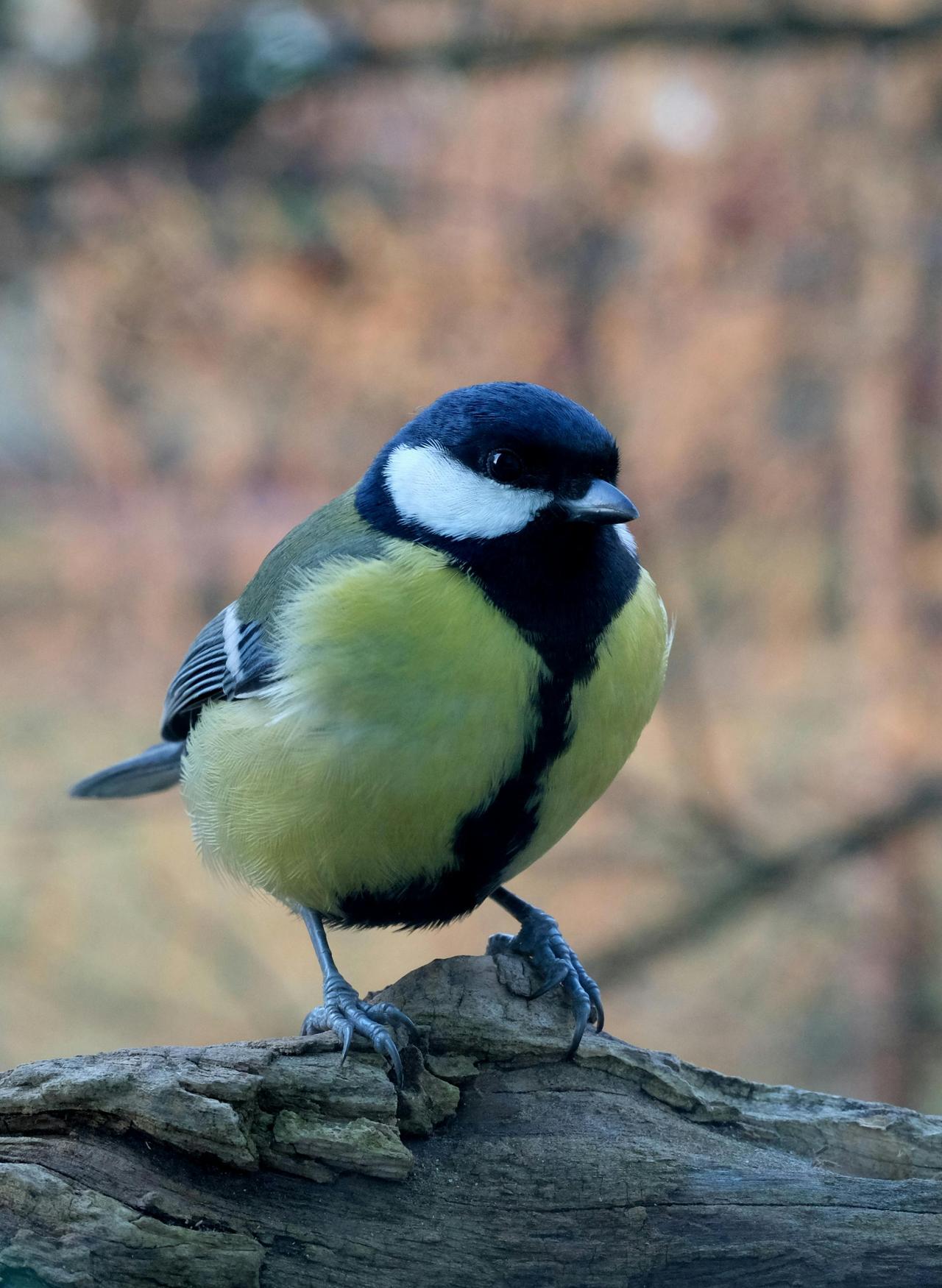
Distinctive Feature(s) | Black stripe extending from throat to belly | ||||||||
Size(s) | 13-15 cm length | ||||||||
Distribution(s) | Native species observed year-round throughout Türkiye | ||||||||
Diet(s) | Insects larvae seeds and fruits | ||||||||
Conservation Status | Least Concern LC category | ||||||||
Habitat | Forests parks gardens and wooded areas | ||||||||
Vocalization Characteristic | Melodic metallic and variable alarm calls | ||||||||
Number of Offspring | 7 to 12 eggs per breeding season | ||||||||
Nesting Site | Tree cavities wall crevices and artificial nest boxes | ||||||||
Head Structure | Black head and bright white cheeks | ||||||||
Body Color | Yellow belly and olive-green back | ||||||||
Wingspan | 22-26 cm wingspan | ||||||||
English Name | Great Tit | ||||||||
The great tit (Parus major) is a colorful and widely distributed native bird species belonging to the family Paridae within the order Passeriformes. It is the largest-bodied member of its family. These birds can be observed year-round throughout Türkiye with high population densities and are capable of surviving across an exceptionally wide altitudinal range, from sea level to the tree line in mountainous regions.
Adult males and females are morphologically very similar. They are easily distinguished by their black head, prominent large white cheek patches, and yellow underparts. A broad black stripe runs from the throat down the center of the belly to the tail; this stripe is thicker and broader in males than in females. A white patch is present on the nape, while the shoulders and back are covered in olive-green feathers. The wings and tail display bluish-gray tones. A distinct white wing bar and white edges on the tail feathers are also visible. Their long tail structure aids in maintaining balance on tree branches. In juveniles, the black areas are duller or more brownish, the cheek patch is yellowish, the dark lower edge of the cheek is absent, and the underparts are a duller yellow. Body length typically ranges from 13 to 15 cm.
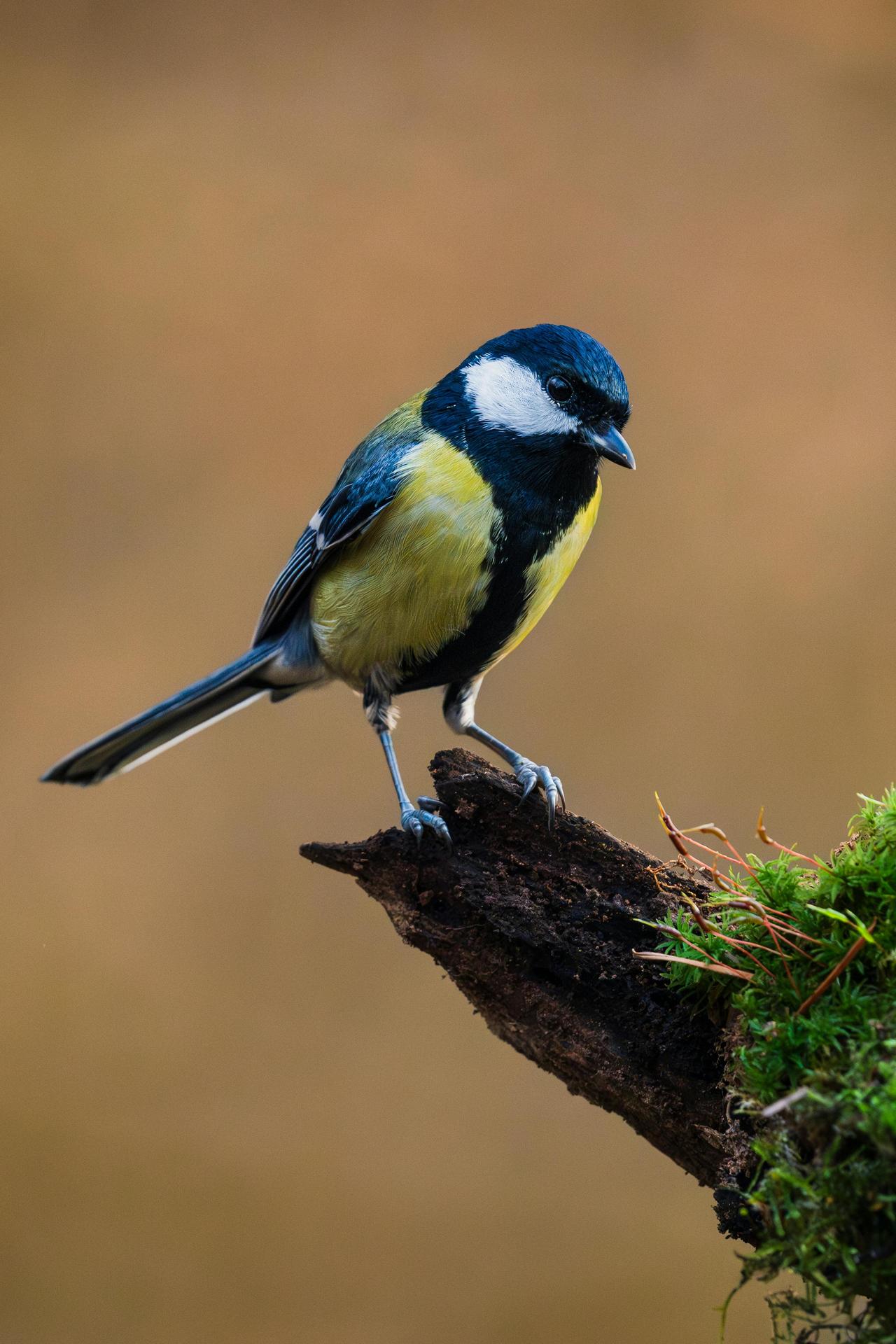
Great Tit (Parus Major) (pexels)
The species is found throughout Türkiye’s geography but exhibits a more localized distribution in central Anatolia, the Southeastern Anatolia Region, and the valleys of Eastern Anatolia. It predominantly inhabits lowland areas of valleys and mountains. Primary breeding and living habitats include sparse woodlands, forests, olive groves, agricultural fields, shrublands, maquis, and urban parks and gardens.
The great tit actively and continuously moves among trees and shrubs while foraging for food; individuals are rarely observed remaining motionless for extended periods. Its primary diet consists of insects, insect larvae, small invertebrates, plant seeds, hard-shelled fruits, and shrub berries. Although rarely recorded, there are documented cases of it killing and consuming small birds. Especially during winter months, it is commonly observed forming mixed flocks with other tit species such as the blue tit, pine tit, long-tailed tit, marsh tit, and coal tit.
During the breeding season, great tits typically nest in tree cavities, rock wall crevices, holes in buildings, and gaps in utility poles. It is the species most likely to use artificial nest boxes provided by humans. The nest, built within these cavities, has a typical cup shape. A single clutch usually contains 7 to 8 eggs, though occasionally up to 12. Parents primarily feed their young with caterpillars, and studies have found that they bring food to the nest approximately 500 times per day to meet the chicks’ nutritional needs. When the chicks detect their parents approaching with food, they open their mouths fully and call loudly.
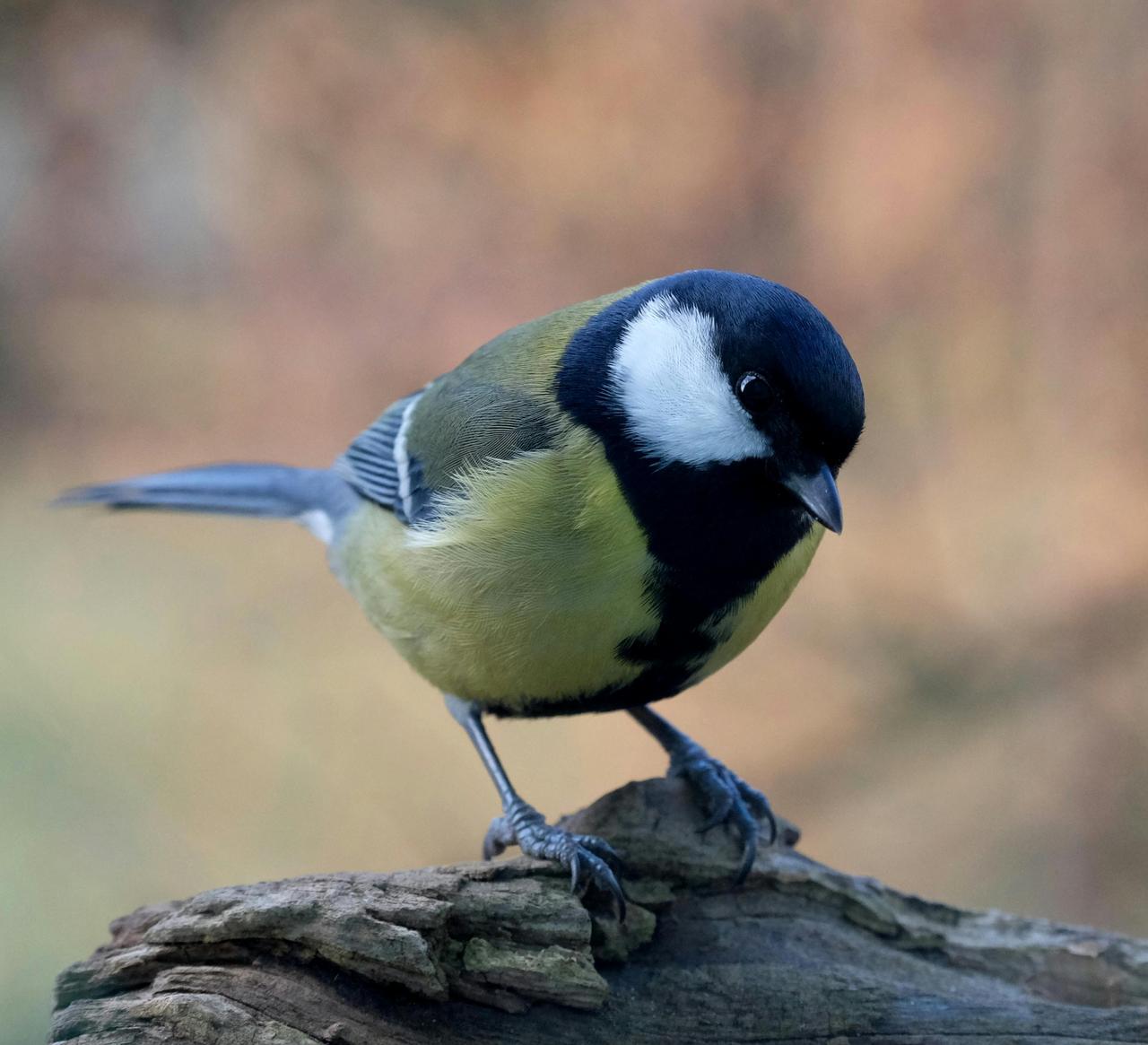
Great Tit (Parus Major) (pexels)
The great tit has a highly variable and extensive vocal repertoire. In addition to high-pitched, metallic, and clear “chink-chink” calls resembling those of the sparrow, it also produces “tui-tui-tui” calls similar to those of the blue or coal tit. It sings distinctive, melodious two- or three-syllable songs audible at long distances, such as “tii-çu”, “tu-tit”, and “tii-tii-çu”. Furthermore, when detecting predatory birds such as hawks approaching its territory, it emits specific alarm calls to warn other birds. After these alarm calls, all surrounding birds typically fall silent until the predator departs, at which point normal vocalizations resume.
Kurt, Bahtiyar. "Kıpır Kıpır Bir Kuş Büyük Baştankara." TÜBİTAK Bilim Çocuk. Accessed April 24, 2026. https://bilimcocuk.tubitak.gov.tr/wp-content/uploads/sites/157/2025/09/1f8e8768-e170-4c4b-bf18-f1e6d53b6c49.pdf
ORNITO.ORG. "Büyük Baştankara." ornito.org. Accessed April 24, 2026. https://ornito.org/Bird/Detail/103
Türkiye Üreyen Kuş Atlası. "Üreyen Kuş Türleri: Büyük Baştankara." Türkiye Üreyen Kuş Atlası. Accessed April 24, 2026. https://kustr.org/kusatlasi/2014/06/ureyen-kus-turleri-buyuk-bastankara/
eBird. "Büyük Baştankara." The Cornell Lab of Ornithology. Accessed April 24, 2026. https://ebird.org/species/gretit1?siteLanguage=tr

Scientific Name(s) | Parus major | ||||||||
|---|---|---|---|---|---|---|---|---|---|
Distinctive Feature(s) | Black stripe extending from throat to belly | ||||||||
Size(s) | 13-15 cm length | ||||||||
Distribution(s) | Native species observed year-round throughout Türkiye | ||||||||
Diet(s) | Insects larvae seeds and fruits | ||||||||
Conservation Status | Least Concern LC category | ||||||||
Habitat | Forests parks gardens and wooded areas | ||||||||
Vocalization Characteristic | Melodic metallic and variable alarm calls | ||||||||
Number of Offspring | 7 to 12 eggs per breeding season | ||||||||
Nesting Site | Tree cavities wall crevices and artificial nest boxes | ||||||||
Head Structure | Black head and bright white cheeks | ||||||||
Body Color | Yellow belly and olive-green back | ||||||||
Wingspan | 22-26 cm wingspan | ||||||||
English Name | Great Tit | ||||||||
No Discussion Added Yet
Start discussion for "Big Dipper (Ursa Major)" article
Physical Characteristics
Habitat and Distribution
Feeding and Behavior
Breeding
Vocalizations and Communication