This article was automatically translated from the original Turkish version.
Cooking Method(s) | In a wood-fired or stone oven | ||||||||
|---|---|---|---|---|---|---|---|---|---|
Product / Product Group(s) | Oven dishes – Meat dishes | ||||||||
Production Location | Besni, Adıyaman, Türkiye | ||||||||
Consumer Profile | Local residents, visitors who want to experience regional cuisine | ||||||||
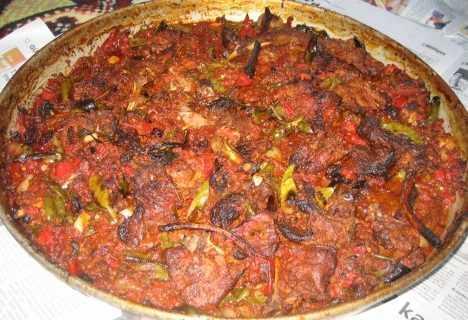
Besni tava is a baked dish unique to the Besni district of Adıyaman Province in Türkiye, classified among the regional meat dishes of Turkish cuisine. Typically prepared with lamb or beef, it reflects the local oven culture and traditional cooking techniques of the region. Although oven-cooked dishes across Anatolia exhibit great diversity, Besni tava acquires a distinctive identity through the quality of its ingredients, its cooking method, and the influence of local spices. In this regard, the dish is regarded as a characteristic representative of regional culinary culture.
Meat dishes, particularly those prepared by cooking red meat in wood-fired or stone ovens, are prominent in many parts of Anatolia. However, Besni tava differs through its preparation using ingredients specific to Besni’s climate, soil, and agricultural conditions. Small-scale livestock farming and the local quality of meat form the foundational elements of this dish. This characteristic renders it both a geographical and gastronomic value.
Besni tava has a strong geographical association with the district of Besni from which it derives its name. The dish acquires its local character primarily through the use of lamb and beef raised specifically in Besni. The semi-arid climate and natural vegetation of the district, integrated with livestock practices, influence the flavor profile of the meat. This demonstrates that Besni tava is not merely a gastronomic product but also a cultural expression of the region’s agricultural and livestock system.
Although it lacks official geographical indication status, its widespread recognition and adoption by the local population significantly strengthen its reputation. This is further supported by its frequent appearance in local media and gastronomic sources.
Besni tava occupies a central place at tables during weddings, religious holidays, and communal meals. This highlights that the dish represents not only nourishment but also social belonging and the culture of shared dining.
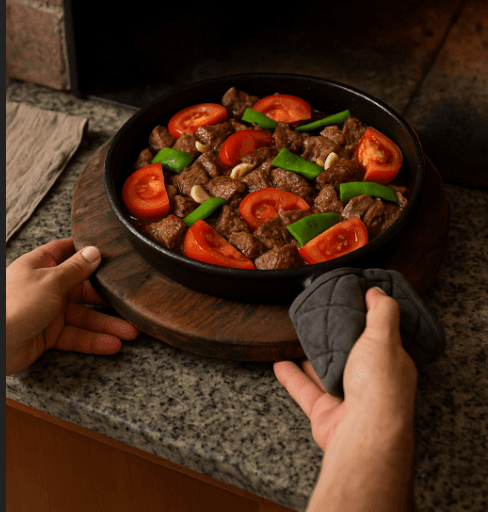
Besni Tava (Generated by Artificial Intelligence.)
Besni tava is primarily prepared using lamb or beef, tomatoes, peppers, garlic, and various local spices. Lamb is especially preferred for its tender texture and aromatic flavor. Sourcing the meat directly from locally raised livestock enhances both the flavor profile and nutritional value of the dish. This feature is one of the key distinctions that set Besni tava apart from other oven-cooked meat dishes.
Vegetables such as tomatoes and peppers are selected from region-specific aromatic varieties. Besni’s climate and soil conditions enhance the mineral content and flavor intensity of these vegetables. Garlic serves as a fundamental ingredient, contributing both aroma and health benefits. When combined with the meat and cooked through a prolonged and controlled process, the mixture develops a tender and juicy texture in the oven.
The dish’s distinctive aromatic profile is completed through the use of local spices. Red pepper, black pepper, and occasionally fenugreek produced in Besni add a unique flavor layer to Besni tava. The balanced use of these ingredients ensures flavor harmony and appeals to local palates.
The product’s characteristics attract attention not only for their nutritional value but also for their aesthetic presentation. The simultaneous baking of meat and vegetables allows aromas to meld while creating an elegant presentation on the table. For this reason, Besni tava holds an important place both in daily meals and special gatherings.
The preparation process follows a step-by-step method requiring skill and patience. First, the meat is cut into bite-sized pieces or thin slices. It is then preferably rested for a period to naturally tenderize. Subsequently, the meat is lightly rubbed with a mixture of salt and spices to marinate. This step is crucial as it enhances the meat’s aroma and helps preserve flavor during cooking.
Vegetables such as tomatoes and peppers are selected seasonally and cut into large pieces. Garlic is typically used whole to intensify the meat’s flavor profile. All ingredients are layered in a clay or metal baking tray, ensuring even distribution of meat and vegetables. This arrangement facilitates balanced aroma distribution during cooking.
Cooking is carried out in traditional wood-fired or stone ovens. The slow and even heat of these ovens allows the meat to remain tender and juicy. The tray is baked under controlled conditions for approximately one and a half hours. During this time, the juices from the meat and vegetables blend to create a rich aroma.
After cooking, the dish is left to rest. This resting period allows the internal juices to redistribute and the flavors to fully settle. The result is a richly aromatic and nutritious dish born from the integration of traditional production techniques and natural ingredients.
The serving style is as integral to local culinary culture as the cooking method. As in the cuisines of Diyarbakır and Adıyaman, the dish is traditionally presented on clay or copper trays, adding a traditional touch to the table. In Besni, the tray is often brought directly from the wood-fired oven to the table, enriching the dining experience both in temperature and aesthetics. The serving vessel retains heat for an extended period, preserving the dish’s aromatic qualities.
At local tables, Besni tava is typically served as the main course, accompanied by complementary elements such as lavaş bread, sumak-dressed onion salad, or seasonal greens. These traditional accompaniments support the dish’s flavor profile while reinforcing regional culinary identity. During serving, the tender, juicy texture of the cooked meat and vegetables presents a rich and appealing visual appearance.
It is not only a daily meal but also regarded as a celebratory dish during special occasions such as weddings and holiday feasts. This underscores that the dish symbolizes social connection and the culture of shared dining. The ritual of gathering around a single tray emphasizes both the importance of the dish and the culture of communal solidarity.
In conclusion, the serving characteristics highlight an important element that reflects both traditional culinary aesthetics and social values. This presentation, combining visual appeal with flavor, transforms the dish into more than a source of nourishment—it becomes a cultural symbol.
Although Besni tava is prepared with great skill in local kitchens across Adıyaman and its surroundings, it does not hold official geographical indication status. Nevertheless, the transmission of traditional recipes and cooking methods from generation to generation serves as a vital mechanism for preserving its authenticity. As a result, the production process is shaped by traditional knowledge and experience, ensuring the dish’s authentic flavor is passed down to the present day.
In terms of quality control and authenticity, local cooks and households carefully adhere to the traditional recipe. The quality of the meat, the seasonal sourcing of vegetables, and the use of traditional methods such as wood-fired ovens all contribute to preserving the original taste of Besni tava. Local restaurants and eateries also favor these traditional methods, sustaining the dish’s cultural value.
Ultimately, its production and presentation are preserved as an important part of cultural heritage through the continuation of local traditions and recipe fidelity. This dish continues to be served at tables as a symbol of both regional culinary identity and social values.
Cam, Oguz. “Gastronomi Turizmi Kapsamında Adıyaman Mutfağının İncelenmesi.” Turar: Turizm ve Araştırma Dergisi 12, no. 2 (2023): 6–43. https://dergipark.org.tr/en/pub/turar/article/1348386
Ministry of Culture and Tourism. "Besni Tava – Adıyaman." Kültür Portalı. Accessed May 24, 2025. https://www.kulturportali.gov.tr/turkiye/adiyaman/neyenir/besni-tava.

Cooking Method(s) | In a wood-fired or stone oven | ||||||||
|---|---|---|---|---|---|---|---|---|---|
Product / Product Group(s) | Oven dishes – Meat dishes | ||||||||
Production Location | Besni, Adıyaman, Türkiye | ||||||||
Consumer Profile | Local residents, visitors who want to experience regional cuisine | ||||||||
Geographical Boundaries and Reputation
Product Characteristics
Recipe and Production Method
Serving Characteristics
Quality Control and Authenticity