


This article was automatically translated from the original Turkish version.
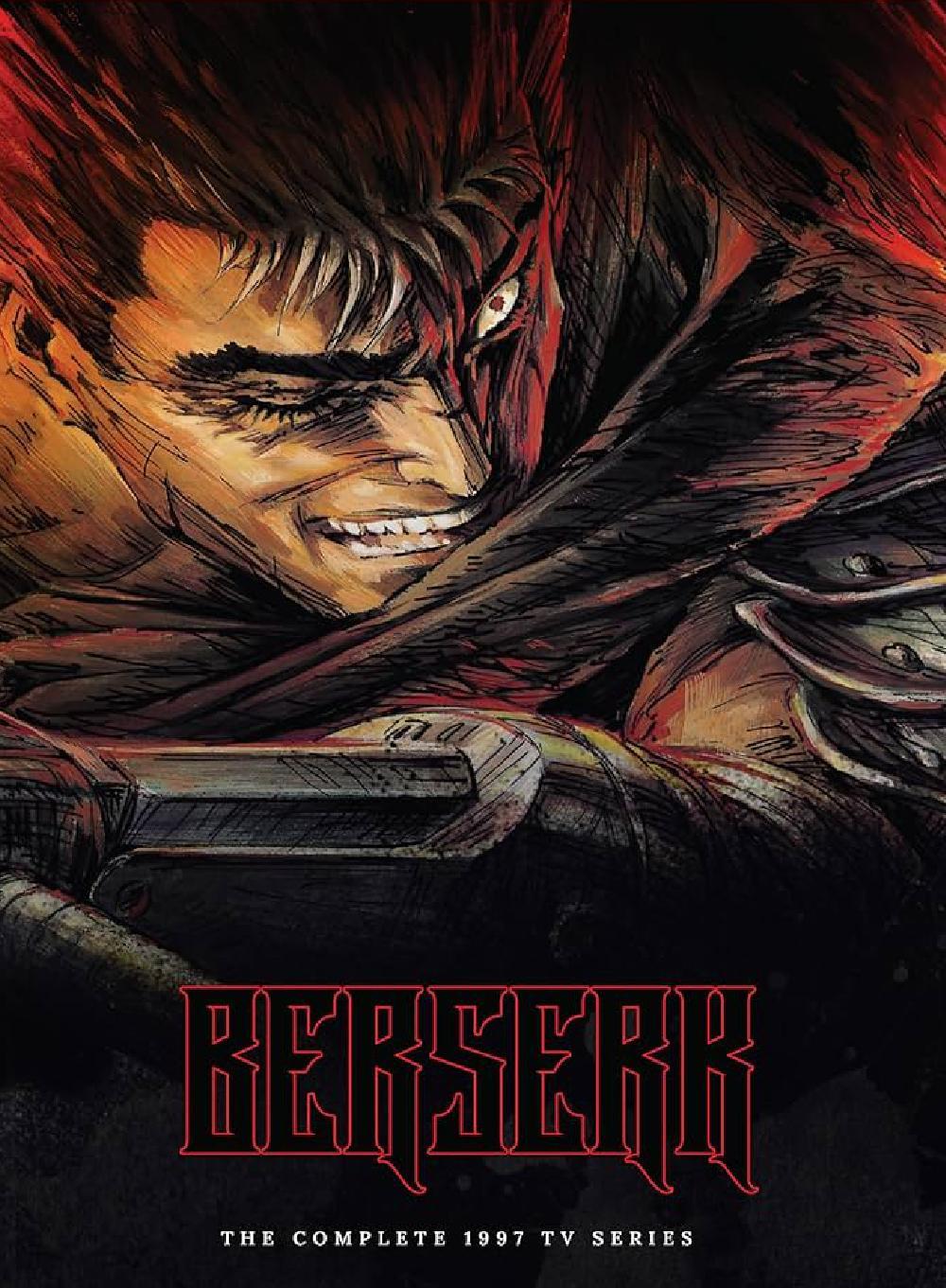
(IMDb)
Berserk
Japanese Title | Berserk | ||||||||
|---|---|---|---|---|---|---|---|---|---|
Genre | Epic Fantasy Adult Animation Action/Adventure Dark Fantasy | ||||||||
Author / Illustrator | Kentaro Miura | ||||||||
Manga Publisher | Hakusensha (Young Animal) | ||||||||
Genre | Epic fantasy Adult animation Action/Adventure Dark fantasy | ||||||||
Music (OST) | Susumu Hirasawa | ||||||||
Original Release Date | 1989 - Present | ||||||||
Anime Studio | OLM, Inc. (1997) | ||||||||
IMDb Rating | 8.8 | ||||||||
Current Status | Manga ongoing | ||||||||
Number of Manga Volumes | 42+ (Current) | ||||||||
Berserk is a manga and anime series created by writer and artist Kentaro Miura, targeting the adult male demographic (Seinen), and blending martial mechanics with psychological and philosophical analysis.
Kenpuu Denki Berserk (1997) (IMDb)
The story centers on Guts, a wandering mercenary raised on battlefields, who joins the Band of the Hawk after losing a duel against its charismatic leader, Griffith. The group, which dominates every battle they fight and ultimately ends the Hundred Years’ War on behalf of the King of Midland, sees its fate irrevocably altered when hidden demonic forces are revealed. During the event known as the Eclipse, Griffith sacrifices his comrades to be reborn as Femto, a member of the Godhand, leaving Guts as the sole survivor. Vowing revenge, Guts takes on the title of the Black Swordsman.
The plot unfolds through the arcs Black Swordsman, Golden Age, Millennium Falcon, and Fantasia, depicting Guts’s existential struggle against monsters and his efforts to heal his traumatized comrade Casca, constructing a dark and epic fantasy universe.
Kenpuu Denki Berserk - GATS (Susumu Hirasawa)
The Berserk universe is built on a fictional world grounded in medieval and Renaissance Europe, where military conflicts intertwine with supernatural elements. Kentaro Miura fused architectural and cultural motifs from various historical periods of Europe to create a hybrid timeline. Visually, the series draws from Gothic and Romantic traditions, incorporating references to Romanesque portals, the columnar arrangements of the Great Mosque of Córdoba, and historical castle structures.
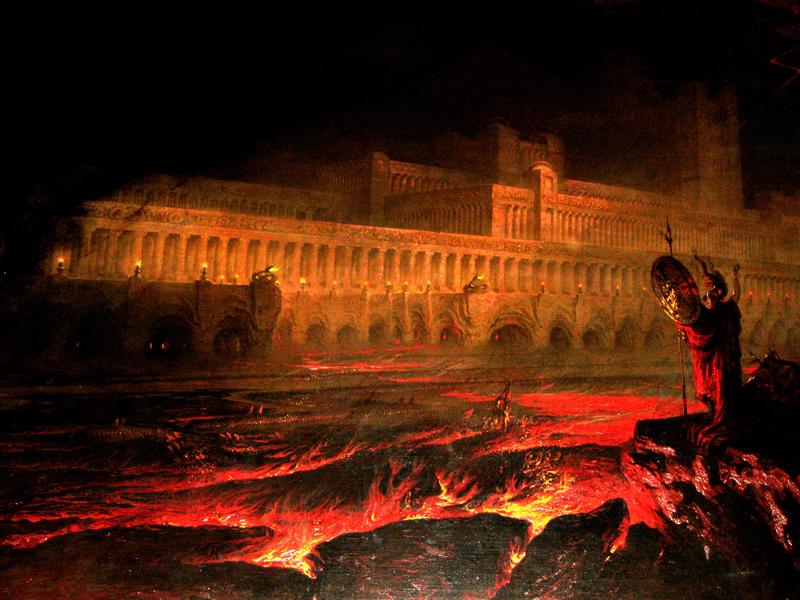
Pandemonium, John Martin (flickr)
Berserk features combat mechanics that push characters beyond physical limits and add profound depth to the narrative. An egg-shaped artifact known as the Behelit enables interdimensional transitions and allows its bearer to transcend humanity by sacrificing their will to become a supernatural entity. Additionally, the cursed armor known as the Berserker Armor suppresses pain and fear but consumes the user’s spiritual integrity and life force, making it one of the most critical tools enhancing combat capability. Massive swords such as Guts’s Dragon Slayer are not merely weapons but tangible manifestations of the character’s immense physical strength and indomitable will to survive.
Berserk manga was launched by Kentaro Miura in August 1989 in Monthly Animal House (later Young Animal) and continued without interruption until January 2021. Following Miura’s death in 2021, the series was left unfinished. Its continuation, under the supervision of Miura’s former assistants and his friend Kouji Mori, resumed in June 2022. It is currently still actively being published.
The first anime adaptation of the series, released in 1997, begins with the Black Swordsman arc. Centered on the Golden Age arc, the adaptation consists of 25 episodes. Produced with Miura’s active involvement, this version played a crucial role in establishing Berserk’s cult status through its atmospheric storytelling and original visual style.
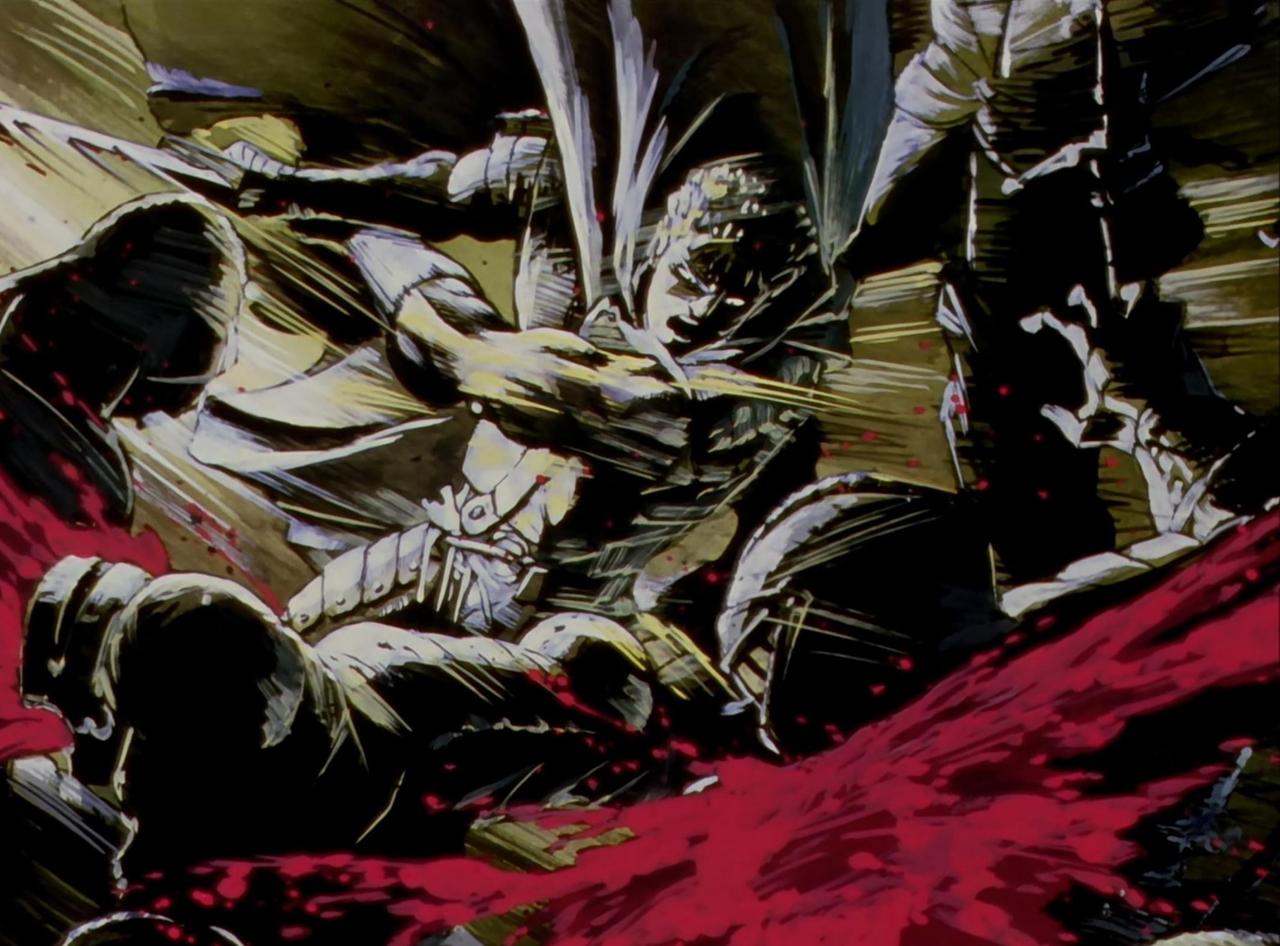
Berserk 1997 (IMDb)
Berserk offers a deep psychological analysis through its characters’ traumas and their existential relationships to them.
Since its manga debut in 1989 and its 1997 anime adaptation, Berserk has set a standard for fantasy grounded in medieval Europe. Its influence extends beyond Japan, becoming one of the foundational references for the “dark fantasy” genre in Western culture. With its visual aesthetics drawing inspiration from artists like John Martin, the work has served as a model for productions such as Dark Souls and established a powerful mythopoetic impact through its intricate hierarchy of evil.
Hirasawa, Susumu. "Guts (Berserk Soundtrack)." YouTube, 2:37. Accessed June 30, 2026. https://www.youtube.com/watch?v=auLopgsgJ_s
IMDb. "Berserk: Official Trailer." Accessed June 27, 2026. https://www.imdb.com/video/vi515506457/
IMDb. "Kenpuu Denki Berserk (1997)." Accessed June 30, 2026. https://www.imdb.com/title/tt0318871/
Khrisna. "Pandemonium by Martin." Flickr. Accessed July 3, 2026. https://flic.kr/p/4Epi9x
MyAnimeList. "Kenpuu Denki Berserk." MyAnimeList. Accessed June 27, 2026. https://myanimelist.net/anime/33/Kenpuu_Denki_Berserk
Shepherd, Axel Martínez. "Beyond the Guts and Viscera: The Nuanced Masculinity of Kentaro Miura’s Berserk." Master's thesis, Culture and Change – Critical Studies in the Humanities, 2023. Accessed June 27, 2026. https://www.academia.edu/106447177/Beyond_the_Guts_and_Viscera_The_Nuanced_Masculinity_of_Kentaro_Miuras_Berserk
Souza, Gustavo L. de, and Daniel F. B. de Oliveira. “Romanticism, the Gothic and the Middle Ages in Kentaro Miura’s Berserk.” *Studies in Visual Arts and Communication* 10, no. 1 (2023). Accessed June 25, 2026. https://journalonarts.org/wp-content/uploads/2023/12/03_SVACij_Vol10_No1-2023_Souza-Oliveira_Romanticsm-the-Gothic-and-the-Middle-Ages-in-Kentaro-Miura-s-Berserk.pdf
Takahashi, Naohito, dir. Kenpuu Denki Berserk. Japan: Hakusensha, Nippon Television Network (NTV), OLM-Animation Studio, 1997.

(IMDb)
Berserk
Japanese Title | Berserk | ||||||||
|---|---|---|---|---|---|---|---|---|---|
Genre | Epic Fantasy Adult Animation Action/Adventure Dark Fantasy | ||||||||
Author / Illustrator | Kentaro Miura | ||||||||
Manga Publisher | Hakusensha (Young Animal) | ||||||||
Genre | Epic fantasy Adult animation Action/Adventure Dark fantasy | ||||||||
Music (OST) | Susumu Hirasawa | ||||||||
Original Release Date | 1989 - Present | ||||||||
Anime Studio | OLM, Inc. (1997) | ||||||||
IMDb Rating | 8.8 | ||||||||
Current Status | Manga ongoing | ||||||||
Number of Manga Volumes | 42+ (Current) | ||||||||
Story and Plot Structure
Universe and Fictional Setting
Dimensions and Cosmic Hierarchy
Architectural and Artistic References
Combat Mechanics
Characters and Voice Cast
Publication and Production History
1997 Anime Adaptation
Psychological Structure and Archetypes
Impact and Legacy