+1 More

Spouse | Asif Ali Zardari | ||||||||
|---|---|---|---|---|---|---|---|---|---|
Date of birth | 1953-06-21 | ||||||||
Date of death | 2007-12-27 | ||||||||
Mother | Nusrat Bhutto | ||||||||
Father | Zulfikar Ali Bhutto | ||||||||
Child | Bilawal Aseefa Bakhtawar | ||||||||
Party | Pakistan Peoples Party (PPP) | ||||||||
Office | 1993–1996 Prime Minister of Pakistan (1988–1990) | ||||||||
Education | University of Oxford Radcliffe College–Harvard | ||||||||
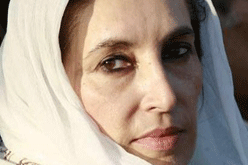
Benazir Bhutto, a political figure born in Karachi in 1953, served two terms as prime minister.
Throughout her life she faced both military regimes and intense political competition, playing a pivotal role in her country’s democratization process. She entered public life at a young age and throughout her political career encountered personal tragedies arrests, years in exile, electoral battles and serious security threats. She was killed in an assassination on 27 December 2007, an event that became a defining turning point in Pakistan’s political history.
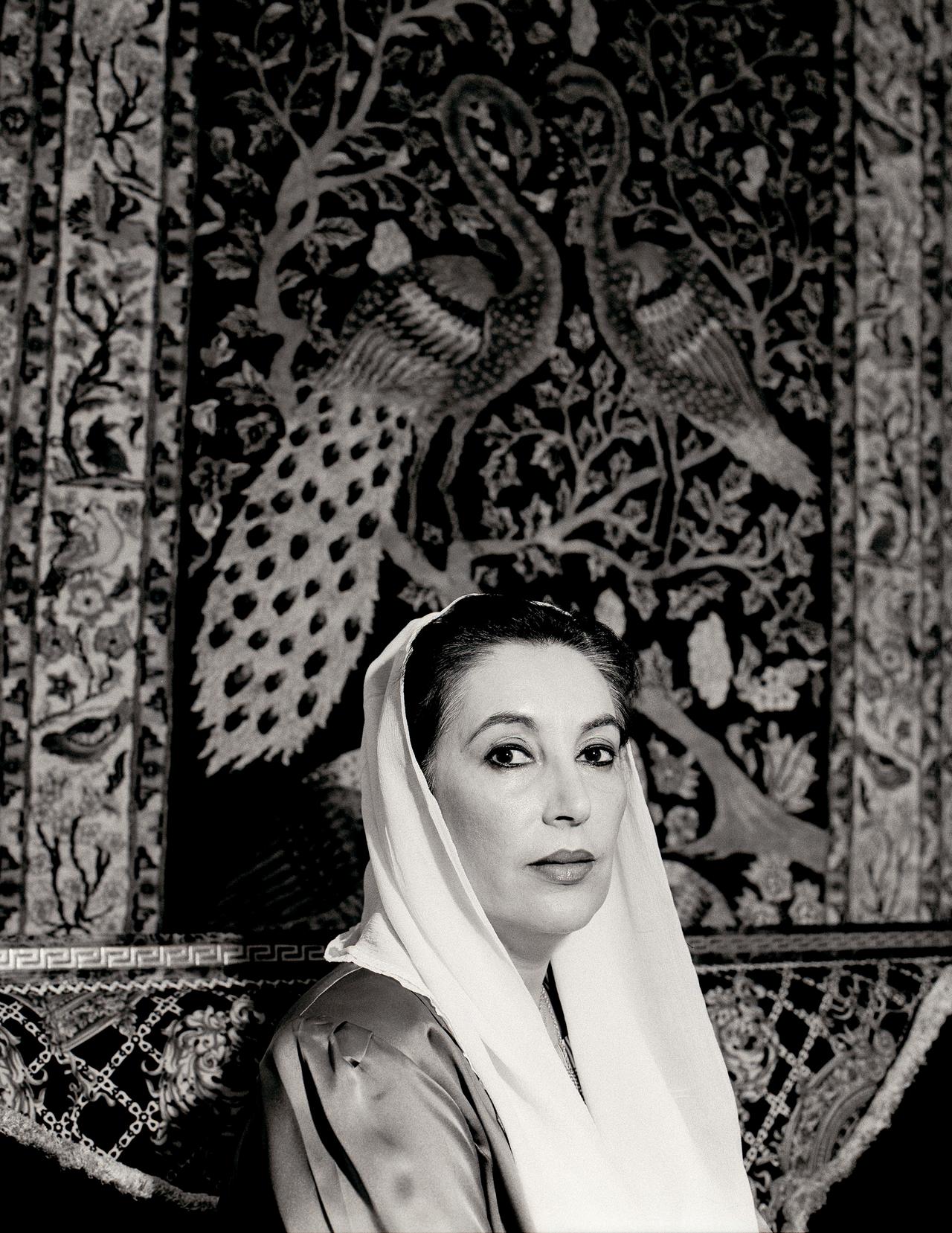
Benazir Bhutto (Flickr)
Benazir Bhutto was born on 21 June 1953 in Karachi. Her father was former prime minister Zulfikar Ali Bhutto and her mother was Nusrat Ispahani of Iranian origin. The family has been described as one of Pakistan’s most prominent political dynasties and belonged to a feudal background with extensive landholdings.
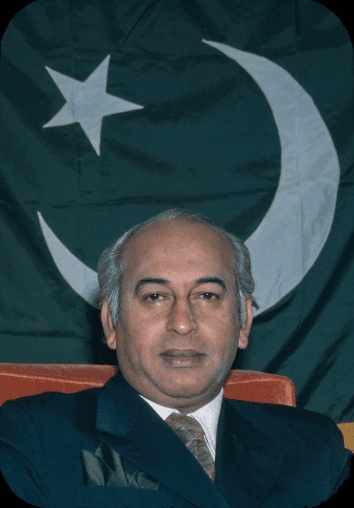
Zulfikar Ali Bhutto (Rawpixel)
She was raised in a family of four children: Benazir, Murtaza (1954), Sanam (1957) and Shahnawaz (1958). The family’s close ties to the political climate enabled Benazir to closely observe state governance developments from an early age.
It is reported that during her father Zulfikar Ali Bhutto’s political activities in the 1970s including international meetings and state visits Benazir occasionally accompanied him. Thus she witnessed both national and international political environments at a young age.
Benazir Bhutto was a member of one of Pakistan’s most influential political dynasties. The family achieved a prominent position both politically and socio-economically within the country. Zulfikar Ali Bhutto’s service as both prime minister and president strengthened the family’s role in national politics.
Her mother Nusrat Bhutto assumed leadership of the party after her husband’s arrest and remained a significant figure within the Pakistan Peoples Party for many years. The Bhutto family’s identity as political fighters has become a long-standing tradition.
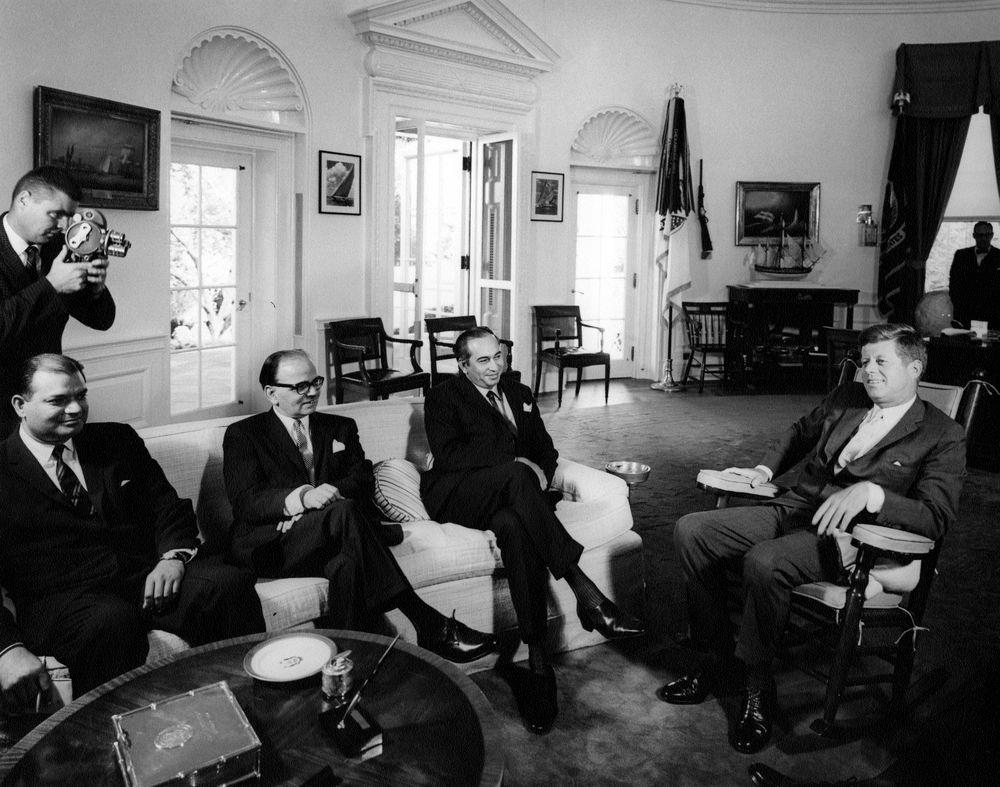
President John F. Kennedy (in rocking chair) meets with Pakistan’s Foreign Minister Zulfikar Ali Bhutto. Seated (left): First Secretary of the Pakistan Embassy Muzaffar Ali Jafri; Pakistan’s Ambassador Gulam Ahmed; Minister Bhutto. (Picryl)
Many members of the family were affected by various events in the political process. Shahnawaz Bhutto’s death in France in 1980 deeply impacted the family. The circumstances of his death were controversial and remained a subject of public investigation for years.
Murtaza Bhutto was killed in 1996 in Karachi during an armed clash with police. This incident became one of the most critical developments during Benazir Bhutto’s prime ministership and sparked widespread public debate. Murtaza’s death had profound effects both within the family and within the party.
Sanam Bhutto is a family member who has remained distant from politics and has never assumed public roles.
Benazir Bhutto’s early education took place at various schools in Pakistan. She attended the Convent of Jesus and Mary in Karachi the Presentation Convent High School in Rawalpindi and the Convent of Jesus and Mary in Murree. During this period it is reported that her childhood was significantly shaped by public attention due to her family’s political role.
She was described as a shy child in her early years. However she witnessed diplomatic engagements and official meetings due to her father’s duties and occasionally accompanied him to United Nations gatherings.
The regional crises of 1971 the course of the India-Pakistan war and the resulting division of Pakistan placed Zulfikar Ali Bhutto at the center of events and directly influenced Benazir’s formative years.
Her exposure to politics intensified during this period and the political line represented by her father shaped her worldview. Sources indicate that the debates she witnessed both at home and in the political arena contributed significantly to her political development.
Benazir Bhutto is reported to have traveled to the United States in 1969 and began her undergraduate studies at Radcliffe College within Harvard University. She studied political science and comparative government and completed her bachelor’s degree in 1973.
During this period she received comprehensive education in world politics democratic theory and international relations. The years she spent in the United States provided a crucial intellectual environment that shaped her political thinking.
At Harvard Benazir had the opportunity to compare political systems and gained important insights into the functioning of democratic institutions. This experience is regarded as one of the key factors that guided her later role in Pakistani politics.
After completing her studies at Radcliffe College she moved to the University of Oxford where she studied international law and diplomacy at Lady Margaret Hall and St Catherine’s College. She completed her education at Oxford in 1977.
Benazir Bhutto was elected president of the Oxford Union for the 1976–1977 term. This position is regarded as an important platform for students interested in politics in the United Kingdom. The experience she gained during this period significantly contributed to the development of her political oratory and representation skills.
It has been emphasized that her education in both the United States and the United Kingdom provided a solid foundation for her later political activities. The international perspective she acquired helped shape modernization and democratization as central concepts in her view of Pakistan.
Benazir Bhutto married Asif Ali Zardari in 1987. The wedding ceremony held in Lahore attracted widespread public attention. Throughout the marriage Zardari’s political standing and public visibility occasionally became subjects of debate.
Zardari’s prolonged detention in the 1990s on various charges had a major impact on family life. During this period Bhutto and her children were forced to live in different countries.
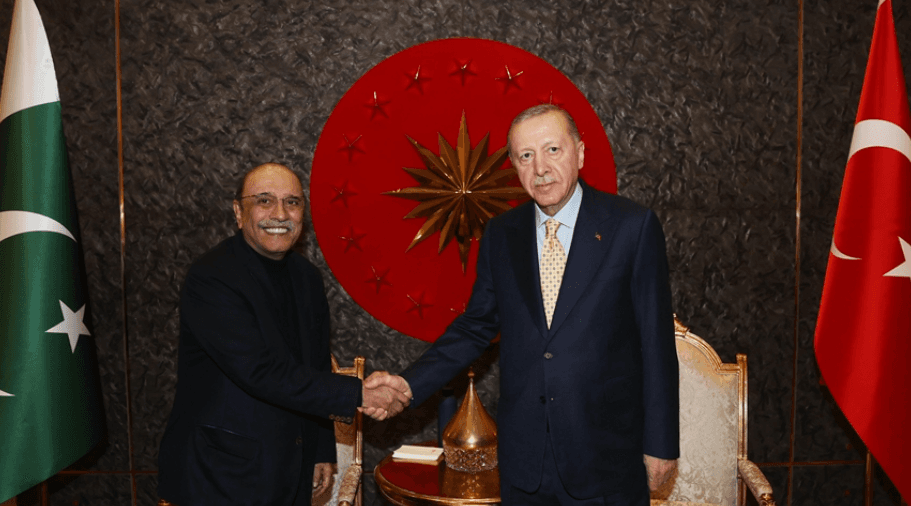
Turkish President Recep Tayyip Erdoğan (right) shakes hands with Pakistani President Asif Ali Zardari (left) at Istanbul Atatürk Airport in Turkey on 9 February 2025. (AA)
Bhutto had three children: Bakhtawar Bilawal and Aseefa.
The birth of her first child Bakhtawar in 1990 marked a historic first in Pakistan’s history. Benazir Bhutto became the first head of government to give birth while in office. It is reported that the birth was conducted in secrecy and via cesarean section.
The births and upbringing of her children progressed in fragmented ways across different countries due to Bhutto’s intense political life and frequent arrests and periods of exile.
The military coup in Pakistan in 1977 and the subsequent arrest of Zulfikar Ali Bhutto created a fundamental rupture in the country’s politics. Family members particularly Benazir Bhutto closely followed these developments and the events led her to assume political responsibility at a young age. During her father’s second arrest military raids on the family home clearly indicated that the military regime was directly targeting them. During this period it was discovered that the family’s communications were being monitored and listening devices were installed in various parts of the house.
The presence of soldiers in the home forced Benazir to carefully choose her political expressions even within private spaces. At the same time she occasionally openly criticized the military administration which led to her being perceived as a “dangerous” figure. During this period of full martial law the family members remained publicly supported despite the repression.
The trial of Zulfikar Ali Bhutto on charges related to the murder of a political opponent had a major impact on Pakistani politics. The court’s death sentence was upheld and appeals were unsuccessful. The Bhutto family attended the trial proceedings and intense communication occurred between Benazir and her father in the days before the verdict was announced. On his final day in prison Zulfikar Ali Bhutto dressed in clean clothes shaved and met his family for the last time before execution.
After the execution Benazir Bhutto’s political role became more prominent. Leadership of the Pakistan Peoples Party (PPP) passed to her within the family and she was expected to assume responsibility for the party’s future. During this period both public opinion and the party’s organizational structure placed Benazir at the center of the political struggle.
After her father’s execution Benazir Bhutto was held under house arrest for an extended period due to pressure from the military regime. Her political activities were restricted during house arrest but she still managed to establish occasional contacts and became a symbolic figure of resistance against the regime. She received various warnings due to participation in certain meetings which demonstrated that the military administration was closely monitoring her.
Under martial law authorities conducted raids on homes where political meetings were held and even events attended by women were brought under control. After Benazir gave a brief speech at one such meeting military authorities issued a warning. This was sufficient to indicate that the regime viewed her as a potential political threat.
During some military raids on the family home Benazir openly defied the soldiers and voiced verbal resistance. During one raid her criticism of the soldiers momentarily changed their behavior and they allowed her to meet her father. Such incidents made her personal resistance visible.
In late 1977 large open-air rallies drew significant public participation and increased Benazir’s visibility on the political scene. Her speeches in some cities were followed by massive crowds and she was repeatedly detained by the military regime. Her third round of public appearances led to her being placed once again under house arrest which was intended to cut off her contact with the public.
There were incidents where the military regime used physical force at certain events. While attending a sports event with her mother security forces used tear gas clubs and rifle butts to suppress the crowd. This attack contributed to the hardening of Benazir’s future political stance. After the attack she made clear that instead of retreating she adopted a more determined attitude.
As pressure from Zia’s regime intensified Benazir Bhutto’s ability to conduct political activities in Pakistan became impossible. Prolonged detentions and continuous house arrest severely restricted her freedom of movement. There were periods of three years when she was not permitted to leave her home. During this time other family members also faced similar restrictions.
In 1984 the ban on leaving the country was lifted. Benazir then traveled to the United Kingdom to continue her political activities. Her relocation to London marked a decisive step in expanding her international contacts and reorganizing the PPP from exile.
During her time in London she managed the PPP’s exile organization. Consultative meetings were held within the party and communication was maintained with opposition elements inside Pakistan. During this period she worked with her brothers Murtaza and Shahnawaz to establish underground political structures opposing the military regime. These organizations helped boost the morale and visibility of the opposition in Pakistan.
The death of her brother Shahnawaz in 1985 was a severe personal and political blow. When she traveled to Pakistan to attend his funeral she was arrested again. This incident demonstrated that tensions with the military regime continued.
After a long period of exile Benazir decided to return to Pakistan in 1986. Her return increased the expectations of various opposition groups for the end of military rule. This decision was also a strategic step to strengthen the PPP’s structure within the country.
The reception in Lahore in April 1986 became one of the largest mass gatherings in Pakistan’s recent political history. Tens of thousands attended and the event demonstrated the PPP’s return to the political stage. The enthusiastic public support created a significant shift in the political climate and increased pressure on the military regime.
Immediately after her return rallies demanded the resignation of Zia’s regime. These demands received broad public support. The military administration responded with various administrative restrictions and security measures. Nevertheless Benazir Bhutto continued her nationwide outreach and conducted an extensive political campaign.
During this period the internal leadership of the PPP was significantly restructured. Benazir Bhutto served as co-chair of the party alongside her mother Nusrat Bhutto. This structure was important both as a continuation of family tradition and for preserving the party’s legitimacy among broad segments of the population.
The postponement of elections under Zia’s regime increased political tensions within the country. In response the PPP continued preparations for elections updating its platform expanding its organizational structure and holding intensive meetings across various provinces. Benazir Bhutto’s nationwide tours during this period helped the party gain broad-based support.
Following Zia’s death in 1988 the country entered a process of re-civilianization. This development opened the way for elections. The PPP adopted a strategy centered on Benazir Bhutto’s leadership in preparing for the elections. The political campaign was shaped around themes of transition to democracy and economic stability.
During the transition period after Zia societal expectations increased and the PPP gained a strong political position in this environment.
The death of President Zia ul-Haq in an airplane crash in 1988 fundamentally changed Pakistan’s political landscape. The sudden end of military rule pushed the country toward long-delayed general elections. A provisional government announced that elections would be held and a period began in which political parties rapidly intensified their activities.
The Pakistan Peoples Party repositioned its national policies before the elections and structured its campaign around the transition to democratic governance strengthening fundamental rights and ensuring economic stability. As party leader Benazir Bhutto drew large crowds at rallies across the country.
Her youth and emphasis on civilian rule attracted significant public attention. The expectation of a return to democracy became widespread and the PPP turned this expectation into a political advantage.
As a result of the 1988 elections the PPP secured a majority at the federal level. This outcome made Benazir Bhutto the first woman ever to become prime minister in Pakistan’s history and in any Muslim-majority country. She assumed the office of prime minister on 1 December 1988.
The PPP did not achieve an absolute majority in parliament so it engaged in negotiations with other parties to form a government. After coalition talks support was secured from several smaller parties and Benazir Bhutto’s first cabinet was formed.
In the early months of the new government the balance between civilian authority and military institutions became a critical issue. After decades of military rule the question of how the civilian government would exercise its powers was debated. Disagreements arose between the General Staff and the government on certain administrative matters. The reconstruction of the civil-military balance particularly in security policy and foreign relations became central to the process.
The government launched various programs to ensure economic stability and improve access to basic needs. Extending electricity to rural areas improving housing and expanding health services were key priorities. Infrastructure projects were implemented to increase access to essential public services for populations in rural regions.
New educational institutions were opened across the country to increase literacy rates. Expanding access to education supporting women’s participation in education and promoting broad-based social development were targeted goals. Health care and poverty alleviation also became key components of the government’s program.
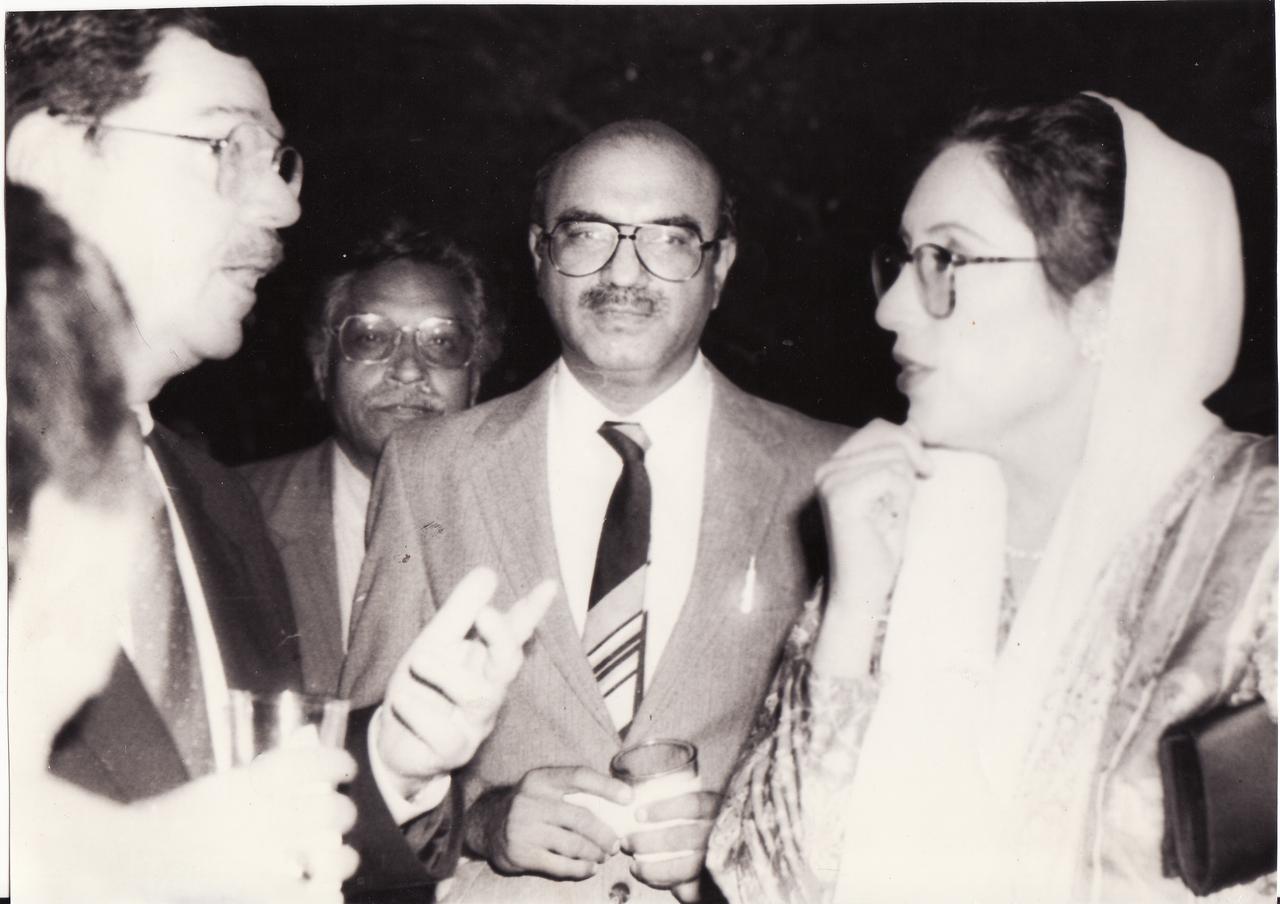
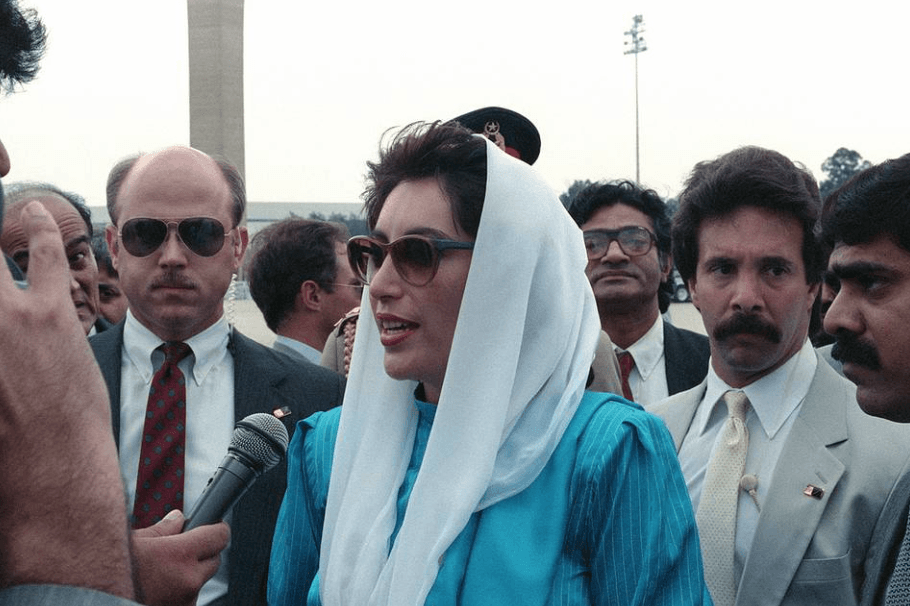
Academic Altaf Sheikh and Benazir Bhutto (Flickr)
Benazir Bhutto’s tenure as prime minister drew particular attention to reforms concerning women’s rights. Various initiatives were undertaken to increase women’s visibility in public life and improve their legal status. Programs supporting women’s employment were also introduced during this period.
Reducing tensions in India-Pakistan relations and maintaining diplomatic channels were important. Mutual dialogue channels remained open during this period. At the same time developments in Afghanistan continued to be a major component of Pakistan’s foreign policy.
During her first term Pakistan’s relations with international organizations were revitalized. The country aimed to pursue a more balanced and peaceful foreign policy. Pakistan participated in various international meetings and its regional role was strengthened.
During 1989 and 1990 disagreements emerged between the presidency and the government on various issues. Particularly disagreements over economic management and security policy narrowed the government’s operational space.
On 6 August 1990 the president used his constitutional powers to dissolve Benazir Bhutto’s government. This action was justified on grounds of economic problems national security concerns and administrative disputes. With the dissolution of parliament the country entered a new electoral process.
The dissolution of the government ended Benazir Bhutto’s first term as prime minister after only two years. This episode clearly revealed the fragile nature of power balances between civilian governments and other state institutions in Pakistan.
After being removed from office Bhutto resumed political struggle and assumed the role of opposition leader within the party.
After the government’s dissolution in 1990 Benazir Bhutto lost her parliamentary position but quickly reemerged as the main opposition leader in Pakistani politics. Although the Pakistan Peoples Party lost power in the elections it maintained a strong grassroots presence nationwide. Despite reduced parliamentary representation Bhutto expanded her political campaigns across the country and established herself at the center of the opposition.
During this period intense political debates occurred between the new government and the PPP. Criticisms directed at the government focused particularly on economic and administrative reforms. Bhutto criticized the transitional governments for failing to meet democratic standards and increased the opposition’s visibility.
Between 1990 and 1993 party organizations were restructured and coordination among local units was strengthened. Through nationwide meetings and advisory councils the preparation for elections was restarted. During this period the PPP conducted special efforts to expand its regional base.
Occasionally disagreements surfaced regarding the leadership style of certain party cadres. These debates did not affect Bhutto’s authority in decision-making. The central party leadership focused on upcoming elections and worked to maintain internal cohesion.
By 1993 serious conflicts emerged between the presidency and the government. This struggle within state management undermined governmental stability and pushed the country into another political impasse. During this period the view that elections were inevitable gained strength on both the governing and opposition sides.
The incompatibility between the two branches of the executive directly affected the functioning of parliament. This political deadlock led to early elections. As a result of the political chaos both the president and prime minister stepped down and a caretaker government was established.
When the election process began the PPP launched a wide-ranging campaign. The campaign emphasized economic stability democratization and improvements in public administration. Bhutto’s field visits especially in rural areas attracted large crowds and party organizations conducted active election campaigns.
As a result of the 1993 elections the Pakistan Peoples Party again secured a majority sufficient to form a government. Thus Benazir Bhutto became prime minister for the second time. This success demonstrated the continued strength of the PPP’s organizational structure and Bhutto’s political influence.
At the beginning of her second term a cabinet was formed and plans were prepared for implementing economic and administrative reforms. It was evident that Bhutto’s second prime ministership raised public expectations across the country. Coordination was established with senior bureaucracy to restructure the administration.
After the 1993 elections Benazir Bhutto became prime minister for the second time. The new government began its term with more extensive administrative preparation than the previous one. Public expectations had risen during the election process and a strong administrative team was assembled to restore political stability. During this period the cabinet structure was reorganized and changes were made in key areas of public administration.
The PPP’s number of seats in parliament during the second term was still insufficient to form an absolute majority so cooperation was established with various parties. The government took steps to maintain coalition balances to ensure the continuity of administrative processes. This structure was seen as important for sustaining political stability and implementing nationwide public policies.
Former Pakistani Prime Minister Benazir Bhutto on Day 32 | 1993 (32. Day)
During her second term economic policy became one of the government’s most intensive areas of focus. Programs were developed to expand electricity services to rural areas strengthen the energy infrastructure and reduce poverty. Various infrastructure projects were launched to improve the quality of public services.
Incentive programs were introduced to improve economic conditions in rural areas through agricultural production. Economic reforms included negotiations with international financial institutions and comprehensive planning to achieve economic stability.
The new term aimed to increase the number of educational institutions raise literacy rates and expand access to basic education. New schools were opened nationwide and teaching staff were strengthened. In the health sector efforts were made to improve access to basic health services.
Social service programs were implemented in unrest-affected areas and regulations were introduced to increase women’s participation in education and employment. These initiatives diversified services directed at different segments of society.
Managing the balance of power among state institutions was of great importance during Bhutto’s second term. Relations with the military intelligence agencies and bureaucracy were carefully managed during administrative decisions. Some reforms in governance sparked debates regarding the jurisdiction of various institutions.
During Bhutto’s second term disagreements occasionally arose between state institutions and the political process progressed under the delicate balances of these relationships. Emergence of coordination problems in the governance structure at times narrowed the government’s operational space.
In 1996 the death of Benazir Bhutto’s brother Mir Murtaza Bhutto affected national politics. Murtaza Bhutto had long been in disagreement with the party leadership and this period intensified family tensions. He lost his life as a result of a police operation targeting him.
Following this incident widespread public debate erupted and criticism of the government intensified. In her statements during this period Benazir Bhutto indicated that the incident was an attempt targeting both her family and the political structure. Her brother’s death was a severe blow both politically and personally.
The frequent appearance of Bhutto’s family members in political debates influenced public perception. The immediate public reactions to Murtaza Bhutto’s death and the internal family tensions negatively affected the government’s popularity. This situation was exploited by political opponents in various assessments.
By 1996 disagreements between the presidency and the government resurfaced. Disputes over governance approach administrative decisions and particularly public security created serious discord between the civilian government and the president.
This tension created a political deadlock and strengthened the president’s inclination to use his constitutional powers.
On 5 November 1996 the president dissolved the government and terminated the parliament’s term. The dissolution cited administrative problems allegations regarding public order and economic instability as reasons. Thus Benazir Bhutto’s second term as prime minister ended.
The termination of the government led the country into a new electoral process. Bhutto returned to the opposition after being removed from office for the second time.
After the government’s dissolution in 1996 the political environment in Pakistan became challenging once again for Benazir Bhutto. Following the government’s removal investigations were launched and political pressure increased. During this period legal actions intensified against both her and her family.
These conditions led Bhutto to leave the country to seek a broader space for security and political activity.
After the government’s dissolution Asif Ali Zardari remained in prison for many years. Various charges were brought against him and widespread public debates ensued. Zardari’s detention was one of the factors that complicated Bhutto’s return to Pakistan.
Bhutto was forced to continue living with her children and spent years trying to reunite her fragmented family.
During her years in exile she participated in international meetings and spoke at conferences on democracy and human rights. She advocated for the strengthening of the democratic process in Pakistan and maintained constant communication with her supporters inside the country.
As the leader of the PPP in exile she continued to guide the party internally and maintained its strategic direction.
During the years of exile the PPP’s internal structure experienced occasional divisions. Some members of parliament who opposed Bhutto’s political line left the party and formed new groupings. Nevertheless the PPP remained an influential force in elections.
In the 2002 elections the PPP became the party with the most seats in the national assembly but failed to gain power. As a result of coalition negotiations some figures from within the party formed a different political bloc and cooperated with the ruling party.
Zardari’s release from detention in 2004 after years in prison enabled the Bhutto family to reunite. This development contributed to Benazir Bhutto’s renewed consideration of returning to Pakistan.
Between 2004 and 2007 Benazir Bhutto held meetings with various international actors and called for support of the transition to civilian rule in Pakistan. She conducted diplomatic talks to define the security and political conditions necessary for her return.
By 2007 political activity in Pakistan had increased due to upcoming elections. Benazir Bhutto decided to return to the country in this atmosphere. Her return decision created significant impact both within the party base and among the broader political environment.
Before her return she received various warnings about threats against her. Information was shared indicating a high probability of an attack and it was stated that her return would be high-risk. Nevertheless she remained determined to participate in the elections and personally manage the party campaign.
Upon her return to Pakistan a massive convoy accompanied her in Karachi with hundreds of thousands of people participating. The scale of this reception attracted attention in Pakistan’s political history.
During the night hours of the convoy’s journey two separate explosions occurred. More than 150 people lost their lives in the attack. Bhutto survived this attack because the explosions did not directly target her. However the incident intensified debates regarding her security.
Significant difficulties were encountered in identifying the perpetrators of the attack and the details of the incident were not clarified. Criticisms emerged regarding the inadequacy of the security forces’ investigations.
Despite the attack Benazir Bhutto continued her election campaign and held rallies in various cities. She interacted directly with large public crowds and managed the election process herself.
Although security measures were increased during the election campaign Benazir Bhutto’s close circle repeatedly reassessed the possibility of another attack. The tense election atmosphere contributed to the continued risk of violence.
On 27 December 2007 Benazir Bhutto held an election rally at Liaquat Bagh Square in Rawalpindi. The rally was one of the key stops in the campaign for the upcoming general elections. Various party officials local administrators and a broad base of supporters attended the program. Bhutto took the stage to deliver her speech and convey her election messages.
Although various security units were deployed during Bhutto’s attendance at the rally the adequacy of protective arrangements became a subject of debate due to previous attack attempts. The movement of the armored convoy the location of security checkpoints and crowd control on the day of the rally exhibited notable intensity.
After the rally concluded Benazir Bhutto entered an armored vehicle and the convoy began to move. As the convoy passed near Liaquat Bagh Bhutto leaned out through the opening in the vehicle’s roof to greet supporters. At that moment a large crowd surrounded the vehicle.
As Bhutto was leaning out of the vehicle a gunman opened fire. Immediately after the gunfire the attacker detonated a device strapped to his body. This two-stage attack caused serious destruction both within the convoy and among the surrounding crowd.
The explosion resulted in numerous deaths and injuries. The intensity of the blast shook nearby vehicles and security forces responded to the incident.
It was determined that Benazir Bhutto had sustained severe injuries during the attack. Immediately after the explosion her bodyguards and party officials rapidly moved the vehicle away from the area. Bhutto was taken to the nearest hospital.
Benazir Bhutto was admitted to the emergency department of a hospital in Rawalpindi and received medical treatment. Despite all interventions it was announced that Benazir Bhutto had died. The news of her death spread rapidly throughout the country.
Following the announcement of Bhutto’s death statements were issued by government circles and political parties. The news caused widespread grief across the country and particularly in regions where Bhutto had strong political support large-scale protests were organized.
The attack in Rawalpindi heightened concerns about political stability in the country and the future of the election process became a subject of debate.
In the days following the attack several individuals were arrested and statements were made regarding the existence of a group involved in the attack. Information emerged regarding the identity of the young attacker.
Immediately after the incident various statements were made regarding the planning and execution of the attack and connections to certain organizations were alleged. Some of these claims sparked debate during the investigation process.
Immediately after the assassination investigations were conducted at the crime scene in Rawalpindi. However the manner in which these investigations were carried out sparked public debate. The crime scene was cleaned up shortly after the incident creating serious deficiencies in evidence collection. The rapid washing of the blast area caused lasting problems for the investigation.
Insufficient time was allocated to examine the weapons explosives and the identity of the attacker. This situation became a subject of criticism in both national and international reports in subsequent periods.
Initial investigations indicated that the attacker was a young militant. Some testimonies suggested that the attacker had links to various organizations. A structure involving young militants was mentioned in relation to the planning of the attack.
The arrest of multiple individuals during the investigation led to assessments that the attack was not the act of a single individual.
Shortly after the assassination several suspects were arrested and interrogated. Some of those questioned admitted involvement in the attack. Details regarding the preparation of the explosive devices the direction of the attacker and his transportation to Rawalpindi were recorded in interrogation reports.
One suspect stated that he had originally intended to be the main attacker but that the plan had changed. This indicated that the attack had been coordinated by multiple individuals.
Some suspects later retracted the statements they had given while in custody. The retractions created uncertainty in the investigation file. Inconsistencies between evidence and statements affected the progress of the trial.
After the assassination criticisms increased regarding the inadequacy of local investigations. In response the authorities permitted external experts to assist. A team from Scotland Yard arrived in Pakistan and conducted technical examinations.
Experts evaluated aspects such as the nature of the explosion the presence of bullet marks and the cause of Bhutto’s death. Experts focused on technical findings indicating that the attack was blast-centered.
Later a commission was established by the United Nations to examine the progress of the investigation in Pakistan. The commission members sought to meet with various institutions but some institutions refused these meeting requests.
During the commission’s work support provided on security grounds was withdrawn the safe house allocated to the commission was canceled and its protection personnel were removed. These events limited the commission’s capacity to operate on the ground.
During the investigation several individuals linked to the assassination were found dead within a short time. These deaths slowed progress in the case file.
Some individuals alleged to have been involved in preparing the attack were reported killed in clashes or security operations in different regions. Some records simply noted “killed in a clash” for these individuals.
This situation created a complex picture that made it difficult to uncover all connections to the incident.
During the investigation allegations emerged that security institutions had failed in their duties. Threat assessments prior to the assassination the quality of protection provided to Bhutto and the measures taken on the day of the attack were debated.
The murder of a prosecutor working on the assassination case further intensified debates regarding the security of the investigation.
Cases against some suspects faced difficulties and some were acquitted. Courts cited procedural irregularities in evidence collection as grounds. The assassination investigation remained incomplete for years due to insufficient evidence and various administrative obstacles.
Trials against some high-level figures were suspended at various points. Multiple allegations were made regarding the ultimate perpetrators of the assassination but the judicial process never reached a definitive conclusion on any of them.
Immediately after the announcement of Benazir Bhutto’s death widespread protests erupted in many cities across Pakistan. Mass demonstrations occurred particularly in Sindh where her support base was strong. Transportation networks were disrupted and some public buildings were damaged. The intensity of the protests demonstrated the deepening of political uncertainty in the country.
The emotional response of the public clearly revealed the strength of Bhutto’s political and symbolic influence. The period following the assassination was shaped by prolonged street demonstrations by large segments of the population.
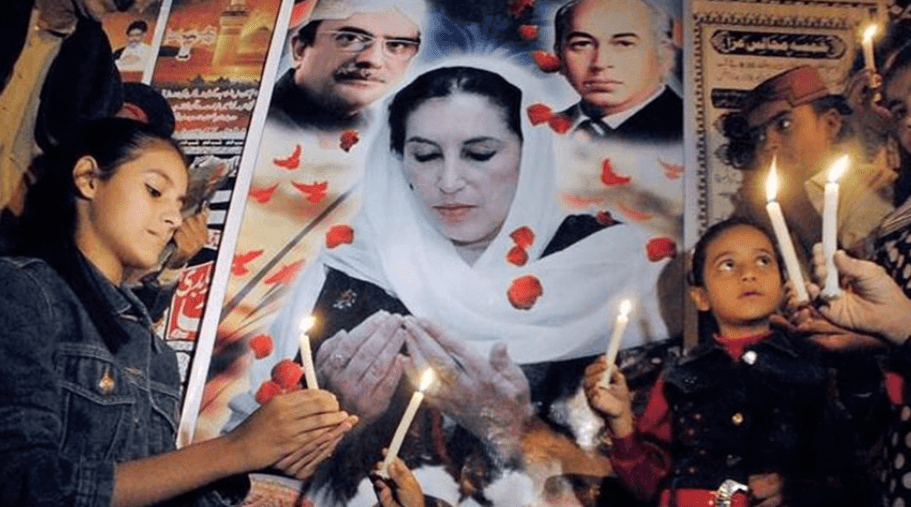
Pakistan Karachi memorial events for Benazir Bhutto (AA)
Due to the intensity of the protests security forces implemented additional measures in many cities. Strict security precautions were applied in various areas to maintain public order. Statements by political leaders were seen as important for reducing protest violence and ensuring the continuation of the election process.
After Benazir Bhutto’s death the leadership structure of the Pakistan Peoples Party was reorganized. A rapid restructuring process occurred within the party’s central leadership to preserve her political legacy and continue the electoral process. A new era began with Benazir Bhutto’s son Bilawal Bhutto Zardari emerging as the party’s leader.
This transition within the party helped preserve the PPP’s position in public opinion. Bhutto’s death had a lasting impact on the party’s political identity.
Following the assassination the timing of the upcoming general elections was reconsidered. Due to the tense political atmosphere the election schedule was reviewed and the process was delayed for a period. This adjustment caused parties to re-plan their campaign preparations.
The PPP viewed Bhutto’s death as a turning point in its political struggle and reshaped its election campaign accordingly. The assassination became a defining theme in the rhetoric and campaign strategies of political parties.
In statements by political leaders Benazir Bhutto’s death was described as a major loss for Pakistani democracy. Party representatives emphasized her crucial role in the democratization process. Political circles stated that the assassination was a development affecting the country’s stability.
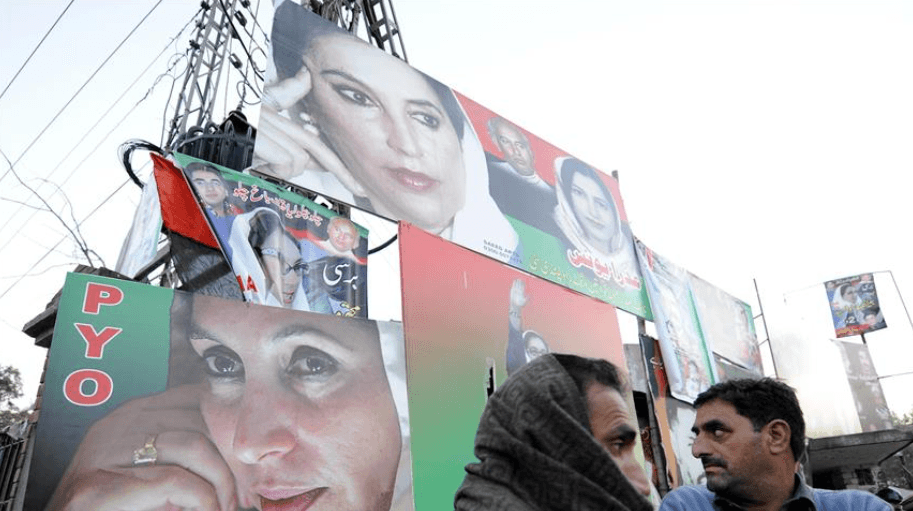
Islamabad,Memorial events for Benazir Bhutto (AA)
The assassination generated widespread international反响. Statements from various countries condemned the attack and emphasized the need for the continuation of the democratic process in Pakistan. In the international media Bhutto’s political career her struggle and the impact of her death on Pakistan received extensive coverage.
Benazir Bhutto’s death created a lasting impact on the trajectory of political debates in the country. Her political identity as a symbol of the transition to democracy her struggle against military regimes and her two terms as prime minister led to her being widely regarded as a symbolic figure.
After her death a strong expectation emerged within the party and public opinion for the continuation of her political line. Traditional support for the Bhutto family became even more pronounced among the grassroots.
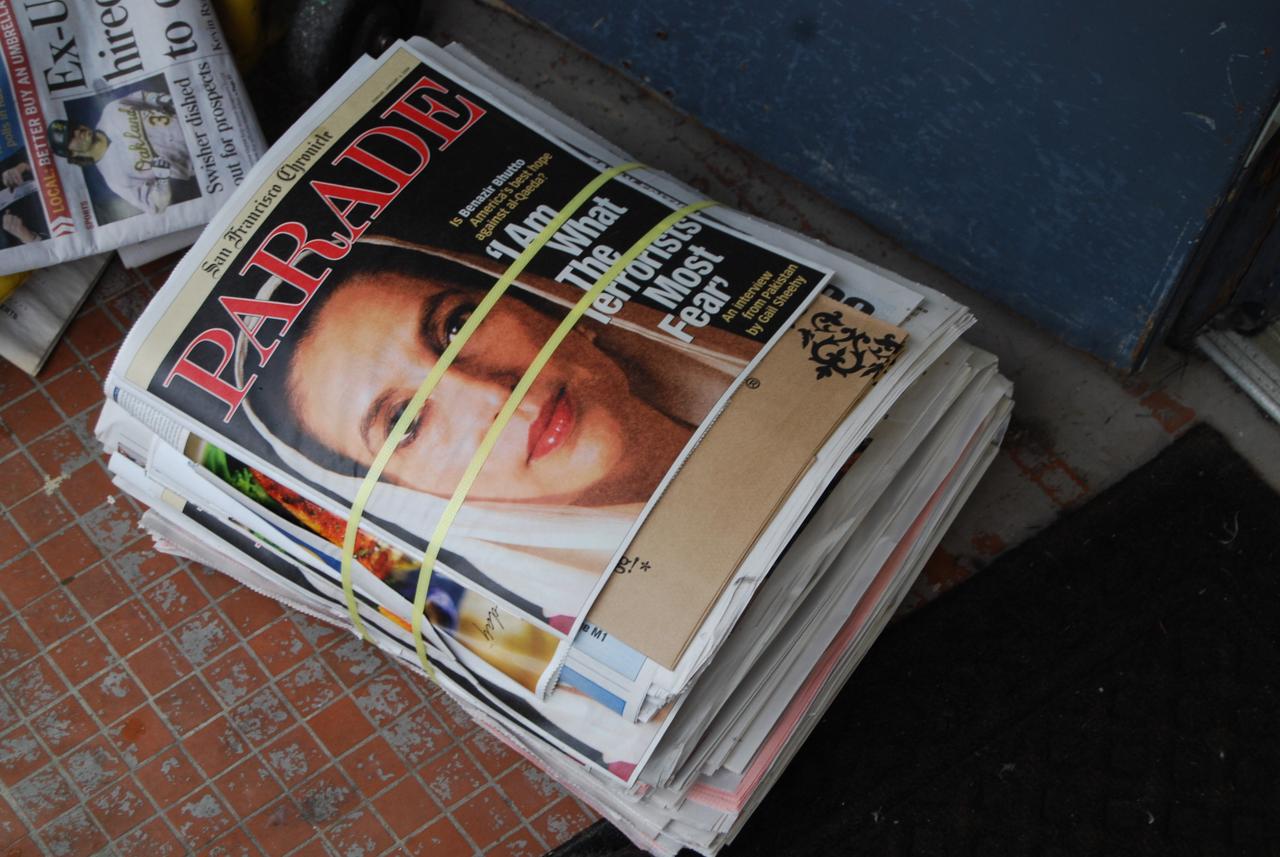
San Francisco Chronicle newspaper dated 7 January 2008 (Flickr)
After the assassination the Bhutto family continued to be an important actor in Pakistani politics. The continuation of family members’ roles within the PPP institutionalized this political legacy. The political tradition shaped through the Bhutto family has shown continuity within the country’s political structure.
Deficiencies in the investigations and problems in evidence collection increased public distrust in state institutions. The failure to fully clarify the assassination led to prolonged delays in the investigation process.
Legal and political debates regarding Bhutto’s death remained unresolved for many years and the investigation file resurfaced in different periods.
The assassination marked the end of one era and the emergence of a new political atmosphere in Pakistan. This process laid the groundwork for the PPP’s return to power and revived debates on democratization in the country.
Bhutto’s death directly influenced both the election process and the shaping of the country’s governance structure.
Achievement. "Benazir Bhutto." Accessed November 18, 2025.https://achievement.org/achiever/benazir-bhutto/
Al Jazeera. "The day Benazir Bhutto was killed." Reporter's Notebook, Accessed November 18, 2025.https://www.aljazeera.com/features/2017/12/27/the-day-benazir-bhutto-was-killed
Anadolu Ajansı. "Annemi Müşerref öldürdü." AA, May 25, 2012. Accessed November 18, 2025.
Anadolu Ajansı. "Benazir Bhutto: Supporters remember 1st Muslim woman PM." Accessed November 18, 2025.
Anadolu Ajansı. "Eski Pakistan Cumhurbaşkanı Müşerref idama mahkum edildi." AA, December 17, 2019. Accessed November 18, 2025.
Anadolu Ajansı. "Müşerref Butto suikastinden hakim karşısına çıktı." AA, August 20, 2013. Accessed November 18, 2025.
Anadolu Ajansı. "Müşerref cinayet davasında suçsuz bulundu." AA, January 18, 2016. Accessed November 18, 2025.
Anadolu Ajansı. "Müşerref'i mahkemeden kaçırdılar." AA, April 18, 2013. Accessed November 18, 2025.
Anadolu Ajansı. "PROFILE - Remembering Benazir Bhutto: First Muslim woman premier." Accessed November 18, 2025.
Anadolu Ajansı. "Turkish President Erdogan meets with Pakistani counterpart in Islamabad" AA, Accessed November 18, 2025.
BBC. "Benazir Bhutto assassination: How Pakistan covered up killing" Owen Bennett Jones, Accessed November 18, 2025.https://www.bbc.com/news/world-asia-42409374
BBC. "Obituary: Benazir Bhutto." BBC, May 3, 2013. Accessed November 18, 2025.https://www.bbc.com/news/world-asia-22394089
Benazir Bhutto, *Benazir Bhutto Daughter of the East*, Benazir Bhutto An Autobiography Daughter of Destiny, Copyrighthttps://bhutto.org/
Biography. "Benazir Bhutto." Women's History, Accessed November 18, 2025.https://www.biography.com/political-figures/benazir-bhutto
EBSCO. "Benazir Bhutto." EBSCO Knowledge Advantage™, Accessed November 18, 2025.https://www.ebsco.com/research-starters/biography/benazir-bhutto
First Post. "History Today: When Benazir Bhutto shattered barriers to become Pakistan's first woman" First Post, Accessed November 18, 2025.
Flickr. "Altaf Shaikh (ctr) & Benazir Bhutto." altafshaikhjapan, Accessed November 18, 2025.https://www.flickr.com/photos/10872493@N06/3787454311/in/photolist-6LFGdp-4gr4Ad-6jiAMb-5Uqj72-4h9dxy-a1pqxt-4h4h5z-4h9dyC-4h9dzf-4h9dww-4ggxHd-4gmh8f-5wdqWT-4gp75k-5UuuUy-4p2uY3-956UDQ-4npGD5-73eAhN-4J6poy-4ghdxm-4gzspP-dEBHok-4oXwPR-dEBHxP-dEBHgc-dEH6Tq-dEBHjX-dEBH7M-cmLoDb-dEH6jh-4p2w7Y-4jbSUf-958wgL-955xsM-958B3N-955sjn-955xxT-9543gR-957UtY-955xvB-958BgL-958wiW-958woE-954QPB-955xqH-955smB-955svn-4oXvVp-4p2zHY
Flickr. "Benazir Bhutto - 'I am What the terrorists most fear'." Accessed November 18, 2025.https://www.flickr.com/photos/ari/2174889582/
Flickr. "Benazir Bhutto, Dubai 2006." Oliver Mark, Accessed November 18, 2025.https://www.flickr.com/photos/olivermarkcc/52606737607/
Flickr. "Benazir Bhutto." Accessed November 18, 2025.
GZT. "İlk Müslüman kadın başbakan: Benazir Butto." *Mecra*, October 25, 2025. Accessed November 18, 2025.https://www.gzt.com/mecra/ilk-musluman-kadin-basbakan-benazir-butto-3791916
Hassan Abbas. "Benazir Bhutto: A Brief Biography." Medium, Accessed November 18, 2025.https://medium.com/@hassankhan12/benazir-bhutto-a-brief-biography-b969b91f5a0f
History. "Benazir Bhutto." Women's History, Accessed November 18, 2025.https://www.history.com/articles/benazir-bhutto
History. "Pakistani politician Benazir Bhutto assassinated." Accessed November 18, 2025.https://www.history.com/this-day-in-history/december-27/pakistani-politician-benazir-bhutto-assassinated
Iowa State University. "Benazir Bhutto." Awpc, Accessed November 18, 2025.https://awpc.cattcenter.iastate.edu/directory/benazir-bhutto/
Jangbar, Sakina. "Benazir Bhutto: A Wilful Muslim Woman." *Journal of Intercultural Communication Research* 51, no. 1 (2022): 79–92.https://www.tandfonline.com/doi/citedby/10.1080/17475759.2021.1963305?scroll=top&needAccess=true
Khuhro, Amir. “Benazir Bhutto: A Lesson for Democracy,” 2014https://www.academia.edu/8223195/Benazir_Bhutto_A_Lesson_for_Democracy
Liberal International. "Benazir Bhutto Awarded 1988." Liberal International, Accessed November 18, 2025.https://liberal-international.org/people/benazir-bhutto/
New Yorker. "Bhutto’s Fateful Moment." Mary Anne Weaver, Accessed November 18, 2025.https://www.newyorker.com/magazine/1993/10/04/bhuttos-fateful-moment
Picryl. "President John F. Kennedy with Foreign Minister of Pakistan, Zulfikar Ali Bhutto." Picryl, 04/10/1963. Accessed November 18, 2025.https://picryl.com/media/president-john-f-kennedy-with-foreign-minister-of-pakistan-zulfikar-ali-bhutto-57dfc3
Rawpixel. "Zulfikar Ali Bhutto, former Prime Minister of Pakistan by Bernard Gotfryd." RawPixel, Accessed November 18, 2025.https://www.rawpixel.com/image/6316431/zulfikar-ali-bhutto-former-prime-minister-pakistan
Shafqat, Saeed. "Pakistan under Benazir Bhutto." Asian Survey 36, no. 7 (1996): 655–72.https://www.jstor.org/stable/2645715
Starsunfolded. "Benazir Bhutto." Accessed November 18, 2025.https://starsunfolded.com/benazir-bhutto/
Yale University Press. "The Assassination of Benazir Bhutto." Accessed November 18, 2025.https://yalebooks.yale.edu/2021/02/05/the-assassination-of-benazir-bhutto/
YouTube. "Eski Pakistan Başbakanı Benazir Butto 32.Gün'de | 1993" 32. Gün, Accessed November 18, 2025.
Spouse | Asif Ali Zardari | ||||||||
|---|---|---|---|---|---|---|---|---|---|
Date of birth | 1953-06-21 | ||||||||
Date of death | 2007-12-27 | ||||||||
Mother | Nusrat Bhutto | ||||||||
Father | Zulfikar Ali Bhutto | ||||||||
Child | Bilawal Aseefa Bakhtawar | ||||||||
Party | Pakistan Peoples Party (PPP) | ||||||||
Office | 1993–1996 Prime Minister of Pakistan (1988–1990) | ||||||||
Education | University of Oxford Radcliffe College–Harvard | ||||||||
Early Life
The Bhutto Family’s Position
Relationships with Siblings
Childhood and Early Education
Influence of the Political Atmosphere Before University
Education Years
Higher Education in the United States
Radcliffe College (1969–1973)
Impact of Her Harvard Years
Education in the United Kingdom
University of Oxford (1973–1977)
Presidency of the Oxford Union
Marriage and Children
Marriage to Asif Ali Zardari
Birth of Children
Political Rise and Conflict with Military Rule
Removal of Zulfikar Ali Bhutto and the Family’s Position
Trial and Execution of Zulfikar Ali Bhutto
Arrests and Struggle During Martial Law
House Arrest and Early Political Activities
Blocking of Meetings and Political Restrictions
Confrontation and Open Resistance
Public Engagement at Political Meetings
Violent Interventions
Exile Period and the Reshaping of Political Struggle After 1986
Transition from House Arrest to Exile
Rebuilding Political Organization in London
Return to Pakistan in 1986
Decision to Return
Nature of the Reception
Public Demands and Confrontation with Zia’s Regime
Repositioning of the Pakistan Peoples Party
Co-Chairmanship
Election Preparations
The Path to 1988
1988 Elections and First Term as Prime Minister (1988–1990)
Emergence of the 1988 General Elections
Post-Zia Political Transition
PPP’s Election Strategy
Election Results
Formation of the Government
Need for a Coalition
Relations with Military Institutions
Domestic Policy Initiatives
Economic Priorities
Education and Social Policies
Empowering Women in Public Life
Foreign Policy Balances
Relations with Neighboring Countries
Process of Removal from Office
Disputes with President Ghulam Ishaq Khan
Dissolution of the Government
End of the First Prime Ministership
Opposition Period (1990–1993)
Political Position After Removal from Office
Assumption of Opposition Leadership
Intensification of Political Criticism
Reorganization of Party Structure
Strengthening of Organizations
Conflicts with Party Leaders
Path to the 1993 Elections
Deepening of the Political Crisis
Tension Between President and Prime Minister
Resurgence of PPP’s Election Campaign
1993 General Elections
Determination of Election Results
Formation of the Government
Second Prime Ministership (1993–1996)
Rebuilding the Government
Beginning of the New Term After the 1993 Elections
Formation of the Coalition Structure
Economic and Social Policies
Economic Management Priorities
Implementation of Education Health and Social Policies
Political Challenges and Relations with State Institutions
Managing Balances with Military and Administrative Institutions
Family Events and Their Political Impact
Mir Murtaza Bhutto’s Life and Death
The Family’s Position in Public Opinion
Removal from Office in 1996
Tensions with President Farooq Leghari
Dissolution of the Government and Disbanding of Parliament
Exile Years and the International Dimension of Political Struggle (1996–2007)
Return to Exile After Removal from Office
Contraction of the Political Environment
Family Situation and Zardari’s Detention
Life in Exile in London and Dubai
Continuation of Political Activities
PPP’s Position Inside Pakistan
Political Contacts Between 2004 and 2007
Release of Zardari
International Meetings
Return in 2007 and the Political Atmosphere Before the Assassination
Decision to Return to Pakistan
Maturation of the Political Process
Security Warnings
10 October 2007: First Attack in Karachi
Structure of the Reception
Two-Stage Attack
Progress of the Investigation
Security Crisis During the Campaign
Continuation of Election Activities
Deepening of Security Concerns
Assassination on 27 December 2007
Rawalpindi Rally and the Day’s Events
Organization of the Rally
Security Measures
Development of the Attack
Saluting from the Vehicle
Armed Attack and Explosion
Bhutto’s Condition Inside the Vehicle
Admission to Hospital and Announcement of Death
Emergency Intervention
Official Statements and Initial Reactions
Initial Information Regarding Responsibility for the Attack
Arrests and Testimonies
Claims and Statements
Investigations and Legal Proceedings After the Assassination
Initiation of Initial Investigations
Deficiencies in the Crime Scene Examination
Assessments Regarding the Identity of the Attacker
Arrests and Confessions
Collection of Statements
Retraction of Confessions
International Investigations and Scotland Yard’s Involvement
Request for External Support
United Nations Commission
Allegations of Cover-up and Stalling of the Investigation
Deaths of Witnesses and Suspects
Criticism of Security Forces
Suspension of the Legal Proceedings
Political and Social Impact in Pakistan After Benazir Bhutto’s Death
Initial Reactions Across the Country
Social Tension and Widespread Protests
Increased Security Measures
Shift in Political Balances
Reorganization of PPP’s Leadership Structure
Revisions to the Election Calendar and Political Programs
National and International Reactions
Domestic Political Statements
International Reactions
Formation of the Political Legacy
Impact of Bhutto’s Political Identity on Public Perception
Continuation of the Family’s Role in Politics
Long-Term Consequences of the Assassination
Erosion of Trust in State Institutions
A New Era in Pakistani Politics