


This article was automatically translated from the original Turkish version.
+1 More
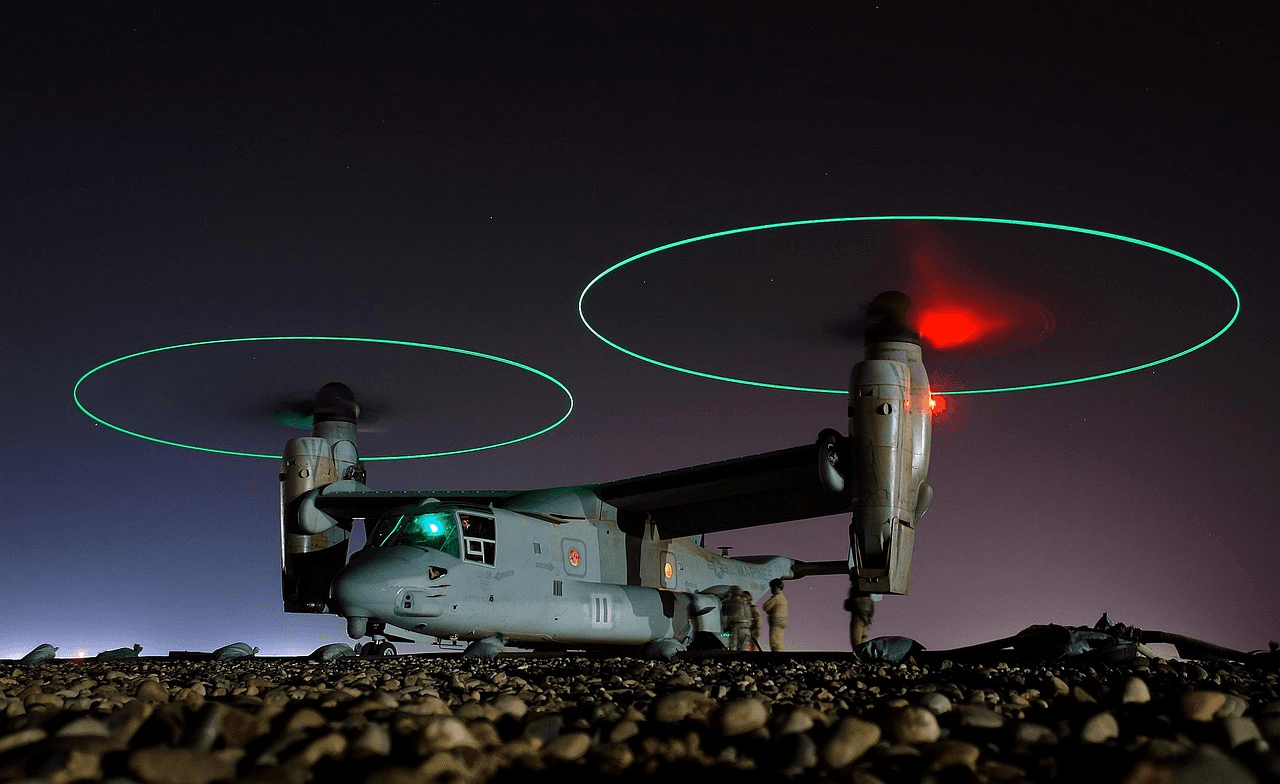
Bell Boeing V-22 Osprey
Category | Convertible tiltrotor military aircraft | ||||||||
|---|---|---|---|---|---|---|---|---|---|
Origin | United States (Bell Boeing) | ||||||||
Quantity Produced | More than 400 | ||||||||
Engine and Power System | 2 × Rolls-Royce AE 1107C turboshaft engines | ||||||||
First Flight | 19 March 1989 | ||||||||
Year of Production | 1997 | ||||||||
Empty Weight | 33,110 lb (15,020 kg) | ||||||||
Maximum Takeoff Weight | 60,500 lb (27,440 kg) | ||||||||
Maximum Speed | 275 knots (509 km/h) | ||||||||
Cruising Speed | 240 knots (444 km/h) | ||||||||
Range | 879 nautical miles (1,627 km) | ||||||||
Service Ceiling | 26,000 ft (7,925 m) | ||||||||
Length | 17.5 metres | ||||||||
Rotor Diameter | 11.6 metres | ||||||||
Wingspan | 25.8 metres | ||||||||
Height | 6.7 metres | ||||||||
Notable Features | High cruise speed and range Vertical takeoff and landing (VTOL) capability Short takeoff and landing (STOL) capability Capable of use in various military missions | ||||||||
Bell Boeing V-22 Osprey is a convertible aircraft that occupies an important place in aviation history by combining vertical takeoff and landing (VTOL) with short takeoff and landing (STOL) capabilities. This innovative design integrates the vertical takeoff and landing capacity of helicopters with the high speed and long range advantages of fixed-wing aircraft and is widely used for various missions in military operations.
The Bell Boeing V-22 Osprey adapts to the dynamic nature of military operations by providing flexibility and rapid maneuverability on the battlefield. This enables the swift deployment of troops, transportation of critical supplies and immediate response to emergencies. The aircraft’s convertible tiltrotor system has established a significant role in military operations by overcoming the limitations of traditional helicopters and aircraft.

Bell Boeing V-22 Osprey (Pixabay)
The development of the V-22 Osprey began in the 1980s under the U.S. Department of Defense’s Joint Service Vertical Takeoff and Landing Experimental (JVX) program. The goal of the program was to develop an aircraft that combined the vertical takeoff and landing capabilities of helicopters with the high speed and long range advantages of fixed-wing aircraft. This concept emerged from the need for rapid and effective intervention in operational areas during military missions. Developed as a joint project by Bell and Boeing, the first prototype of the V-22 made its maiden flight on 19 March 1989. However, technical challenges and accidents during the development process caused significant delays to the project. Nevertheless, the V-22 Osprey has gone down in history as one of the successful examples of convertible tiltrotor technology.
The most distinctive feature of the V-22 Osprey is its convertible tiltrotor system. This system enables the aircraft to perform vertical takeoff and landing like a helicopter and to fly at high speeds over long distances like a fixed-wing aircraft. The aircraft is equipped with advanced avionics and sensor systems, the capability for in-flight refueling, and various electronic navigation, communication and mission management systems. Additionally, it features advanced sensors and imaging systems that allow operations at night and in adverse weather conditions. These technological features have made the V-22 Osprey a vital asset in modern military operations.
The V-22 Osprey performs a wide range of missions in military operations:

Bell Boeing V-22 Osprey (Pixabay)
Boeing. "22 Fast Facts on the Bell Boeing V-22 Osprey." Accessed April 15, 2025.
Boeing. "V-22 Osprey." Accessed April 15, 2025.
SKYbrary Aviation Safety. "Bell Boeing V-22 Osprey." Accessed April 15, 2025.

Bell Boeing V-22 Osprey
Category | Convertible tiltrotor military aircraft | ||||||||
|---|---|---|---|---|---|---|---|---|---|
Origin | United States (Bell Boeing) | ||||||||
Quantity Produced | More than 400 | ||||||||
Engine and Power System | 2 × Rolls-Royce AE 1107C turboshaft engines | ||||||||
First Flight | 19 March 1989 | ||||||||
Year of Production | 1997 | ||||||||
Empty Weight | 33,110 lb (15,020 kg) | ||||||||
Maximum Takeoff Weight | 60,500 lb (27,440 kg) | ||||||||
Maximum Speed | 275 knots (509 km/h) | ||||||||
Cruising Speed | 240 knots (444 km/h) | ||||||||
Range | 879 nautical miles (1,627 km) | ||||||||
Service Ceiling | 26,000 ft (7,925 m) | ||||||||
Length | 17.5 metres | ||||||||
Rotor Diameter | 11.6 metres | ||||||||
Wingspan | 25.8 metres | ||||||||
Height | 6.7 metres | ||||||||
Notable Features | High cruise speed and range Vertical takeoff and landing (VTOL) capability Short takeoff and landing (STOL) capability Capable of use in various military missions | ||||||||
No Discussion Added Yet
Start discussion for "Bell Boeing V-22 Osprey" article
Development Process
Technical Features and Convertible Tiltrotor System
Operational Use