


This article was automatically translated from the original Turkish version.
+1 More
Belene Collection Camp is a repressive institution established and operated in socialist Bulgaria to isolate individuals deemed opponents or potentially oppositional by state authorities without judicial proceedings, through administrative orders. The camp functioned as an institutionalized instrument of assimilation, absorption, and control policies targeting minorities and groups resisting regime policies.
Belene Victim Fahri Yaşaroğlu Tells His Story (AA)
Belene Collection Camp is located on Belene Island in the Danube River. The camp was first established in 1949 as one of the repressive tools of the Stalinist period in socialist Bulgaria; political opponents, peasants resisting collectivization, and individuals suspected of potential dissent were sent there by administrative order. In this capacity, the camp operated not through court rulings but directly under the decisions of state security organs, functioning as a mechanism for the forced isolation of groups deemed “potential threats”.
By 1959, as part of the post-Stalin process across the Eastern Bloc, collection camps began to be dismantled; operations at Belene were scaled back in Bulgaria as well. However, during the forced name-changing campaigns targeting the Pomaks and, to a lesser extent, Turks in the 1970s, the camp was briefly reopened.
The camp was reopened for a third time in April 1985. During this period, as part of the “Revival Process” initiated by the People’s Republic of Bulgaria, the goal was to forcibly register Turks with Bulgarian names and ban Turkish cultural elements; those who actively or potentially resisted these policies were collectively arrested. In the initial phase (December 1984–March 1985), those detained were sent to Belene Prison; subsequently, the Belene Collection Camp was reestablished.
Between 1985 and 1986, Belene operated administratively under the status of a “segregation camp”. This status enabled the detention of individuals without judicial rulings. Internal security and state security organs directly managed the camp’s operations, with administrative mechanisms subordinate to political authority playing the decisive role.
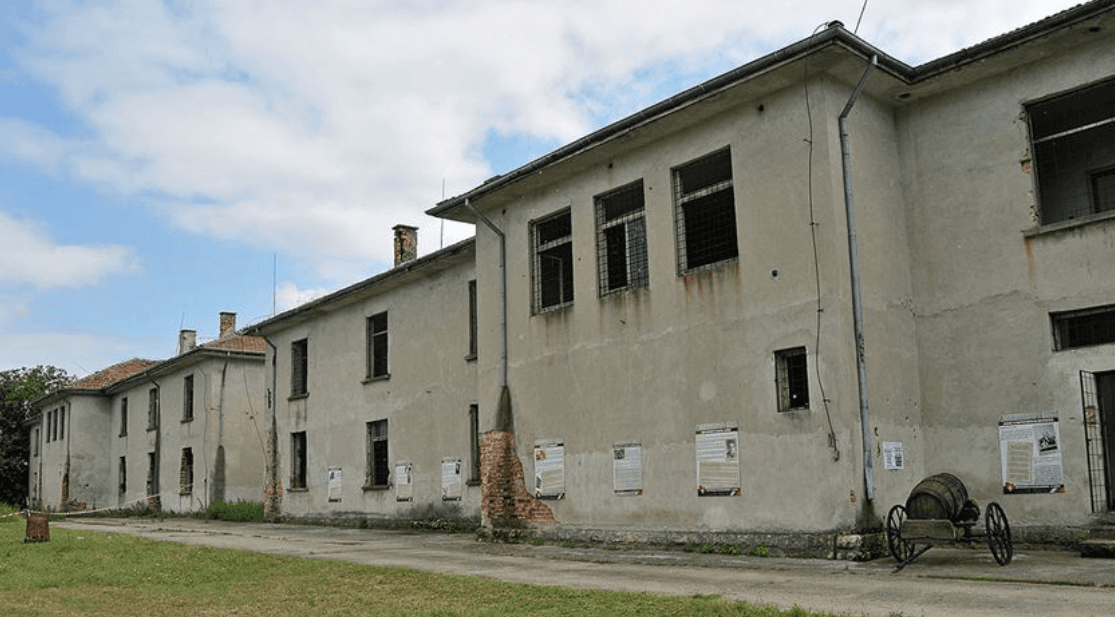
Belene Kampı (AA)
The institutionalization of nationalism as an ideology in late 18th- and early 19th-century Europe profoundly affected the Balkans and societies under Ottoman rule. The intellectual foundations of Bulgarian identity were laid during this period; the “national awakening” (Vazrazhdane), which began with efforts to establish an independent church separate from the Phanariot Greek Patriarchate, evolved into a political movement by the mid-19th century with support from major powers, especially Russia. When Bulgaria declared its autonomy in 1878 and independence in 1908, a large Turkish population whose rights were guaranteed by treaties continued to live within its borders. Over time, however, these rights were arbitrarily curtailed, and policies toward Turks gradually shifted as they were reduced to minority status.
In the early years after independence, the Ottoman sultan, in a decree sent to Prince Alexander on 15 August 1879, stipulated that the rights of Muslim subjects remaining in Bulgaria must be protected; the prince pledged to fulfill these demands. Nevertheless, the 1877–1878 Russo-Turkish War and its aftermath—deaths, epidemics, and migrations—dramatically reduced the Turkish population: from approximately 1.12 million in 1876, it fell to around 600,000 by 1887, reducing Turks to minority status. During the same period, large-scale migrations occurred, particularly toward Anatolia from Rumelia.
The roots of pressure and insecurity against the Turkish presence extend to the late 19th century, when the spread of “haiduk movements” led to increased local violence; rural Turkish populations became targets of property seizures, arson, abduction, and sexual assaults. These experiences found expression in folk ballads and became part of collective memory.
With the transition from the Republic (Kingdom) era to the socialist period (after 1944), minority policies in Bulgaria were reconfigured within a new ideological framework. The 1947 Constitution granted national minorities the right to education and cultural development in their mother tongue; however, the 1971 “Zhivkov Constitution” removed the term “national minorities” and adopted the phrase “citizens of non-Bulgarian origin”, signifying a conceptual narrowing and reduced visibility in legal terminology.
Between 1944 and 1984, assimilation policies persisted across various domains—from family life to education and from military service to employment; for example, Turkish names were officially recorded with Bulgarian suffixes, and the Bulgarization of place names became widespread. This long-term pressure culminated in the 1980s in an ideological leap, transforming into a comprehensive policy of cultural eradication known as the “Revival Process” (Vazroditelen Protses). The official thesis claimed: “Only Bulgarians exist in Bulgaria; those who speak Turkish are Bulgarians forcibly Turkified during the Ottoman period and must return to their Bulgarian roots.” Implementation began in 1984 and continued until the collapse of the socialist regime in 1989; Turkish cultural elements were banned, and mass forced name changes were carried out. According to testimonies, approximately one million people were affected. The process was not limited to administrative measures: between 1981 and 1984, publications were widely disseminated to provide a “psychological preparation” framework, attempting to legitimize the historical claim that Turks had been forcibly Turkified.
In 2006, the head of Bulgaria’s delegation to the Parliamentary Assembly of the Council of Europe declared that the period 1984–1989 constituted an “ethnic genocide” and that 350,000 people had been deported in 1989, setting a precedent for official recognition of this era. Within this ideological and administrative framework, collection camps were reintroduced as tools for “managing and punishing resistance”. The Belene Collection Camp on Belene Island, initially opened in 1949 and operating until 1959 as a facility for sending regime opponents, anti-collectivization peasants, and suspected dissenters, had seen its network reduced following post-Stalin closure trends in Bulgaria. In the 1970s, during forced name-changing campaigns targeting Pomaks and some Turks, Belene was briefly reopened.
With the wave of forced name changes at the end of 1984, those initially detained in the first mass arrests (December 1984–March 1985) were imprisoned in Belene Prison; the Belene Collection Camp was reopened for the third time at the end of April 1985 to “segregate” those who actively or potentially resisted the name-changing policy, and remained operational until mid-December 1986. During the same period, the Belene Segregation Camp and the Bobov Dol Collection Camp were also reactivated.
The timing of the camp’s reopening in 1985 and its closure in 1986 was linked not only to internal security and assimilation goals but also to leadership changes in the Soviet Union: the death of Chernenko on 10 March 1985 and Gorbachev’s accession on 11 March signaled the emergence of policies of “openness” and “restructuring”; this external context influenced decisions to partially regularize conditions in Belene Prison and transfer detainees to the camp regime.
Testimonies regarding the operation of the Belene Collection Camp between 1985 and 1986 reveal that its physical conditions were extremely harsh and that the regime’s systematic repression was directly reflected in daily life.
Detainees were housed in overcrowded barracks. Inadequate heating conditions, especially during winter months, led to increased illness. Beds were limited, and many detainees were forced to share the same bed with multiple others. Sanitation facilities in the barracks were insufficient and hygiene conditions extremely poor, creating fertile ground for the spread of infectious diseases.
Meals provided in the camp kitchen were inadequate in both quantity and quality. Malnutrition led to constant hunger and health problems. Protein deficiency, weight loss, and weakened immune systems were common. Health services were limited; due to shortages of doctors and medicines, even minor illnesses could result in serious consequences.
Discipline in Belene was enforced through harsh and arbitrary punishments. Minor infractions were met with beatings, confinement in isolation cells, or forced labor. Guard violence was a constant threat in detainees’ daily lives. Punishment practices aimed not only at individual discipline but also at generating collective fear.
Detainees’ contact with the outside world was severely restricted. Family visits were rare and conducted under strict surveillance; communication methods such as letters and telephone calls were largely blocked. This situation deepened feelings of loneliness and helplessness among prisoners and weakened family ties. Cutting off contact with the outside world was a method used by the political authority to render its assimilation and repression efforts invisible.
The framework of daily life was defined by constant surveillance and monitoring. Daily activities were conducted under military discipline, and detainees’ personal space was almost entirely eliminated. This situation inflicted deep psychological trauma, fostering feelings of helplessness, constant fear, and identity erosion.
The operation of the Belene Collection Camp between 1985 and 1986 ended due to a combination of internal and external factors. While the Bulgarian authorities continued their forced name-changing policy against the Turkish minority, they increasingly faced growing international criticism. Gorbachev’s reformist policies (glasnost and perestroika) in the USSR created a more liberal political climate across the Eastern Bloc, while persistent condemnation from Western media and human rights organizations made it difficult for Bulgaria to maintain the camp open for long. Consequently, the camp’s function as a “segregation camp” was formally terminated in December 1986.
The closure of the camp did not mean the full release of detainees. Many were either exiled or placed under house arrest. Others were transferred to prisons or disciplinary camps in other parts of Bulgaria. This process demonstrated that the closure of Belene represented merely a formal change, not an end to repression and control, which continued through different means.
Several years after the closure of Belene, a historic turning point occurred for Bulgarian Turks in 1989. The Zhivkov regime forcibly expelled approximately 350,000 Turks to Turkey, an event known in literature as the “Great Journey”. Considered the largest mass migration in Europe after World War II, this process marked the peak of the systematic repression carried out between 1984 and 1989.
The closure of the Belene Camp did not signify the end of pressure on Bulgarian Turks; rather, assimilation policies assumed new forms within their continuity. However, the very existence of the camp and the manner of its closure severely damaged Bulgaria’s international image and strengthened narratives that framed the regime’s actions as “ethnic genocide” or “ethnic cleansing”.
Anadolu Ajansı Youtube Kanalı. "Göçe zorlanan Bulgaristan Türkleri Belene Kampı'nda yaşadıklarını unutamıyor." Accessed September 13, 2025.https://www.youtube.com/watch?v=21u3tlmNiFc
Anadolu Ajansı. "Bulgaristan'da eski komünist rejimin Belene Toplama Kampı'nda mağdurlar anıldı." Accessed September 13, 2025.https://www.aa.com.tr/tr/dunya/bulgaristanda-eski-komunist-rejimin-belene-toplama-kampinda-magdurlar-anildi/3237765
Erdi, İslam Beytullah. "Bulgaristan Türkleri Halk Edebiyatında Ağıtlar." *Türk Dünyası Dil ve Edebiyat Dergisi*, 2008, 25: 19–23.https://dergipark.org.tr/en/download/article-file/135919
TRT Belgesel YouTube Channel. "1989 Belene Belgeseli." Accessed September 13, 2025.https://www.youtube.com/watch?v=rffTCnWNiMk
Yavuz, Rengin. “Bulgar Milliyetçiliği ve Bulgaristan Türkleri Üzerine Bir Değerlendirme.” *Genel Türk Tarihi Araştırmaları Dergisi*, 1, no. 2 (2019): 221–232.https://dergipark.org.tr/en/pub/gttad/issue/47158/504995
Özkan, Vildane. *Bulgaristan’da Siyasal Otoritenin Ulusal Türk Azınlığı Üzerindeki Politikaları: Belene Toplama Kampı Örneği (1985–86).* PhD thesis, Hacettepe Üniversitesi, 2010.https://tez.yok.gov.tr/UlusalTezMerkezi/TezGoster?key=zD1B0cW7zVr3VcnZjitVXn1ZoqzsrzWY6NDLDaYVsH-E5Sizo8o6HC4iQPGF4nHn

No Discussion Added Yet
Start discussion for "Belene Collection Camp" article
Establishment and Operation of the Belene Collection Camp
Historical Background
Physical Conditions
Accommodation and Barracks Organization
Nutrition and Health
Discipline and Punishments
Visitation and Communication
Daily Life and Psychological Effects
Closure and Consequences
Closure Process
Status of Detainees
Connection to the 1989 Forced Migration