

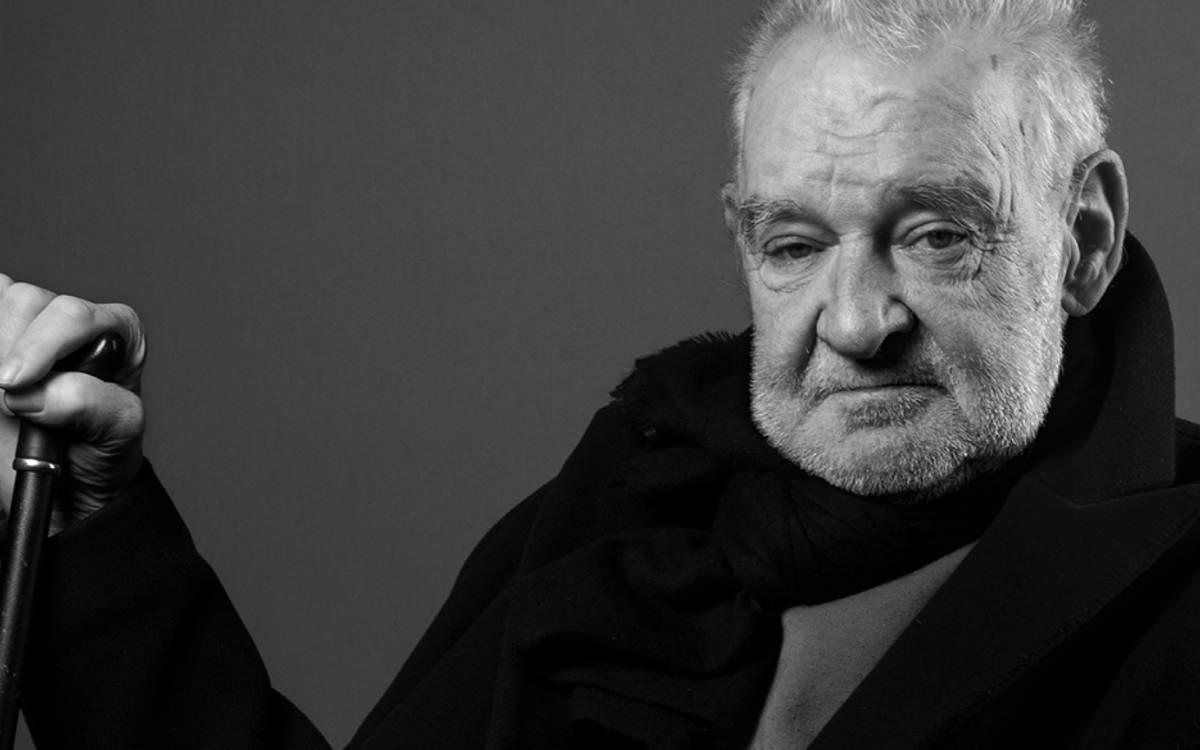

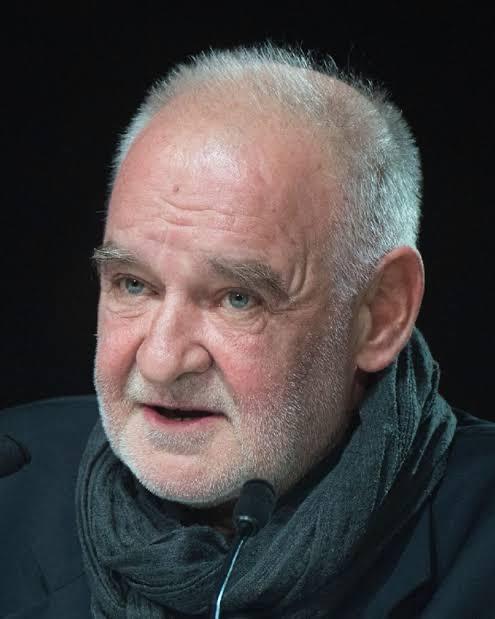
Hürriyet. (January 6, 2026). A Star Falls from the Cinema World… Legendary Director Béla Tarr Passes Away. Access address: https://www.hurriyet.com.tr/kelebek/televizyon/sinema-dunyasindan-bir-yildiz-kaydi-efsane-yonetmen-bela-tarr-hayatini-kaybetti-43078100
Béla Tarr
Spouse | b. 2012 Ágnes Hranitzky (e. 1978) | ||||||||
|---|---|---|---|---|---|---|---|---|---|
Father | Béla Tarr | ||||||||
Date of death | 2026-01-06 | ||||||||
Date of birth | 1955-07-21 | ||||||||
Béla Tarr is one of the most important directors in the history of Hungarian cinema. Born on 21 July 1955 in Pécs, he died in Budapest on 6 January 2026. Over his career from 1977 to 2011, he directed nine feature films, known for formal choices that fundamentally depart from the traditional cinematic understanding of time and space. His films are characterized by black-and-white cinematography, extremely long takes (sequence shots), and the absence of conventional narrative structures. His work occupies a central place in the academic literature on slow cinema.
In the early phase of his career, he directed documentary-style films focused on the daily lives of the working class. After 1984, he underwent a significant formal transformation in terms of camera movement, shot duration, and spatial treatment; this second period has been extensively studied in film scholarship. Tarr’s films have become frequently cited references in academic studies on Gilles Deleuze’s concept of the time-image, phenomenology, and post-communist Central European cinema.
Tarr was born in Pécs; his family was connected to the world of art and culture. His father, Béla Tarr, was a set designer, and his mother worked as a stage prompter in a theater. At sixteen, he co-founded an amateur film group with friends, naming it after Soviet filmmaker Dziga Vertov. He had not yet enrolled at the Budapest Academy of Theatre and Film when he made his first films; his admission came after Family Home won the Grand Prize at the 1977 Mannheim Film Festival. He graduated in 1982.
During this period, he became associated with the Balázs Béla Studio, a major Hungarian experimental film workshop. In 1982, he became a founding partner of Társulás Filmstudio; however, the studio was closed in 1985 for political reasons. That same year, he began working independently and made Damnation (1988), recognized as Hungary’s first independent feature film.
The most distinctive technical feature of Tarr’s cinema is the extreme elongation of shot duration beyond conventional cinematic standards. According to Cinemetrics database data, the average shot length in his mature films is 191.8 seconds. In The Man from London, this figure rises to 248 seconds, and in The Turin Horse, it reaches 229 seconds. For comparison, the average shot length in Andrei Tarkovsky’s Sacrifice (1986) is 70 seconds; in Hollywood productions from the 2010s onward, it typically ranges between two and three seconds.
In Tarr’s films, the camera movement is no longer a simple tool for conveying action or character; it functions as an independent element that generates space in tandem with time. The camera slowly rotates within interior spaces and, in exterior scenes, sometimes follows characters for minutes or completely abandons them. The opening sequence of Werckmeister Harmonies is a frequently analyzed example of this approach: the camera remains uninterrupted as drunken villagers play with the sun, the moon, and the Earth. Tarr has explained his rationale as follows: ‘I did not want to show the story. I wanted to show their lives.’
Black-and-white cinematography is used in all of his mature films. Tarr described this choice as an aesthetic necessity, arguing that color distracts from the material weight of spaces. Cinematographer Gábor Medvigy worked on Damnation, Sátántangó, and Werckmeister Harmonies. For The Man from London and The Turin Horse, the cinematographer was filmmaker and theater director Fred Kelemen.
Sound design also constitutes a formal layer of Tarr’s cinema. The music composed by Mihály Víg was typically written before filming began and integrated into the production process. Recurring melodies and cyclical rhythmic structures serve to reinforce the films’ narrative time.
The primary theoretical framework used to interpret Tarr’s films is Gilles Deleuze’s distinction between the movement-image and the time-image. In Deleuze’s film theory, the movement-image describes traditional narrative cinema in which events unfold according to an action-based logic, while the time-image refers to a cinematic form in which time becomes independent of action and is presented directly. Rancière has noted that Tarr’s films employ a cinematography that does not merely depict space but generates it; he argues that architectural elements such as doors and windows function not as transitional points but as thresholds that open between inside and outside.
Tarr’s cinematic precursors include Hungarian director Miklós Jancsó, Andrei Tarkovsky, Michelangelo Antonioni, and Chantal Akerman. Jancsó’s long takes and socio-political themes had a decisive influence on Tarr. However, Tarr has maintained a distance from the frequent comparisons made between himself and Tarkovsky. ‘The fundamental difference is that Tarkovsky is religious; we are not,’ he has said, delineating the boundaries of this relationship. While Tarkovsky’s prolonged shots aim to reveal the extraordinary dimensions of objects, it is argued that Tarr employs the same technique to emphasize the weight and ordinariness of the everyday.
Tarr’s philosophical references include Friedrich Nietzsche and Arthur Schopenhauer. Particularly, the connection between The Turin Horse and Nietzsche’s anecdote of the horse in Turin forms the philosophical foundation of the film. The film portrays a six-day process in which a horse, rendered powerless, gradually immobilizes its owner, as the world’s light slowly dims.
After reading László Krasznahorkai’s 1985 novel Sátántangó, Tarr contacted the Hungarian writer and proposed an adaptation. The two did not begin their first collaborative work on Sátántangó but on Damnation (1988); this was due to the implicit political pressure both faced in Hungary at the time. Krasznahorkai’s passport had been confiscated in the 1970s, and Tarr was regarded as an outcast in Hungarian cinema.
The production of Sátántangó took over seven years. The Hungarian government neither approved nor supported the project; the film was only made possible through the contributions of German and Swiss co-producers. The novel portrays the inhabitants of a decaying collective farm on the brink of collapse, within a cyclical temporal structure. The twelve-part film presents events from overlapping perspectives that move both forward and backward. Werckmeister Harmonies, adapted from Krasznahorkai’s 1989 novel The Melancholy of Resistance, tells the story of how a mysterious circus — containing the carcass of a giant whale and led by an enigmatic figure known as ‘The Prince’ — disrupts the social fabric of a small Hungarian town.
Krasznahorkai was awarded the Nobel Prize in Literature in 2015. Their collaboration has become a reference point in academic studies examining the boundaries of adaptation between literature and cinema.
The artist Ágnes Hranitzky, with whom Tarr lived for many years, has served as editor on all his films since The One Outside (1981). She also served as co-director on Werckmeister Harmonies, The Man from London, and The Turin Horse. In numerous interviews, Tarr has stated that the decisions regarding how long takes evolve over time were largely made during the editing process and that Hranitzky’s contribution during this phase was decisive.
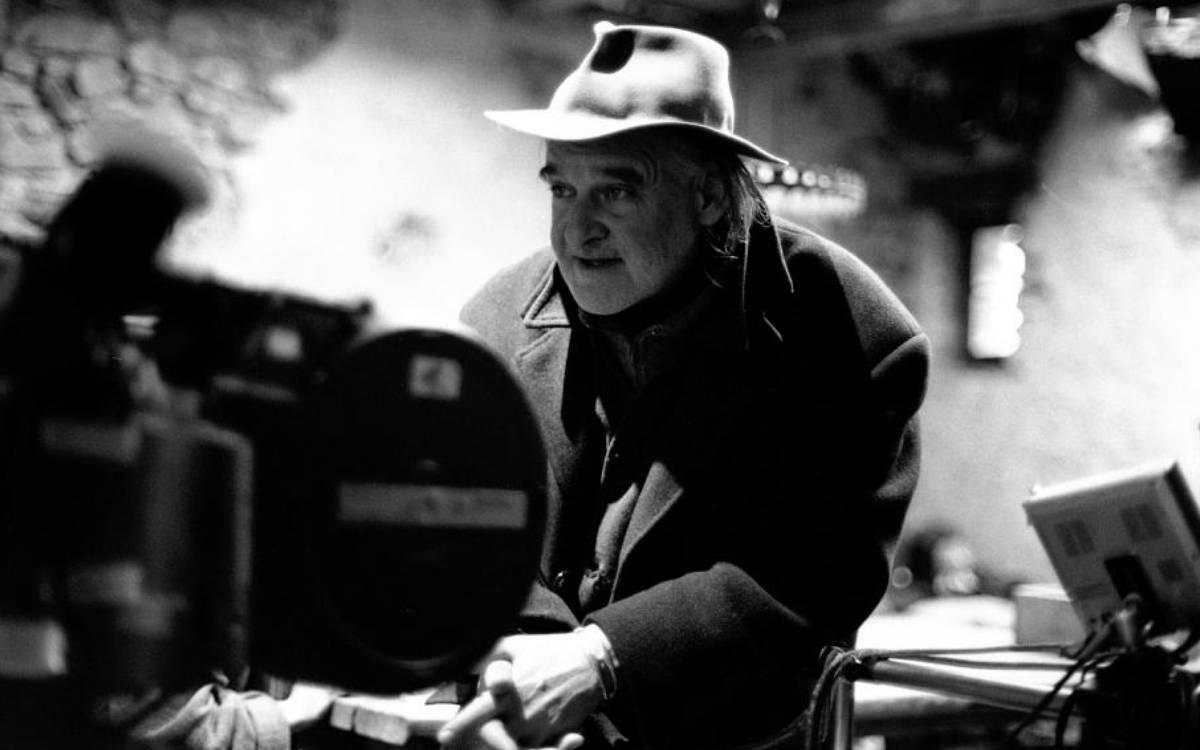
A black-and-white portrait depicting Hungarian film director Béla Tarr at work.
Family Home (Családi tüzfészek, 1977/1979) is Tarr’s first feature film. The film, which addresses Hungary’s housing crisis, depicts the plight of a factory worker’s wife forced to live with her husband’s family, using a documentary style, non-professional actors, and handheld cameras. It won the Grand Prize at the 1979 Mannheim-Heidelberg International Film Festival.
Autumn Almanac (Őszi almanach, 1984) is the first film to display the signs of Tarr’s formal transformation. It explores the conflicts among people living together in a dilapidated apartment building. Its compositional approach and the unnatural tone of its dialogue laid the groundwork for his subsequent films.
Damnation (Kárhozat, 1988) is recognized as Hungary’s first independent feature film. It centers on the dead-end relationship between Karrer, a regular at the Titanik Bar, and a married singer. The film, noted for its heavy lighting and controlled camera movement, played a decisive role in establishing Tarr’s international reputation. It won the Bronze Rosa Camuna Award at the 1988 Bergamo Film Meeting.
Sátántangó (1994), adapted from Krasznahorkai’s novel of the same name, contains approximately one hundred and fifty shots over a four-hour and thirty-five-minute runtime. The inhabitants of a decaying collective farm in post-communist collapse are shaken by rumors of the return of a deceased former member. The film employs a narrative structure that repeats events from different characters’ perspectives, moving both forward and backward. The opening shot follows a herd of cattle for eight minutes. The film received multiple awards, including the Caligari Prize at the 1994 Berlin International Film Festival, the National Society of Film Critics Experimental Film Award, and the FIPRESCI Prize. In the 2012 BFI Sight & Sound poll, Sátántangó was ranked among the fifty greatest films of all time by leading critics.
Werckmeister Harmonies (Werckmeister harmóniák, 2000), adapted from Krasznahorkai’s 1989 novel The Melancholy of Resistance, is co-directed by Ágnes Hranitzky. In this film, a mysterious circus — containing the carcass of a giant whale and led by the enigmatic figure known as ‘The Prince’ — arrives in a small Hungarian town and begins to dismantle its social fabric. The one hundred and forty-five-minute runtime is conveyed through thirty-nine shots. The film won the Berliner Zeitung Jury Prize at the 2001 Berlin International Film Festival and received widespread critical attention internationally. On Rotten Tomatoes, it holds a 98% positive rating based on fifty-six reviews.
The Man from London (A Londoni férfi, 2007), adapted from Belgian writer Georges Simenon’s 1934 novel, tells the story of a railway worker who works as a night watchman in a small port town and whose life is transformed by an event he witnesses. The film is an international production featuring Tilda Swinton; its production faced serious disruptions due to the unexpected death of the lead producer and funding problems. It was screened at the 2007 Cannes Film Festival.
The Turin Horse (A torinói ló, 2011), co-directed by Ágnes Hranitzky, is Tarr’s final feature film. Based on the anecdote of the horse Nietzsche reportedly encountered in Turin in 1889, the film portrays the repetitive daily life of an elderly farmer and his daughter over thirty-one shots. As the film progresses, the light fades, the well runs dry, and the horse refuses to move. It won the Silver Bear Grand Jury Prize and the FIPRESCI Prize at the 2011 Berlin International Film Festival. At the film’s premiere, Tarr announced the conclusion of his directing career.
The critical reception of Tarr’s films has clearly diverged between his early and mature periods. His early films were negatively received by Hungary’s cultural authorities, who conveyed the message that he should not be allowed to make films in the country. This changed with the international release of Damnation in Berlin in 1988; the film began to find a place within the international festival circuit.
Tarr’s cinema has been examined from diverse academic perspectives, including Gilles Deleuze’s time-image theory, Heideggerian phenomenology, post-communism, and the relationship between architecture and cinema. Jacques Rancière’s short monograph Béla Tarr, the Time After (2011) is among the most cited sources analyzing the philosophical context of these films. Articles published in Tandonline and other peer-reviewed journals have explored topics such as shot duration, spatial cinematography, and existential nihilism in Tarr’s work.
Director Susan Sontag, in a 1996 article, described Tarr as one of the few filmmakers offering hope for the future of cinema culture. Sontag stated she was willing to watch Sátántangó once a year. Gus Van Sant explicitly acknowledged the influence of Tarr’s formal approach on his films Gerry, Elephant, and Last Days, shot between 2002 and 2005. The impact of this influence is also discussed in the works of directors such as Carlos Reygadas, Apichatpong Weerasethakul, Bi Gan, and László Nemes.
After concluding his directing career in 2011, Tarr redirected his energy toward educational initiatives. In 2012, he moved to Sarajevo; in 2013, he founded the international film program film.factory under the auspices of the Sarajevo Film Academy. The program accepted students at undergraduate, graduate, and doctoral levels, with directors such as Apichatpong Weerasethakul and Pedro Costa teaching courses. Tarr led the program until 2016 and continued to serve occasionally as a visiting faculty member at various film academies thereafter.
In subsequent years, he developed artistic projects in expanded cinema. In 2017, he created an exhibition-installation titled Till the End of the World for the Eye Film Museum in Amsterdam; the project attracted forty thousand visitors. In 2019, as part of the Vienna Festwochen, he realized a site-specific performance titled Missing People, involving two hundred and fifty homeless individuals. As a producer, he supported Valdimar Jóhannsson’s film Lamb (2021).
A member of the European Film Academy since 1997, Tarr was awarded Hungary’s highest cultural honor, the Kossuth Prize, as well as the Balázs Béla Prize. He received honorary professorships from several Chinese universities. He died in Budapest on 6 January 2026 after a prolonged illness; his death was publicly announced by the Hungarian Filmmakers’ Union.
https://scholarlypublishingcollective.org/psup/hungarian-studies/article-abstract/49/
Academia.edu. "Béla Tarr and the Moving Camera: Slow Noir in Damnation and The Man from London." Accessed April 13, 2026. https://www.academia.edu/98174958/.
Academia.edu. "Béla Tarr and the Qualities of Slowness: An Analysis of A torinói ló." Accessed April 8, 2026. https://www.academia.edu/47759687/.
Academia.edu. “A Study of Béla Tarr’s Film Aesthetics Based on Heidegger’s Phenomenology / Fauzi Naeim Mohamed.” Accessed April 8, 2026. https://www.academia.edu/82661345/.
American Cinematheque. “Boundless Damnation: The Films of Béla Tarr.” Accessed April 8, 2026. https://www.americancinematheque.com/series/boundless-damnation-the-films-of-bela-tarr/.
BFI. “Béla Tarr Obituary: Hungary’s Slow-Cinema Visionary.” January 7, 2026. https://www.bfi.org.uk/features/bela-tarr-obituary-hungary-slow-cinema-visionary.
CUNY Academic Works. "Béla Tarr and Hungarian National Cinema." Accessed April 13, 2026. https://academicworks.cuny.edu/cgi/viewcontent.cgi?article=1117&context=lg_pubs.
Criterion Collection. “Béla Tarr in LA and NYC.” Accessed April 11, 2026. https://www.criterion.com/current/posts/8168-bela-tarr-in-la-and-nyc.
Criterion Collection. “Werckmeister Harmonies.” Accessed April 11, 2026. https://www.criterion.com/films/33388-werckmeister-harmonies.
Criterion Collection. “Werckmeister Harmonies: Dark Side of the Earth.” Accessed April 13, 2026. https://www.criterion.com/current/posts/8442-werckmeister-harmonies-dark-side-of-the-earth.
European Film Academy. "In Memoriam Béla Tarr." January 6, 2026. https://www.europeanfilmacademy.org/mourning-bela-tarr/.
Film at Lincoln Center. "Farewell to Béla Tarr." Accessed April 8, 2026. https://www.filmlinc.org/series/farewell-to-bela-tarr/.
Film at Lincoln Center. "The Last Modernist: The Complete Works of Béla Tarr." Accessed April 13, 2026. https://www.filmlinc.org/series/the-last-modernist-the-complete-works-of-bela-tarr/.
Harvard Film Archive. “The Melancholy Worlds of Béla Tarr.” Accessed April 13, 2026. https://harvardfilmarchive.org/programs/the-melancholy-worlds-of-bela-tarr.
Khalili, Hamid Amouzad. “The Cinema of Béla Tarr: The Architectonics of Time, Movement and Hapticity.” Journal of Architecture, 2025. https://www.tandfonline.com/doi/full/10.1080/13264826.2025.2462923.
MUBI Notebook. "Waiting for the Miracle: The Films of Béla Tarr, Ágnes Hranitzky, and László Krasznahorkai." Accessed April 13, 2026. https://mubi.com/en/notebook/posts/waiting-for-the-miracle-the-films-of-bela-tarr-agnes-hranitzky-and-laszlo-krasznahorkai.
Michigan Quarterly Review, University of Michigan. “Béla Tarr’s Sátántangó.” 2013. https://sites.lsa.umich.edu/mqr/2013/07/bela-tarrs-satantango/.
NPR. “Hungarian Filmmaker Béla Tarr Has Died at 70.” January 6, 2026. https://www.npr.org/2026/01/06/nx-s1-5668240/bela-tarr-filmmaker-dead.
Orban, Clara. "Slow Places in Béla Tarr’s Films: The Intersection of Geography, Ecology, and Slow Cinema." Hungarian Studies Review 49, no. 2 (2022).
PBS NewsHour. “Béla Tarr, Hungarian Director Known for Bleak and Beautiful Films, Dies at 70.” January 6, 2026. https://www.pbs.org/newshour/arts/bela-tarr-hungarian-director-known-for-bleak-and-beautiful-films-dies-at-70.
Rancière, Jacques. Béla Tarr, the Time After. Trans. Erik Beranek. Minneapolis: Univocal, 2013.
Tandfonline. "Metaphysics of the Sequence Shot: The Gathering and Nihilating of Being in Béla Tarr’s The Turin Horse." Studies in European Cinema, 2023. https://www.tandfonline.com/doi/full/10.1080/20004214.2023.2271097.
Taste of Cinema. "Filmmaker Retrospective: The Slow Cinema of Béla Tarr." Accessed April 10, 2026. https://www.tasteofcinema.com/2014/filmmaker-retrospective-the-slow-cinema-of-bela-tarr/.
They Shoot Pictures, Don’t They? "Béla Tarr." Accessed April 10, 2026. https://theyshootpictures.com/tarrbela.htm.
UC Press. “What Became of Transcendental Style?” [Chapter from Slow Cinema.] Accessed April 8, 2026. https://content.ucpress.edu/chapters/383001.introduction.pdf.

Hürriyet. (January 6, 2026). A Star Falls from the Cinema World… Legendary Director Béla Tarr Passes Away. Access address: https://www.hurriyet.com.tr/kelebek/televizyon/sinema-dunyasindan-bir-yildiz-kaydi-efsane-yonetmen-bela-tarr-hayatini-kaybetti-43078100
Béla Tarr
Spouse | b. 2012 Ágnes Hranitzky (e. 1978) | ||||||||
|---|---|---|---|---|---|---|---|---|---|
Father | Béla Tarr | ||||||||
Date of death | 2026-01-06 | ||||||||
Date of birth | 1955-07-21 | ||||||||
Filmography
Life and Early Period
Formal Characteristics
Theoretical Context
Collaboration with László Krasznahorkai
Collaboration with Ágnes Hranitzky
Films
Academic and Critical Reception
Education and Later Period