


This article was automatically translated from the original Turkish version.
+1 More
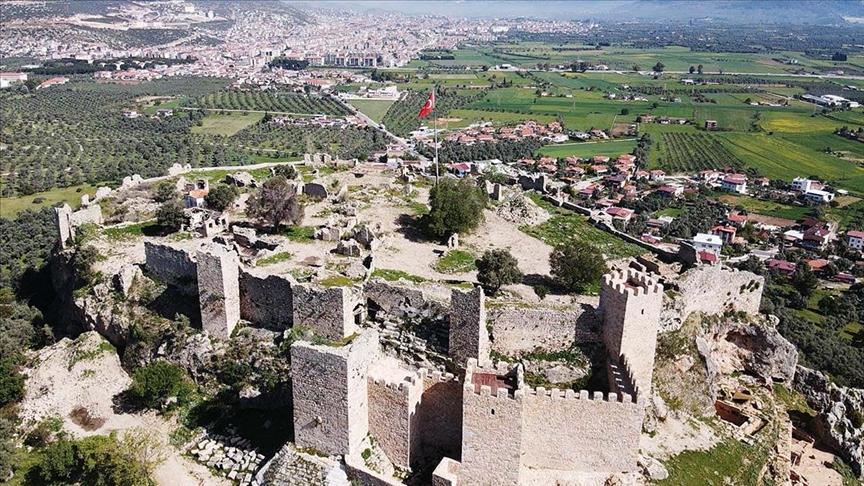
Beçin Castle and Archaeological Site
Location | Muğla Milas Beçin Mahallesi | ||||||||
|---|---|---|---|---|---|---|---|---|---|
Establishment | Middle Ages, Menteşe Beylik | ||||||||
Periods | Geometric, Archaic, Classical, Hellenistic, Roman, Byzantine, Menteşe, Ottoman | ||||||||
UNESCO | 2012 – Temporary World Heritage List | ||||||||
Protection | Archaeological site area | ||||||||
Beçin Castle and Archaeological Site is located within the boundaries of Beçin Village, approximately five kilometers south of the district center of Milas in the province of Muğla. Beçin is accessible via the Milas-Ören road and is situated on a flat plateau about 200 meters above the Milas Plain, commanding a view over the valley. Archaeological remains from various periods are found at the foot of the steep northern slope of the castle and around its perimeter.
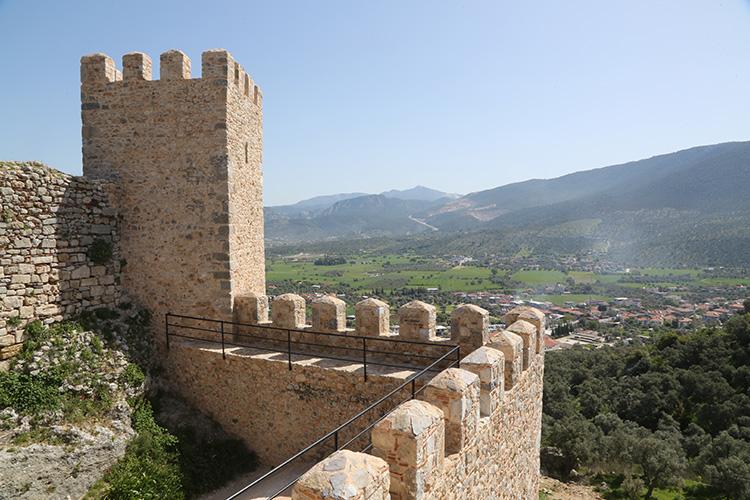
Beçin Kalesi.(AA)
The history of the Beçin settlement extends back to the Geometric Period (8th century BCE), and it was continuously inhabited through the Archaic, Classical, Hellenistic, Roman, Byzantine, Menteşe Beylik, and Ottoman periods. Archaeological excavations have uncovered tombs and architectural remains from various eras, including a child’s burial dating to the Early Bronze Age (circa 3000 BCE). The town came under the control of the Menteşe Beylik in the late 13th century and served as its capital for a time. Beçin reached its peak during the reign of Ahmet Gazi; following his death in 1391, the capital of the beylik was moved to Balat (ancient Miletos). In 1424, Beçin definitively came under Ottoman rule. During the Celali rebellions in the early 17th century, the town’s population retreated into the inner citadel, and the last settlements within the castle were abandoned in the 1950s.
Throughout history, Beçin has been referred to by various names in different sources. In medieval Italian sources it appears as “Pezona,” while in Turkish-Islamic sources it is recorded as “Barçın,” “Berçin,” and “Peçin.” The modern name “Beçin” evolved from these earlier forms.
The Beçin Archaeological Site consists of an inner citadel surrounded by an outer walled city. Within the inner citadel are Hellenistic-era tomb monuments, as well as baths and cisterns dating to the Turkish period. The outer city contains numerous structures representative of medieval Turkish-Islamic architecture, including:
Ahmet Gazi Medresesi (the only structure in Beçin with an inscription that has survived to the present day), Orhan Bey Camii, Kızılhan, Kubbeli Çeşme, Karapaşa Medresesi, Yelli (Kepez) Camii and its medrese and bath, Bey Konağı and Bey Hamamı, Orman Tekkesi, and a basilica-plan “Yeni Kilise” (19th century, built by the Greek community). Additionally, remains of numerous other structures whose functions and periods have not been fully determined are present in the town.
Archaeological excavations at the castle and its surroundings have revealed cultural layers from multiple periods. Rescue excavations conducted by the Milas Museum have uncovered Geometric Period tombs, Hellenistic foundation remains, Roman and Byzantine artifacts, and an Early Bronze Age burial.
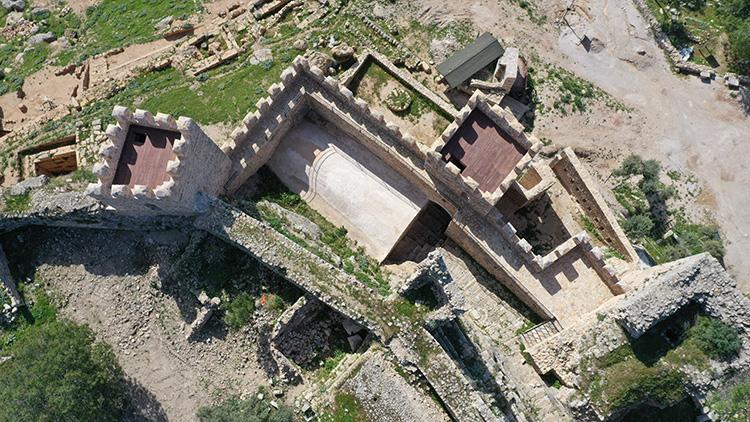
Beçin Kalesi Restorasyon Çalışmaları.(AA)
The town of Beçin comprises the inner citadel, the walled city within the fortifications, and religious and educational structures located outside the walls. The town square is surrounded by structures such as the Ahmet Gazi Medresesi, Orhan Camii, tombs, Kızılhan, and fountains. The architectural fabric of Beçin reflects the medieval Turkish urban planning concept.
The Medieval Town of Beçin was added to the UNESCO World Heritage Tentative List in 2012. Its inclusion recognizes the cultural heritage value of the site on an international scale.
Archaeological excavations at Beçin Castle and Archaeological Site are currently ongoing under the direction of Professor Dr. Hüseyin Rahmi Ünal of the Department of Archaeology and History of Art at Ege University. Simultaneously, various projects are being implemented to promote the site. Among these, the documentary and book titled “A Treasury of History: Beçin Castle” are among the first comprehensive studies documenting the historical, cultural, and architectural characteristics of Beçin.
Anadolu Ajansı. “Beçin Antik Kenti’ndeki Kale Duvarları, Burçlar ve Sarnıç Restore Edilerek Ayağa Kaldırıldı.” Accessed May 31, 2025.
Milas Belediyesi. "Beçin Kalesi." Milas Belediyesi Resmi Web Sitesi. Accessed May 31, 2025.https://www.milas.bel.tr/HOME/INDEX/MILAS/TARIHI-YERLER/281
Ministry of Culture and Tourism. "Beçin Kalesi." Türkiye Kültür Portalı. Accessed May 31, 2025.https://www.kulturportali.gov.tr/turkiye/mugla/gezilecekyer/becin-kalesi
Ministry of Culture and Tourism. "Beçin Kalesi."Muğla İl Directorate of Culture and Tourism. Accessed May 31, 2025.https://mugla.ktb.gov.tr/TR-177908/becin-kalesi.html
T.C. Kültür ve Turizm Bakanlığı. "Beçin Kalesi Ören Yeri." Türkiye Müzeleri. Accessed May 31, 2025.https://muze.gov.tr/muze-detay?SectionId=BCN01&DistId=MRK

Beçin Castle and Archaeological Site
Location | Muğla Milas Beçin Mahallesi | ||||||||
|---|---|---|---|---|---|---|---|---|---|
Establishment | Middle Ages, Menteşe Beylik | ||||||||
Periods | Geometric, Archaic, Classical, Hellenistic, Roman, Byzantine, Menteşe, Ottoman | ||||||||
UNESCO | 2012 – Temporary World Heritage List | ||||||||
Protection | Archaeological site area | ||||||||
No Discussion Added Yet
Start discussion for "Beçin Castle and Archaeological Site" article
History
Naming
Cultural and Religious Structures
Archaeological Findings
The Urban Structure of Beçin
UNESCO World Heritage Tentative List
Modern Era and Promotion Efforts