


This article was automatically translated from the original Turkish version.
Bandırma Füze Kulübü was founded by five high school students at Şehit Mehmet Günenç High School in Bandırma, Balıkesir. The club continued as a community group under the patronage of the “Füze Kültür Kulübü” starting in 1957. As global rocket activities increased, particularly following the successful launch of the Soviet Union’s Sputnik-1 rocket, the club sought to raise awareness through expanded research in space exploration, rockets, missiles, and atomic energy, as well as by delivering lectures.
Five high school students who conducted research on space and rocketry left school in 1959 and, following the Füze Kültür Kulübü, officially established the “Bandırma Havacılık ve Astronomi Roket Kulübü” (BHARK) in 1964. The club’s first rocket test, a 3-kilogram, 1-meter-long Bernark-type rocket, reached a height of 40 meters before crashing into the sea and failing. After a second launch attempt also failed, they received negative reactions from the public. Cevat Fehmi Başkut, a writer for the newspaper Cumhuriyet at the time, wrote:
"Do not let the young people be discouraged. Let them have their due. They are living in other worlds. Meanwhile, we have not yet resolved our own problems on this earth. Let us wait. Let party conflicts end. Let the Algeria issue be settled. Let a republic be declared in Cyprus. Let elections be held. Let congresses be completed. Of course, rockets will eventually come their turn."
BHARK’s third rocket reached a height of 750 meters. This rocket, 10 centimeters in diameter and 1.5 meters long, featured an automatic two-stage ignition mechanism and represented a major achievement by a group of young people. This remarkable success attracted considerable attention in the public and international press; the U.S. Press Attaché of the period conducted an extensive interview with the club’s president.
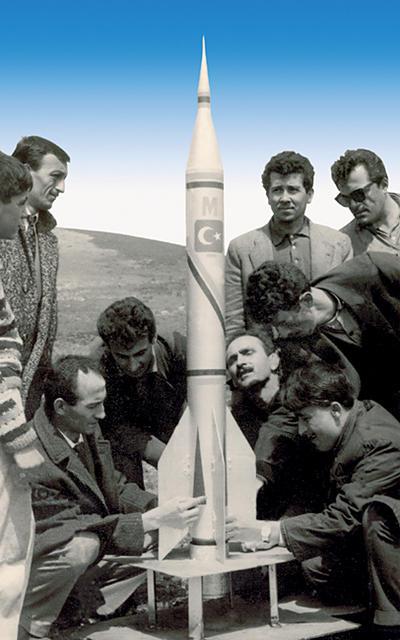
Club members and the Marmara-1 rocket (Credit: veryansin.com)
In 1966, the association changed its name from Bandırma Havacılık ve Astronomi Roket Kulübü (BHARK) to Bandırma Havacılık ve Uzay Araştırma Derneği (HUZAD). Kirkor Divarcı later joined the association. With his participation, the club continued its efforts to launch the Marmara-1 rocket. After their project received approval from Istanbul Technical University, they presented it to the Turkish Armed Forces. The rocket was approved by the Turkish Armed Forces and scheduled for launch on August 30, 1962, during Victory Day.
On August 30, 1962, the first major Turkish rocket, Marmara-1, measuring 1.33 meters in length and weighing 1.5 kilograms, soared to a height of 920 meters, piercing the sky. The horizons opened by Marmara-1 spurred increased activity and great excitement in this field. Following the launch of Marmara-1, Hamdi Varoğlu, a writer for Cumhuriyet newspaper, expressed his support with these words:
"The hand of humanity has conquered the heavens, leaving no corner of space untouched. Soon we will travel to Mars and the Moon as casually as going for morning coffee. Yet we, on this side, show our young people who are curious and seeking to uncover the secrets of this field not encouragement but a graveyard of airplanes. There is something even more shameful: the American Rocket Club has been the greatest supporter of the Bandırma youth. No interest, no help, yet we mock the endeavor. We have not advanced even a barley’s length since Hezarfen Ahmet Efendi."
Just four days after the August 30 launch, HUZAD launched the Marmara-2 rocket and achieved a significant success by becoming the third in the world in amateur rocket competitions, after the United States (56 km) and Germany (36 km). The Marmara-2 rocket reached a height of 822 meters (2700 feet) and traveled a total distance of 15 kilometers. The Chief of the General Staff of the period personally met with the club president and pledged support.
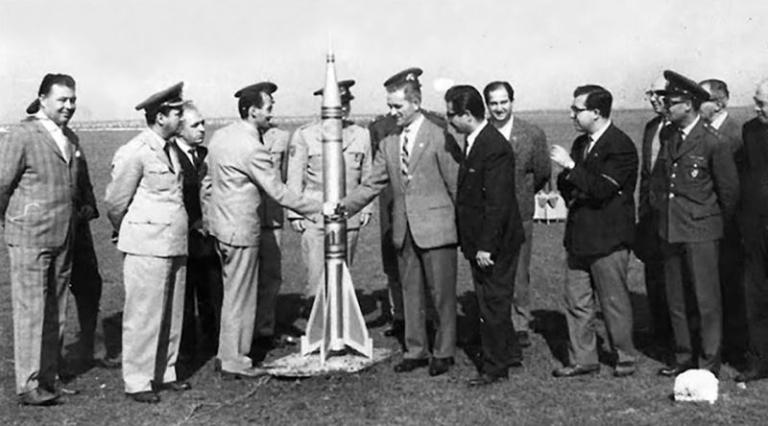
Club members and delegation meetings (Credit: veryansin.tv)
Following Marmara-2, the club developed the Hürriyet-1 and Hürriyet-2 rockets. Although the Marmara-3 rocket test ended in failure, they corrected technical shortcomings and successfully raised the Marmara-4 rocket to an altitude of 5415 meters. Due to the success of Marmara-4, which descended via parachute 200 meters beyond the launch ramp, the Commander of the 6th Main Jet Base, Air Force Colonel Halim Menteş, congratulated the team.
In addition to the Marmara and Hürriyet rocket series, the club also developed projects named Ata-1, Aktrüs, Vega, and Sirius. The Vega rocket was 3.6 meters long and weighed 300 kilograms, with a designed range of 410 kilometers. The most striking of these projects was Aktrüs. The Aktrüs rocket, measuring 4 meters in length and weighing 500 kilograms, was intended to carry a living being into space, with capsules designed to separate and return safely to Earth. However, this project was never realized.
The team, which formalized as the Füze Kültür Kulübü on September 17, 1960, originally consisted of Ali Osman Caran, Adnan Zambak, Artuğ Sayıner, and Güngör Gezer. Later, Atilla Yedikardaşlar and Kirkor Divarcı joined the association.
All written documents and plans related to the Marmara-1 project, recognized as the first Turkish rocket, were destroyed along with Kirkor Divarcı’s house in an unknown cause fire.
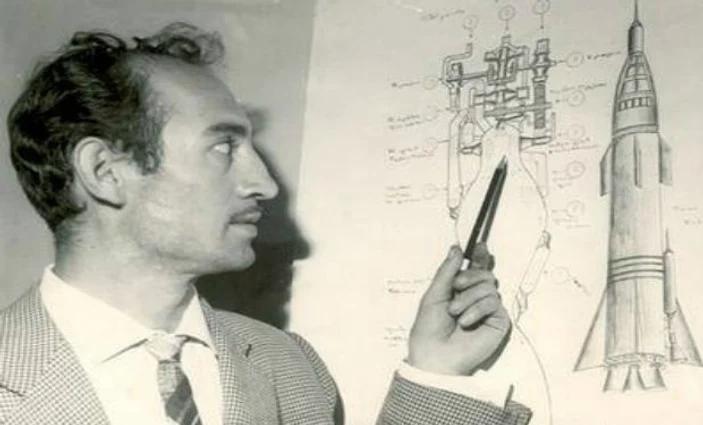
Kirkor Divarcı (Credit: ensonhaber.com)
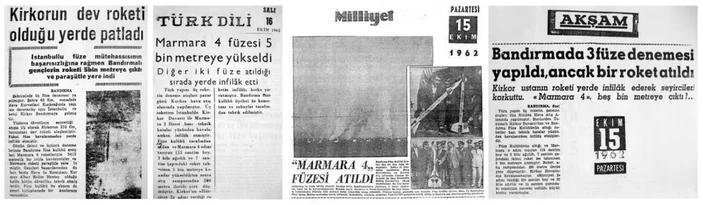
Newspaper front pages of the period (Credit: ensonhaber.com)
Diyot.net. "Türkiye'nin ilk Füzesi ve Kirkor Divarcı." Accessed February 14, 2025.Accessed Adresi.
En Son Haber. *The first Turkish missile, launched on October 10, 1959.* Accessed February 14, 2025.Accessed Adresi.
TRT Haber. "TRT ortak yapımı 'Bandırma Füze Kulübü' filmine konu olan kulübün öyküsü." Accessed February 14, 2025.Accessed Adresi.
Veryansin. *Bandırma Füze Kulübü'nün Hikayesi.* Accessed February 14, 2025.Accessed Adresi.

No Discussion Added Yet
Start discussion for "Bandırma Missile Club" article
Team Members