This article was automatically translated from the original Turkish version.
Origin(s) | Crimean Tatar Culinary Culture | ||||||||
|---|---|---|---|---|---|---|---|---|---|
Related Region | Eskişehir | ||||||||
Key Technique | Ironing Method (Cooking with Cast Iron) | ||||||||
Main Ingredients | Beef, Tırnak Pide, Yogurt, Bone Broth, Butter | ||||||||
Meal Type | Kebab / Köfte | ||||||||
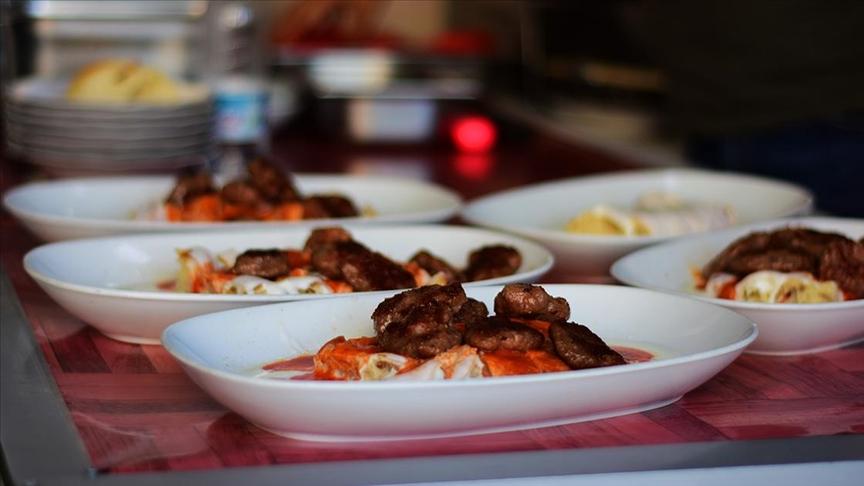
Balaban kebabı (or balaban köfte) is a traditional dish closely associated with Eskişehir cuisine, shaped by the influence of migrants who settled in the city. It is prepared by placing yogurt and a sauce made from tomato paste on soaked nail-shaped bread, then topping it with grilled meat products. This flavor from Central Anatolia is known for its distinctive cooking techniques and presentation style.
The development of Eskişehir in the late 19th century through railway and industrial investments attracted migration from Crimea, the Caucasus and the Balkans, enriching the city’s culinary traditions. The commercial origins of Balaban kebabı began in the late 1930s when Abdüsselam Soyarık, a Crimean migrant, started selling köfte from a cart. In 1938, Master Abdüsselam opened a shop together with his brother Kerim Dokuzlar, beginning to serve his dish of köfte and skewered meat with yogurt and butter.
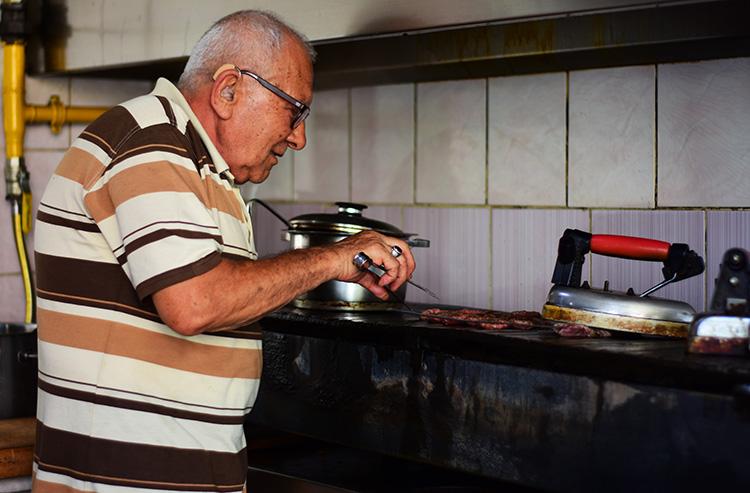
Fahrettin Usta (Anadolu Ajansı)
One of the key techniques in the modern preparation of the dish, known as "ütüleme" (pressing with an iron), was developed by Fahrettin Deviren, who opened his business in 1979. Master Fahrettin began applying a method of placing a cast-iron griddle on top of the meat while grilling to prevent curling and ensure even cooking. Over time, this technique became a defining symbol of Balaban kebabı preparation.【1】
The word "Balaban" in Tatar Turkish means "large", "abundant" or "big". The dish received its name because customers would request larger portions by saying "Balaban olsun" (make it Balaban). Over time, this phrase evolved into a specific term for servings of one and a half portions or more, eventually becoming the general name of the dish.【2】
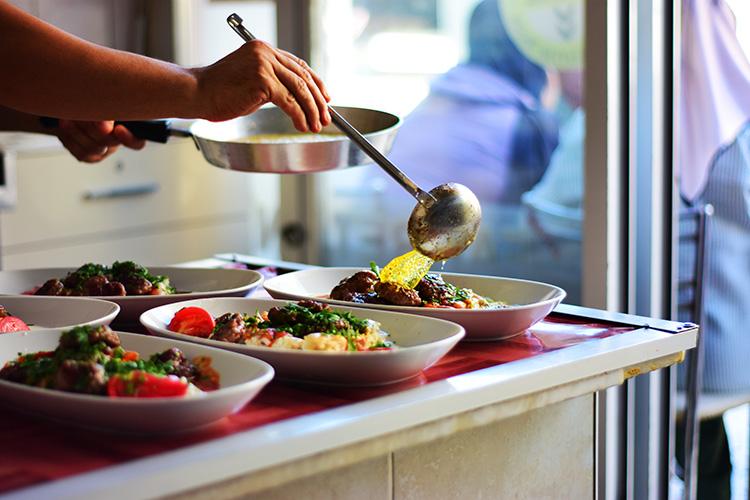
Balaban Kebabı Sunumu (Anadolu Ajansı)
The key components and preparation process of Balaban kebabı are as follows:
Anadolu Ajansı. "Eskişehirli Fahrettin Usta 44 Yıldır 'Ütüyle' Balaban Kebabı Yapıyor." Accessed February 6, 2026. https://www.aa.com.tr/tr/yasam/eskisehirli-fahrettin-usta-44-yildir-utuyle-balaban-kebabi-yapiyor/2979837
Zencir, Ebru, Dönüş Çiçek, and Hüseyin Öney. "Küçük İşletmelerde Temel Yetenek: Abdüsselam Balaban Kebap Örneği." *III. Disiplinlerarası Turizm Araştırmaları Kongresi Bildiriler Kitabı.* Kuşadası: Anadolu Üniversitesi Yayınları, 2014: 335–344. https://www.academia.edu/10893796/K%C3%BC%C3%A7%C3%BCk_%C4%B0%C5%9Fletmelerde_Temel_Yetenek_Abd%C3%BCsselam_Balaban_Kebap_%C3%96rne%C4%9Fi
Çevik, Müge. "Eskişehir'in Lezzet Markası: Balaban Köfte." Türk Tarım ve Orman Dergisi. Accessed February 6, 2026. https://www.turktarim.gov.tr/Haber/519/eskisehirin-lezzet-markasi-balaban-kofte
[1]
Anadolu Ajansı, "Eskişehirli Fahrettin Usta 44 Yıldır 'Ütüyle' Balaban Kebabı Yapıyor," Anadolu Ajansı, Erişim Tarihi: 11 Mayıs 2026, https://www.aa.com.tr/tr/yasam/eskisehirli-fahrettin-usta-44-yildir-utuyle-balaban-kebabi-yapiyor/2979837
[2]
Ebru Zencir, Dönüş Çiçek ve Hüseyin Öney, "Küçük İşletmelerde Temel Yetenek: Abdüsselam Balaban Kebap Örneği," III. Disiplinlerarası Turizm Araştırmaları Kongresi Bildiriler Kitabı, 2014: s. 337, Erişim 11 Mayıs 2026, https://www.academia.edu/10893796/K%C3%BC%C3%A7%C3%BCk_%C4%B0%C5%9Fletmelerde_Temel_Yetenek_Abd%C3%BCsselam_Balaban_Kebap_%C3%96rne%C4%9Fi
Origin(s) | Crimean Tatar Culinary Culture | ||||||||
|---|---|---|---|---|---|---|---|---|---|
Related Region | Eskişehir | ||||||||
Key Technique | Ironing Method (Cooking with Cast Iron) | ||||||||
Main Ingredients | Beef, Tırnak Pide, Yogurt, Bone Broth, Butter | ||||||||
Meal Type | Kebab / Köfte | ||||||||
No Discussion Added Yet
Start discussion for "Balaban Kebab (Balaban Köfte)" article
History
Etymology
Ingredients and Preparation