


This article was automatically translated from the original Turkish version.
+1 More
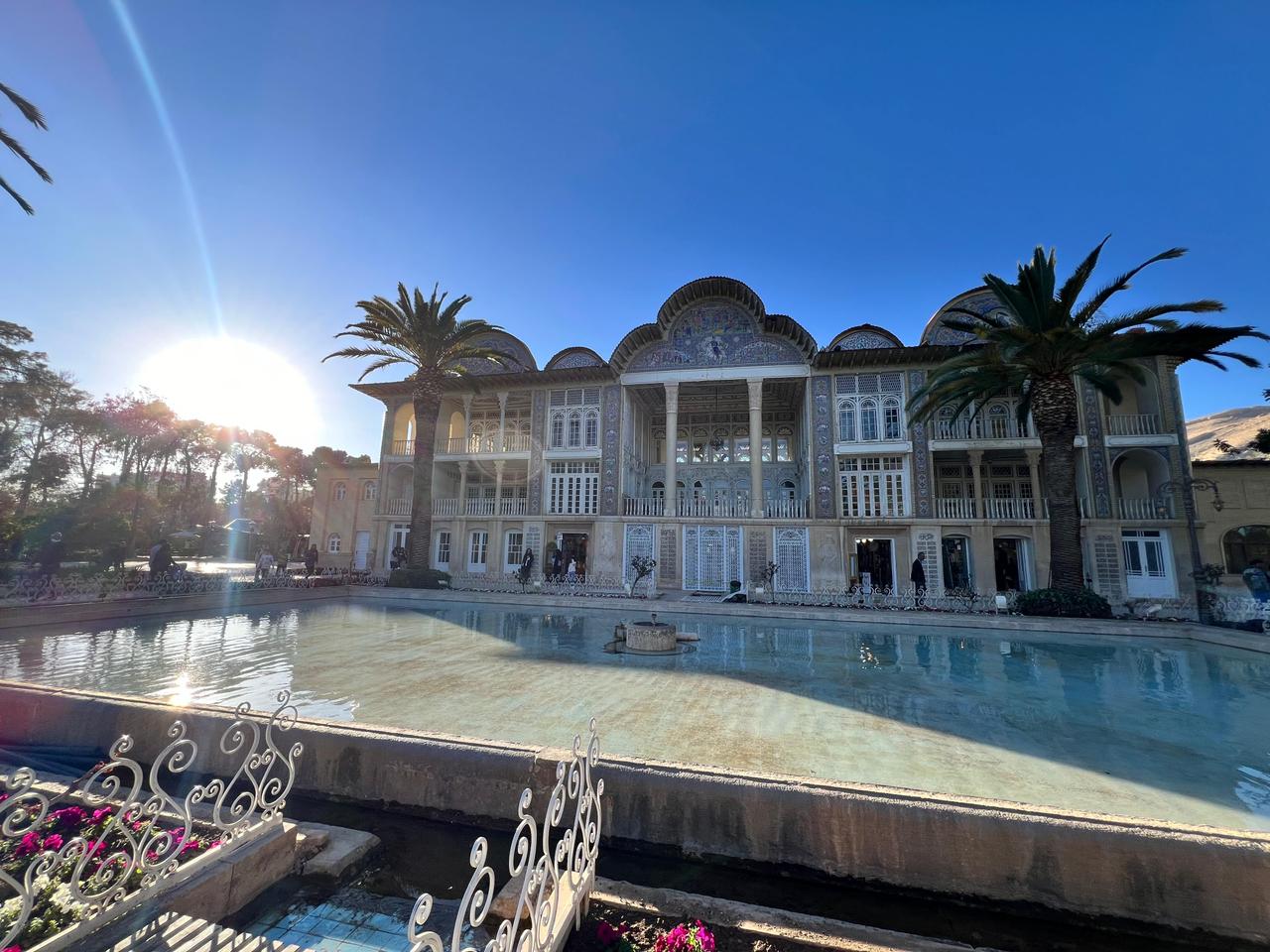
Bagh-e Eram is a historic Islamic garden located in Shiraz, the capital of Fars province in southern Iran. It is regarded as one of the finest examples of Iranian garden art and Qajar architectural aesthetics. The word “Eram” in Persian (derived from Arabic “Iram”) alludes to the Quranic descriptions of paradise, thus “Eram Garden” means “Garden of Paradise.” This garden, listed on the UNESCO World Heritage List, holds a unique position among Islamic gardens for its aesthetic relationship with nature and its powerful visual narrative.
(Photo: Duygu Şahinler)
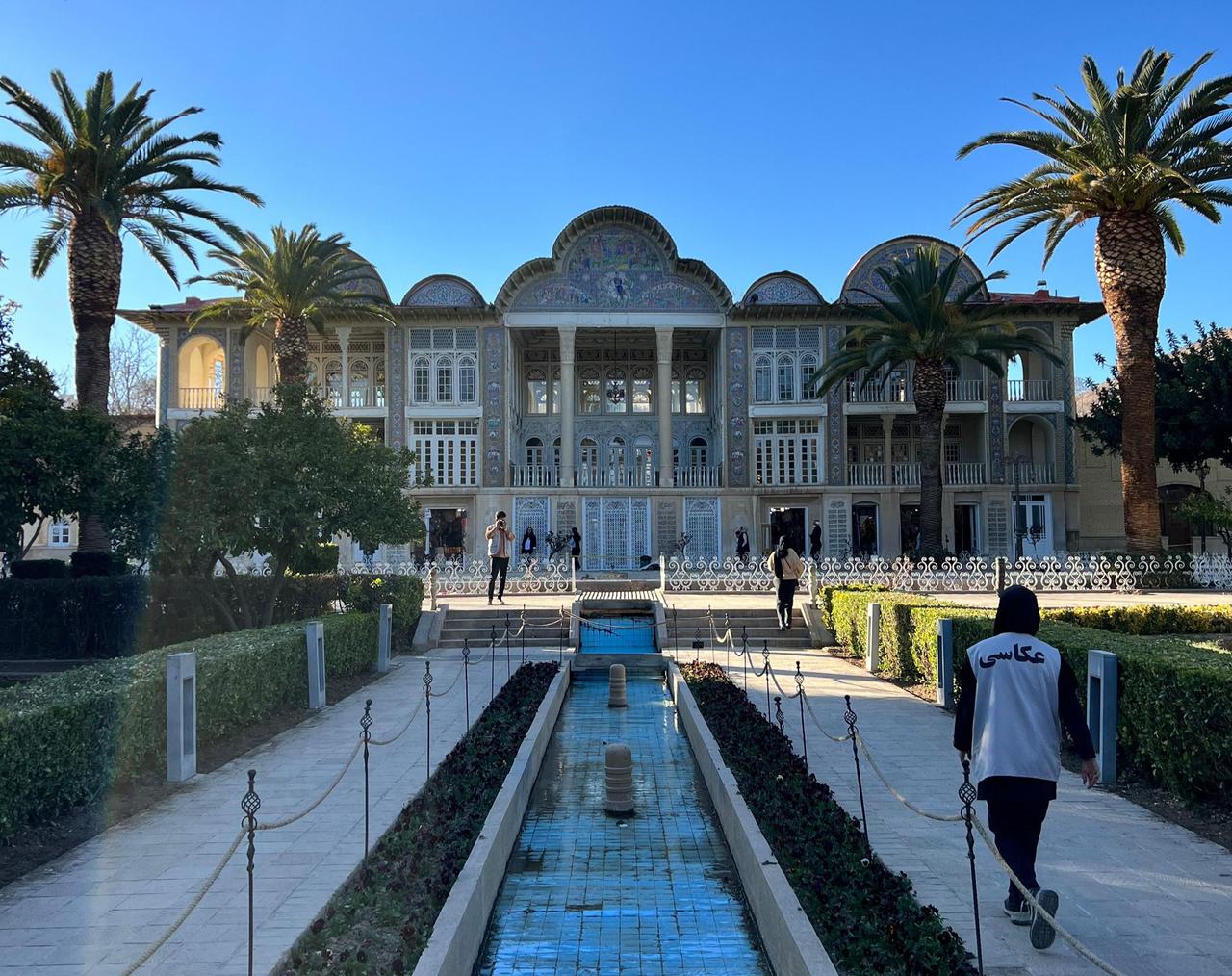
Although the earliest foundations of Bagh-e Eram date back to the Safavid period, its current form was established during the 19th century under the Qajar dynasty. The garden’s present appearance was shaped by a large pavilion and intricate tilework constructed with the support of Mohammad Kuli Khan Qashqai, a prominent member of Shiraz’s ruling family. During this era, governors appointed to the Fars region, often with the direct or indirect patronage of Nasreddin Shah, commissioned various palaces and gardens.
(Photo: Duygu Şahinler)
The Qajars, the dynasty that built Bagh-e Eram, are of critical importance to the Turkish world. Historically, the Qajars were a Turkmen tribe affiliated with the Kayı branch of the Oghuz Turks. This dynasty, founded by Ağa Muhammed Khan in the late 18th century, ruled Iran from 1796 to 1925.
The Qajar dynasty left a significant legacy in Turkish language and culture. Although Persian was the official state language, poems and documents written in Turkish—particularly in Chagatai and Azerbaijani dialects—were produced within the Qajar court. Fath Ali Shah, one of the Qajar monarchs, was the author of a Turkish divan. Nasreddin Shah also showed interest in Turkish, and during his reign, Turkish became a common language of communication, especially within the military and palace circles.
(Photo: Duygu Şahinler)
Nasreddin Shah Qajar (r. 1848–1896) was the longest-reigning monarch of the Qajar dynasty and one of the key figures who initiated the process of modernization in Iran. During his reign, visual arts—including architecture, tilework, and portraiture—underwent significant transformation.
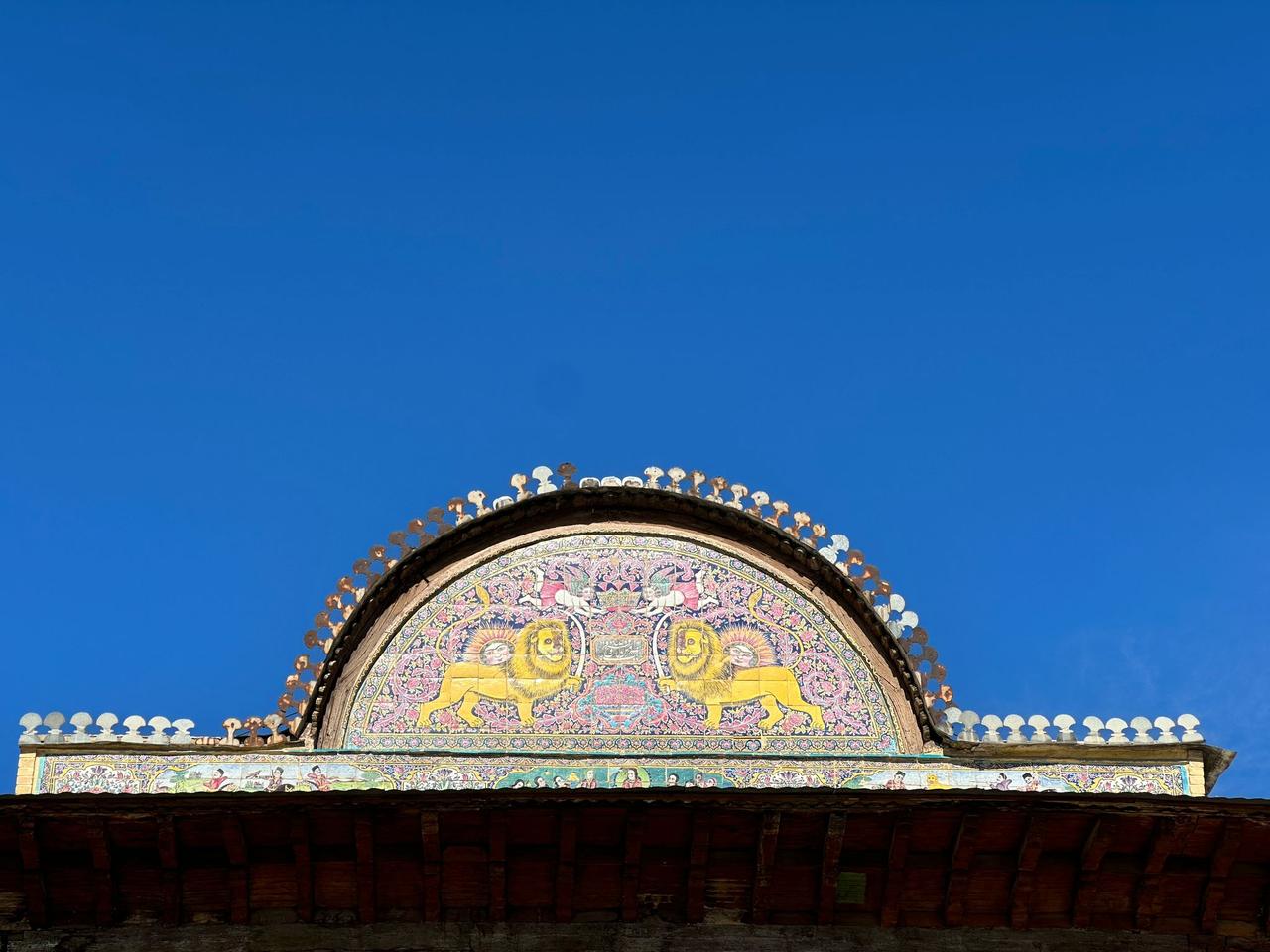
Nasreddin Shah’s connection to Bagh-e Eram is clearly evident in the tile panels adorning the façade of the main pavilion. These panels depict figurative scenes such as Nasreddin Shah on horseback, the divan of Süleyman Prophet, women swooning before the beauty of Prophet Yusuf, and the scene of Khusraw observing Shirin bathing.
This tile program serves both to equate the monarch with divine justice and to elevate the Qajar identity in the eyes of the public. Qajar iconography frequently employed symbols associated with the Turk-Islamic conception of rulership—such as the throne, crown, equestrian imagery, and scenes of justice. In this sense, Bagh-e Eram is regarded as an aesthetic and ideological manifesto.
Bagh-e Eram Decorations (Duygu Şahinler)
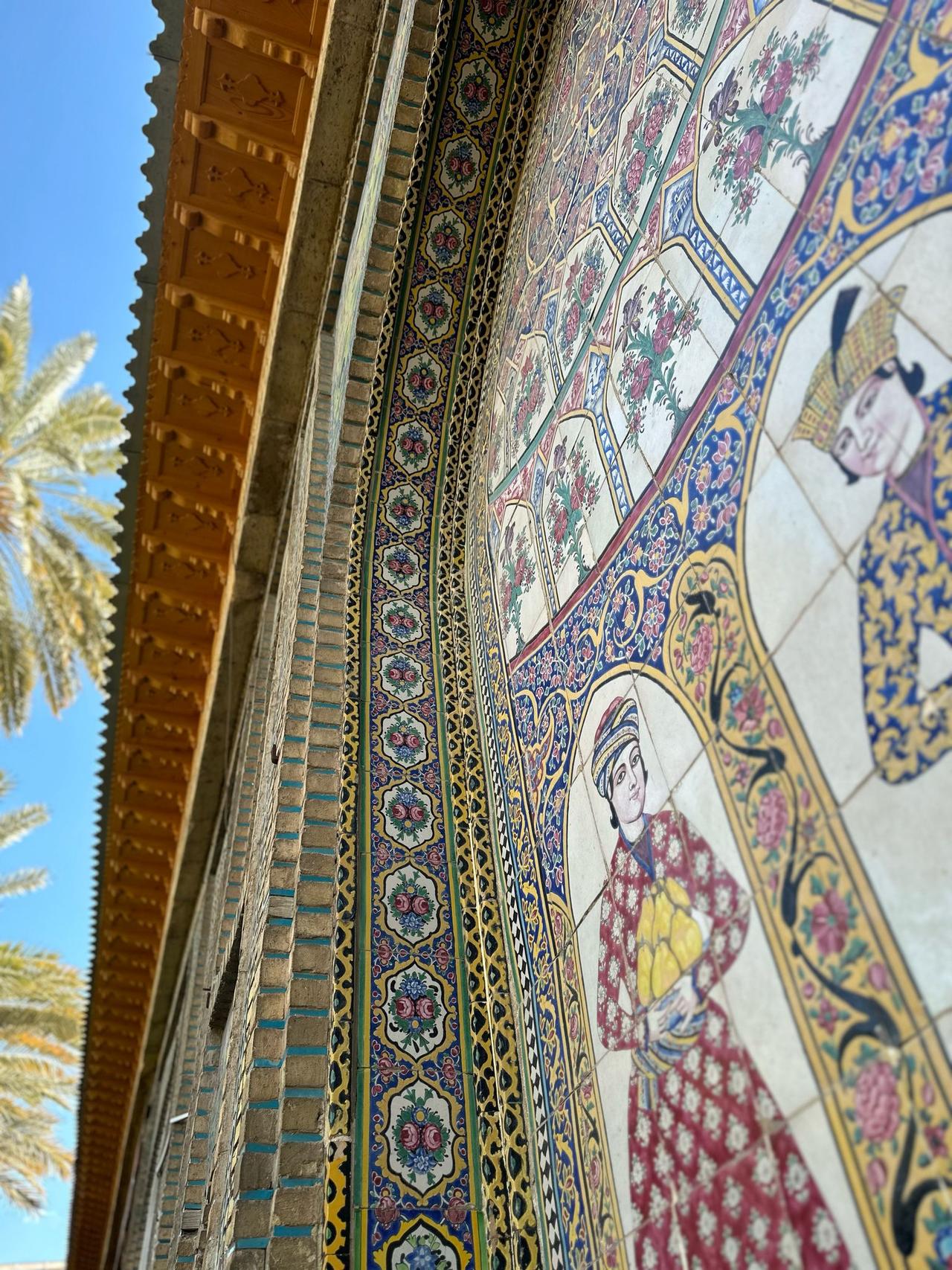
Bagh-e Eram Decorations (Duygu Şahinler)
Bagh-e Eram is designed according to the classical Iranian garden layout known as the chahar bagh (four gardens) system. In this design, the garden is divided into four equal parts with a central pool or fountain. This layout draws inspiration from Quranic descriptions of paradise and centers the element of water. The garden integrates fountains, symmetrical pathways, cypress trees, and citrus trees into a unified whole.
The three-story pavilion at the garden’s center exhibits typical features of Qajar palace architecture: large portals, colorful tile panels, high-arched verandas, and mirrored ceilings. The decorative elements of these structures employ the Qajar-specific seven-color tile technique (haft rang). The vibrancy of the colors and the figurative intensity of the scenes result from a synthesis of traditional Persian miniature painting and Western perspective techniques.
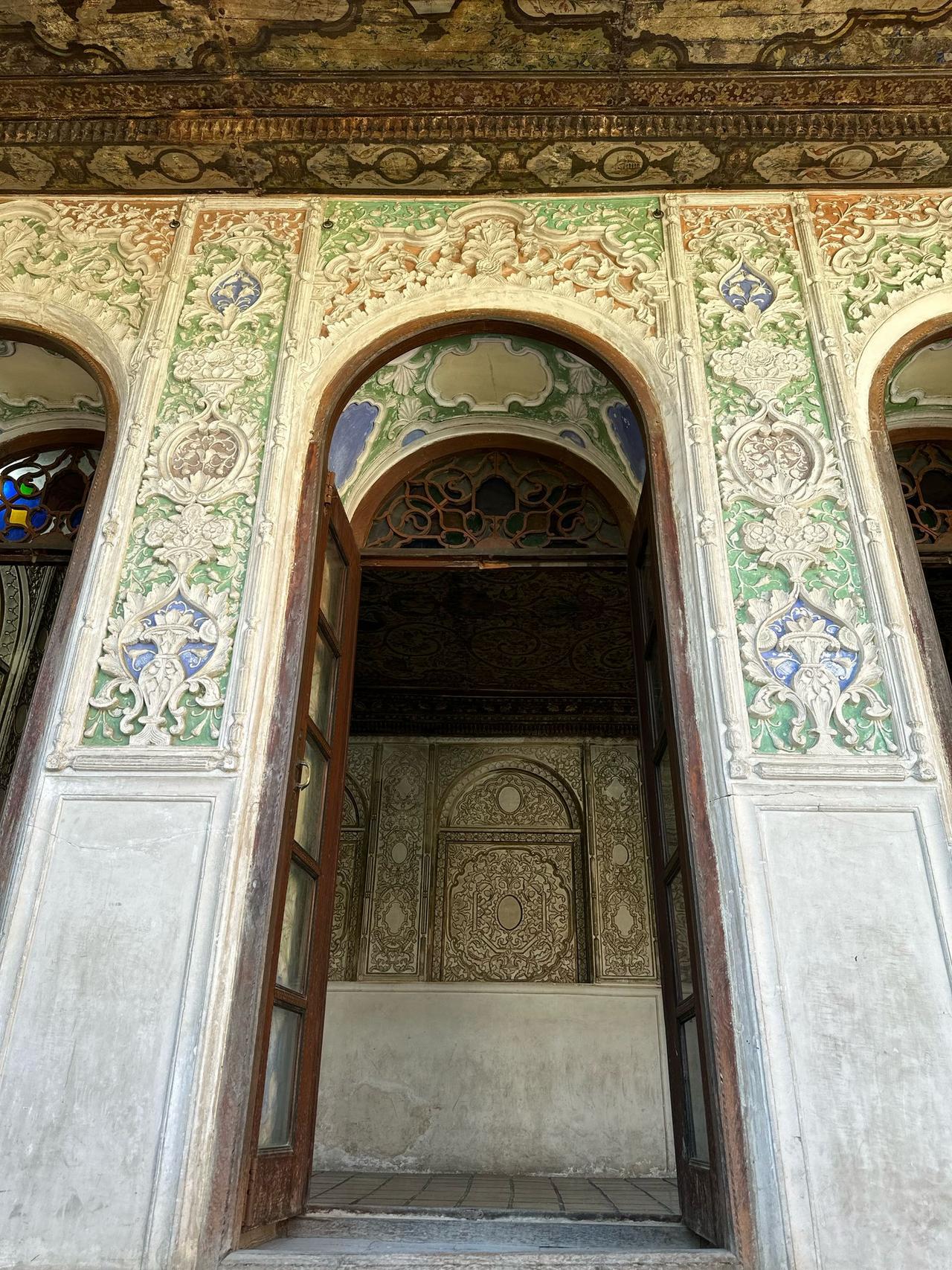
Bagh-e Eram Decorations (Duygu Şahinler)
The tile panels on the façade of Bagh-e Eram are striking in both aesthetic and narrative terms. Four distinct scenes reflect the literary and religious narratives of the period:
These iconographic scenes are grounded in the Turk-Islamic tradition of portraying the ideal ruler. They also exemplify the aesthetic and technical sophistication of the period.
The construction and decoration of Bagh-e Eram by the Qajar dynasty directly positions it as a product of the Turkish cultural sphere. In this context:
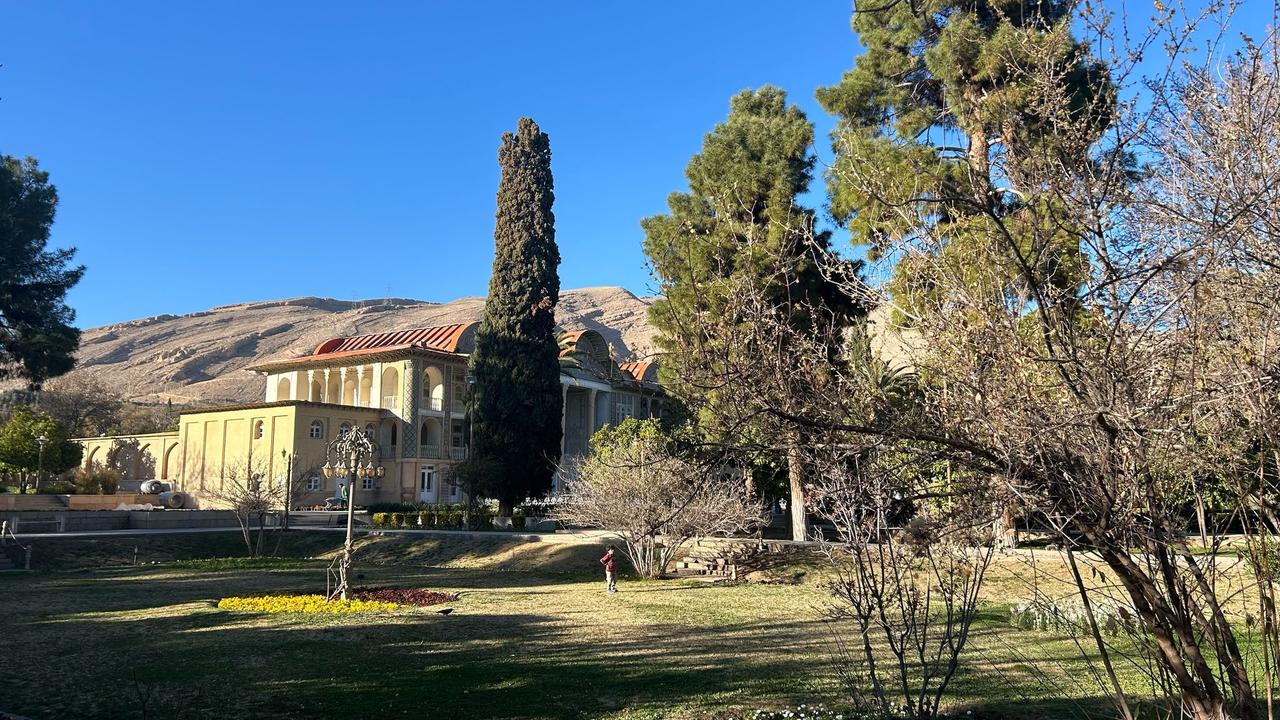
Today, Bagh-e Eram, located within the grounds of Shiraz University, functions as a multifaceted site serving as a botanical garden, tourist attraction, and architectural masterpiece.
Ensari, Senem Aker. “İran Kaçar Dönemi Çinilerinin Şiraz’da Bulunan Dört Yapı Örneğinde İncelenmesi.” *Ulakbilge Sosyal Bilimler Dergisi* 74 (July 2022): 767–781.https://www.ceeol.com/search/article-detail?id=1091617.
Khabbazi, P. A., and Erdoğan, E. "İslam Bahçeleri." Tekirdağ Ziraat Fakültesi Dergisi 9, no. 2 (2012): 20–31.
Uzun, Tolga. "İran’da Öykülü Resimlerin Dolaşımı: İslâm Edebiyatının Popüler Konularının El Yazmalardan Tuvallere Taşınması Üzerine Bir Deneme." Modern Türklük Araştırmaları Dergisi 5, no. 2 (June 2008): 127–154.

Historical Background and Construction
II. The Qajar Dynasty and Turkish Identity
III. Nasreddin Shah and Bagh-e Eram
Architectural and Aesthetic Features
Narratives and Iconography in the Tile Panels
Bagh-e Eram and Traces of Turkish Culture