


This article was automatically translated from the original Turkish version.
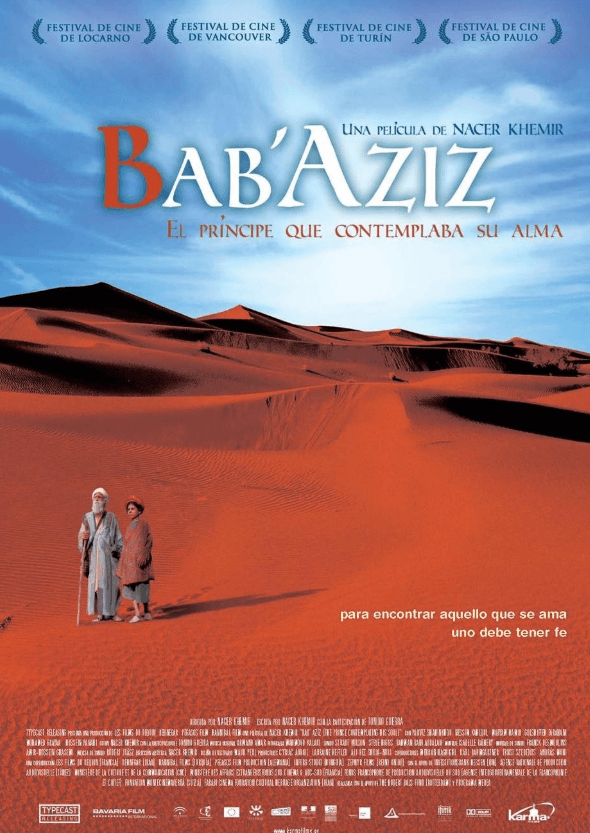
Production Year(Text) | 2005 | ||||||||
|---|---|---|---|---|---|---|---|---|---|
Music(s) | Armand Amar | ||||||||
Cinematographer(s) | Mahmoud Kalari | ||||||||
Director(s) | Nacer Khemir | ||||||||
Duration | 1s 36dk | ||||||||
Actors | Parviz Shahinkhou, Maryam Hamid, Golshifteh Farahani | ||||||||
Screenwriter(s) | Tonino Guerra Nacer Khemir | ||||||||
Country(ies) | İran Tunus | ||||||||
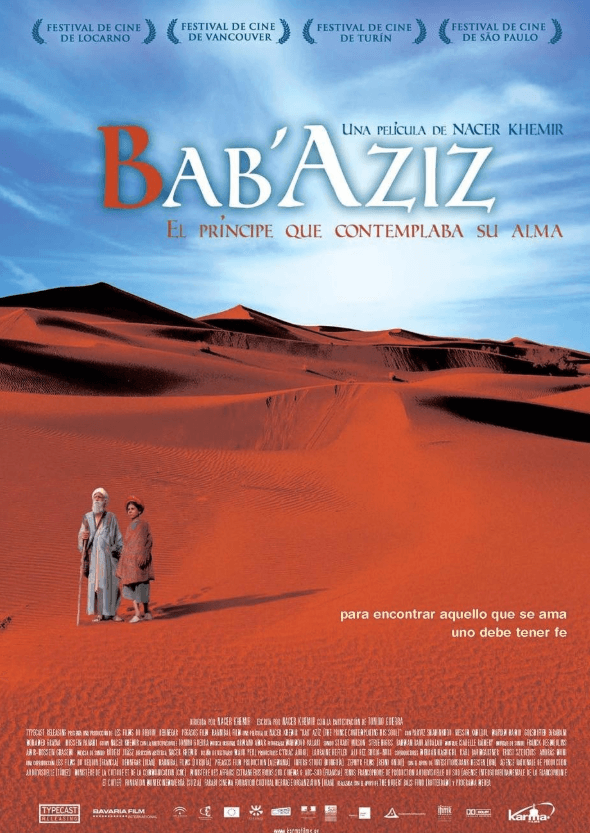
Bab’ Aziz is a film that explores profound themes surrounding the continuous journey and pilgrimage of the human soul between this world and the hereafter, between body and spirit, world and the afterlife. Directed by Nacer Khemir, this film, modern challenges conventional perceptions of the world and avoids representing Islam as merely a narrow segment, instead offering a universal narrative of faith. In an interview, Khemir stated that the film’s concept emerged as a response to stereotypes about Islam propagated after 11 September by media. It can be said that the film presents an alternative to offer to the negative effects of the politicization of Islam by emphasizing weakness, humility, and stillness rather than power.
【1】
In the film, the understanding of time and space diverges from traditional perspectives, presenting everything as shaped entirely by divine will and as part of a unified whole. Time here is not arranged in a conventional sequence but is rendered within a universal framework, eliminating the necessity of chronological order. Similarly, space is not perceived as a fragmented domain but as an integrated unity. This narrative style resembles the way time and events are presented in a disordered fashion in God’s sacred scriptures, portraying human existence and experience in this world as a single piece.
The film’s central philosophy can be summarized in the phrase: “There is a path to Allah for every human being on earth.” Here, a strong message is offered against the radicalism that arises from reducing religion to a single interpretation. The film underscores the necessity of accepting diversity in approaches and interpretations of Islam. In this context, the film points toward a broader and more inclusive perspective in understanding religion, rather than adhering to a rigid notion of a single truth.
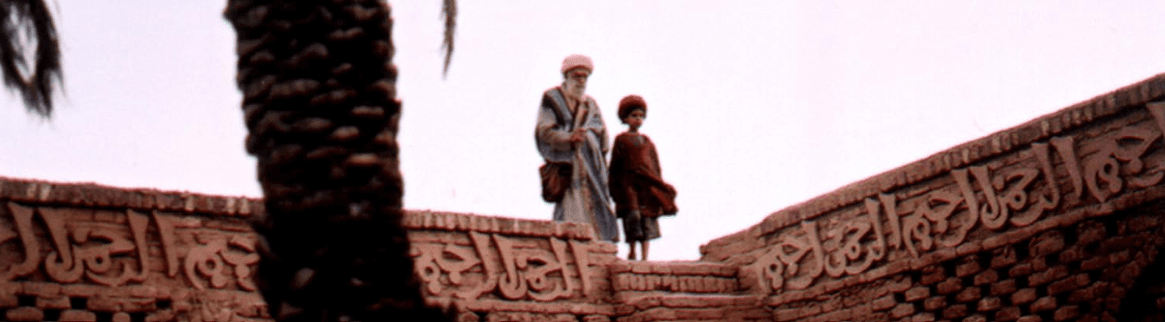
The journey of the film’s central character, Bab’ Aziz, and his granddaughter Ishtar through the desert narrates a physically arduous process while simultaneously symbolizing a spiritual quest and the act of walking with faith. Bab’ Aziz’s declaration, “One who has faith never gets lost,” conveys the message that faith and inner conviction prevent a person from losing their way. Additionally, the story of another key important, the prince character, reveals how material pleasures and worldly delights obstruct a person’s perception of spiritual truth, while the desert’s solitude and heat are emphasized as conducive elements for spiritual seeking.
Bab’ Aziz is not merely a visual narrative but a work that engages deeply with philosophical and religious discourse. Through its characters, Khemir reveals the importance of turning away from worldly pleasures and pursuing spirituality, highlighting the significance of the human soul’s journey. In this regard, the film underscores the value of a more comprehensive and participatory perspective on Islam’s universal message.
【2】
Khemir, Nacer, dir. Bab'Aziz: The Prince That Contemplated His Soul. 2005.
Özalp, Zeynep. "Hayattan Ölüme Yolculuğun Hikayesi: Bab’ Aziz." Nar Edebiyat Kültür & Sanat Dergisi.
[1]
Khemir, Nacer, dir. Bab'Aziz: The Prince That Contemplated His Soul. 2005. IMDb.
[2]
Khemir, Nacer, dir. Bab'Aziz: The Prince That Contemplated His Soul. 2005. IMDb.

Production Year(Text) | 2005 | ||||||||
|---|---|---|---|---|---|---|---|---|---|
Music(s) | Armand Amar | ||||||||
Cinematographer(s) | Mahmoud Kalari | ||||||||
Director(s) | Nacer Khemir | ||||||||
Duration | 1s 36dk | ||||||||
Actors | Parviz Shahinkhou, Maryam Hamid, Golshifteh Farahani | ||||||||
Screenwriter(s) | Tonino Guerra Nacer Khemir | ||||||||
Country(ies) | İran Tunus | ||||||||
Awards Received by the Film
Cast