This article was automatically translated from the original Turkish version.
Geographical Indication Type | Mahreç Sign | ||||||||
|---|---|---|---|---|---|---|---|---|---|
Application Date | 27.03.2020 | ||||||||
Registration Number | 590 | ||||||||
Registration Date | 12.11.2020 | ||||||||
Product / Product Group | Rugs handcraft products other than carpets, kilims and textiles | ||||||||
Province | Kastamonu | ||||||||
Applicant / Registrant | Azdavay Municipality | ||||||||
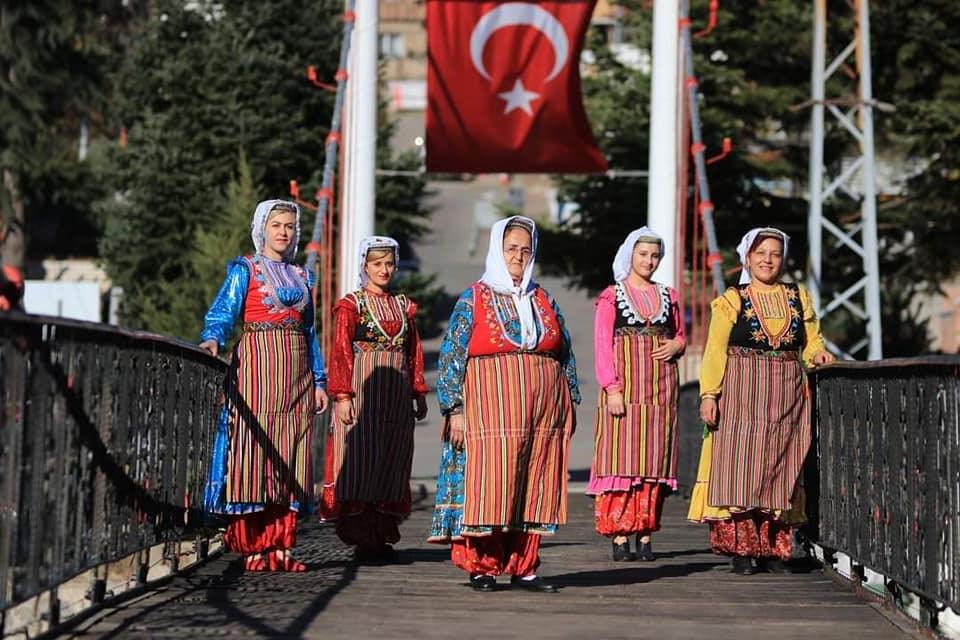
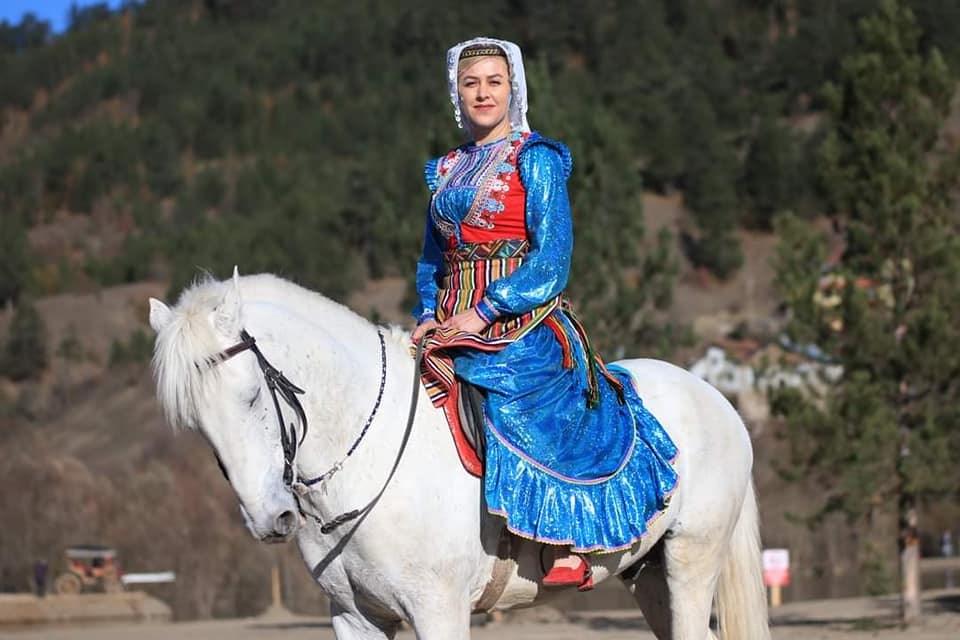
Azdavay Regional Costumes consist of traditional garments worn for centuries by women in the Azdavay district of Kastamonu Province, both in daily life and on special occasions. These garments are not merely aesthetic expressions; they constitute a cultural whole that reflects social identity, belief systems, and local craft traditions.
Registered as a geographical indication under Law No. 6769 on Industrial Property by the Turkish Patent and Trademark Office.
Azdavay Regional Costumes (Azdavay District Governorship)
A headpiece made of etamin fabric and decorated with needlework embroidery. Circular and triangular etamin pieces are used in its construction. Married women fasten the takke with a patterned turban called “çökü,” while unmarried women use a fabric casing known as “peyik.” These headpieces serve not only decorative purposes but also convey information about a woman’s civil status. The embroidery on the takke includes small triangular muska motifs and dotted square göz symbols, which in folk belief offer protective qualities and are used to ward off the evil eye. The takke is completed with beaded tassels and braided cords and stiffened with sugar water before drying to maintain its shape.
A beaded cord threaded under the chin to prevent the takke from slipping. It passes either in front of or behind the ears and is tied at the top of the head. It is also known locally as “çene boncuğu” or “imik bağı.”
A traditional garment extending from the waist to the ankles, covering the legs. The upper section is sewn from cotton fabric (pazen or basma), while the lower part is made from patterned synthetic fabric. Elastic bands are attached at the waist and ankles. The stitching and measurements are tailored to the wearer’s body. The crotch area is sewn in three sections to allow for ease of movement.
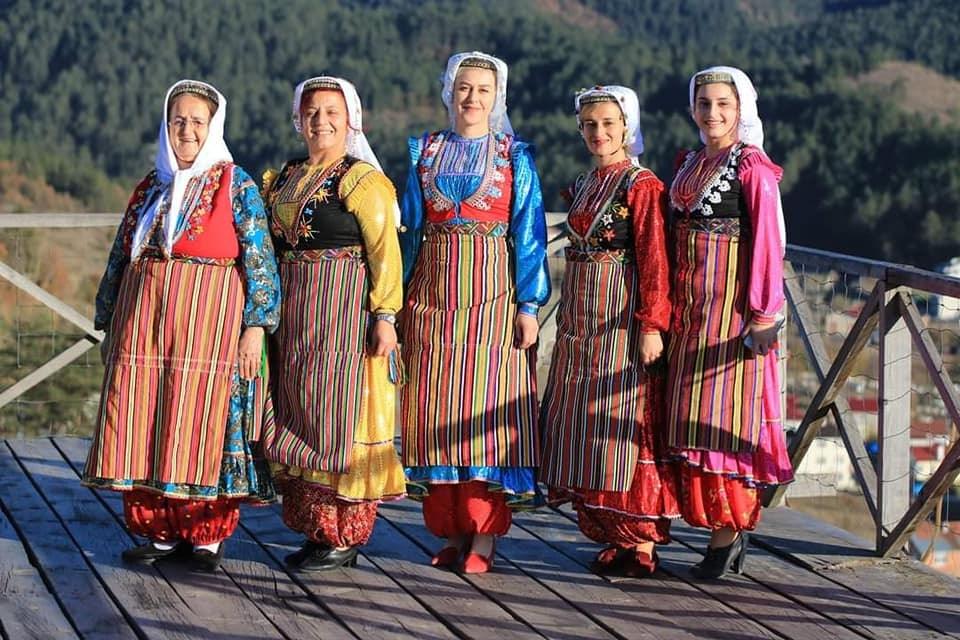
Azdavay Regional Costumes (Azdavay District Governorship)
An ankle-length overdress reaching below the knees, with a flat front panel and a ruffled back panel known as “sayvanlı.” Decorative trim made of sutaşı fabric in various colors is applied to the neckline, sleeves, and hem. The fabric is synthetic and finished with buttoned or snap-fastened cuffs. Additional fabric pieces called “kuyma” are added to the sleeves to shape the silhouette.
A traditional vest made of synthetic fabric, lined and cut short, with an open front extending to below the chest. The sleeve openings are treated with a printing technique called “kıvratma,” and tassels are attached at the shoulders. The vest is embellished with beaded crochet work, etamin embroidery, and ready-made appliqués. These decorations are chosen to contrast with the fabric and are typically sewn on by hand.
A traditional woven band worn around the waist, serving both aesthetic and functional purposes. Rectangular woven fabrics with fringed edges are woven in three parts and joined using the “çatma” technique to form a square shape. The kuşak is wrapped so that its back portion hangs in a triangular shape and is secured to the waist with a thin, long woven strip called “şerit.” Motifs such as the mirror cover and menük (patterned thread) are defining elements of kuşak weaving.
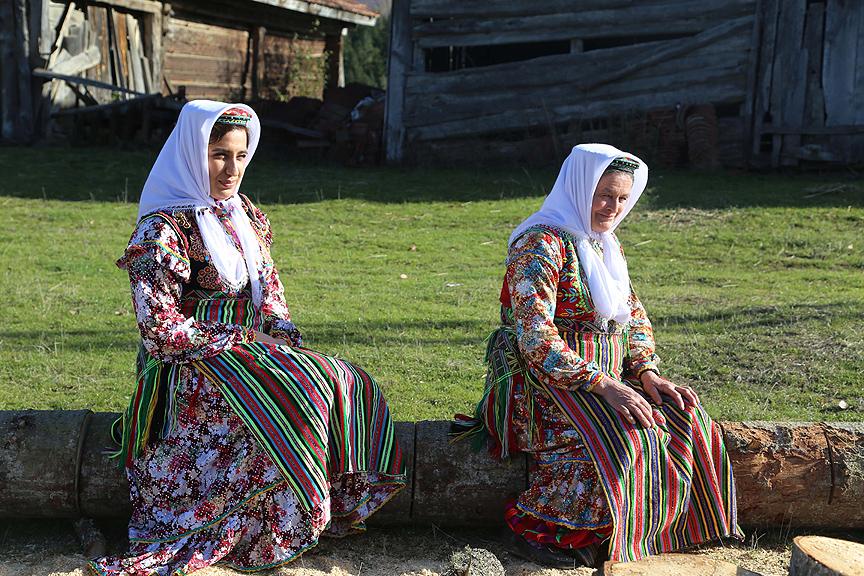
Azdavay Regional Costumes (AA)
A narrow weaving, 1–1.3 cm wide and 3–4 m long, used to secure the kuşak. Made from orlon yarn, it is produced using stretched warp threads and wooden sticks. The patterns feature small square shapes, with red and yellow dominating the color palette.
A protective textile panel, 30–40 cm wide and 110–150 cm long, woven in stripes and fastened over the dress. It is woven using the bezayağı technique, with white cotton warp threads and colorful orlon weft threads. A belt is sewn along the upper edge to fasten it around the waist.
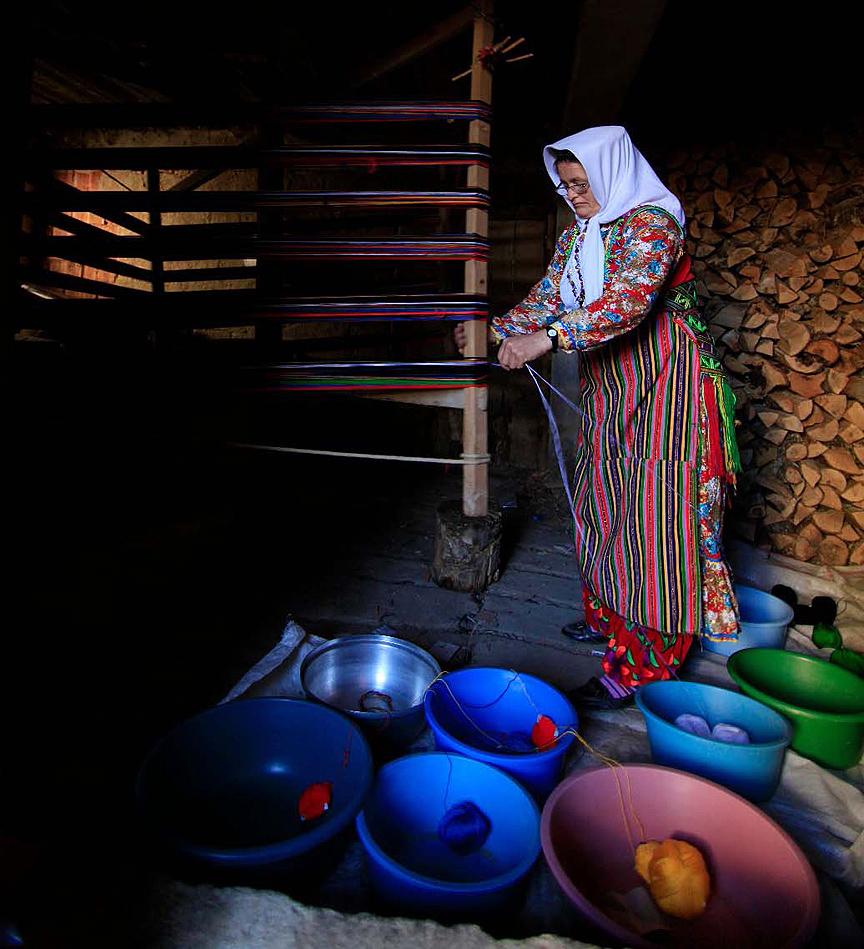
An Image from the Production Process (AA)
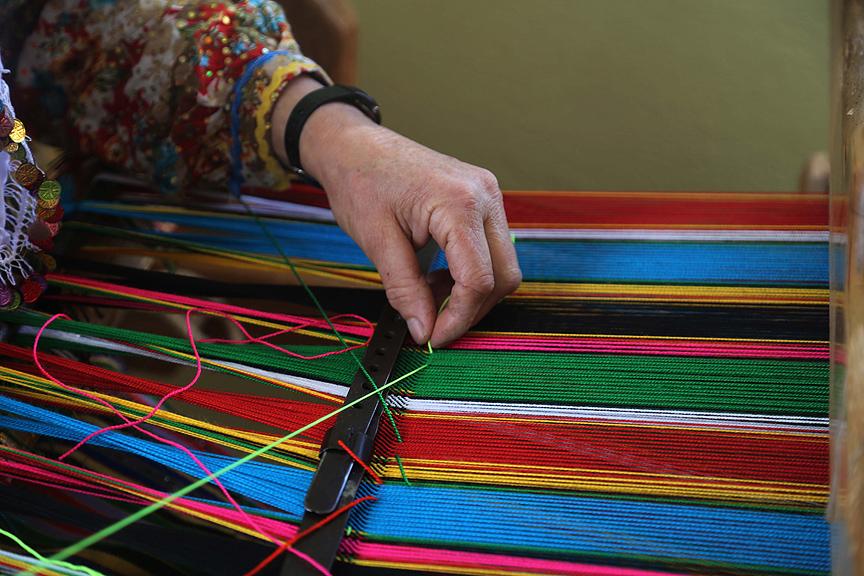
An Image from the Production Process (AA)
The production of Azdavay Regional Costumes is permitted only within the geographical boundaries of Azdavay district in Kastamonu Province. Due to the strong association between the product and its place of origin, and because its manufacture requires specialized local techniques, production must not extend beyond these boundaries.
Oversight is conducted at least once annually under the coordination of Azdavay Municipality, with participation from the Azdavay District Governorship, Azdavay Community Education Center Directorate, and relevant experts. Additional inspections may be carried out at any time upon complaint. During inspections, compliance with production methods and correct use of the geographical indication mark are verified.
Anadolu Ajansı. "Azdavay Kuşağının Son Ustaları." Accessed July 12, 2025.https://www.aa.com.tr/tr/yasam/azdavay-kusaginin-son-ustalari-/1063879.
Azdavay Belediyesi. "Kültür ve Turizm." Azdavay Belediyesi Resmî Sitesi. Accessed July 12, 2025.https://www.azdavay.bel.tr/Kultur-Turizm.
Azdavay Kaymakamlığı. "Türk Kültürünün Zenginliği: Azdavay Yöresel Giysileri Tezgah Başına Geçen Kadınlar Tarafından Geleceğe Aktarmaya Devam Etmektedir." Azdavay Kaymakamlığı Resmî Web Sitesi. Accessed July 12, 2025.http://azdavay.gov.tr/turk-kulturunun-zenginligi-azdavay-yoresel-giysileri-tezgh-basina-gecen-kadinlar-tarafindan-gelecege-aktarmaya-devam-etmektedir.
Turk Patent and Trademark Office. "Azdavay Yöresel Clothing." *Coğrafi İşaretler Portalı*. Accessed July 12, 2025.https://ci.turkpatent.gov.tr/cografi-isaretler/detay/1844.

Geographical Indication Type | Mahreç Sign | ||||||||
|---|---|---|---|---|---|---|---|---|---|
Application Date | 27.03.2020 | ||||||||
Registration Number | 590 | ||||||||
Registration Date | 12.11.2020 | ||||||||
Product / Product Group | Rugs handcraft products other than carpets, kilims and textiles | ||||||||
Province | Kastamonu | ||||||||
Applicant / Registrant | Azdavay Municipality | ||||||||
No Discussion Added Yet
Start discussion for "Azdavay Regional Clothing" article
Garment Components and Cultural Functions
Takke
Çene İpi
Paça (Şalvar)
Entari
Delme (Yelek)
Kuşak
Şerit Dokuma
Ön Bezi
Production Techniques
Geographical Boundaries and Oversight Process