


This article was automatically translated from the original Turkish version.
+2 More
An avalanche is a natural phenomenon that occurs when layers of snow slide due to internal and external forces, typically in mountainous, sloped areas devoid of vegetation cover. This event can also be described as the sliding of snow layers over one another or entirely over the ground as a result of heavy snow accumulation. Avalanches are commonly observed on steep terrain in mountainous regions, especially along valley slopes. Mountains provide environments where snow accumulations can move rapidly. Over time, under specific loading and external forces, snow layers begin to slide and accelerate downhill. This movement can lead to severe loss of life and property damage, as the speed of an avalanche mass is extremely high and it can spread over wide areas, destroying everything in its path.
The two most important factors in avalanche formation are topographical conditions and meteorological elements. Northern, northeastern, and eastern regions of Türkiye possess mountainous areas with topographical features conducive to such natural disasters, resulting in a high avalanche risk. Avalanches are particularly common at elevations above 1000 meters. These high-altitude regions are prone to frequent avalanches because most precipitation falls as snow and microclimates develop, creating favorable conditions. Additionally, these areas experience wind-driven redistribution and accumulation of snow, which contributes to the rapid growth of avalanches.
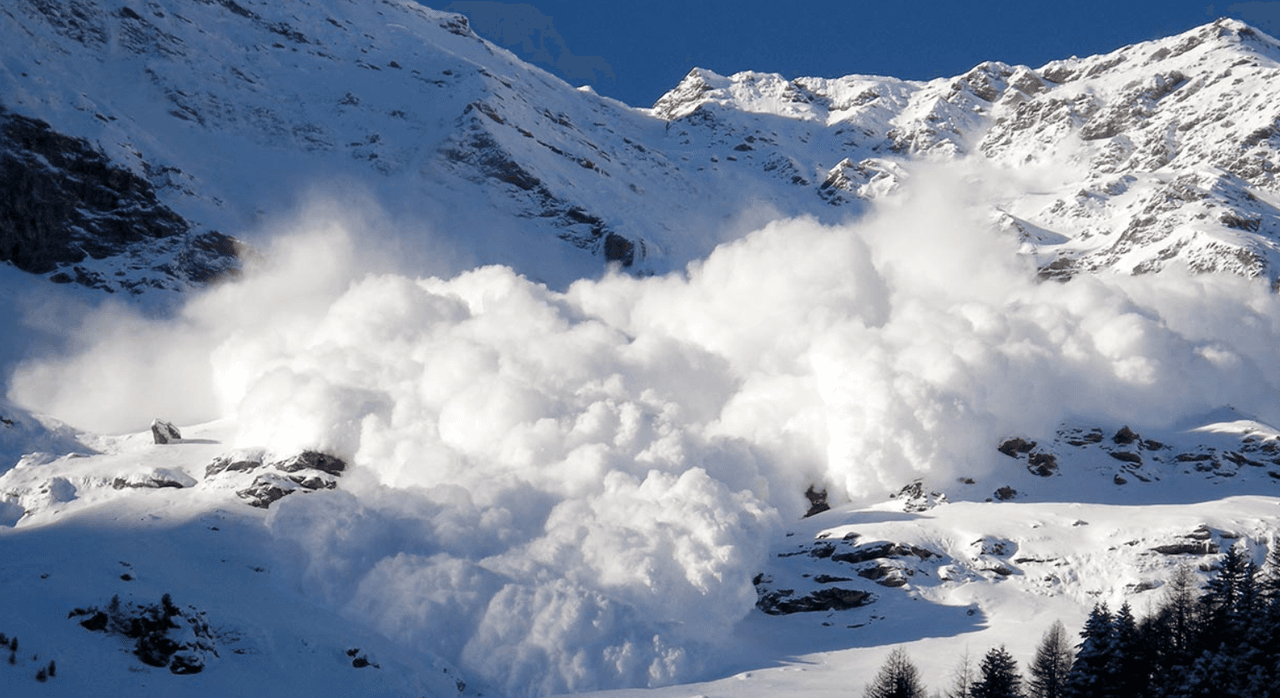
Avalanche (Source: Outdoor Haber)
The most important meteorological factors contributing to avalanche formation include precipitation, wind, temperature fluctuations, and atmospheric conditions in the region. Heavy snowfall can cause rapid accumulation of snow layers, leading to sliding under the influence of gravity. Wind can transport snow to specific areas, forming large snowdrifts and increasing avalanche risk. Another triggering factor is temperature change. Particularly, sudden drops in temperature following warm periods cause snow to melt and then refreeze, disrupting the stability of snow layers and triggering avalanches. Rain adds water to the snowpack, increasing its weight and initiating movement.
Due to its mountainous terrain and climatic characteristics, Türkiye is frequently affected by avalanche disasters. The northeastern and eastern regions of the country, with their high mountain ranges and valley slopes, are highly susceptible to avalanches. Avalanches are especially common in the interior areas of the Black Sea Region, Eastern Anatolia, and Southeastern Anatolia. Avalanches threaten settlements, roads, and tourist facilities in these regions, causing significant material losses. Moreover, loss of life due to avalanches remains a serious concern. For example, during the 1991–1992 winter avalanche disaster, 328 people lost their lives. The social impacts of such disasters are also substantial: displaced populations may migrate from damaged settlements, and the regional economy may suffer negative consequences. The economic impact of avalanches becomes more pronounced when damage is not compensated and production losses increase.
Avalanches can be classified into different types based on their structure. Powder avalanches are the most common type and typically occur during windy conditions. These avalanches consist of snow particles that can reach speeds of up to 400 km/h. Powder avalanches generate strong air pressure and can cause extensive damage to surrounding areas. Slab avalanches form when hardened and compacted snow layers slide over one another. These types are usually triggered by wind or other external factors. Wet snow avalanches consist of moist and older snow layers and typically occur toward the end of winter. These type of avalanches move as very heavy and massive masses.
Both passive and active methods can be employed to protect against avalanches. Passive measures include avoiding the establishment of new settlements in avalanche-prone areas, preserving forests and vegetation, and constructing structures such as avalanche tunnels and barriers. Active preventive measures involve compacting snow layers, triggering artificial avalanches, and modifying the slope angles of hazardous areas. These measures can help prevent avalanche formation and mitigate the occurrence of major disasters.
An avalanche is an event that develops with extreme speed, and therefore, maintaining calm when caught in one is vital. If you are outdoors, try to move quickly toward safer areas. If you are skiing, remove your skis and attempt to grip a solid rock or tree. Additionally, perform swimming motions to help stay on the surface and avoid being buried. It is also important to create an air pocket to allow breathing. If possible, shout to alert others nearby and call for help. If you are inside a vehicle, turn off the engine and do not exit; audible and visual signals from outside may provide a chance for rescue.
After an avalanche, appropriate steps must be taken to assist victims. First, contact the 112 Emergency Line and direct the nearest rescue teams to the avalanche zone. When providing first aid, one of the most critical considerations is treating potential fractures in the neck and spine. Victims buried under snow may require immediate oxygen supply, warming, and fluid replenishment.
An avalanche is a natural phenomenon occurring in mountainous areas that can rapidly cause extensive damage. However, with proper preventive measures, avalanche disasters can be avoided or their impacts minimized. Increasing public awareness and ensuring local authorities are prepared for such disasters is of great importance.
Göl, Ceyhun. “Çığ Olgusu ve Ormancılık.” *Süleyman Demirel Üniversitesi Orman Fakültesi Dergisi*, Series A, no. 1 (2005): 49–63. Accessed March 26, 2025.https://dergipark.org.tr/tr/download/article-file/195682#page=1.35
Gürer, İbrahim, and Harun Tunçel. “Türkiye’de Çığ Sorunu ve Bugünkü Durumu.” Accessed March 26, 2025.https://tucaum.ankara.edu.tr/wp-content/uploads/sites/280/2015/08/tucaum4_1.pdf.
Maltepe Üniversitesi. "Çığ ve Korunma." Accessed March 26, 2025.https://maltepe.edu.tr/aramakurtarma/tr/cig-ve-korunmaa
Meteorology General Directorate. "Natural Disasters: Avalanche." Accessed March 26, 2025.https://mgm.gov.tr/arastirma/dogal-afetler.aspx?s=cigozet
T.C.Dörtyol Kaymakamlığı Governorship. "Çığ." Accessed March 26, 2025.http://www.dortyol.gov.tr/cig.
Taştekin, Ahmet Tolga. *Meteoroloji ve Çığ*. Devlet Meteoroloji İşleri Genel Müdürlüğü. Accessed March 26, 2025.https://www.mgm.gov.tr/files/genel/makale/meteorolojivecig.pdf

Conditions Required for Avalanche Formation
Meteorological Conditions
Avalanches and Their Impacts in Türkiye
Types of Avalanches
Prevention Methods Against Avalanches
Actions to Take If Caught in an Avalanche
First Aid After an Avalanche