


This article was automatically translated from the original Turkish version.
+1 More
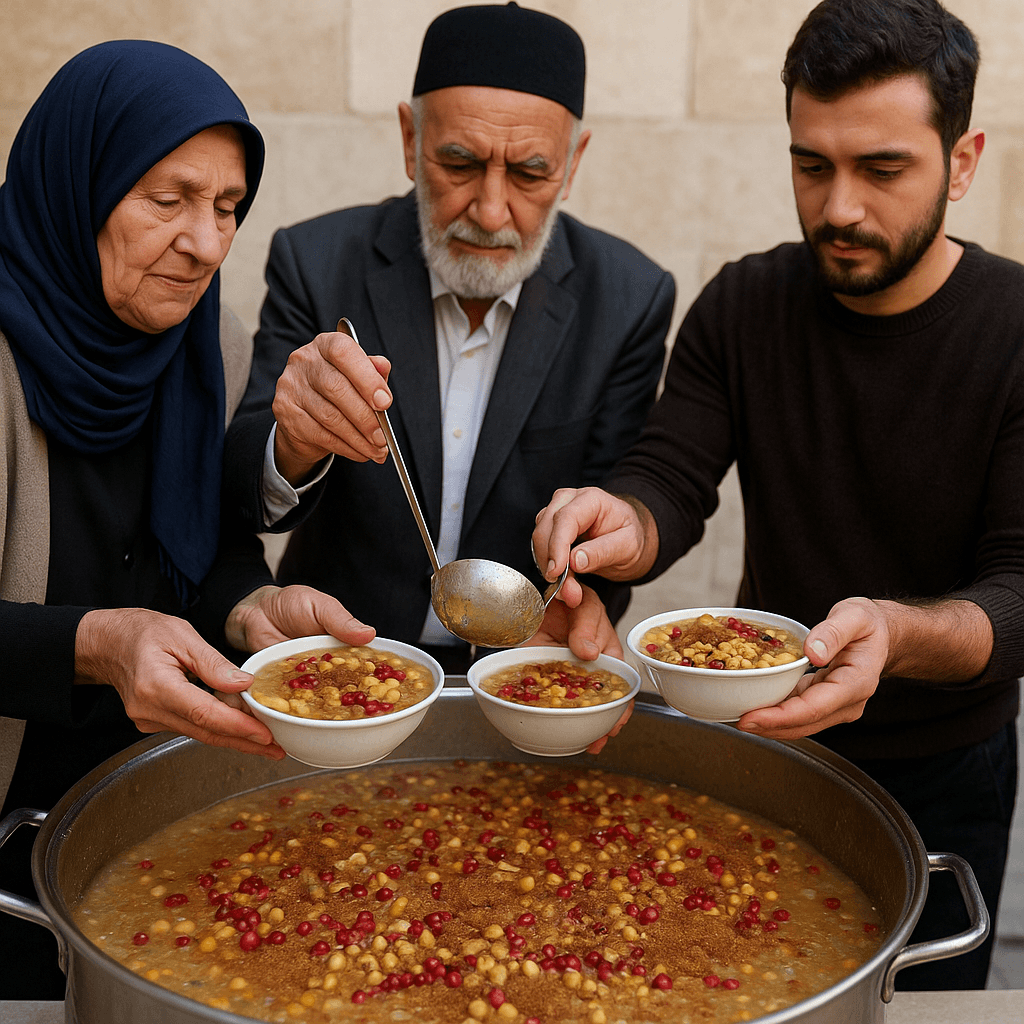
Ashura Day
Name | Ashura Day | ||||||||
|---|---|---|---|---|---|---|---|---|---|
Calendar | Hijri Calendar | ||||||||
Date | The 10th day of Muharram | ||||||||
Etymology | From the Arabic word 'ashara' (10) | ||||||||
Celebration Method | Distribution of Ashura Mourning (Shia tradition) Fasting | ||||||||
Symbolic Elements | Ashura pot Prayer ladle Embroidered tray | ||||||||
Ashura Day is a special day that, throughout history, has carried multiple religious and cultural meanings and is sustained in Islamic societies through a shared sense of values. This day, which corresponds to the tenth day of Muharram—the first month of the Islamic calendar—has held special significance not only in the Islamic world but also in Jewish and Christian cultures, evolving over time into a day observed through fasting and rituals. The formation of rituals associated with Ashura Day in Islamic societies has been influenced not only by narratives concerning the deliverance of Prophet Moses from Pharaoh but also by historical traumas such as the martyrdom of Imam Husayn in Karbala. For this reason, the day is commemorated by different sects and belief groups either as a celebration or within a mood of mourning.
Regarding Muharram Month and Ashura Day (Diyanet TV)
Practices related to Ashura Day have not developed solely within the context of worship but have become deeply intertwined with social solidarity, mutual aid, and neighborhood relations. The preparation and distribution of the multi-ingredient dessert known as “ashura” has, over centuries, been carried out within a broad social organization in Ottoman society, extending from the palace to the tekke and from the home to the imaret. In this sense, ashura has become more than a dish—it has transformed into a collective expression of faith and culture.
The word “ashura” derives from the Arabic term “ʿaşara” (عشرة), meaning “ten.” In this context, “ʿašūrāʾ” (عاشوراء) refers to the tenth day of Muharram, the first month of the Islamic calendar. In this sense, the term “ashura” designates both the day itself and the traditional dessert prepared on that day. This Arabic term for the tenth day has become a lasting nomenclature in both the Islamic world and Turkish culture. In Ottoman documents, this day and the dessert were sometimes written as “ashura” and sometimes as “ashure.”
Various theories have been proposed regarding the origin of the word “ashura.” One view argues for its Arabic roots, while another suggests a Hebrew origin. This latter interpretation links the term to the Hebrew word “kipur” (kapara), associating it with Yom Kippur (the Day of Atonement) in Jewish tradition. However, the majority of Islamic scholars accept that the word is of Arabic origin and directly connected to the number ten.
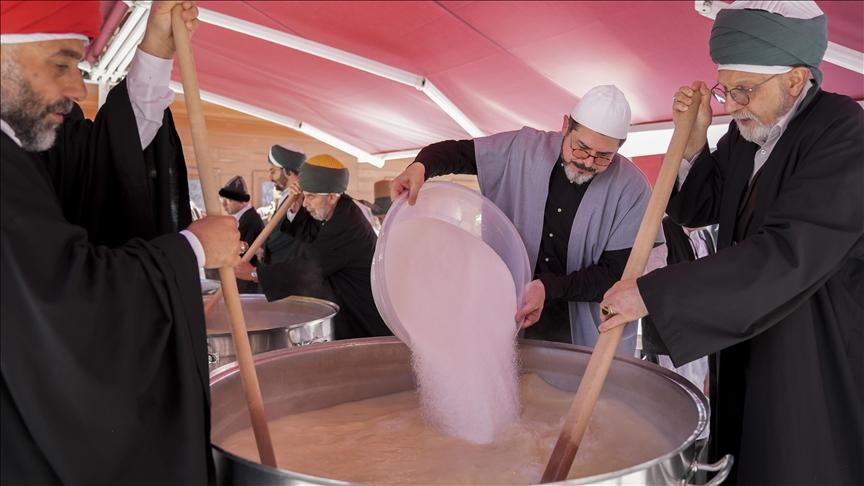
The Ashura Tradition at Sünbül Efendi Tekke (Anadolu Ajansı)
Over time, the term “ashura” evolved beyond being merely a calendrical designation to become a concept defining a specific culinary tradition. This semantic expansion became even more pronounced in Turkish usage. In popular parlance, this dish is also referred to as “ashura dessert,” “ashura porridge,” or “ashura soup,” thereby solidifying the term’s representation as a tangible cultural product.
In Ottoman culinary documents and folk literature, ashura has been described as both a material and spiritual symbol. Particularly in tekkes, dergahs, and palace kitchens, the practices surrounding its preparation and distribution became integrated with specific objects such as the “ashura ladle,” “ashura cauldron,” and “ashura trays.” Some of these objects were even mentioned in endowment deeds, establishing an institutional religious-social memory through the ashura tradition.
The historical origins of Ashura Day rest on a multi-layered foundation extending from pre-Islamic Arab conceptions of sacred time to Jewish and Christian traditions. Authentic reports indicate that this day was already recognized in pre-Islamic times as a special day of fasting. According to a narration from Aisha: “Ashura Day was a day on which the Quraysh fasted during the Age of Ignorance. The Messenger of God also fasted on this day. When he came to Medina, he instructed people to fast on this day. After the fast of Ramadan was made obligatory, he began fasting in Ramadan and abandoned the fast of Ashura. Afterward, whoever wished fasted on Ashura, and whoever wished did not.”【1】
After the Prophet Muhammad’s migration to Medina, his initial interactions with Jewish communities reshaped the meaning of Ashura Day. According to a narration in Bukhari: “When the Prophet arrived in Medina, he saw the Jews fasting on Ashura Day. He asked, ‘What is this?’ They replied, ‘It is a blessed day: it is the day when God delivered the Children of Israel from their enemies, and it is the day on which Moses fasted.’ Upon hearing this, the Prophet (peace be upon him) said, ‘I am more deserving of Moses than you are,’ and he fasted on this day and commanded others to do so as well.”【2】
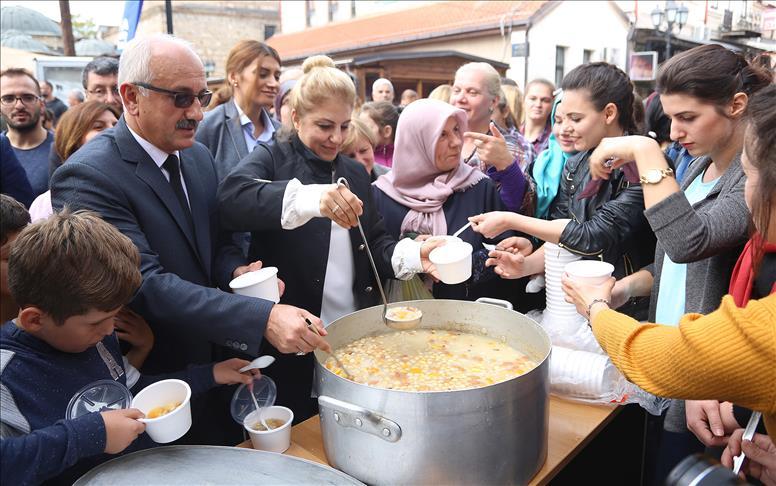
Distribution of Ashura to Nine Countries in the Ottoman Geography (Anadolu Ajansı)
With the obligation of Ramadan fasting, the Ashura fast became a voluntary act. This shift is clearly stated in another narration from Aisha: “The Messenger of God (peace be upon him) ordered fasting on Ashura Day. After Ramadan fasting became obligatory, whoever wished fasted on Ashura, and whoever wished did not.”【3】 The Quranic verse that establishes the obligation of fasting— “O you who believe! Fasting has been prescribed for you as it was prescribed for those before you, so that you may attain piety.” (Al-Baqarah, 2:183)【4】 —also forms the foundational basis for this transformation.
Numerous historical narrations contribute to the sanctity attributed to Ashura Day. According to these reports, on this day Adam’s repentance was accepted, Noah’s ark settled on Mount Judi, Moses was delivered from Pharaoh’s tyranny, Abraham emerged unharmed from the fire, Jonah was freed from the belly of the fish, and Job was healed.【5】 Although the belief that all these events occurred on the same day lacks historical certainty, it holds significant symbolic importance in popular belief.
One of the most pivotal historical turning points shaping the meaning of Ashura Day was the Battle of Karbala, which occurred on the 10th of Muharram, 61 AH (October 10, 680 CE). The martyrdom of Husayn ibn Ali, the son of Ali and grandson of Muhammad, by the army of the Umayyad caliph Yazid transformed Ashura Day into a day of mourning and grief, particularly for Shia and Alevi communities.【6】
Following this event, Ashura Day acquired political and sectarian significance and came to be commemorated through mourning rituals, elegies, fasting, and ceremonies. From the Abbasid period onward, the Shia tradition publicly observed Ashura Day; during the Buyid era (962), it was officially declared a day of mourning in Baghdad, processions were held in the streets, shops were closed, and special shrines known as husayniyyas were constructed.【7】
This multi-layered historical development has led to Ashura Day being commemorated with different meanings by various communities. In Sunni traditions, the day is primarily associated with Moses’ deliverance and is observed through fasting and the preparation of ashura dessert. In Shia tradition, the day is marked by intense mourning rituals aimed at preserving the memory of the massacre at Karbala. Both approaches reflect the collective memory of the historical events underlying Ashura Day.
The sanctity of Ashura Day in the Islamic world has been constructed not only through the act of fasting but also through numerous historical and cosmological events linked to this day. According to popular beliefs, many events in human and prophetic history are said to have occurred on the 10th of Muharram. Although much of this narrative derives from pre-Islamic Jewish and Christian traditions and folk reports, these stories have played a crucial role in reinforcing the cultural meaning of Ashura Day.
According to narrations, on this day Adam’s repentance was accepted, Noah’s ark settled on Mount Judi after the flood, Abraham escaped from Nimrod’s fire, Moses liberated the Children of Israel from Pharaoh’s army, Jonah emerged from the belly of the fish, Joseph was lifted from the well and his father Jacob’s sight was restored. On the same day, Job was healed of his illness, Idris was raised to heaven, Jesus was born or ascended to heaven, David’s repentance was accepted, and Solomon was restored his kingdom. Additionally, this day is cited as the moment when the Prophet Muhammad received the glad tidings that all his past and future sins would be forgiven.【8】
Some of these narratives are found in pre-Islamic Jewish and Christian traditions, while others are drawn from Islamic sources but are classified as weak or fabricated (mawḍūʿ) hadiths. For instance, the story of Moses’ deliverance from Pharaoh, which was the reason for Jewish fasting on Ashura Day, was accepted by the Prophet Muhammad and recommended to Muslims. In contrast, narrations such as “Adam’s repentance was accepted on this day” or “Noah’s ark landed on this day” were later incorporated into Islamic tradition and classified as weak or inauthentic within the hadith corpus.【9】 【10】
The most historically grounded and strongly attested event associated with Ashura Day is the Battle of Karbala. On the 10th of Muharram, 61 AH, the Prophet Muhammad’s grandson Husayn and dozens of his companions were besieged and martyred by the army of the Umayyad caliph Yazid in the region of Karbala, present-day Iraq. This event is the primary reason why Shia and Alevi communities commemorate Ashura Day as a day of mourning and grief.【11】
These narrations did not remain confined to oral tradition but were incorporated into various treatises and folk literary works, becoming part of written culture. During the Ottoman period, numerous small books bearing titles such as “Risale Fi Fadli Yevmi’l Aşure” listed these events to expound the virtues of Ashura Day. Although many of these narrations have limited religious validity, they reinforced the day’s place in collective memory.【12】
The meaning and practices associated with Ashura Day vary across Islamic sects. These differences have been shaped by historical memory, interpretations of sacred texts, and socio-cultural practices, particularly becoming distinct between Sunni and Shia traditions. Among Alevi-Bektashi belief circles, this distinction is even more pronounced at the ritual level.
In the Sunni belief system, Ashura Day is primarily regarded as a voluntary day of fasting. This understanding emerged after the Prophet Muhammad observed the Jews fasting on Ashura Day upon his arrival in Medina and learned that they fasted to commemorate Moses’ deliverance from Pharaoh. The Prophet’s statement on this matter was: “I am more deserving of Moses than you are.” He then fasted and encouraged Muslims to do the same.【13】
After the obligation of Ramadan fasting, the Ashura fast became one of the recommended (mustahabb) acts of worship. It is recommended to fast not only on Ashura Day but also on the day before (9 Muharram) or the day after (11 Muharram). The Hanafi, Shafi’i, and Hanbali schools consider this fast recommended, while the Maliki school regards it as a confirmed sunnah.
In Shia traditions, Ashura Day is primarily identified with the Battle of Karbala and is observed as a day of mourning. The martyrdom of Husayn and his companions on the tenth day of Muharram has transformed this day into one of profound grief and remembrance. In this context, particularly in Iran, Iraq, Lebanon, Bahrain, and some South Asian countries, Ashura Day is commemorated through public mourning ceremonies.
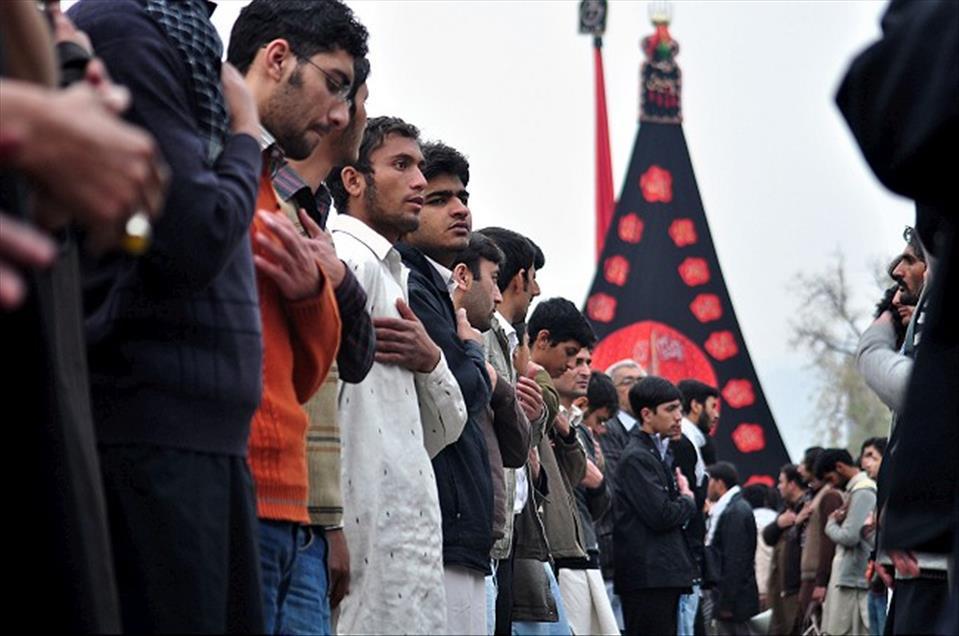
Ashura Day Observances in Iran (Anadolu Ajansı)
For Shia communities, the first ten days of Muharram, especially Ashura Day, are dedicated to commemorating Husayn and the other martyrs of Karbala. During this period, elegies, sinezen, tevhit, and laments are recited in mosques and husayniyyas, and the Karbala narrative is dramatized. In some regions, physical expressions such as striking the body with chains are practiced. In recent years, these practices have faced criticism in some areas, with symbolic alternatives such as blood donation being promoted.【14】
Regarding fasting on Ashura Day, Shia literature offers varied interpretations. Some Shia scholars view fasting as a symbol of Sunni origin and therefore discourage it, while others continue to observe the fast. The general tendency, however, is to observe Ashura Day in a spirit of abstinence from food and drink, simplicity, and solemnity.【15】
In the Alevi-Bektashi belief circles prevalent in Anatolia, Ashura Day is integrated into the twelve-day Muharram mourning fast, which is tied to the belief in the Twelve Imams. These fasts are dedicated to the memory of the Karbala martyrs, and Ashura Day is regarded as the final day of this fast. Alevi communities abstain from entertainment, weddings, and musical gatherings during this period; they dress simply, avoid meat, and even refrain from drinking water.
The ashura prepared after the Muharram fast is not merely a dessert in Alevi-Bektashi tradition but is regarded as a sacred symbol. It is commonly believed that each ingredient in the ashura carries symbolic meaning, and it is preferred to prepare it using twelve ingredients representing the Twelve Imams. The addition of ingredients to the ashura cauldron accompanied by prayers and gülbank (rose water) is considered part of the ritual of sharing and spiritual intention. In this sense, ashura is accepted both as an instrument of worship and as a symbol of social solidarity.【16】
Ashura Day in Ottoman society was not confined to individual worship but was sustained as a collective religious-social tradition through the joint participation of the state, tekkes, foundations, and the public. This special day was met with spiritual enthusiasm among the people and was commemorated through organized events in numerous structures, from the palace to the tekke, from the military to the imaret. The importance accorded to Ashura Day in the Ottoman era was concretized through a wide administrative and social network, encompassing both specific ceremonies and the organization of food distribution.
On Ashura Day, in Istanbul and other major cities, ashura was prepared in Sufi tekkes under ritual conditions and distributed to the public without distinction of wealth, social status, or civil-military affiliation. It is known that in particular Bektaşi, Qadiri, Mevlevi, and Shazeli tekkes, hundreds, even thousands, of people received ashura. Archival records indicate that this distribution was not limited to the public: some large tekkes even sent ashura to the palace, and the state provided food and financial aid to encourage these activities.
In Ottoman society, two distinct types of ashura were prepared for Ashura Day: Muharram Ashura and Sefer Ashura. Muharram Ashura was prepared on the anniversary of the Karbala event and was associated with mourning and sorrow. Sefer Ashura, by contrast, was prepared to commemorate Zayn al-Abidin’s survival from Karbala and the continuation of the Prophet’s lineage, symbolizing joy. This dual meaning reflects the symbolic nature of Ashura Day as embodying both grief and hope.
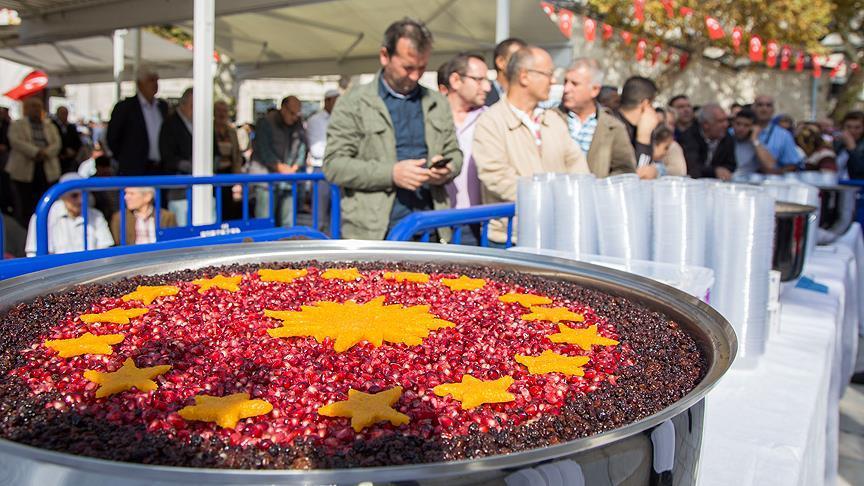
The Ashura Tradition Continues from the Early Ottoman Period (Anadolu Ajansı)
The process of preparing ashura in tekkes was not merely an act of material charity but was regarded as a religious ritual. Each ingredient added to the ashura cauldron was interpreted as a reference to one of God’s names; thus, even a single grain of ashura falling to the ground was considered a loss and was not tolerated. In this understanding, ashura was regarded as a source of healing and blessing, even as a spiritual medicine.
The palace and state institutions also commemorated Ashura Day through special programs. Ashura was distributed to residents of social welfare institutions such as Darülaceze, and prayers were offered for the sultan and state officials. In 1902, approximately 1,000 people, including staff and servants at Darülaceze, received ashura, and these events were organized by a commission with expenses covered by the official budget.
Official support for Ashura Day increased over time. For example, in 1849, 120 kuruş was allocated from the Imperial Treasury for ashura prepared in hânkâhs; by 1890–91, this amount had risen to 3,000 kuruş, with additional grants provided where budgets proved insufficient. These practices demonstrate that Ashura Day was viewed not only as a religious observance but also as an organization strengthening social solidarity.
One of the places where Ashura Day rituals were most intensely observed was the Üsküdar district of Istanbul. On the tenth of Muharram, the streets of Üsküdar became a gathering place not only for locals but for people from all corners of the city. This tradition continues today in Istanbul through the activities of the Ja’fari community around Aytaşı and Seyyidahmed Deresi.
One of the most vibrant and symbolic manifestations of Ashura Day in Ottoman society occurred through ritual activities conducted in tekkes at the center of Sufi orders. In this context, tekkes affiliated with the Bektaşi, Qadiri, Mevlevi, and Shazeli orders treated Ashura Day not merely as a religious day but as a space of worship and social solidarity. The preparation and distribution of ashura in tekkes were regarded as a practice that embodied the connection between the public and the order, merging faith with charity.
The process of preparing ashura in tekkes was typically accompanied by prayers, gülbank, dhikr, ilahis, and elegies. As each ingredient was added to the cauldron, one of God’s names was recited, thereby integrating the material substance of ashura with spiritual meanings. In accordance with this belief, even a single grain falling from the cauldron was counted as “one Fatiha” and received great reverence, with special care taken to prevent it from being dropped or wasted.
The prepared ashura was not only distributed to members of the dergah but also to the poor, travelers, civil and military personnel, and in some tekkes, even to the palace. The ability of tekkes to sustain this service was supported not only by endowments providing food and cash aid but also by direct state subsidies, as documented in Ottoman archival records. Especially for imarets and zaviyes with limited resources, additional grants were sent by the Hazine-i Hassa. In 1849, an allocation of 120 kuruş for this purpose was raised to 3,000 kuruş in 1890 and 1891.
The Ashura Tradition in Dergahs (KonTV)
It is known that in tekkes, ashura was prepared not only during Muharram but also during the Sefer month. Sefer Ashura was prepared to commemorate Zayn al-Abidin’s survival from Karbala and the continuation of the Ahl al-Bayt lineage, and thus carried a joyful meaning in contrast to the sorrowful character of Muharram Ashura. These two types of ashura were prepared, distributed, and ritualized at different times of the year within Ottoman Sufi circles, each carrying distinct symbolic meanings.
One of the most well-known rituals during Ashura ceremonies was the recitation of Karbala elegies and nasheeds. Particularly in Bektaşi and Alevi traditions, the emotional intensity surrounding the martyrdom of Husayn was expressed through ilahis and laments. In centers such as the Sünbül Efendi Tekke in Istanbul, these events were performed vividly, accompanied by large gatherings of dervishes and the public.
Some tekkes prepared special objects and endowment documents for Ashura Day. For instance, on the handle of a two-meter-long ashura ladle in the Ahi Yusuf Sinan Tekke in Çay, Afyonkarahisar, two lines from the tekke’s endowment deed were engraved. Alongside this ladle, ashura cauldrons, ornate copper trays, maces, and deer antlers also acquired ritual significance.
Ashura Day continues to exist in contemporary Türkiye as a cultural and religious tradition upheld at both individual and institutional levels. The events held on the tenth day of Muharram reflect the social dimensions of religious practices that have maintained historical continuity. In this context, ashura is not merely a ritual of the past but a practice continually re-created within the multi-layered structure of modern Turkish society.
Ashura dessert prepared in homes holds particular importance as a medium of sharing within neighborhoods and community relations. Although the ingredients vary according to families’ socioeconomic conditions, the traditional recipe typically includes seven, ten, twelve, or more different ingredients. These numbers carry symbolic meanings in different belief systems: for instance, among Alevis, the use of twelve ingredients to represent the Twelve Imams is widespread.
Regarding the Ashura Tradition (Edirne Televizyonu)
The contemporary observance of Ashura Day is not limited to individual practices. Public distributions of ashura are organized by local governments, foundations, associations, and various civil society organizations. Municipalities set up stalls in public squares to distribute ashura free of charge, demonstrating that this tradition is sustained at an institutional level within modern urban life.
Within Alevi-Bektashi communities, the mourning fasts and commemorative ceremonies held throughout Muharram culminate in a collective event on Ashura Day. In this context, ashura functions not merely as food but as a reflection of the religious and historical memory tied to the Karbala event. The elegies recited, speeches delivered, and ashura distributed during these ceremonies can be understood as spaces where community identity is renewed.
Interest in Ashura Day today is sustained through media, publishing houses, and digital platforms across diverse channels. The commercial marketing of pre-packaged ashura ingredients by the food industry indicates a trend toward commodification, while simultaneously facilitating the continuation of traditional culinary culture. This situation reflects the socio-cultural functions of ashura beyond its religious meaning, embedded in everyday life.
Ashura dessert has become inseparable from the tenth day of Muharram and, over the historical process, has acquired both religious and social meanings. Beyond its richness in ingredients, ritual preparation, and mode of distribution, it is not merely a culinary product but a cultural expression imbued with symbolic value. While interpreted differently across various belief systems, it is generally associated with the concepts of unity, sharing, and blessing.
The basic ingredients of ashura include cracked wheat, dried beans, chickpeas, raisins, dried apricots, dried figs, walnuts, almonds, hazelnuts, pomegranate seeds, and sugar. However, the selection and number of ingredients vary according to regional traditions, belief symbols, and family economic conditions. Commonly held opinions in popular culture suggest that at least seven, ten, or twelve different ingredients should be used. The number ten corresponds to the tenth day of Muharram, while the number twelve is linked to the reverence for the Twelve Imams in Alevi-Bektashi belief.
Ashura Distribution by Diyanet (Diyanet TV)
Ashura dessert is not merely regarded as a sweet but as a ritual meal laden with meaning. In some regions of Anatolia, the ingredients are added to the cauldron with prayers and in a specific order. This practice is especially common among Alevi-Bektashi communities, where each ingredient symbolizes one of God’s names or a member of the Ahl al-Bayt. Reciting prayers, gülbank, or ilahis beside the cauldron during preparation integrates the ashura with a religious duty.
The ashura tradition was also actively maintained in the Ottoman palace. Archival records indicate that two types of ashura were prepared in Topkapı Palace: strained and unstrained. The strained version, made by thoroughly cooking the wheat and then straining out the grains to use only the pulp, was typically served to the sultan and high-ranking state officials. Over time, the palace kitchen also developed milk-based ashura and, from the 19th century onward, a special variety known as “Frenk arpası aşuresi” (barley ashura).
The ashura cauldron has been described in some accounts as the “cauldron of unity.” The combination of diverse ingredients boiled together into a single sweet symbolizes the ideal of unity within diversity in society. This meaning reached a functional symbolic level within the multi-sectarian and multicultural structure of Ottoman society. The inclusion of sweet and sour, hard and soft, nourishing and decorative elements in the ashura is interpreted as a culinary embodiment of the ideal of coexistence.
Beliefs in the healing and blessing properties of ashura are widespread. In various regions of Anatolia, practices such as feeding the first spoonful to the eldest family member, giving it to the sick, or pouring it on the doorstep to bring abundance reflect the view that this dessert serves not only a nutritional but also a protective and auspicious function. This understanding is rooted in the narrative that ashura was prepared from the last remaining ingredients aboard Noah’s Ark after the flood.
The composition of ashura has also diversified in folk cuisine. Poorer families reduce the number of ingredients, and in some regions, salty, onion-based, or even meat-based versions of ashura are prepared. For example, in eastern provinces such as Erzurum and Ardahan, ashura is cooked as a savory dish rather than a sweet. In some places, meat hidden within the ashura alludes to past religious practices.
Another notable example of ingredient diversity is the strained ashura prepared in 1870 by Pertevniyal Valide Sultan, mother of Sultan Abdülaziz. Records indicate that this ashura contained nineteen distinct ingredients: wheat, sugar, musk, razaki raisins, seedless raisins, pine nuts, gum mastic, corn dates, barberries, roasted hazelnuts, almonds, bird cherries, starch, rice flour, and rose water.
Ashura dessert has counterparts in other regions outside Anatolia with similar ingredients. The Armenian dessert “anushabur,” prepared in memory of the birth of Jesus, and the Chinese New Year dish “ba bao fan” resemble ashura in content. However, in Türkiye, ashura has become more than a dish—it has evolved into a multi-layered cultural symbol due to its historical and belief-based context.
Altuntaş, Halil. “Muharrem Ayı ve Aşûre.” Din Hizmetleri Genel Müdürlüğü, 337-340. Accessed July 4, 2025.https://www2.diyanet.gov.tr/DinHizmetleriGenelMudurlugu/Muharrem%20Ayı%20ve%20Aşure.pdf
Anadolu Ajansı. "Cumhurbaşkanlığı Osmanlı’dan kalan geleneği devam ettirdi." Accessed July 4, 2025.https://www.aa.com.tr/tr/turkiye/cumhurbaskanligi-osmanlidan-kalan-gelenegi-devam-ettirdi/664908.
Anadolu Ajansı. "Dünyadan Aşura Günü törenleri [Foto Galeri]." Accessed July 4, 2025.https://www.aa.com.tr/tr/pg/foto-galeri/dunyadan-asura-gunu-torenleri.
Anadolu Ajansı. "Osmanlı coğrafyasındaki 9 ülkede 40 bin kişiye aşure dağıtıldı." Accessed July 4, 2025.https://www.aa.com.tr/tr/yasam/osmanli-cografyasindaki-9-ulkede-40-bin-kisiye-asure-dagitildi/928094.
Anadolu Ajansı. "Sümbül Efendi Merkez Tekkesi’nde 10 bin kişilik aşure kaynatıldı." Accessed July 4, 2025.https://www.aa.com.tr/tr/kultur/sumbul-efendi-merkez-tekkesinde-10-bin-kisilik-asure-kaynatildi/3621960
Audiovisual Sources
Açıkgöz, Fatma Ünyay. “Osmanlı Sarayında Aşure Yapımı ve Dağıtımı (XVIII.-XIX. Yüzyıllar).” *Türk Kültürü ve Hacı Bektaş Veli Araştırma Dergisi*, no. 90 (Summer 2019): 99–110. Accessed July 4, 2025.https://dergipark.org.tr/tr/pub/tkhcbva/issue/71932/1157258
Bayar, Muharrem. “Bir Aşure Kepçesine Yazılmış Ahi Yusuf Sinan Tekkesi Vakfiyenamesi.” In *1. Uluslararası Ahilik Kültürü ve Kırşehir Sempozyumu Bildirileri*, Volume 1, pp. 159-165. Kırşehir, 2008. Accessed July 4, 2025.https://isamveri.org/pdfdrg/D198644/2011/2011_BAYARM.pdf
Baş, Eyüp. “Aşure Günü, Tarihsel Boyutu ve Osmanlı Dini Hayatındaki Yeri Üzerine Düşünceler.” *Ankara Üniversitesi İlahiyat Fakültesi Dergisi (AÜİFD)* XLV, no. 1 (2004): 167–190. Accessed July 4, 2025.https://dergipark.org.tr/tr/pub/auifd/issue/40638/488903
Diyanet İşleri Başkanlığı. "Bakara Suresi 183-184. Ayetlerin Tefsiri." Accessed July 4, 2025.https://kuran.diyanet.gov.tr/tefsir/Bakara-suresi/190/183-184-ayet-tefsiri.
DiyanetTV. "Muharrem Ayı Nedir?" Accessed July 4, 2025.https://www.youtube.com/watch?v=SjpeUiHKsmU&t=12s.
Edirne Televizyonu. "MUHARREM AYINDA AŞURE GELENEĞİ YİNE SÜRDÜ." Accessed July 4, 2025.https://www.youtube.com/watch?v=kdx2wqp4zQ8.
KonTV. "Hazreti Pir'in dergahında unutulan aşure geleneği." Accessed July 4, 2025.https://www.youtube.com/watch?v=zMnfFhvUoAk.
Research Works
Tan, Nail. “Nuh Tufanı’nın Dünya Mutfak Kültürüne Armağanı Bir Tatlı: Aşure.” In *Öz Köz Söz: Türk Halk Kültürü Araştırmaları*, 266–272. Ankara: Kültür Ajans Tanıtım ve Organizasyon Ltd., 2014. Accessed July 4, 2025.https://isamveri.org/pdfsbv/D229984/2014/2014_TANN35.pdf
Türkiye Diyanet Vakfı. "Türkiye Diyanet Vakfı'ndan aşure ikramı." Accessed July 4, 2025.https://www.youtube.com/watch?v=WSCnD_2C2BM&t=1s.
Yavuz, Yusuf Şevki. “Aşûra.” *Türkiye Diyanet Vakfı İslam Ansiklopedisi (DİA)*, c. 4, pp. 24-26. Accessed July 4, 2025.https://islamansiklopedisi.org.tr/asura
Özlü, Zeynel. “Osmanlı Devletinde Tekkelere Bir Bakış: Aşure Geleneği.” *Türk Kültürü ve Hacı Bektaş Veli Araştırma Dergisi*, no. 57 (2011): 191-197. Accessed July 4, 2025.https://dergipark.org.tr/tr/pub/tkhcbva/issue/71923/1157172
[1]
Halil Altuntaş, “Muharrem Ayı ve Aşûre,” Din Hizmetleri Genel Müdürlüğü, 340.
[2]
Halil Altuntaş. (a.g.e), s. 339.
[3]
Halil Altuntaş. (a.g.e), s. 339.
[4]
Diyanet İşleri Başkanlığı, “Bakara Suresi 183-184. Ayetlerin Tefsiri,” erişim tarihi: 4 Temmuz 2025, https://kuran.diyanet.gov.tr/tefsir/Bakara-suresi/190/183-184-ayet-tefsiri.
[5]
Eyüp Baş, “Aşure Günü, Tarihsel Boyutu ve Osmanlı Dini Hayatındaki Yeri Üzerine Düşünceler,” Ankara Üniversitesi İlahiyat Fakültesi Dergisi (AÜİFD) XLV, no. 1 (2004): 168-169.
[6]
Eyüp Baş. (a.g.e), s. 175-176.
[7]
Eyüp Baş. (a.g.e), s. 175-177.
[8]
Zeynel Özlü, “Osmanlı Devletinde Tekkelere Bir Bakış: Aşure Geleneği,” Türk Kültürü ve Hacı Bektaş Veli Araştırma Dergisi, no. 57 (2011): 194-195.
[9]
Halil Altuntaş. (a.g.e), s. 339.
[10]
Zeynel Özlü. (a.g.e), s. 194-195.
[11]
Eyüp Baş. (a.g.e), s. 175.
[12]
Zeynel Özlü. (a.g.e), s. 197.
[13]
Halil Altuntaş. (a.g.e), s. 339.
[14]
Zeynel Özlü. (a.g.e), s. 195-196.
[15]
Zeynel Özlü. (a.g.e), s. 196.
[16]
Zeynel Özlü. (a.g.e), s. 196.

Ashura Day
Name | Ashura Day | ||||||||
|---|---|---|---|---|---|---|---|---|---|
Calendar | Hijri Calendar | ||||||||
Date | The 10th day of Muharram | ||||||||
Etymology | From the Arabic word 'ashara' (10) | ||||||||
Celebration Method | Distribution of Ashura Mourning (Shia tradition) Fasting | ||||||||
Symbolic Elements | Ashura pot Prayer ladle Embroidered tray | ||||||||
Etymology and Conceptual Framework
Historical Foundations of Ashura Day
Events Associated with Ashura Day
Practices Related to Ashura Day Across Different Sects
Ashura in the Sunni Tradition
Ashura in the Shia Tradition
Ashura in the Alevi-Bektashi Tradition
Ashura Day in the Ottoman State
The Ashura Tradition in Tekkes and Sufi Orders
The Ashura Tradition in Contemporary Türkiye
Ashura Dessert: Ingredients, Recipe, and Symbolism