


This article was automatically translated from the original Turkish version.
Among Istanbul’s evolving art routes in recent years, Karaköy has become more than just a district dense with galleries; it has transformed into a space where diverse modes of production come into contact. The ArtıKÜME 2025 exhibition held at Karaköy Palas stands out as one of the most notable examples of this transformation. The exhibition, which brings together contemporary and traditional art practices under one roof, does more than simply gather artworks—it invites discussion on how cultural memory can be reconfigured through the language of contemporary art. Comprising works by twenty-five artists and students, the exhibition constructs an interdisciplinary structure while simultaneously generating a shared sense of memory. Across the exhibition, different modes of production—from painting to installation, from textiles to collage—interact with one another.
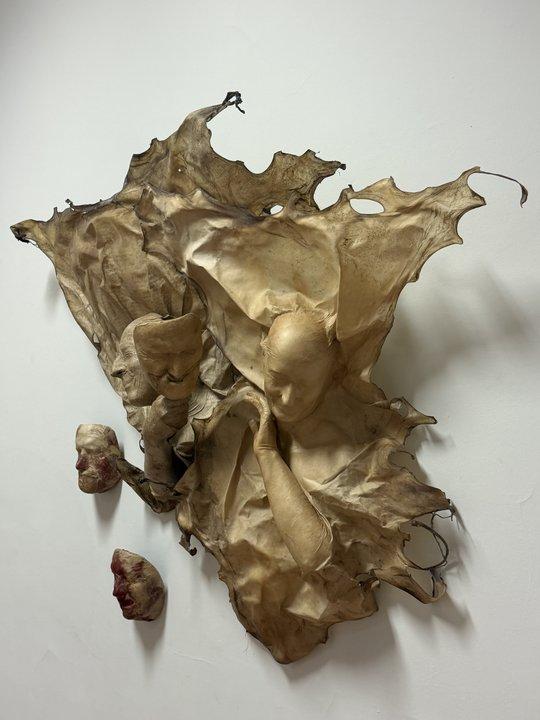
An Artwork Image (Photo: Ahsen Karakaş)
One of the exhibition’s most striking aspects is not only the artworks but the space itself. Karaköy Palas, which for many years served various functions, has been reclaimed for the cultural and artistic sphere—a move that aligns perfectly with the exhibition’s core approach. High ceilings, original doors, wooden details, and the building’s historical atmosphere create for visitors the impression that these elements exist in natural dialogue with many of the exhibited works. In particular, site-specific installations treat the architectural structure not merely as a backdrop but as an active participant in the creative process. This transforms the exhibition from a sterile gallery experience into a more vibrant, living atmosphere. Located at the heart of Karaköy, which has become a neighborhood fully integrated with art, this historic architecture has been positioned as the exhibition’s central object. Access to the venue is easy via public transportation and private vehicles. Its location also makes it possible to extend the visit with a nostalgic stroll along Pera and Asmalımescit streets after the exhibition.
The foundation of ArtıKÜME 2025 is built on the approach of “three axes, one exhibition.” Themes of art support, interdisciplinary production, and cultural heritage resonate throughout the exhibition’s flow. While some works foreground traditional figurative narratives, others draw attention through contemporary collage aesthetics and fragmented surfaces. Particularly in collage works referencing Barış Manço, popular culture, musical history, and collective memory converge on a single surface. The layered structure reinforces the exhibition’s overarching idea of “accumulated traces.” Meanwhile, textile-based works and surfaces centered on handcraft reveal how traditional artisanal practices are being repositioned within contemporary art.
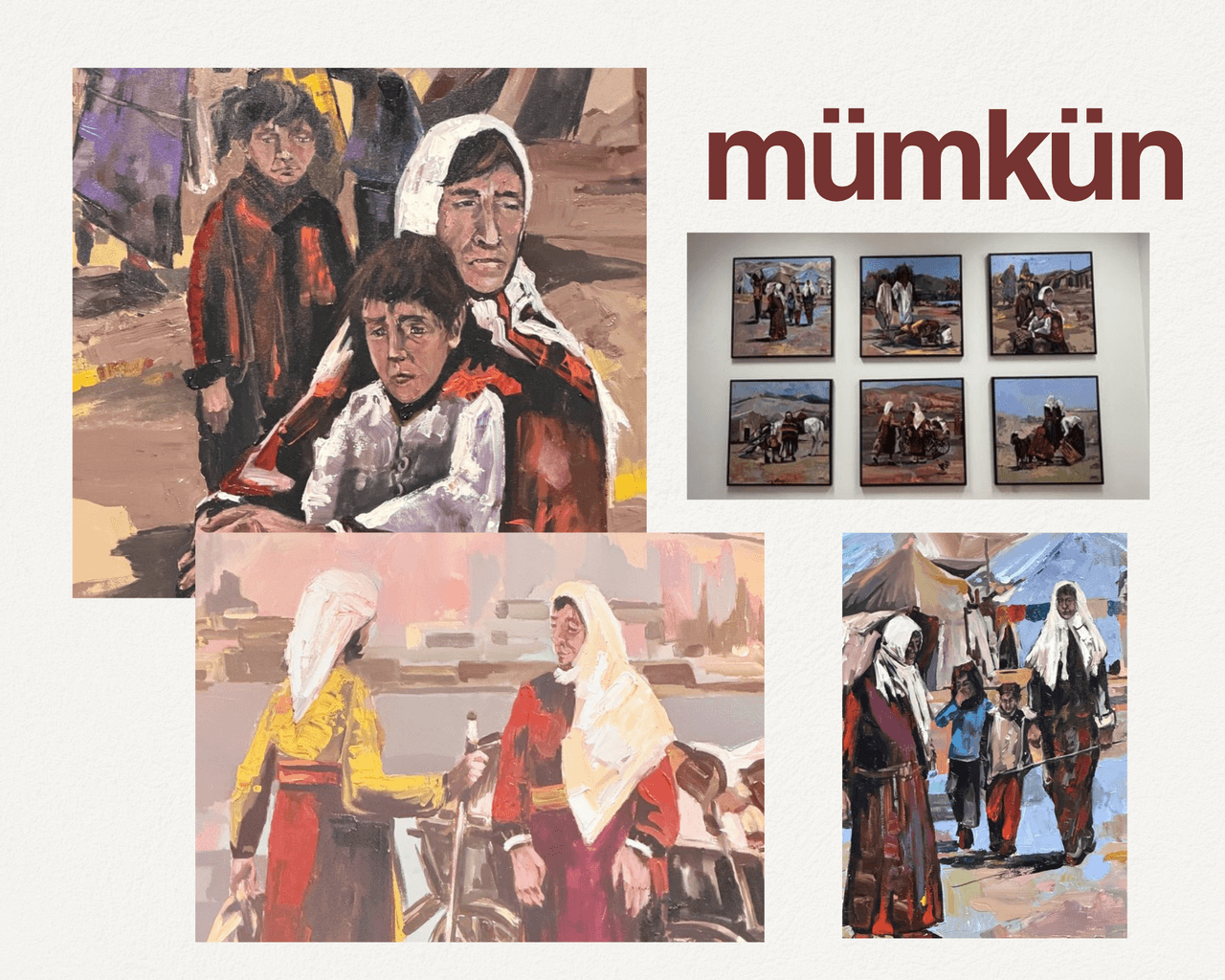
An Artwork Image (Photo: Ahsen Karakaş)
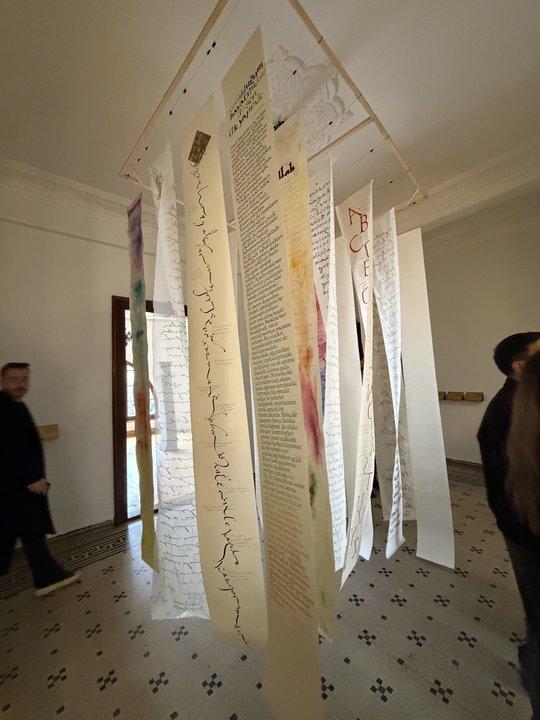
An Artwork Image (Photo: Ahsen Karakaş)
Many works in the exhibition directly engage with the past, yet not through a nostalgic lens. Instead, a critical approach emerges—one that questions the present-day manifestations of cultural memory. Figurative paintings centered on Anatolian life are particularly striking in this regard. Traditional clothing, scenes of daily life, and compositions evoking rural memory are presented to visitors without romanticization, in a direct and unadorned manner. The forcefulness of brushstrokes and the sense of fatigue in facial expressions convey that these works carry not only an aesthetic layer but also a sociological one. In some portraits, quieter but more intense narratives are constructed through individual stories. Especially in interior compositions, themes of solitude, labor, and the relationship to everyday life come to the fore. This exhibition makes it possible to embark on a different journey in each room of Karaköy Palas.
One of the exhibition’s strongest sections was the site-specific installation titled “Lost.” This work, composed of stacked books, microphones, vinyl records, frames, and various objects, creates at first glance the impression of controlled chaos. The accompanying text, however, elevates the work to a deeper level: it gently draws attention to the ever-expanding yet simultaneously vanishing nature of cultural and artistic production. The idea that accumulated data remains visible while its connections fade offers a powerful commentary on today’s modes of cultural production. The use of analog objects here is not treated as nostalgic décor but as physical traces of memory. This renders the work not only visually compelling but also intellectually resonant.
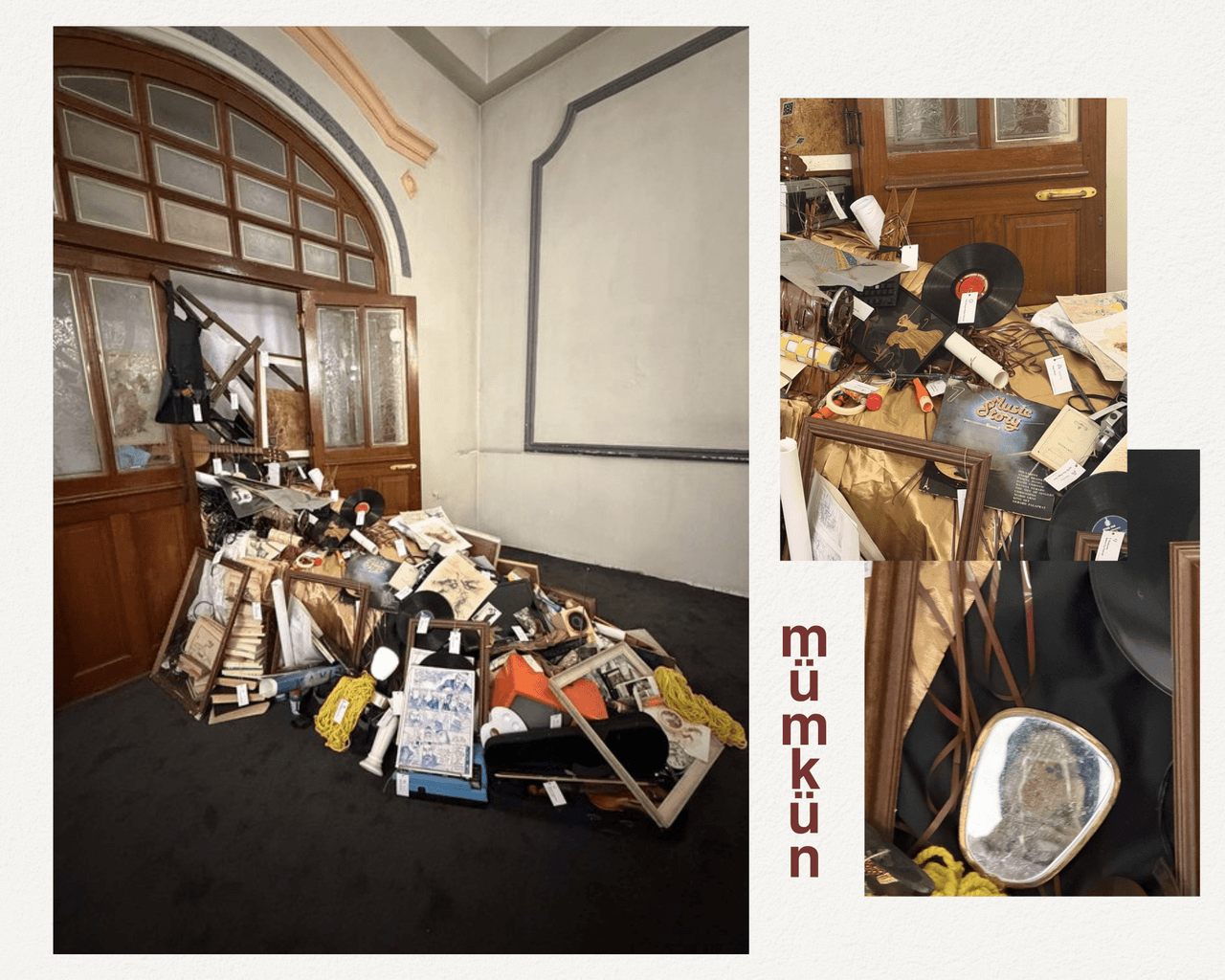
An Artwork Image (Photo: Ahsen Karakaş)
Throughout the exhibition, diverse material applications stand out. A clear transition exists between fabric, ceramic, paper, collage, wood, and sculptural surfaces. Some sculptural works employing fragmented bodily forms approach questions of human psychology and identity from a unique perspective; ceramic pieces, by contrast, establish a more fragile and quiet narrative. The child figure positioned within a puzzle-like structure can be understood as a simple yet effective metaphor for absence, incompleteness, and the sense of belonging. This variety does not fragment the exhibition; rather, it creates an invisible bond between the works through a unifying theme.
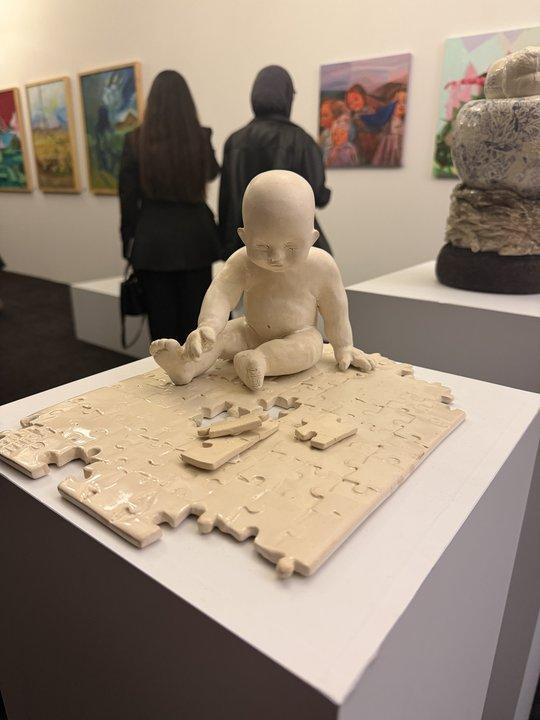
An Artwork Image (Photo: Ahsen Karakaş)
Parallel to the exhibition, the ODAK 2025 project is another vital component. The initiative to systematically document cultural and artistic events across Türkiye supports the exhibition’s themes of memory and data. This approach does more than display artistic production—it proposes a long-term vision of documenting, classifying, and building a cultural archive. In today’s rapidly consumed art environment, such documentation practices are gaining increasing critical value. In our digitized world, motifs from our ancestral traditions do not remain confined to the past; instead, they re-emerge through tangible artworks, enriching our cultural memory.
ArtıKÜME 2025 is an exhibition that does not rely on a single aesthetic framework but seeks to unite diverse modes of production around a shared idea. This is precisely where the exhibition’s greatest strength lies. While some works are technically more accomplished and others more conceptually compelling, the overall selection succeeds in establishing a cohesive atmosphere. Particularly its accessible discussion of the relationship between cultural heritage, collective memory, and contemporary production makes the exhibition appealing to a broader audience. Walking through the historic fabric of Karaköy Palas, one does not merely experience an exhibition; one bears witness to how traces carried from the past are rendered visible again through diverse artistic languages. Open until 17 June 2026, this exhibition makes it possible for art lovers to converge at Karaköy Palas.
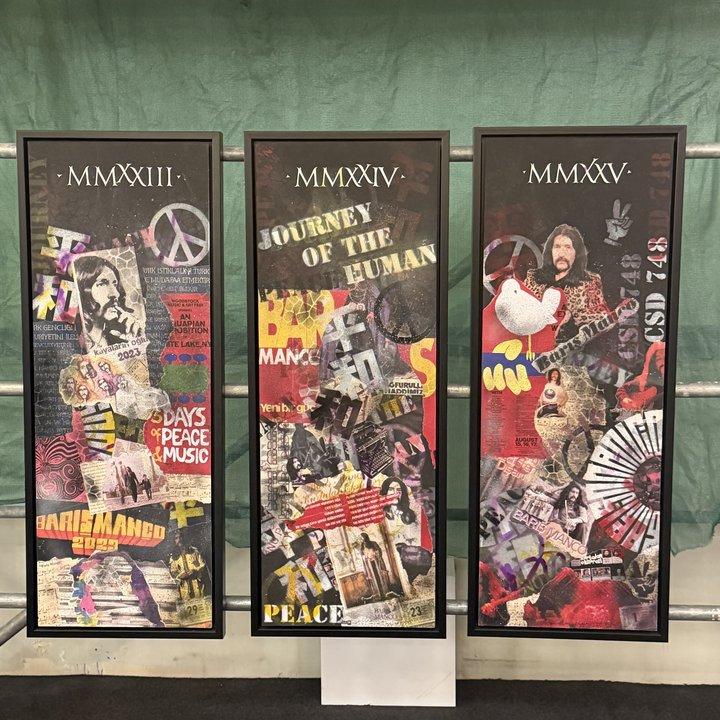
Collage Works Referencing Barış Manço (Photo: Ahsen Karakaş)
Karaköy Palas: A Space with Memory
Interdisciplinary Production: Seeking a Common Language
A Contemporary Interpretation of Cultural Heritage
“Lost”: Memory Amidst Dispersed Data
Material Use and Surface Exploration
ODAK 2025 and the Logic of Archiving
Overall Impression of ArtıKÜME 2025
