This article was automatically translated from the original Turkish version.
Type(s) | Inscribed stele | ||||||||
|---|---|---|---|---|---|---|---|---|---|
Material(s) | Basalt | ||||||||
Number of Discoveries | Number of stelae: 2 (Arsuz 1 and Arsuz 2) | ||||||||
Depiction | Storm God and king figure | ||||||||
Writing System | Hieroglyphic Luwian | ||||||||
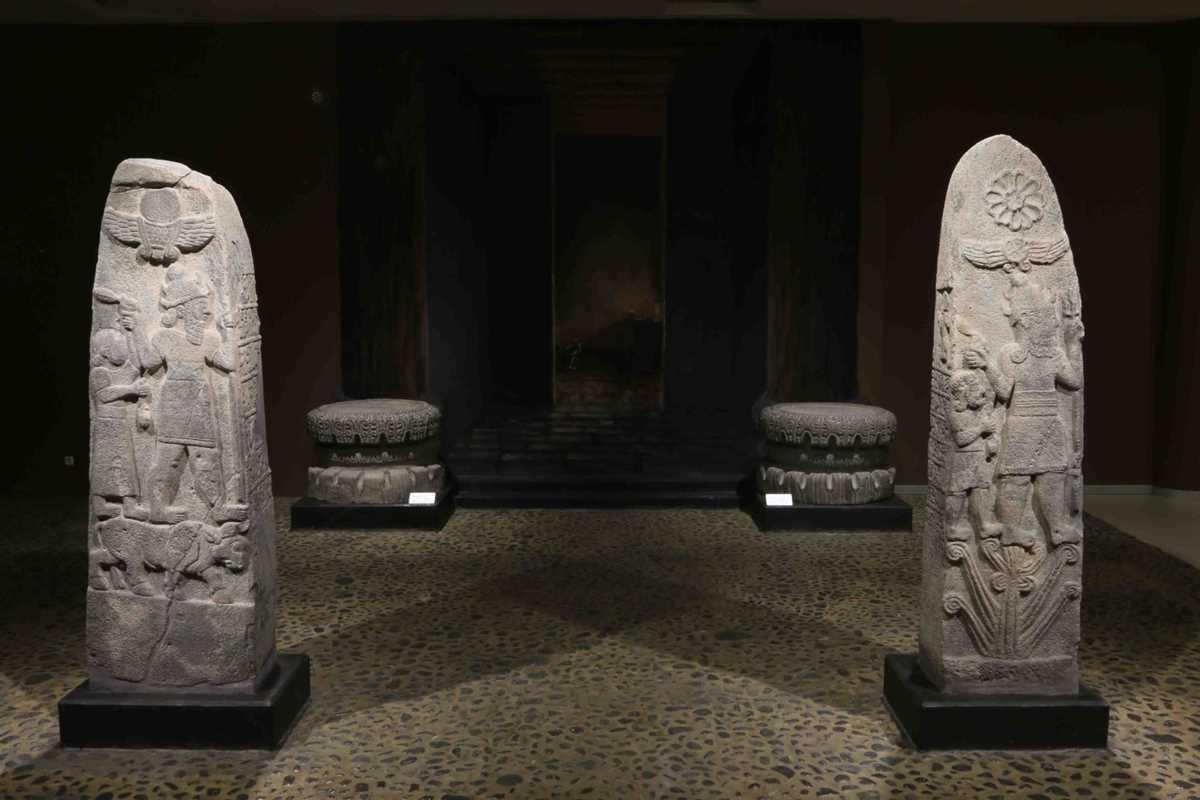
Arsuz Stelae are two inscribed stelae depicting the Storm God, dated to the Late Hittite Period, located in the Uluçınar region of Arsuz district, Hatay Province. These stelae, dated to the 10th century BCE, were commissioned by Suppiluliuma, king of the land of Walastin, and feature Luwian hieroglyphic inscriptions alongside depictions of the Storm God and the king. The stelae are currently preserved in the Hatay Archaeology Museum.
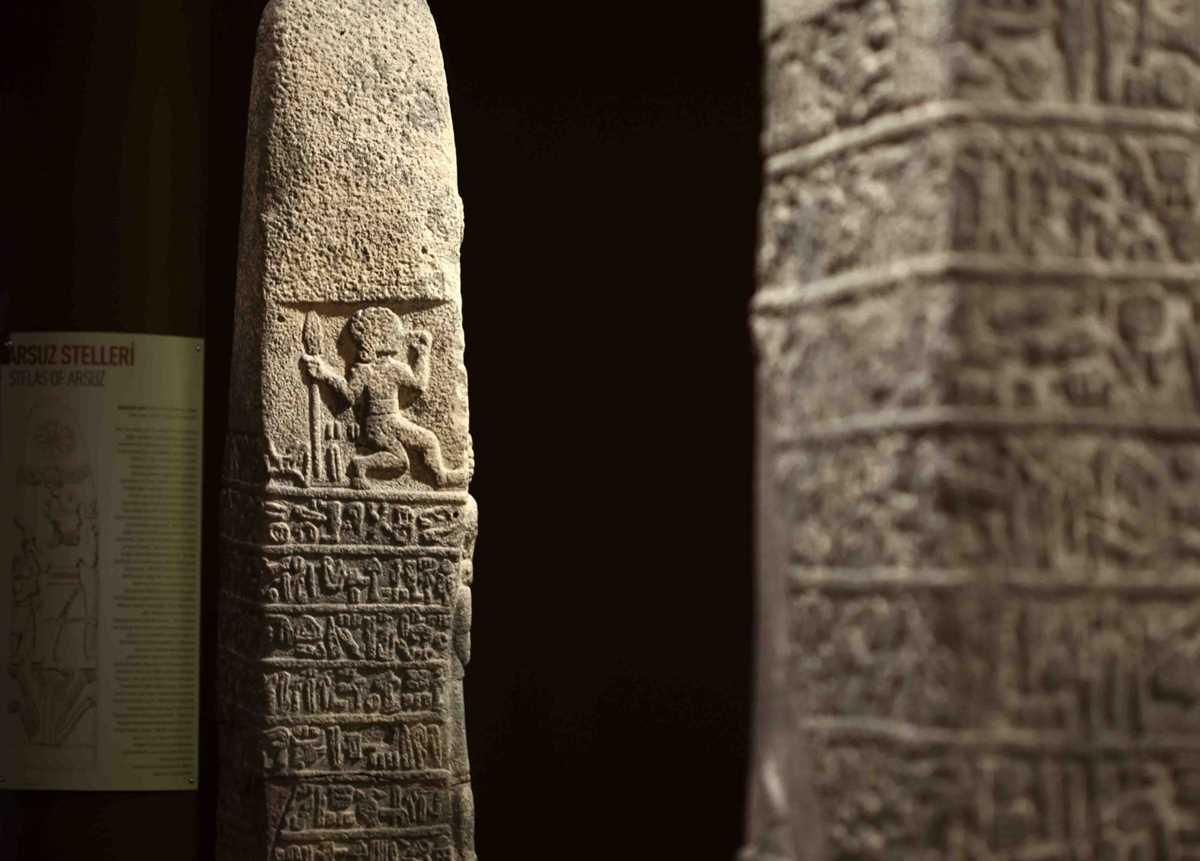
Arsuz Stelae (Kültür Portalı)
The Arsuz stelae were discovered in 2007 in the Uluçınar region of Arsuz district, Hatay Province. They were uncovered during excavations carried out on land belonging to the Turkish Naval Forces. After their identification, the stelae were transported to the Hatay Archaeology Museum where they have been preserved.
The area where the stelae were found lies on the southern coast of the Gulf of İskenderun and is part of a geographic region that hosted significant settlements and political centers during the Late Hittite Period. For this reason, the Arsuz stelae are considered among the important archaeological finds providing insight into the settlement network and political structure of the region during the Late Hittite Period.
The stelae from Arsuz consist of two inscribed stelae made of basalt. They are rectangular in form, with relief scenes on the front faces and Luwian hieroglyphic inscriptions on the side panels and certain sections. The reliefs are carved in raised form on the stela surfaces, while the inscriptions are arranged as hieroglyphic signs directly engraved into the stone.
Both stelae combine figural scenes with inscriptions. The figural scenes are located on the front faces, while the inscriptions are placed on different sections of the stela surfaces. These features place the Arsuz stelae among the known examples of inscribed stelae from the Late Hittite Period.
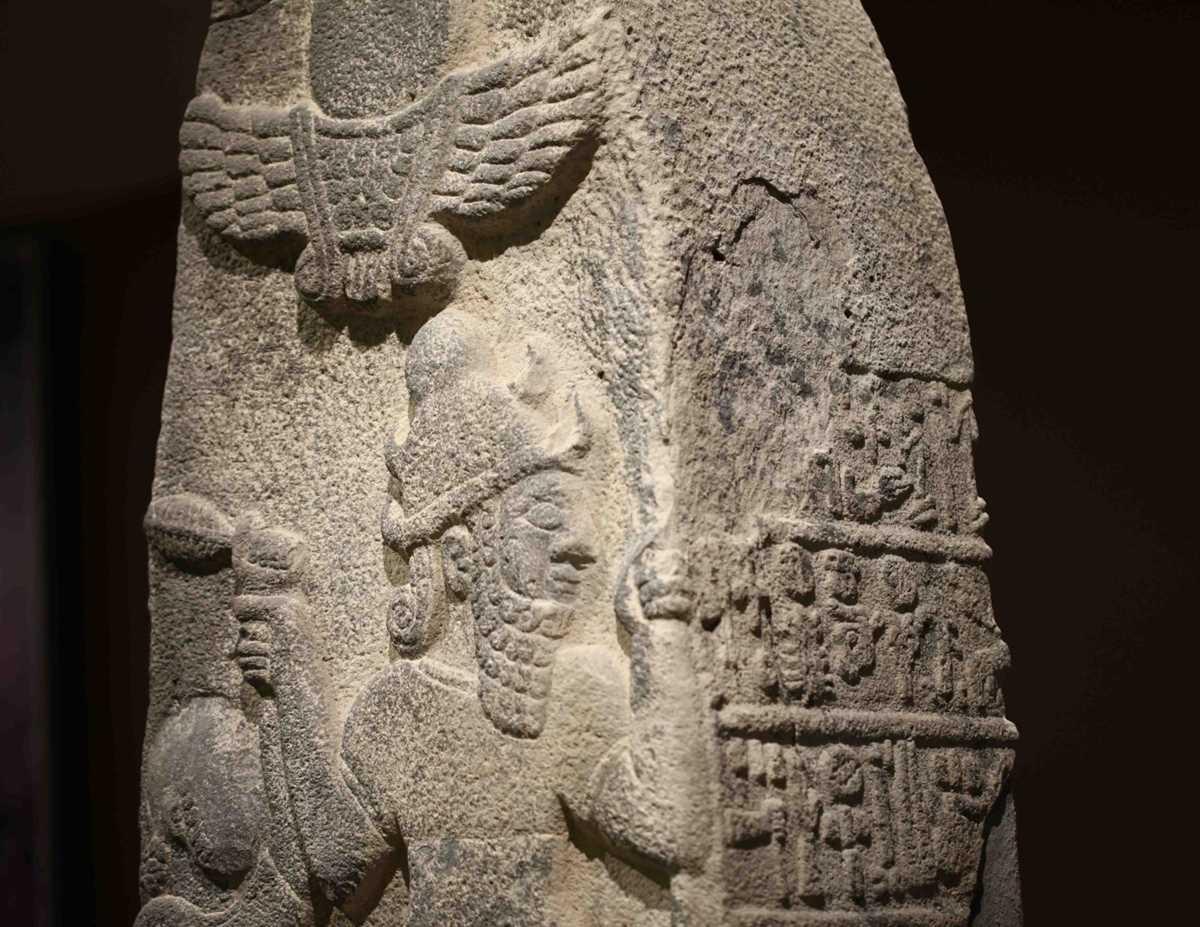
King Figure, Arsuz 2 (Kültür Portalı)
The front faces of the Arsuz stelae feature relief scenes. The composition depicts the Storm God alongside a king figure. Both figures are rendered in profile, with the Storm God positioned in the foreground and the king behind him. The god is shown holding the king’s hand.
In the upper section of the composition, a winged sun disk motif is present. This motif is arranged as an element above the figural scene. The figures are dressed in long garments, with distinct headgear and clothing details rendered in relief.
On the Arsuz 1 stela, the figures are depicted standing on a pedestal shaped like a palmette. On the Arsuz 2 stela, the figures are shown standing on a bull. In both stelae, the figure of the Storm God is rendered on a larger scale than the king and occupies the foreground of the composition.
The Arsuz stelae bear Luwian hieroglyphic inscriptions placed on various sections of the stela surfaces. The texts belong to Suppiluliuma, king of the land of Walastin, and contain information regarding his lineage, accession to the throne, and political activities.
The inscriptions state that Suppiluliuma ascended the throne following his father and assumed control of the kingdom. They also mention that the king established order within his realm and ensured its prosperity. The texts refer to military campaigns and victories against the regions of Adana and Hiyawa. Thus, these inscriptions are not merely religious texts but also provide valuable information about the political events of the period.
The Luwian hieroglyphic inscriptions and the figural compositions on the Arsuz stelae exhibit characteristics typical of the Late Hittite Period. The references to Suppiluliuma, king of Walastin, confirm that the stelae date to the 10th century BCE. This period corresponds to the time when Late Hittite kingdoms flourished in southern Anatolia and northern Syria.
The land of Walastin is known as one of the Late Hittite kingdoms located in the Amik Plain and its surroundings. The Arsuz stelae are among the inscribed documents that provide information regarding the political presence and activities of this kingdom. The references to military successes and political actions in the inscriptions shed light on Walastin’s political relationships and conflicts in the region.
The Arsuz Stelae are currently preserved and displayed at the Hatay Archaeology Museum. They form part of the museum’s collection and are recognized as representative examples of inscribed stelae from the Late Hittite Period. Due to their relief scenes and Luwian hieroglyphic inscriptions, they are studied within the fields of epigraphy and iconography.
Dinçol, Belkıs, Ali Dinçol, and J. D. Hawkins et al. “Two New Inscribed Storm-god Stelae from Arsuz (İskenderun): ARSUZ 1 and 2.” *Anatolian Studies* 65 (2015): 59–77. Accessed March 8, 2026. Accessed Adresi
Türkiye Kültür Portalı. “Türkiye’de Görebileceğiniz 11 Eşsiz Arkeolojik Eser.” T.C. Kültür ve Turizm Bakanlığı. Accessed March 8, 2026. https://www.kulturportali.gov.tr/portal/turkiye-de-gorebileceginiz-11-essiz-arkeolojik-eser


Type(s) | Inscribed stele | ||||||||
|---|---|---|---|---|---|---|---|---|---|
Material(s) | Basalt | ||||||||
Number of Discoveries | Number of stelae: 2 (Arsuz 1 and Arsuz 2) | ||||||||
Depiction | Storm God and king figure | ||||||||
Writing System | Hieroglyphic Luwian | ||||||||
Discovery and Find Location
Definition and Physical Characteristics
Front Face Depictions
Inscriptions and Content
Dating and Historical Context
Current Status