


This article was automatically translated from the original Turkish version.
+1 More
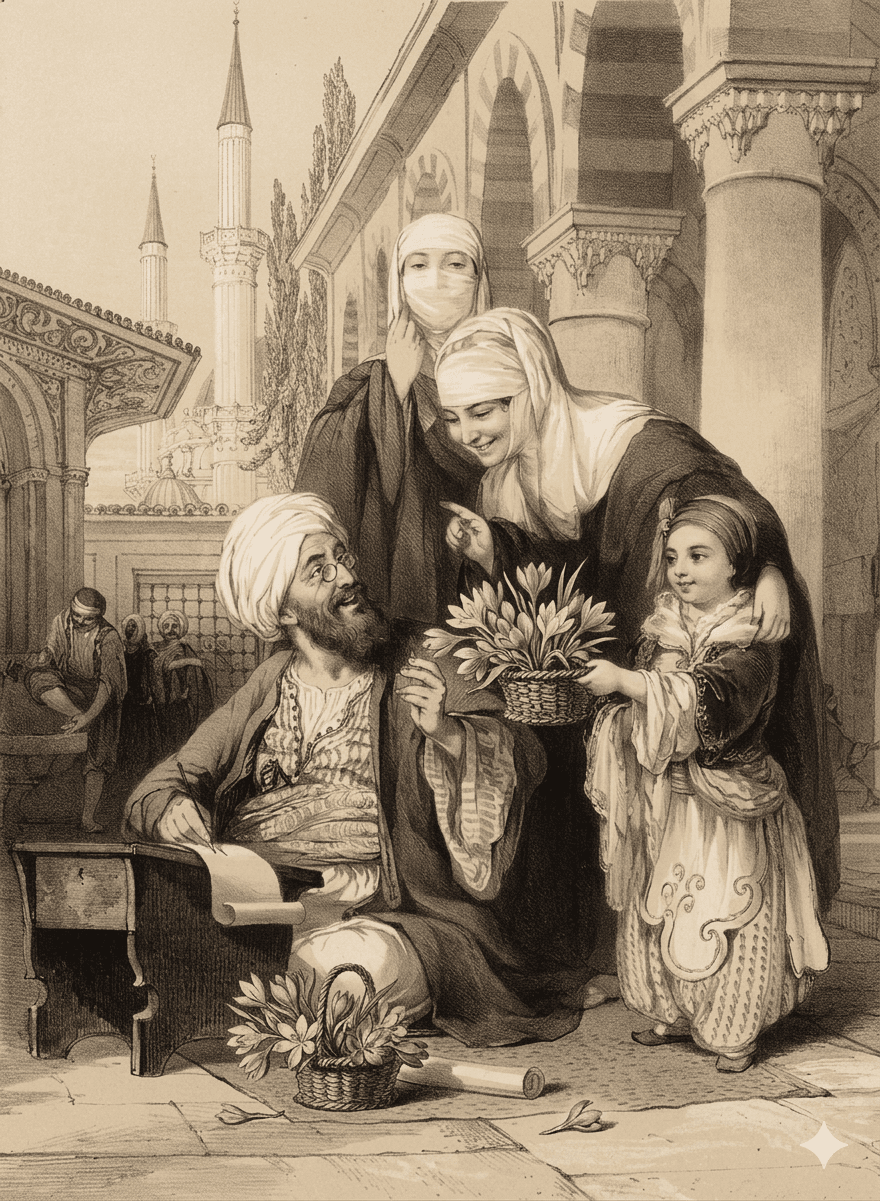
Arife Flower (generated with artificial intelligence.)
Type(s) | Social Assistance and Holiday Tradition | ||||||||
|---|---|---|---|---|---|---|---|---|---|
Current Usage | Assistance campaigns, social responsibility projects, holiday events | ||||||||
Institutions Conducting Activities | IHH Humanitarian Relief Foundation, Diyanet organizations, civil society organizations | ||||||||
Religious Character | Pre-holiday solidarity and goodwill tradition | ||||||||
Target Audience | Orphaned children, earthquake-affected children, needy families | ||||||||
Application Method | Distribution of holiday clothing, shoes, toys, and pocket money | ||||||||
Arefe Çiçeği is defined as a social and cultural practice directed toward children on the Arefe day, which occurs just before Ramadan and Eid al-Adha. This practice is shaped around various activities and assistance aimed at enhancing children’s participation in the festive joy of the holidays. The concept of Arefe Çiçeği is addressed both within traditional cultural practices and within social responsibility projects carried out by civil society organizations today.
The concept of Arefe Çiçeği is described as a tradition and social practice that encompasses material and spiritual support provided to children on the Arefe day. It includes elements such as giving children various gifts, meeting their needs, and supporting their preparations for the holiday, all aimed at enabling children to experience the joy of the festival. The activities conducted on Arefe day seek to allow children to welcome the holiday in a more meaningful and cheerful manner.
Arefe Çiçeği is not limited to tangible assistance; it also involves attention, love, and the feeling of being remembered by children. In this sense, the concept is regarded as a tool that connects children with societal values in the period preceding the holiday. In particular, involving children in holiday preparations contributes significantly to developing their awareness of the holiday’s significance.
Although traditionally emerging within families and close circles, the concept has gradually acquired a broader social dimension. Today, Arefe Çiçeği is sustained not only through individual efforts but also through events and projects organized by various institutions and organizations. Within this framework, activities such as providing children with holiday clothing, giving pocket money, or presenting various gifts are considered fundamental elements of the Arefe Çiçeği practice.
Arefe Çiçeği is also understood as a concept through which the values of social solidarity and mutual aid become visibly manifested among children. In particular, support provided to children in need strengthens the social dimension of this practice. In this context, Arefe Çiçeği has become an established practice of sharing before the holiday.
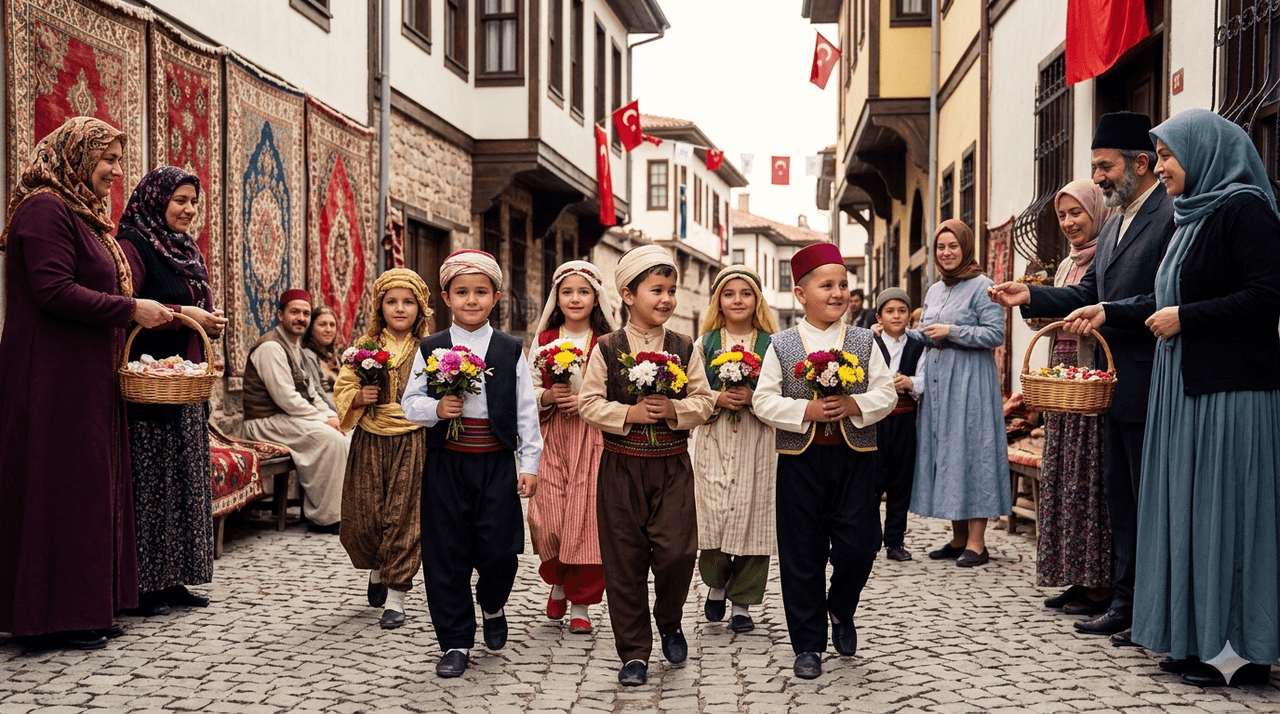
Arefe Çiçeği (generated by artificial intelligence)
The Arefe Çiçeği practice is among the cultural traditions passed down from the past to the present as an essential part of holiday preparations. Given the significance of Arefe day as a time for spiritual reflection and preparation for the holiday, acts aimed at bringing joy to children have become an integral component of this day. Practices such as providing children with holiday clothing, giving them pocket money, or presenting them with gifts are closely associated with the concept of Arefe Çiçeği.
In traditional contexts, Arefe Çiçeği emerged as a practice within families and close circles. The attention shown by elders toward children and their efforts to prepare them for the holiday form the foundation of this tradition. The act of bringing joy to children before the holiday is regarded as a key factor that enables them to experience the holiday with greater awareness and enthusiasm. Such practices on Arefe day demonstrate that the holiday is not confined to a single day but encompasses a preparatory process that begins beforehand.
Over time, Arefe Çiçeği has evolved from an individual and family-based practice into one with broader social significance. In particular, the care for children in need and their inclusion in the festive joy of the holiday have strengthened the social dimension of this concept. Within this framework, Arefe Çiçeği is viewed as a reflection of the culture of mutual aid and solidarity in society.
Today, activities carried out by various associations, foundations, and local institutions demonstrate that the Arefe Çiçeği tradition has acquired an institutional dimension. Through these initiatives, providing children with holiday clothing, toys, or material support helps sustain the continuity of the tradition. At the same time, these practices contribute to promoting a culture of sharing within society.
In this respect, Arefe Çiçeği is regarded both as a tradition that preserves cultural continuity and as a practice that strengthens social solidarity. Such activities conducted before the holiday foster connections between different social groups and contribute to social cohesion.
Today, Arefe Çiçeği practices are carried out in a more systematic and comprehensive manner through projects implemented by various civil society organizations. These activities are particularly targeted at children who are economically disadvantaged or affected by disasters. In the framework of initiatives organized before Arefe day, children receive holiday clothing, shoes, toys, and various gifts.
Such projects aim to support children’s ability to experience the joy of the holiday. At the same time, these activities contribute to strengthening the awareness of social solidarity. The initiatives conducted by institutional structures demonstrate how the Arefe Çiçeği tradition has been adapted to contemporary conditions.
Arefe Çiçeği practices are also supported by educational and religious institutions through various activities. In this context, schools, muftiates, and other relevant institutions carry out awareness and sensitization campaigns for children before the holiday. During these events, the meaning and significance of the holiday are conveyed, and values such as sharing and mutual aid are emphasized.
In some initiatives, children are directly given gifts or support campaigns are organized for students in need. Such activities reveal that the concept of Arefe Çiçeği is not limited to material assistance but also carries an educational and cultural dimension.
Today, Arefe Çiçeği practices are implemented through diverse organizational forms. In addition to individual assistance, campaigns planned by associations and foundations enable the practice to reach wider segments of society. In this process, stages such as fundraising, needs assessment, and distribution are carried out according to a structured plan.
Moreover, volunteer participation plays a significant role in some projects. Distribution activities carried out through volunteers enhance the dimension of social participation in the Arefe Çiçeği practice. This demonstrates that the tradition is not confined to specific institutions but is also sustained by various segments of society.
In this context, Arefe Çiçeği continues to exist as a practice that both preserves traditional values and integrates with modern concepts of social responsibility.
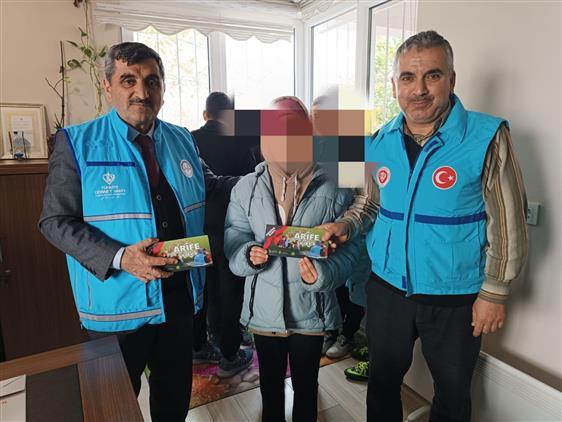
TDV Arefe Çiçeği Practice(Ortaca Muftiate)
As part of holiday culture, Arefe Çiçeği occupies a central place among values transmitted from generation to generation in society. This practice demonstrates that holidays are not merely religious rituals but also processes that strengthen social relationships and reinforce communal bonds. Activities directed toward children on Arefe day give meaning to the preparatory phase of the holiday and contribute to the preservation of cultural continuity.
Culturally, Arefe Çiçeği enables children to become familiar with holiday traditions at an early age. Through such activities before the holiday, children learn values such as sharing, mutual aid, and social responsibility through direct experience. This ensures that cultural values are transmitted not only theoretically but also practically.
Socially, Arefe Çiçeği contributes to making mechanisms of solidarity within society visible. In particular, assistance provided to children in need fulfills a function in mitigating the effects of social inequality. In this context, Arefe Çiçeği practices serve as a bridge between individuals and institutions, facilitating the coming together of different social groups.
Moreover, this practice contributes to increasing social awareness. Assistance activities conducted before the holiday support the spread of a culture of mutual aid and strengthen individuals’ understanding of social responsibility. In this sense, Arefe Çiçeği is not merely a practice directed toward children but also an element that reinforces the culture of solidarity across society as a whole.
In conclusion, Arefe Çiçeği is a multifaceted practice that contributes to the preservation of cultural heritage and strengthens social solidarity. This tradition, carried out before the holiday, supports interpersonal social relationships and contributes to social cohesion.
Avrasya. "Arife Çiçekleri." Accessed April 6, 2026. https://avrasya.org/arife-cicekleri/
Kozyar. "Arife Çiçekleri." Accessed April 6, 2026. https://kozyar.org/arife-cicekleri/
T.C. Diyanet İşleri Başkanlığı. "Arife Çiçekleri." Accessed April 6, 2026. https://mugla.diyanet.gov.tr/ortaca/sayfalar/contentdetail.aspx?MenuCategory=Kurumsal&ContentId=932
İHH İnsani Yardım Vakfı. “Arife Çiçeği Projesi ile Depremzede Çocukların Yüzleri Gülüyor.” Accessed April 6, 2026. https://ihh.org.tr/haber/arife-cicegi-projesi-ile-depremzede-cocuklarin-yuzleri-guluyor

Arife Flower (generated with artificial intelligence.)
Type(s) | Social Assistance and Holiday Tradition | ||||||||
|---|---|---|---|---|---|---|---|---|---|
Current Usage | Assistance campaigns, social responsibility projects, holiday events | ||||||||
Institutions Conducting Activities | IHH Humanitarian Relief Foundation, Diyanet organizations, civil society organizations | ||||||||
Religious Character | Pre-holiday solidarity and goodwill tradition | ||||||||
Target Audience | Orphaned children, earthquake-affected children, needy families | ||||||||
Application Method | Distribution of holiday clothing, shoes, toys, and pocket money | ||||||||
The Concept and Meaning of Arefe Çiçeği
Historical and Cultural Context
Traditional Practices
Dimension of Social Solidarity
Arefe Çiçeği Practices Today
Civil Society Activities
Role of Educational and Religious Institutions
Organizational Forms and Implementation Methods
Cultural and Social Significance