


This article was automatically translated from the original Turkish version.
Arepa is a round, flat bread made from cornmeal and found in the cuisines of Venezuela and Colombia. For centuries, it has been one of the foundational elements of the culinary culture in these regions and can be consumed for breakfast, lunch, or dinner. Despite its simple recipe, it exhibits great variety in terms of fillings and cooking methods.
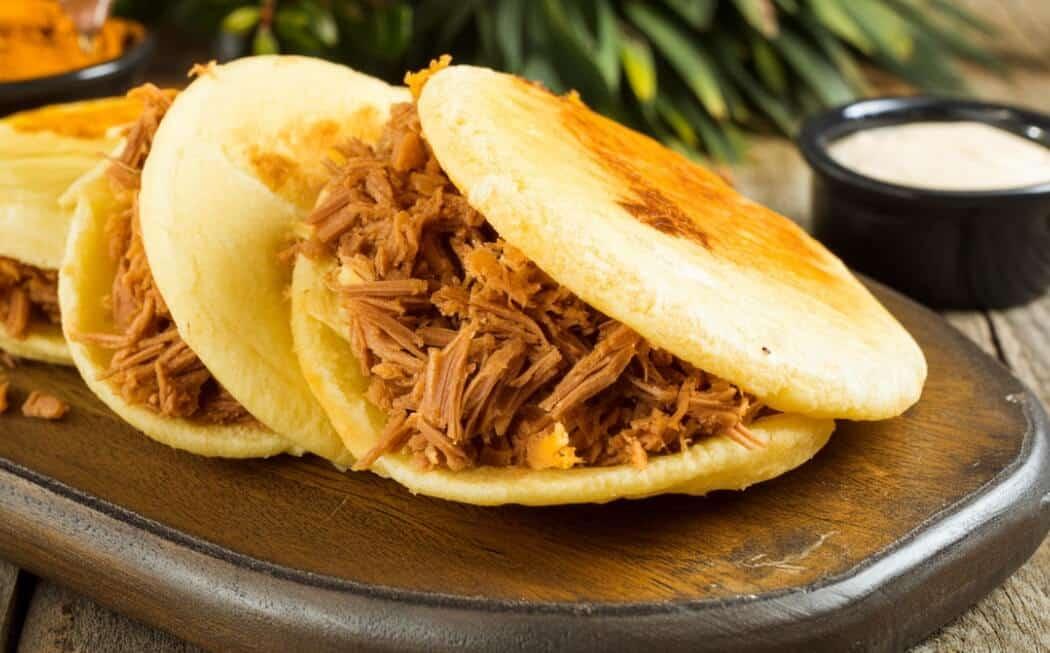
Arepas are among the most important dishes of Venezuela and Colombia.
The origins of the arepa extend back to the indigenous peoples of South America. Indigenous communities commonly consumed this bread, made from cornmeal and water, in their daily lives. Today, the arepa holds an important place in the cuisines of both Venezuela and Colombia and has become a cultural symbol shared between the two countries.【1】
Arepa is prepared by mixing cornmeal, water, and salt. After the dough is kneaded, it is shaped into round, flat patties and then cooked on a grill, in an oven, or fried in oil. Various ingredients are added inside to create different flavors.【2】
Some popular varieties of arepa:
•Arepa Reina Pepiada: Filled with chicken, avocado, and mayonnaise.
•Arepa de Queso: Contains melted cheese inside.
•Arepa de Pabellón: Stuffed with black beans, shredded beef, plantain (large banana), and cheese.
•Arepa de Choclo: Includes corn kernels for a sweeter flavor.
Arepa is a nutritious food source. As cornmeal is the primary ingredient, it is rich in carbohydrates. Additionally, when filled with meat, cheese, or vegetables, it becomes enriched with protein, vitamins, and minerals.
In Venezuela and Colombia, the arepa is more than just a dish—it is a cultural symbol. It can be found everywhere, from street food to homemade meals. In Venezuela, the arepa is regarded as the national dish, while in Colombia it is typically an essential part of breakfast.
In recent years, the arepa has gained popularity worldwide. It appears on the menus of Latin American restaurants and has also found a place within healthy eating trends. Its gluten-free nature has made it an alternative bread option.

History
Preparation and Varieties
Nutritional Value
Cultural Significance
Modern Popularity