This article was automatically translated from the original Turkish version.
Other Name(s) | Arife bread Arefelik Arifelik | ||||||||
|---|---|---|---|---|---|---|---|---|---|
Geography | Erzurum and its surroundings | ||||||||
Type(s) | holiday custom Folk tradition | ||||||||
Collection Tools | pouch bag paper bag Cloth bag | ||||||||
Refreshments | pişi bread Turkish delight chocolate sugar walnut pistachio Hazelnut | ||||||||
Application Format | Children going door to door collecting treats | ||||||||
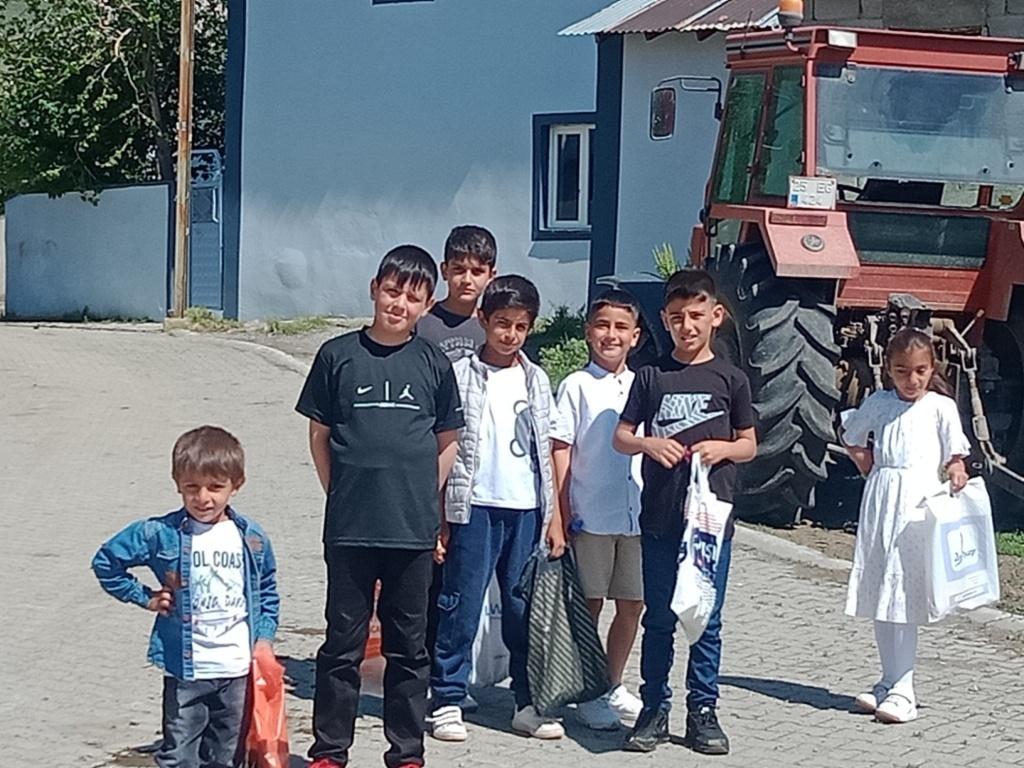
Arafalık, is a folk tradition linked to the eve of religious holidays, during which children go door to door within their neighborhood collecting various foods such as pastries, nuts, sugar, and sweets, thereby visibly expressing the joy of the holiday through shared generosity. The practice transforms the eve from a mere preparatory day into an active social event centered on children. When considered alongside other eve customs—such as spring cleaning, preparing holiday clothes for children, bathing on the eve, preparing holiday treats for guests, and the expectation of mutual neighborhood visits—Arafalık emerges as one of the tangible expressions of holiday culture revolving around children, families, and neighborhood relations. This tradition, known by similar names in different parts of Anatolia, has acquired a distinct local identity in Erzurum and become one of the city’s unique holiday customs.
Arafalık is a holiday tradition in which children go from house to house on the eve, collecting foods such as pişi, çörek, dried nuts, sugar, and similar items. In Anatolia, this practice is known by names such as arifelik, arafalık, and arife çöreği.【1】These terms reflect how the eve, the day immediately preceding religious holidays, has acquired a unique cultural meaning within folk traditions. The eve is not merely a calendrical day of waiting; it is a special period marked by cleaning, preparation, children wearing holiday clothes, visiting cemeteries, and preparing festive treats. Arafalık is one of the child-centered rituals within this broader framework.
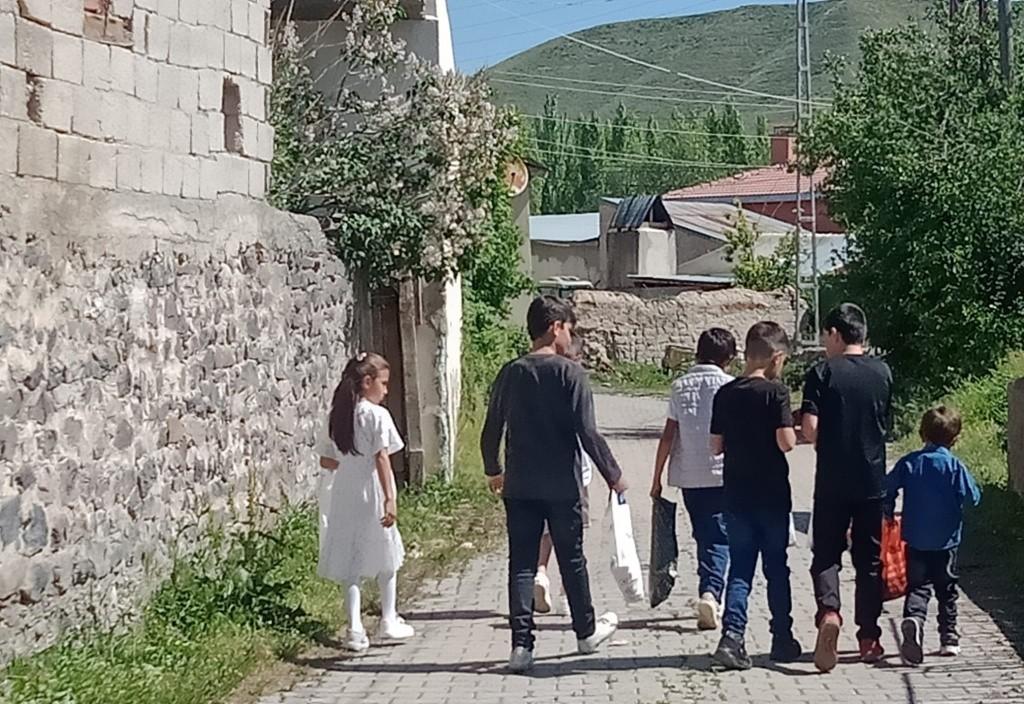
Children Going Door to Door for Arafalık (MEB)
In Erzurum, the tradition involves children dressing in their best or new clothes and going door to door with bags, baskets, paper sacks, or in earlier times, cloth sacks, collecting treats. Homes prepare in advance, setting aside not only holiday treats for guests but also specific items for children: hazelnuts, pistachios, walnuts, sugar, chocolate, and sometimes Turkish delight. Children visit homes in groups, request Arafalık, place the offerings in their bags, and at the end of the day share what they have collected with their families or friends.【2】In this sense, Arafalık is not merely a simple practice of children asking for treats; it is a ritualized expression of pre-holiday sharing and mutual familiarity within the neighborhood. In Erzurum, this practice has been preserved for centuries as a traditional holiday custom, forming an integral part of both family preparations and neighborhood relations.
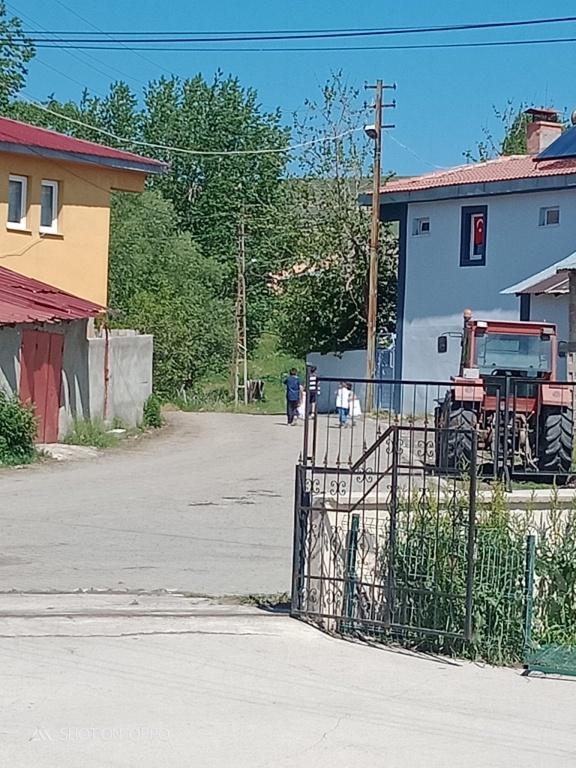
Three Children Going Door to Door for Arafalık (MEB)
Arafalık is one of the folk practices in Anatolia that developed around the eve of religious holidays. Although the exact historical origin of the eve is unknown, its rituals have changed very little over centuries.【3】This day is experienced as a special period marked by cleaning, preparing holiday clothes for children, bathing, and making festive offerings. Practices such as arifelik, arafalık, and arife çöreği, in which children go door to door collecting food, are integral components of this framework. Thus, Arafalık is not an isolated custom but a child-centered tradition that evolved within the broader social meaning of the eve. In Erzurum, this practice has become more pronounced, evolving into a regular element of pre-holiday preparations and neighborhood life.
In Erzurum, the tradition carries a continuity spanning centuries. The former practice of giving children specially sewn cloth sacks, families acquiring nuts and pistachios days in advance, children going out in groups wearing holiday clothes, and the recognition of this activity as one of the first signs of the holiday, all indicate that Arafalık is not a temporary children’s amusement but a deeply rooted holiday practice. Over time, some details have changed: plastic bags have replaced cloth sacks, and participation has declined in some areas. Nevertheless, the tradition has endured as a lasting eve custom in Erzurum to the present day.【4】
In the Arafalık tradition, children begin their rounds early in the morning or later in the day, dressed in their holiday clothes and carrying bags, baskets, paper sacks, or in earlier times, cloth sacks. The rounds are often conducted not individually but in large groups or small clusters. Homes also prepare in advance, setting aside not only sweets for holiday guests but also additional treats specifically for children: hazelnuts, pistachios, walnuts, sugar, chocolate, Turkish delight, and similar items. Thus, the ritual depends not only on children’s door-to-door visits but also on households being ready to receive them.
Interview on the Arafalık Tradition (Erzurum Gastesi)
The oral and behavioral patterns of the practice are also clearly defined. When a door opens, children collectively say, “Abla, arafalığam ver,” requesting their share without objection, and proceed to the next house. If a door remains closed, children wait for a while and sometimes return later in the day. The collected treats are shared among the children with their families or friends at the end of the day. In this way, Arafalık turns the eve into an activity in which children, through their neighborhood walks, actively participate in the holiday’s joy and transform the relationship between homes and streets into brief but regular encounters. Although cloth sacks have been replaced by plastic bags and participation has declined, the core structure of the ritual has been preserved.
Arafalık is a tradition that integrates children into the active life of the neighborhood during the pre-holiday period. Children going door to door on the eve reinvigorate neighborhood ties through brief, repeated encounters, while households contribute to the shared festive atmosphere by offering treats. Thus, the practice moves holiday preparation from a private, household activity to a public, neighborhood-level event. For children, Arafalık creates an experience in which they tangibly feel the joy of the holiday, become visible members of the community, and participate in a collective movement. For families, giving treats to children becomes an extension of the holiday spirit of sharing and generosity without expectation of return.
The Contemporary Celebration of Arafalık (Ulusal Kanal)
This tradition generates feelings of mutual aid and solidarity not only through material offerings but also through shared time and collective excitement. Children’s collective walks on the eve, households preparing for their arrival, and the day-long movement throughout the city make the approach of the holiday visibly apparent. In this sense, Arafalık carries a meaning beyond a children’s game; it nourishes the emotional atmosphere of the holiday embedded in the social memory, fosters shared memories across generations, and plays a role in transmitting local cultural identity. The continued recognition of Arafalık as one of Erzurum’s distinguishing cultural elements is directly linked to this function.
Although Arafalık no longer maintains the same intensity and widespread participation as in the past, it remains one of the enduring holiday traditions in Erzurum. Significant changes have occurred in its material aspects: the specially sewn cloth sacks once given to children have been replaced over time by plastic bags, baskets, and paper sacks. While children still go door to door in groups, participation has declined in some areas. Nevertheless, the tradition retains its visibility due to its nostalgic and symbolic value. These changes indicate not the disappearance of Arafalık but its adaptation into new forms compatible with urban life and daily routines.
The continuity of the tradition has not been confined to neighborhood walks alone; it has also been extended into schools and public spaces. In recent years, some educational institutions in Erzurum have distributed Arafalık treats to students, reflecting a conscious cultural initiative aimed at transmitting the tradition to younger generations.【6】The continued reference to Arafalık in local media and digital publications as a uniquely Erzurum tradition further reinforces its persistence. Thus, Arafalık has preserved its dual character: as a living link to the holiday memories of past generations and as a culturally adapted practice passed on to new ones.
2 Mart Gazetesi. "Erzurum'da Çocukların Vazgeçemediği Bir Gelenek: Arafalık." Accessed March 17, 2026. https://2mart.com.tr/yasam/erzurumda-cocuklarin-vazgecemedigi-bir-gelenek-arafalik-52754.html.
Alaca Yunus Emre Yücelik İlkokulu. "Öğrencilerimizin Arafalık Coşkusu." T.C. Millî Eğitim Bakanlığı, Erzurum/Aziziye. Accessed March 17, 2026. https://alacayeyio.meb.k12.tr/icerikler/ogrencilerimizinarafalikcoskusu_16406636.html
Aras, M. Sıtkı. *Bir Şehrin Ruhu: Erzurum*. Erzurum Kitaplığı 10. 3. bs. İstanbul: Dergâh Yayınları, 2019. Accessed March 17, 2026. https://www.dergah.com.tr/uploads/anadolu_kitapligi/erzurum%20kitaplığı/bir_sehrin_ic.pdf
Erzurum Ekspres. "Erzurum'da Çocukların Arafalık Mutluluğu." 2024. Accessed March 17, 2026. https://www.erzurumekspres.com/haber/erzurum-da-cocuklarin-arafalik-mutlulugu_4362/
Erzurum Günebakış. "Erzurumlu Çocuklar Bu Yıl da Geleneği Yaşattılar." Accessed March 17, 2026. https://erzurumgunebakis.com/haber/erzurumlu_cocuklar_bu_yilda_gelenegi_yasattilar-34339.html
Habertürk. "Asırlık Gelenek: Arafalık." Accessed March 17, 2026. https://www.haberturk.com/erzurum-haberleri/haber/5867170-asirlik-gelenek-arafalik
Sakaoğlu, Saim. "Arafalık." In *Aile Yazıları / 10*, edited by Saim Sakaoğlu, Mehmet Aça, and Pervin Ergun, 12. Araştırma ve Sosyal Politika Serisi 35. Ankara: T.C. Aile ve Sosyal Politikalar Bakanlığı Aile ve Toplum Hizmetleri Genel Müdürlüğü, 2016. https://www.aile.tr/media/36497/aile-yazilari-10.pdf.
TRT Haber. "Bakan Tekin Erzurum'un Asırlık Geleneği Olan 'Arafalık' Dağıttı." June 15, 2024. Accessed March 17, 2026. https://www.trthaber.com/haber/gundem/bakan-tekin-erzurumun-asirlik-gelenegi-olan-arafalik-dagitti-909574.html
Türkan, Kadriye. "Burdur’da Geleneksel Bir Uygulama: Arife Çöreği." In 14. Uluslararası Dil, Kültür ve Edebiyat Araştırmaları Kongresi Özet Metinleri, edited by Yakup Civelek. Ankara: Iksad Yayınevi, 2022. https://dekak2022.meetinghand.net/projectData/1137/webData/Dekak-Özet-Kitabı-2022-1.pdf.
[1]
Kadriye Türkan, "Burdur’da Geleneksel Bir Uygulama: Arife Çöreği," içinde 14. Uluslararası Dil, Kültür ve Edebiyat Araştırmaları Kongresi Özet Metinleri, ed. Yakup Civelek (Ankara: Iksad Yayınevi, 2022), https://dekak2022.meetinghand.net/projectData/1137/webData/Dekak-Özet-Kitabı-2022-1.pdf. s. 14.
[2]
Saim Sakaoğlu, "Arafalık," içinde Aile Yazıları / 10, ed. Saim Sakaoğlu, Mehmet Aça ve Pervin Ergun, Araştırma ve Sosyal Politika Serisi 35 (Ankara: T.C. Aile ve Sosyal Politikalar Bakanlığı Aile ve Toplum Hizmetleri Genel Müdürlüğü, 2016), https://www.aile.tr/media/36497/aile-yazilari-10.pdf.
[3]
Saim Sakaoğlu. (a.g.e), s. 12.
[4]
"Öğrencilerimizin Arafalık Coşkusu," Alaca Yunus Emre Yücelik İlkokulu, T.C. Millî Eğitim Bakanlığı, Erzurum/Aziziye, erişim tarihi: 17 Mart 2026, https://alacayeyio.meb.k12.tr/icerikler/ogrencilerimizinarafalikcoskusu_16406636.html.
[6]
"Bakan Tekin Erzurum'un Asırlık Geleneği Olan 'Arafalık' Dağıttı," TRT Haber, 15 Haziran 2024, erişim tarihi: 17 Mart 2026, https://www.trthaber.com/haber/gundem/bakan-tekin-erzurumun-asirlik-gelenegi-olan-arafalik-dagitti-909574.html.


Other Name(s) | Arife bread Arefelik Arifelik | ||||||||
|---|---|---|---|---|---|---|---|---|---|
Geography | Erzurum and its surroundings | ||||||||
Type(s) | holiday custom Folk tradition | ||||||||
Collection Tools | pouch bag paper bag Cloth bag | ||||||||
Refreshments | pişi bread Turkish delight chocolate sugar walnut pistachio Hazelnut | ||||||||
Application Format | Children going door to door collecting treats | ||||||||
Definition and Geographic Context
Historical Development
Ritual Structure and Practical Applications
Socio-Cultural Functions
Transformation and Continuity in the Present Day