


This article was automatically translated from the original Turkish version.
+2 More
Apollo 11 is the first space mission in which humanity set foot on the Moon. This historic mission, carried out by NASA, began on July 16, 1969, and was successfully completed on July 24, 1969. The most significant moment of the mission occurred on July 20, 1969, when Neil Armstrong took his first step on the lunar surface. Armstrong’s words, “That’s one small step for a man, one giant leap for mankind.” (“This is a small step for a man, a giant leap for mankind.”) have become historic.
Apollo 11 became one of the most important turning points in the Space Race between the United States and the Soviet Union. U.S. President John F. Kennedy emphasized the strategic importance of this mission in his famous 1961 speech, declaring, “We choose to go to the Moon in this decade and do the other things, not because they are easy, but because they are hard.”
NASA used the Saturn V rocket to achieve this goal. The mission consisted of three main modules: the Command Module Columbia, the Lunar Module Eagle, and the Service Module. The crew comprised Commander Neil Armstrong, Command Module Pilot Michael Collins, and Lunar Module Pilot Edwin “Buzz” Aldrin.
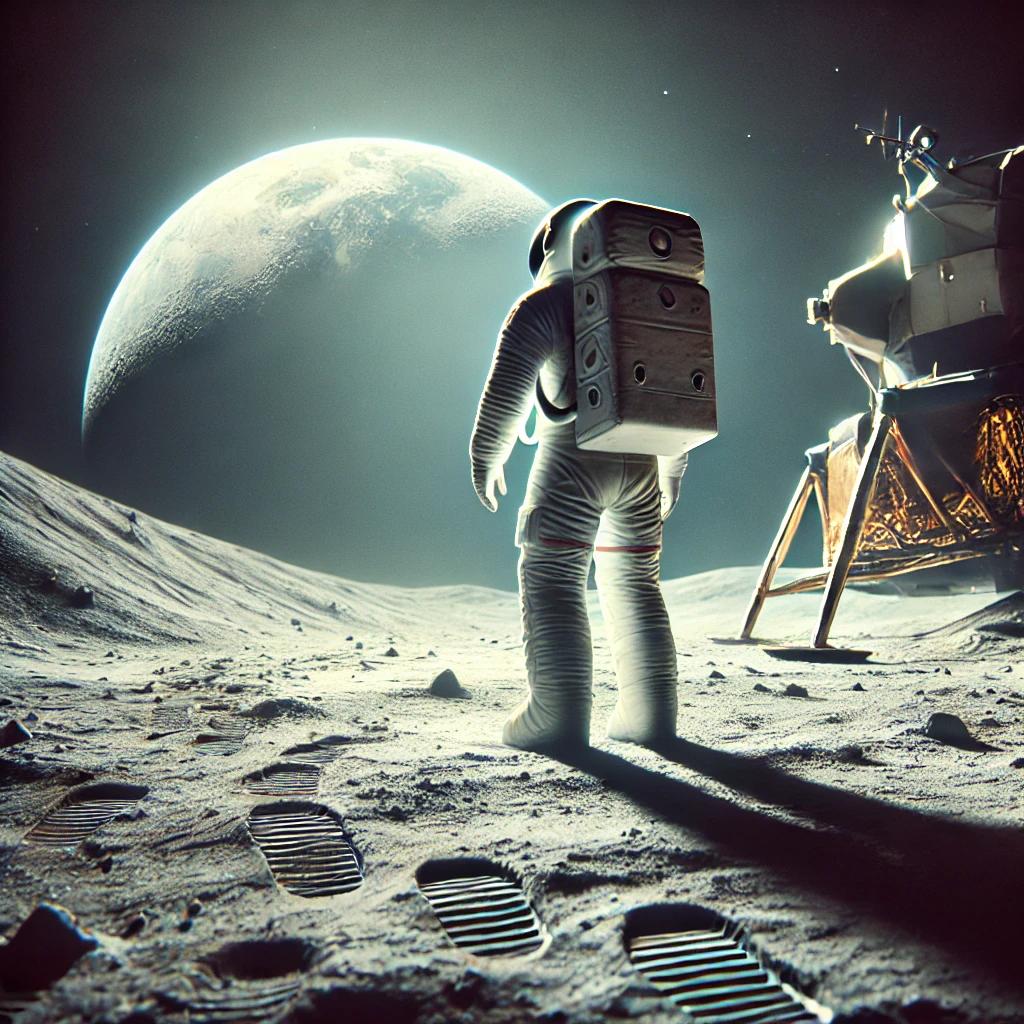
Artificial Intelligence Visualized Apollo 11 Mission.
On July 20, 1969, the Eagle landed on the lunar surface. Neil Armstrong became the first human to step onto the Moon, and a few minutes later, Buzz Aldrin joined him. The pair spent approximately two and a half hours on the lunar surface, conducted various scientific experiments, and collected rock samples to be brought back to Earth.
These historic moments generated widespread echoes worldwide through live coverage by CBS News anchor Walter Cronkite. Additionally, an American flag was planted on the lunar surface and a commemorative plaque was left behind.
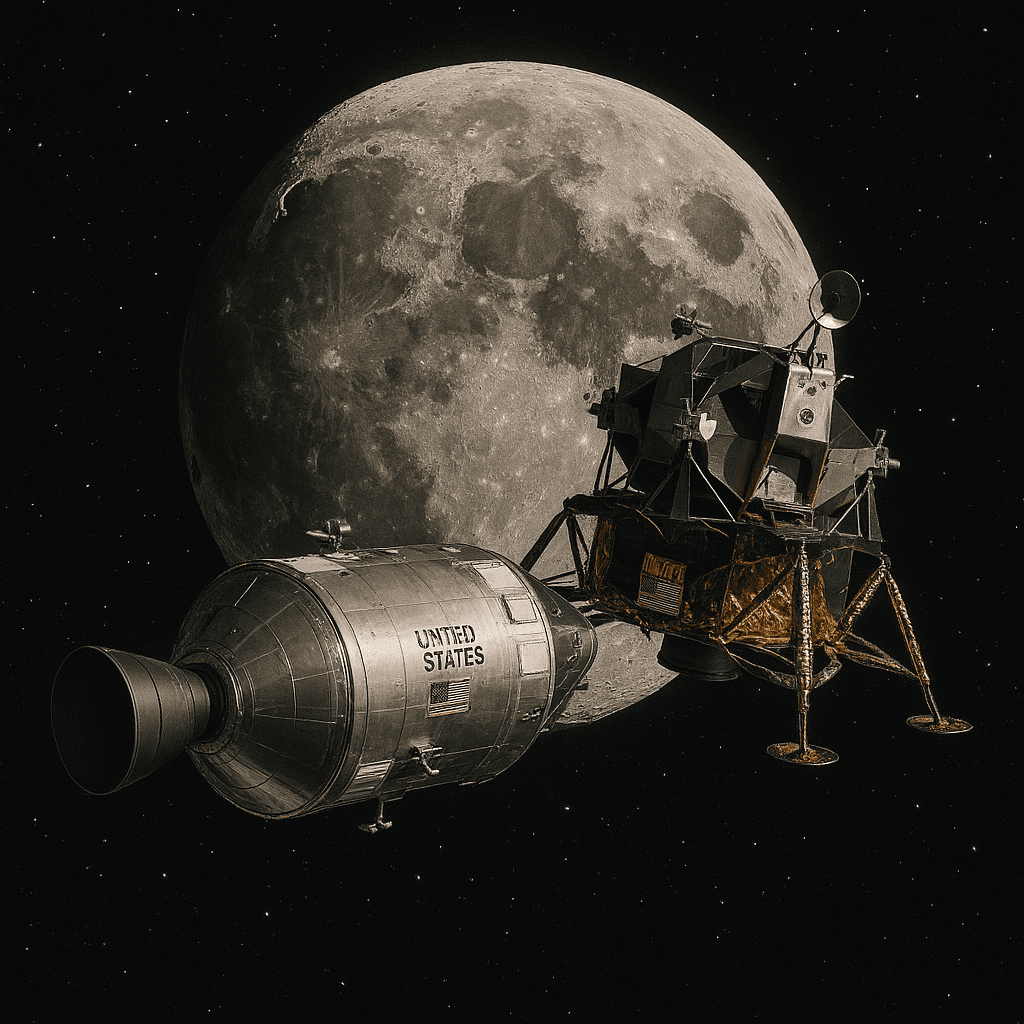
Artificial Intelligence Visualized Apollo 11 Mission.
After departing from the lunar surface, the Apollo 11 crew began their journey back to Earth aboard the Command Module Columbia. They successfully completed the mission with a splashdown in the Pacific Ocean on July 24, 1969. Apollo 11 was a monumental achievement that demonstrated humanity’s potential in space exploration and inspired subsequent space missions.
This mission is regarded as one of the most important steps in humanity’s opening to space and is remembered as a major turning point in the world of science.
CBS News. Apollo 11 Moon Landing Broadcast. CBS Television Network, 1969.
Kennedy, John F. Moon Speech at Rice University. NASA Archives, 1961.
NASA. Apollo 11 Mission Report. Washington, DC: NASA Headquarters, 1969.

Mission Objective and Preparation Process
Lunar Landing and Historic Moments
Return and Legacy
Apollo 11 Primary Crew