Registration Number | 509 | ||||||||
|---|---|---|---|---|---|---|---|---|---|
Registration Date | July 24, 2020 | ||||||||
Applicant/Registrant(s) | Gaziantep Commodity Exchange | ||||||||
Province(s) | Gaziantep | ||||||||
Product / Product Group(s) | Processed and Unprocessed Fruits and Mushrooms Vegetables | ||||||||
Type of Geographical Indication | Geographical Indication | ||||||||
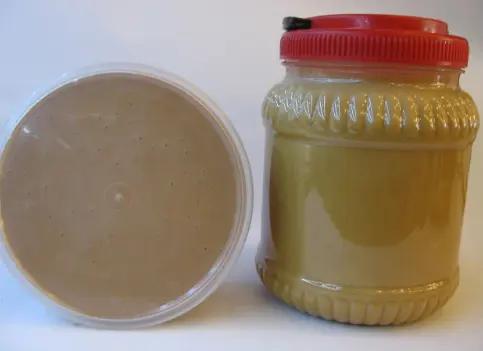
Antep Pekmezi, a traditional grape molasses from Gaziantep, is characterized by its amber color and thick, paste-like consistency. Protected as a Geographical Indication under Law No. 6769 on Industrial Property, it was registered on July 24, 2020, by the Gaziantep Commodity Exchange. A significant part of Gaziantep’s cultural and gastronomic heritage, its importance is reflected in the local saying, “If you’re going to Antep, you’ll eat pekmez.”
Made exclusively from the Dökülgen grape variety, Antep Pekmezi is non-flowing, with a unique aroma, taste, and color. It is spreadable on bread or can be melted into a syrup-like consistency. A distinctive feature is the process of transforming liquid molasses into a solid form, setting it apart from other molasses types.
Production can use fresh or dried Dökülgen grapes. The process includes sorting grapes (tah), placing them in a sala (trough) with soil, crushing, pressing in a menge (press), boiling in a mahsere cauldron, transferring to trays, and fermenting. Local herbs like sütleğen and sarı kantaron are added during boiling to enhance aroma. Sedimentation ensures clarity, and the molasses is fermented with previously made solid pekmez to achieve its thick consistency.
Dried grapes are rehydrated and processed through a grinder, while fresh grapes are crushed in a mill. The juice is separated from solids using a separator, clarified, and concentrated under vacuum. It is then mixed with old solid pekmez and çöven extract for fermentation. The final product solidifies in wooden or tin containers within 1–2 days.
Antep Pekmezi must be produced within Gaziantep province using the Dökülgen grape variety. All stages—production, processing, and packaging—must occur within this geographical boundary.
Inspections are coordinated by the Gaziantep Commodity Exchange, with a committee including representatives from the Gaziantep Provincial Directorate of Agriculture and Forestry, the Gaziantep Gastronomy and Tourism Association, relevant professional chambers, and university experts. Conducted at least annually, inspections verify adherence to the production method, grape variety, and the product’s color, taste, and aroma.
Türk Patent ve Marka Kurumu. "Antep Pekmezi / Gaziantep Pekmezi Mahreç İşareti Tescil Belgesi." Coğrafi İşaretler Portalı. Accessed October 21, 2025. https://ci.turkpatent.gov.tr/Files/GeographicalSigns/f6daf5fb-2889-44a0-8cf4-f34174c300ad.pdf.
Türk Patent ve Marka Kurumu. "Antep Pekmezi / Gaziantep Pekmezi." Coğrafi İşaretler Portalı. Accessed October 21, 2025. https://ci.turkpatent.gov.tr/cografi-isaretler/detay/38296.

Registration Number | 509 | ||||||||
|---|---|---|---|---|---|---|---|---|---|
Registration Date | July 24, 2020 | ||||||||
Applicant/Registrant(s) | Gaziantep Commodity Exchange | ||||||||
Province(s) | Gaziantep | ||||||||
Product / Product Group(s) | Processed and Unprocessed Fruits and Mushrooms Vegetables | ||||||||
Type of Geographical Indication | Geographical Indication | ||||||||
No Discussion Added Yet
Start discussion for "Antep Pekmezi / Gaziantep Pekmezi" article
Physical and Chemical Properties
Production Method
Traditional Method
Modern Method
Production Conditions
Inspection Mechanism
This article was created with the support of artificial intelligence.