Registration Number | 376 | ||||||||
|---|---|---|---|---|---|---|---|---|---|
Registration Date | 14.08.2018 | ||||||||
Applicant/Registrant(s) | Gaziantep Commodity Exchange | ||||||||
Province(s) | Gaziantep | ||||||||
Type of Geographical Indication | Designation of Origin | ||||||||
Product / Product Group(s) | Processed and Unprocessed Fruits and Vegetables and Mushrooms | ||||||||
Antep Kuruluk Patlıcanı (Gaziantep Dried Eggplant) is a quintessential example of Gaziantep’s traditional dried vegetable culture, integral to its rich culinary heritage. Registered as an Designation of Origin (Menşe Adı) on August 14, 2018, under Law No. 6769 on Industrial Property by the Gaziantep Commodity Exchange, its production is limited to the districts of Oğuzeli, Nizip, Karkamış, and Araban in Gaziantep province.
Gaziantep’s cuisine is one of the richest in Turkish culinary tradition, and drying is a key preservation technique passed down through generations. Antep Kuruluk Patlıcanı, primarily used for stuffed dishes (dolma), has been a staple for centuries. Its historical roots are documented in the 18th-century “Yemek Risalesi” by Ali Eşref Dede, which references “balcan dolması” (eggplant dolma).
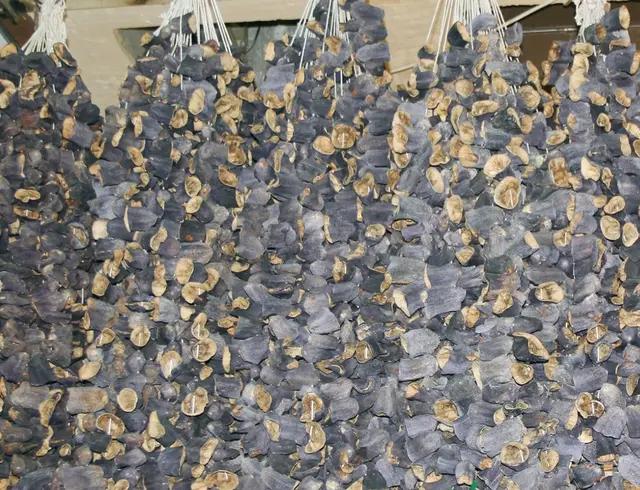
Gaziantep dried eggplant is produced through natural drying methods. The region’s climatic conditions, particularly its low temperatures, extend the drying process compared to other regions, resulting in a softer texture. Key characteristics include:
These physical and sensory properties distinguish it from dried eggplants produced elsewhere.
The harvest occurs in August–September. Eggplants are washed, halved, hollowed out, and prepared for drying. They are strung in groups of 50 on ropes and dried in shaded, well-ventilated areas to avoid direct sunlight, which can cause burning or black spotting. The drying process takes 3–7 days, depending on weather conditions.
Compliance with Designation of Origin standards is monitored by an expert committee coordinated by the Gaziantep Commodity Exchange. Inspections include:
Inspections are conducted at least annually, with additional checks as needed or in response to complaints. The registering institution oversees legal enforcement.
Türk Patent ve Marka Kurumu. "Antep Kuruluk Patlıcanı (Gaziantep Kuru Patlıcanı)." Coğrafi İşaretler Portalı. Accessed October 21, 2025. https://ci.turkpatent.gov.tr/cografi-isaretler/detay/38270.
Türk Patent ve Marka Kurumu. "Antep Kuruluk Patlıcanı (Gaziantep Kuru Patlıcanı) Tescil Belgesi." Coğrafi İşaretler Portalı. Accessed October 21, 2025. https://ci.turkpatent.gov.tr/Files/GeographicalSigns/55b04f65-e0f3-4984-8f1f-39e4a105457d.pdf.

Registration Number | 376 | ||||||||
|---|---|---|---|---|---|---|---|---|---|
Registration Date | 14.08.2018 | ||||||||
Applicant/Registrant(s) | Gaziantep Commodity Exchange | ||||||||
Province(s) | Gaziantep | ||||||||
Type of Geographical Indication | Designation of Origin | ||||||||
Product / Product Group(s) | Processed and Unprocessed Fruits and Vegetables and Mushrooms | ||||||||
No Discussion Added Yet
Start discussion for "Antep Kuruluk Patlıcanı / Gaziantep Kuru Patlıcanı" article
Product Characteristics
Production Process
Inspection and Protection
This article was created with the support of artificial intelligence.