


This article was automatically translated from the original Turkish version.
Antalya piyazı is a traditional dish unique to the Antalya province on Türkiye’s Mediterranean coast, distinguished by its own distinctive preparation technique and officially registered with a geographical indication. This special variety of piyaz, whose origins date back approximately a century, has become one of the most recognized and beloved flavors of Antalya cuisine. While in other regions of Türkiye “piyaz” is typically served as a salad or meze, Antalya piyazı differs significantly from these preparations. In Antalya and its districts, piyaz is consumed as a main course.Antalya and its districts.
The most distinctive element of Antalya piyazı is the tarator sauce added to it, which gives the dish its creamy texture. This unique sauce, based on tahini, transforms the piyazı into a satisfying meal. Additionally, the specific variety of beans used and the details of the preparation method further distinguish Antalya piyazı from other versions. Registered in 2017 by the Turkish Patent and Trademark Office under a Geographical Indication, Antalya piyazı is one of the city’s key gastronomic elements.
The most fundamental features that distinguish Antalya piyazı from other types of piyaz are as follows:
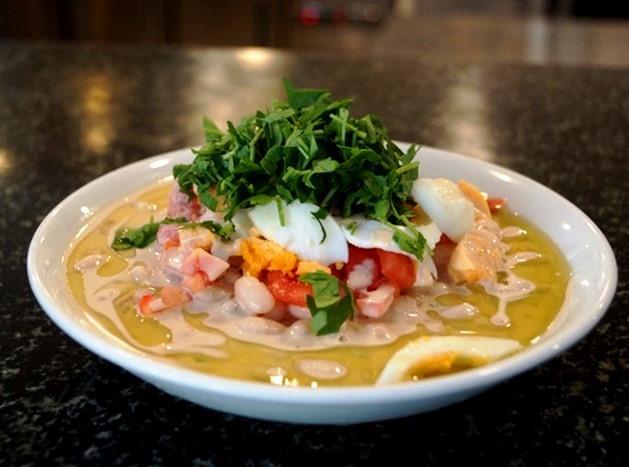
Antalya Piyazı (Kültür ve Turizm Bakanlığı)
Antalya piyazı was registered under Geographical Indication number 315 by the Turkish Patent and Trademark Office upon application by the Antalya Chamber of Commerce and Industry. The registration date is 29.12.2017 and the protection start date is 15.05.2017. The geographical indication certifies that the product is produced within the boundaries of Antalya province and its districts, using the specified methods and ingredients.
The reasons for Antalya piyazı’s geographical indication include its long-standing association with the region, its transmission through cultural heritage, the unique flavor created by the use of tahini in the sauce, and the skill required in its preparation. Oversight of production in accordance with established standards is conducted at least once a year, and as needed, by an independent commission composed of representatives from the Antalya Provincial Directorate of Food, Agriculture and Livestock, the Antalya Chamber of Commerce, and the Antalya Branch of the Chamber of Food Engineers. Inspections cover the quality of ingredients used during production, compliance with the prescribed method, hygiene conditions, and presentation standards during marketing.
Antalya İl Kültür ve Turizm Müdürlüğü. "Antalya Piyazı ve Piyazcılık." Accessed April 26, 2025.Link
Antalya İl Kültür ve Turizm Müdürlüğü. "Antalya Piyazı." Accessed April 26, 2025.
Turk Patent and Trademark Office. "Antalya Piyazı." Turk Patent and Trademark Office, Accessed April 26, 2025.Link
Türkiye Kültür Portalı. "Antalya Piyazı (6 Kişilik)." Türkiye Kültür Portalı, Accessed April 26, 2025.Link
Türkiye Kültür Portalı. "Antalya Piyazı." Accessed April 26, 2025.Link

Distinguishing Features
Ingredients:
Antalya Piyazı Recipe
Geographical Indication Registration
Geographical Linkage and Oversight