


This article was automatically translated from the original Turkish version.
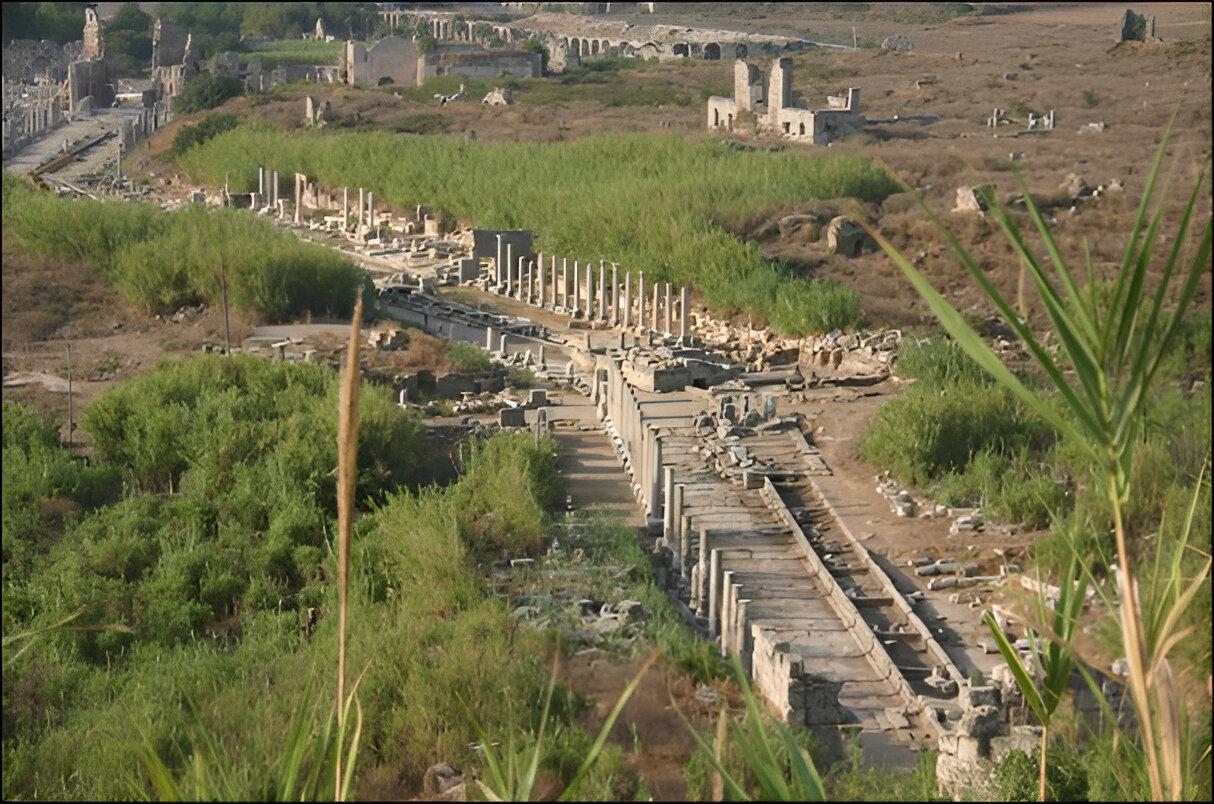
Ancient City of Perge
Location | 17 km east of the city center of Antalya Aksu District Antalya Province | ||||||||
|---|---|---|---|---|---|---|---|---|---|
Historical Origin | Known as 'Parha' during the Hittite period; a prehistoric accumulation extending to the Early Bronze Age | ||||||||
Ancient City of Perge is an important archaeological site located 17 kilometers east of the center of Aksu district in Antalya province, Türkiye. The city’s existence during the Hittite period, known as “Parha,” is evidenced by ceramic finds from the Early Bronze Age discovered on the acropolis. Perge flourished during the Hellenistic, Roman and Byzantine periods and is recognized as one of the most orderly ancient cities in Anatolia due to its architecture, marble sculpture and urban planning.
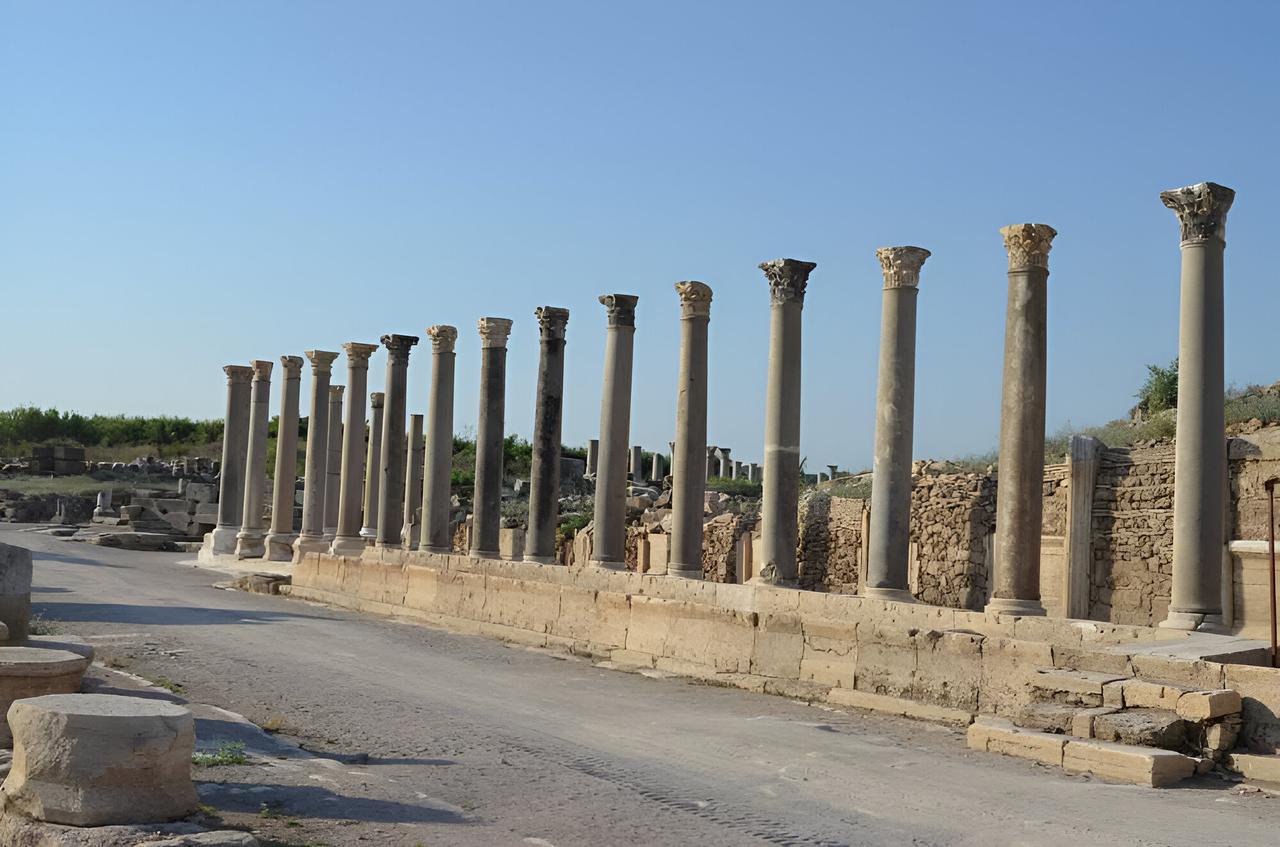
Ancient City of Perge (Culture Portal)
The history of Perge begins with its mention in Hittite texts as “Parha” and extends back to the Early Bronze Age. The city experienced its first golden age during the Hellenistic period (3rd century BCE), when it was designed as a planned urban center. The Hellenistic Towers are enduring symbols of this era. However, Perge reached its peak during the Roman Empire, particularly in the 2nd and 3rd centuries CE under the Pax Romana. Thanks to its geopolitical position and wealth, the city achieved a prosperous standard of living, with the construction of a theater, stadium, agora, baths, aqueducts and monumental fountains. Its final flourishing period occurred during the Byzantine Empire, when it became a pilgrimage site for important Christian figures such as Saint Paul and acquired the title of “Metropolitan City” through the construction of basilicas in the 5th and 6th centuries CE.
The urban plan of Perge consists of two main colonnaded streets oriented east-west and north-south. The aqueduct running the full length of the north-south axis is one of the features reinforcing the city’s identity as a “city of water.” This canal is supported by four monumental fountains (including the Kestros Fountain and the Caracalla Fountain) and two large bath complexes. Among the city’s key structures are:
Excavations at Perge were initiated in 1946 by Ord. Prof. Dr. Arif Müfid Mansel. Work continued under Prof. Dr. Jale İnan in the 1970s and Prof. Dr. Haluk Abbasoğlu in the 1990s, and has been carried out since 2012 by the Antalya Museum Directorate. Excavations have revealed the Colonnaded West Street, the aqueduct, the Caracalla Fountain, the Western Necropolis and the area extending from the Western Gate to the City Square. Restoration of the Hellenistic Towers and the Agora has been completed. The theater was opened to visitors in 2017.
Perge is also a sacred site in Christian history. It is known that Saint Paul arrived in the city via the Aksu River during his missionary journeys and later traveled to Pisidian Antioch. Its mention in the Bible has established Perge and the Aksu River as one of the holy sites of Christianity.
The Ancient City of Perge stands out for its urban planning characteristics from the Late Classical, Hellenistic and especially the Roman Imperial periods. Proposed for inclusion on the UNESCO World Heritage List, the city attracts visitors through its architectural richness, sculptural works and well-preserved structures. Artifacts from Perge displayed at the Antalya Museum reveal the city’s artistic heritage.
Through the phases it has undergone throughout history and the traces it has left behind, Perge continues to exist as one of the most important ancient cities in Anatolia.
Kültür Portalı. "Perge." Türkiye Kültür Portalı. Accessed April 3, 2025.https://www.kulturportali.gov.tr/turkiye/antalya/gezilecekyer/perge
T.C. Ministry of Culture and Tourism Museum Portal. "Perge Antik Kenti." Museum. Accessed April 3, 2025.https://muze.gov.tr/muze-detay?SectionId=PRG01&DistId=PRG
T.C. Ministry of Culture and Tourism, General Directorate of Cultural Heritage and Museums. "Perge Antik Kenti - Antalya." KVMGM. Accessed April 3, 2025.https://kvmgm.ktb.gov.tr/TR-44411/perge-antik-kenti-antalya.html

Ancient City of Perge
Location | 17 km east of the city center of Antalya Aksu District Antalya Province | ||||||||
|---|---|---|---|---|---|---|---|---|---|
Historical Origin | Known as 'Parha' during the Hittite period; a prehistoric accumulation extending to the Early Bronze Age | ||||||||
No Discussion Added Yet
Start discussion for "Ancient City of Perge" article
History and Development
Urban Plan and Structures
Excavation Works
Cultural and Religious Significance
Current Status