


This article was automatically translated from the original Turkish version.
+1 More
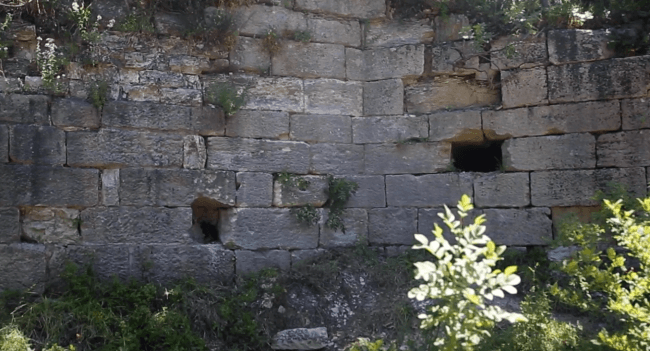
Anastasian Walls (Greek: Ἀναστασιακόν Τεῖχος), also known as Anastasiopolis Walls or the Long Wall, is a defensive line constructed by the Byzantine Empire to the northwestern outskirts of Istanbul (Constantinople). The walls were commissioned by Byzantine Emperor Anastasius I (reigned 491–518) in the late fifth century to protect the capital from attacks coming from the north.
【1】
The Anastasian Walls were designed as a defensive barrier against raids by the Huns, Avars, Slavs, and other northern tribes. This wall system, approximately 56 kilometers long, stretches from the Küçükçekmece Lake to the shores of the Black Sea. This structure, located far outside the Theodosian Walls, functioned as an early warning system for the capital.
However, due to insufficient fortifications, the walls were gradually abandoned and fell into disrepair. Beginning in the seventh century, as Byzantine military strategy shifted, the Anastasian Walls lost their strategic importance and emphasis was placed on the inner walls of Istanbul. 【2】
The Anastasian Walls were constructed from stone, brick, and earth.
• Main Wall: It consisted of a wall approximately 3.5 meters high and 3 meters wide.
• Ditches: Deep ditches were located in front of the walls.
• Towers: Observation towers were placed at regular intervals.
【3】
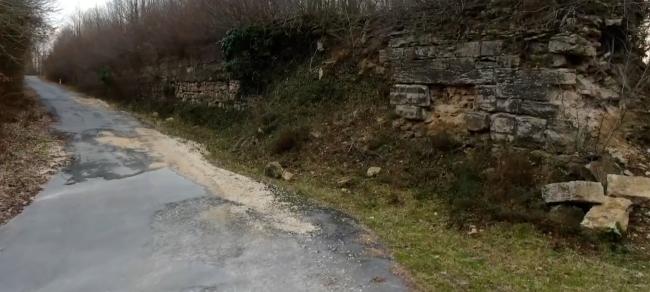
Today, most of the walls have disappeared, and only fragments remain standing. Remains of the walls can still be found in forested areas west of Istanbul.
Seval, Selim. Istanbul City Walls: Album of Photographs. Text by Hayri Fehmi Yilmaz. Istanbul: Türkiye İş Bankası Kültür Yayınları, 2009.
“Bu da İstanbul'un Çin Seddi.” *Milliyet*, 2011.https://www.milliyet.com.tr/gundem/bu-da-istanbulun-cin-seddi-1451791.
“İstanbul'un Saklı Duvarı: Anastasios Surları.” TRT Haber, 2022.https://www.trthaber.com/haber/kultur-sanat/istanbulun-cin-seddi-anastasios-surlari-701434.html.
[1]
İstanbul'un Saklı Duvarı: Anastasios Surları, TRT Haber, 2022. https://www.trthaber.com/haber/kultur-sanat/istanbulun-cin-seddi-anastasios-surlari-701434.html
[2]
“Bu da İstanbul'un Çin Seddi,” Milliyet, 2011, https://www.milliyet.com.tr/gundem/bu-da-istanbulun-cin-seddi-1451791.
[3]
“İstanbul'un Saklı Duvarı: Anastasios Surları,” TRT Haber, 2022, https://www.trthaber.com/haber/kultur-sanat/istanbulun-cin-seddi-anastasios-surlari-701434.html.

History
Architectural and Structural Features