


This article was automatically translated from the original Turkish version.
+2 More
Amber
Name | Amber | ||||||||
|---|---|---|---|---|---|---|---|---|---|
Other Name | Baltic amber Black amber Black amber Oltu stone | ||||||||
Chemical Formula | Approximately C₁₀H₁₆O (contains succinic acid) | ||||||||
Crystal System | Amorphous (shapeless) | ||||||||
Hardness (Mohs Scale) | 2 – 2.5 | ||||||||
Density | 0.96 – 1.1 g/cm³ | ||||||||
Color | Yellow, orange, red, brown, black | ||||||||
Luster | Resinous, glassy | ||||||||
Fracture | Conchoidal (like a mussel shell) | ||||||||
Transparency | Semi-transparent – transparent | ||||||||
Origin Type | Fossilization of conifer resin | ||||||||
Formation Process | Polymerization and oxidation over millions of years in an oxygen-free environment | ||||||||
Geological Period | Upper Cretaceous – Eocene | ||||||||
Major Mining Areas | Lithuania, Poland, Russia, Dominican Republic, Myanmar, Germany, Türkiye | ||||||||
Important Deposits in Türkiye | Erzurum (Havkaskışla, Oltu), Haymana (Ankara), Müşeverek (Bayburt) | ||||||||
Applications | collection scientific research Alternative medicine Jewelry decorative items | ||||||||
Scientific Importance | Contributes to paleontology by containing fossil remains of animals and plants | ||||||||
Cultural/Historical Importance | Has been used since ancient times for healing, courage, and amulet purposes | ||||||||
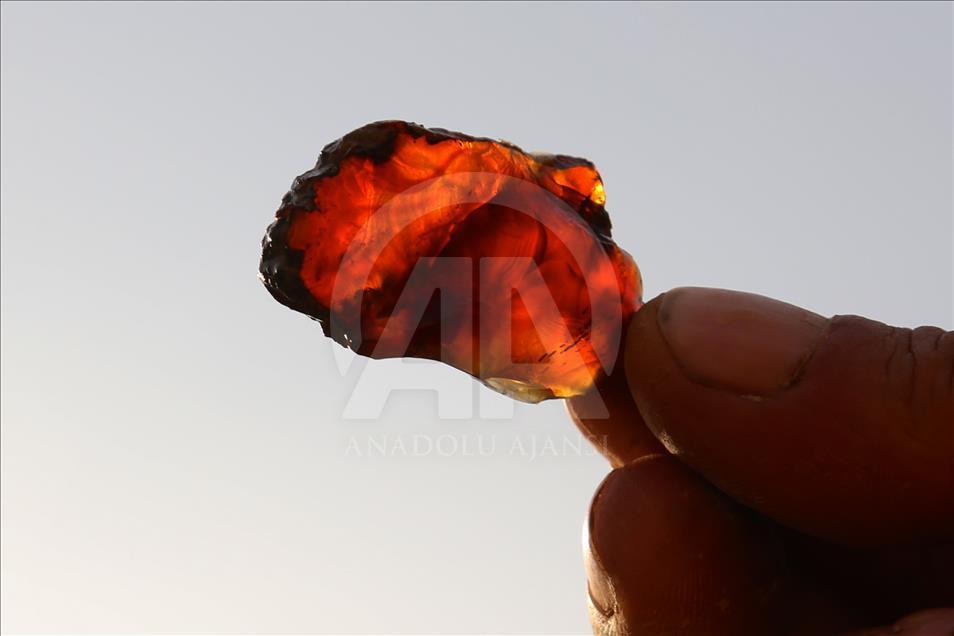
Amber, although commonly referred to by the public as a “stone” or “rock,” is fundamentally an organic substance of plant origin. Defined as fossilized resin, amber forms through physical and chemical transformations that occur over millions of years when resin secreted by coniferous trees for wound healing or defense is subjected to pressure and temperature in an oxygen-free environment.
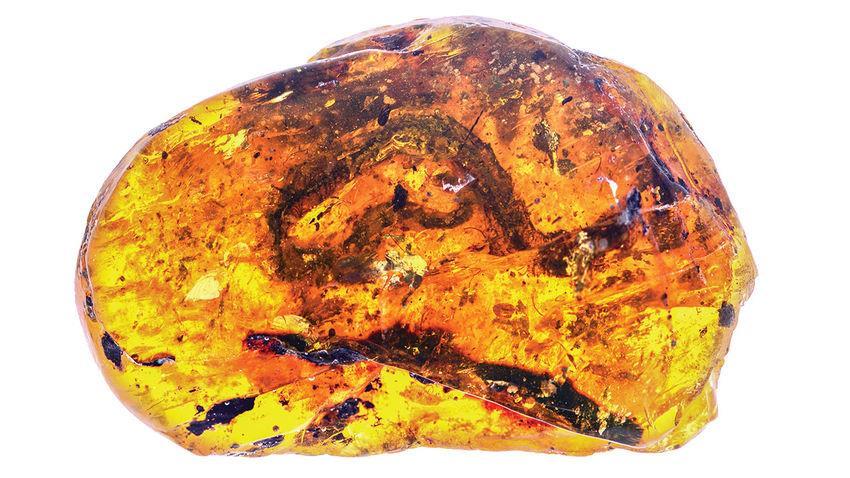
This transformation process causes the resin to harden and eventually acquire a stonelike structure. Before solidifying, this resin is highly sticky and can trap fine twig fragments, leaves, seeds, and various insects within it. Thus, amber is not merely a decorative stone but also a natural time capsule that records biological diversity and past ecological conditions.
Amber’s formation process is long and rare. Consequently, each piece of amber contains unique information about its geographic origin and past environmental conditions. The essential conditions required for resin to be preserved and fossilized are as follows:
When these conditions are met, the resin undergoes polymerization and oxidation processes to become amber.
Kehribar Taşına Ait Görsel (Anadolu Ajansı)
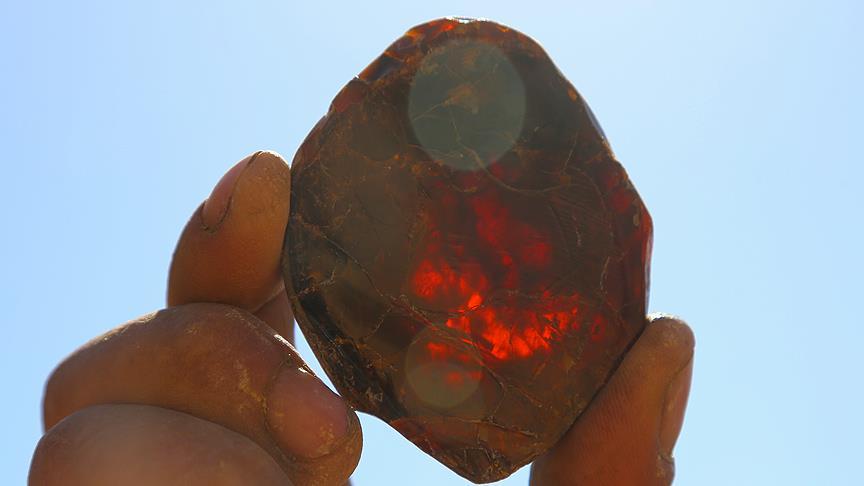
Amber is an amorphous substance that does not exhibit a crystalline structure. Although its chemical composition is not entirely fixed, it is generally accepted to contain succinic acid (C₁₀H₁₆O). It may also include small amounts of sulfur compounds alongside carbon, hydrogen, and oxygen. These components give amber its flammability and characteristic resinous odor.
Its physical properties are as follows:
When rubbed, amber generates static electricity. This property attracted attention in Ancient Greece, and the Greek word elektron, used for amber, later became the root of the term “electricity.” Additionally, when heated, amber decomposes at 370–380 °C without melting and burns with a bright flame.
Amber is typically found in marine sediments from the Upper Cretaceous and Eocene periods, especially within flysch facies formations. These sediments consist of layers such as marl, clay, and sandstone, and can incorporate large quantities of organic material during deposition. These environments are ideal for preserving resin from decomposition.
The formations containing black amber specimens in Türkiye are generally regions subjected to high tectonic pressure. This pressure causes compression of microscopic cellular structures within the amber and leads to the formation of shear lines on its surfaces. These traces provide direct evidence of amber’s tectonic deformation history.
Doğal Kehribar Taşına Ait Görsel (Anadolu Ajansı)
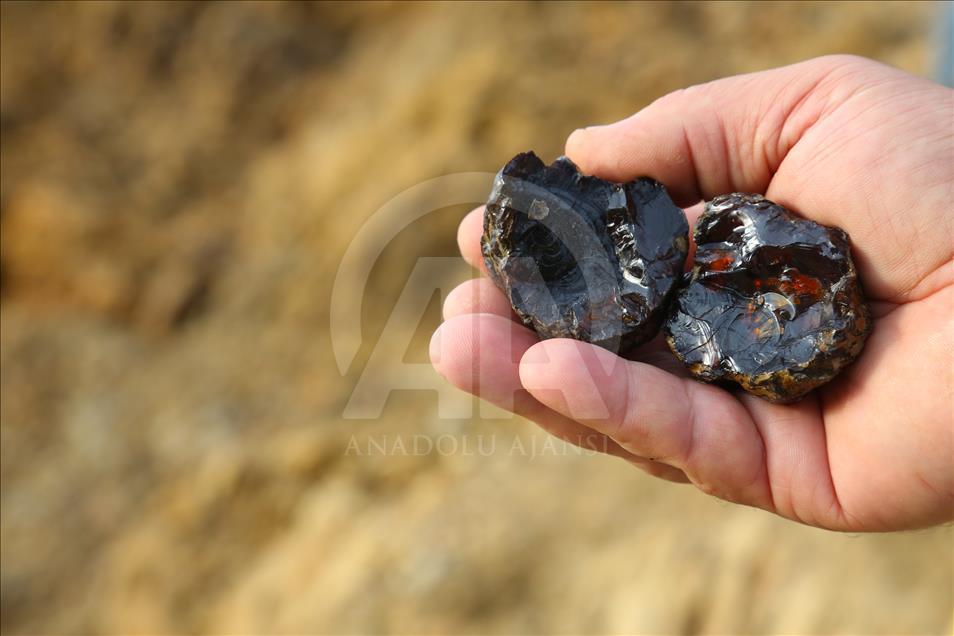
Black amber, or karakehribar, is a form of amber with a high bitumen content and a structure similar to lignite. In Türkiye, this type of amber is primarily extracted from the Oltu district of Erzurum and is known locally as Oltu Stone.
The unique structure of black amber makes it suitable for use in jewelry and rosary production. This material, found in vein-like deposits underground, is sometimes re-buried in soil after extraction to maintain its moisture content.
The main identified amber deposits in Türkiye are as follows:
Common characteristics observed in all three deposits include marly or argillaceous formations, intense tectonic deformation, and the burial of organic remains within marine sediments.
Amber has been regarded as a valuable object in numerous civilizations for thousands of years. In antiquity, the fossilized organisms within amber and its ability to generate electricity led to beliefs in its mystical powers. Amber was used in beliefs aimed at warding off evil spirits, bringing good fortune, soothing heartache, and restoring spiritual balance. During the Roman period, it was presented to gladiators to instill courage, and in China and the Middle East, it was carried as an amulet.
It has also been used medicinally in certain periods; it was believed to alleviate headaches, respiratory illnesses, and stomach ailments. Even today, many people continue to carry amber as part of alternative medicine or as an energy stone.
Amber falls within the scope of interest for multiple scientific disciplines. For geologists, it is a valuable fossil-bearing rock, and it is also studied by entomologists, botanists, chemists, and archaeologists. Thanks to the preserved biological remains it contains, amber provides critical insights into prehistoric environmental conditions and species. For example, some amber specimens from the Dominican Republic contain thousands of ants or unidentified plant species.
Additionally, amber is used in jewelry and ornamental object production, in collecting, and in academic research. Modern microscopy and DNA analysis techniques have transformed the biological inclusions within amber into unique specimens for contemporary science.
İçinde Yavru Yılan Fosili Bulunan Burma Kehribar (bilimgenç)
Amber is extracted in various regions worldwide. The most common and well-known amber sources are:
Since amber is slightly denser than seawater, it can float and be transported by ocean currents to distant areas. This property enables the chance discovery of amber along coastlines.
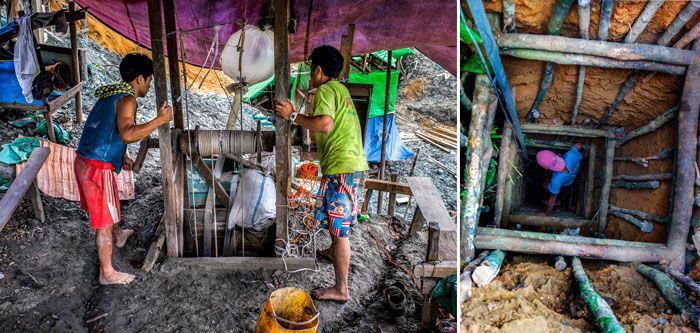
An Amber Mine in Burma (bilimgenç)
Amber is not merely an aesthetic decorative stone; it is a multi-layered natural gift from nature, spanning millions of years, with profound geological, biological, and cultural significance. Thanks to its fossilized resin structure, amber delivers prehistoric organisms and plants to the present day with extraordinary detail, offering a unique window for scientific research. At the same time, it has been part of cultural exchange through one of humanity’s oldest trade routes, the “Amber Road,” and has held symbolic meaning in folk beliefs as a representation of healing, courage, and protection. In geologically diverse regions such as Türkiye, amber remains one of the rare materials that retain their relevance in modern science and craftsmanship, serving as both a natural resource and a cultural heritage.
Aydın, Onur. 2016. Geçmişe Açılan Pencere. Jeomuhabir.
Geology Science. 2021. “Amber: Fossilized Tree Resin.” *GeologyScience.com*.https://tr.geologyscience.com/minerals/amber/.
Lahn, E. 1945. "Türkiye’deki Karakehribar Yatakları." MTA Mecmuası 2 (19): 109–114.
TÜBİTAK Bilim Genç. n.d. “Kehribarın İçine Hapsolmuş Fosiller.” *Bilim Genç*.https://bilimgenc.tubitak.gov.tr/makale/kehribarin-icine-hapsolmus-fosiller.

Amber
Name | Amber | ||||||||
|---|---|---|---|---|---|---|---|---|---|
Other Name | Baltic amber Black amber Black amber Oltu stone | ||||||||
Chemical Formula | Approximately C₁₀H₁₆O (contains succinic acid) | ||||||||
Crystal System | Amorphous (shapeless) | ||||||||
Hardness (Mohs Scale) | 2 – 2.5 | ||||||||
Density | 0.96 – 1.1 g/cm³ | ||||||||
Color | Yellow, orange, red, brown, black | ||||||||
Luster | Resinous, glassy | ||||||||
Fracture | Conchoidal (like a mussel shell) | ||||||||
Transparency | Semi-transparent – transparent | ||||||||
Origin Type | Fossilization of conifer resin | ||||||||
Formation Process | Polymerization and oxidation over millions of years in an oxygen-free environment | ||||||||
Geological Period | Upper Cretaceous – Eocene | ||||||||
Major Mining Areas | Lithuania, Poland, Russia, Dominican Republic, Myanmar, Germany, Türkiye | ||||||||
Important Deposits in Türkiye | Erzurum (Havkaskışla, Oltu), Haymana (Ankara), Müşeverek (Bayburt) | ||||||||
Applications | collection scientific research Alternative medicine Jewelry decorative items | ||||||||
Scientific Importance | Contributes to paleontology by containing fossil remains of animals and plants | ||||||||
Cultural/Historical Importance | Has been used since ancient times for healing, courage, and amulet purposes | ||||||||
Physical and Chemical Properties
Geological Properties and Formation Environment
Black Amber (Karakehribar / Oltu Stone)
Amber Deposits in Türkiye
Historical and Cultural Significance
Scientific Importance and Applications
Global Distribution of Amber