


This article was automatically translated from the original Turkish version.
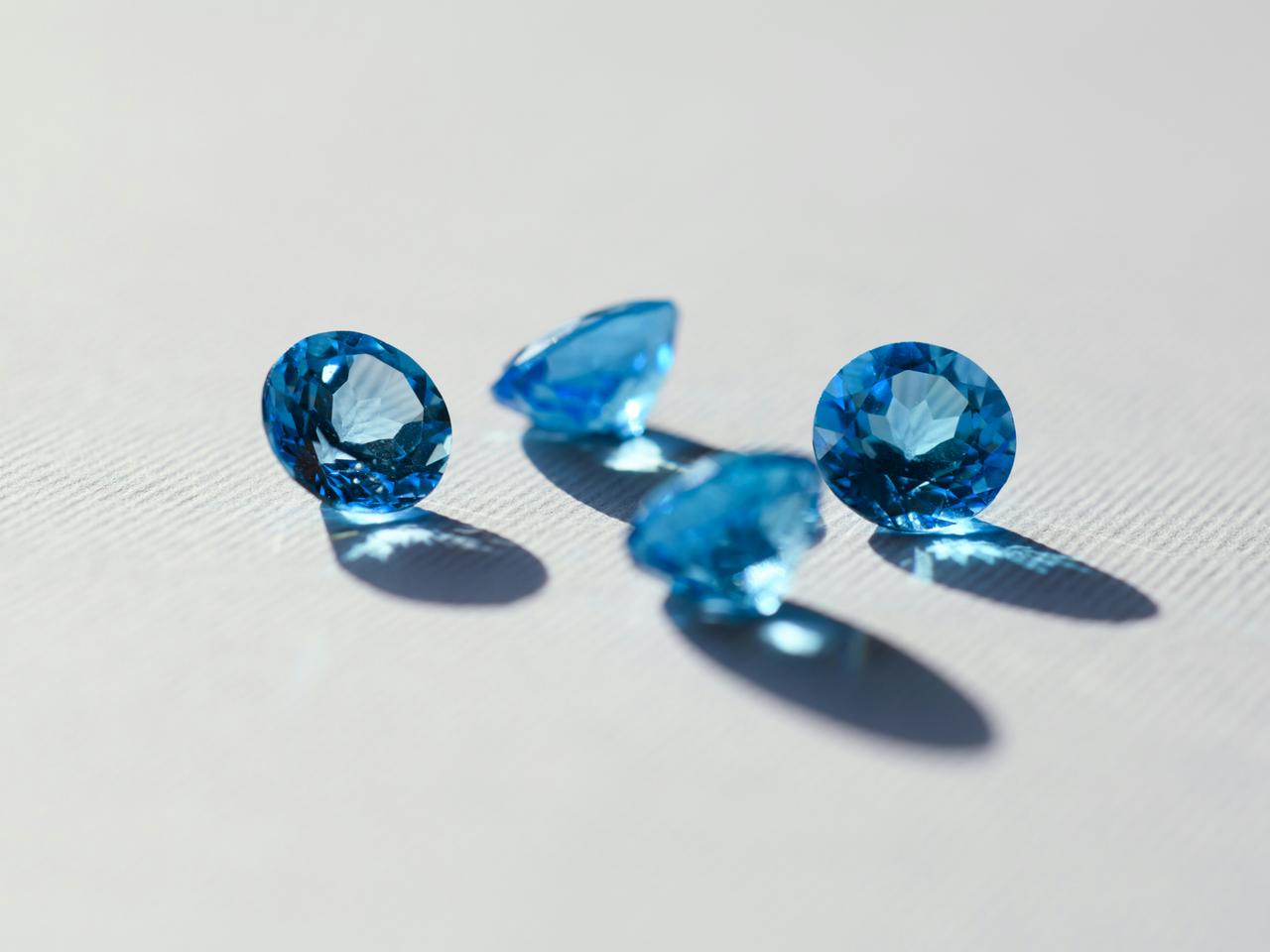
Ambassador
Category | Mineral | ||||||||
|---|---|---|---|---|---|---|---|---|---|
Chemical Formula | Al₂O₃ (Aluminum oxide) | ||||||||
Crystal System | Hexagonal | ||||||||
Hardness (Mohs) | 9 (one of the hardest minerals after diamond) | ||||||||
Density | ~4.0 g/cm³ | ||||||||
Color Scale | Mostly blue; also yellow, pink, green, colorless | ||||||||
Transparency | Transparent – translucent | ||||||||
Luster | Vitreous | ||||||||
Refractive Index | 1.76–1.77 | ||||||||
Sapphire is a precious gemstone belonging to the corundum (aluminum oxide, Al₂O₃) mineral group and is particularly known for its blue tones. However, it is not only blue but also occurs in many different colors including yellow, pink, green, purple, and colorless. Corundums with a red color are not called sapphire but ruby. The word “sapphire” derives from the Latin “sapphirus” and Greek “sappheiros,” likely originating from ancient confusion with blue stones (particularly lapis lazuli). Throughout history, sapphire has been regarded as both a gemstone and a spiritual symbol of importance, representing the sky, fidelity, wisdom, and royal power.
Sapphire crystallizes in the hexagonal system and is commonly found in nature as prismatic or tabular crystals. Chemically composed of Al₂O₃ (aluminum oxide), pure sapphire is colorless; but trace elements incorporated into its structure—such as titanium, iron, chromium, or vanadium—impart blue, yellow, pink, or green hues. The most well-known blue sapphires result from the interaction of iron and titanium elements.
With a Mohs hardness of 9.0, sapphire is one of the hardest minerals after diamond. This high hardness makes it both a valuable gemstone and a durable material for industrial applications. Sapphire has a vitreous luster and displays optical properties ranging from nearly translucent to transparent. Its density is approximately 4.0 g/cm³ and its refractive index ranges from 1.76 to 1.77. These optical properties make it visually appealing and suitable for scientific instruments.
Sapphire forms naturally in igneous and metamorphic rocks. It is commonly found as rounded crystals in river and stream deposits. Among the world’s most important natural sapphire sources are Sri Lanka, Myanmar, Thailand, Madagascar, Australia, and the United States (Montana). Moreover, a large portion of sapphires used in the commercial jewelry market are produced synthetically. Since the method developed by Auguste Verneuil in 1902, laboratory-grown sapphires identical to natural ones have been produced and are now widely used in both jewelry and industrial applications.
Although sapphire is most commonly associated with blue, it can be found in nearly all colors in nature. These colors depend on the type and concentration of trace elements incorporated into the crystal structure. Blue sapphires derive their color from the combined light absorption effect of iron (Fe) and titanium (Ti) elements.
Blue sapphire is the most renowned and sought-after variety. This color arises from the combined light absorption of iron (Fe²⁺) and titanium (Ti⁴⁺) ions within the crystal structure. The blue tones range from light sky blue to deep midnight blue. The most valuable shade is typically described as a velvety blue and is especially found in sapphires from Kashmir (India), Burma (Myanmar), and Sri Lanka. These sapphires, with their delicate brilliance and internal glow, are also known as “royal sapphires.” In astrology, blue sapphire is associated with the planet Saturn and is called “Neelam.”
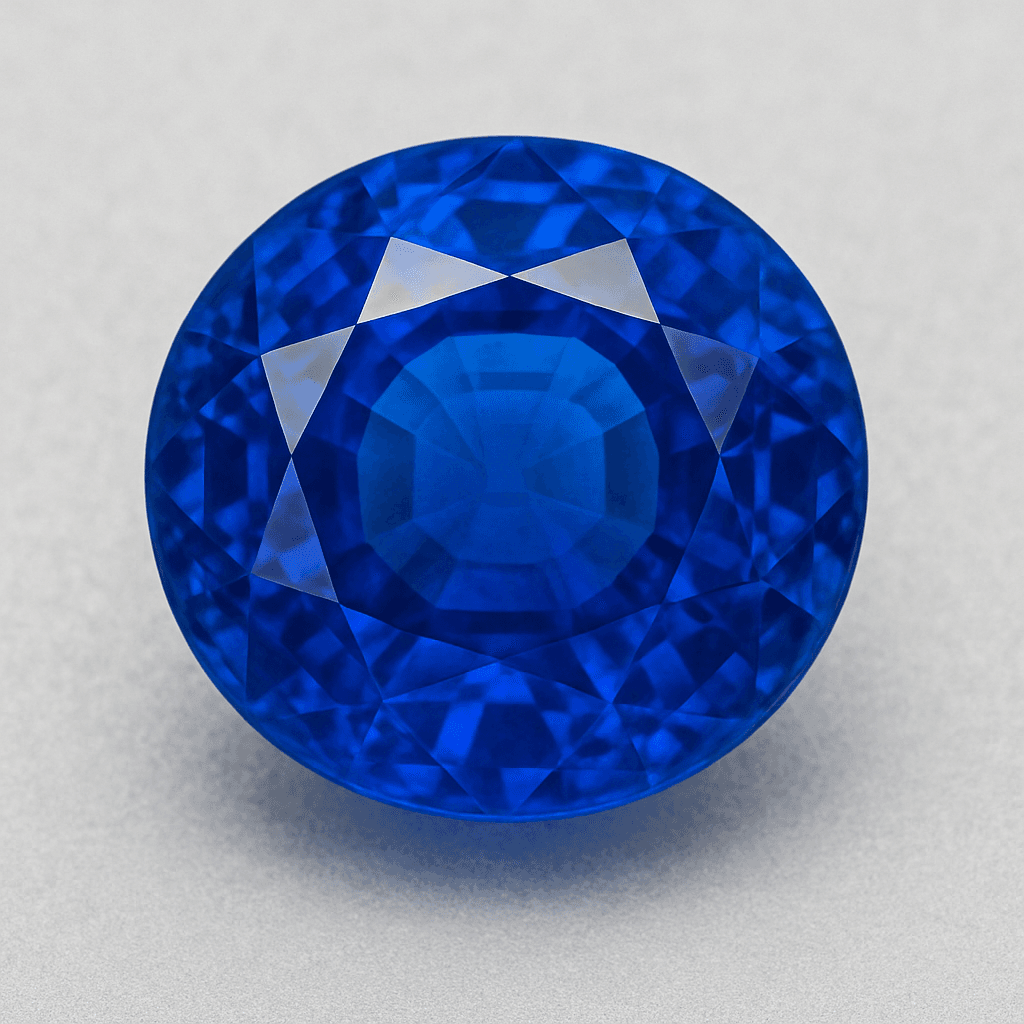
Blue Sapphire (Generated by Artificial Intelligence.)
Pink sapphire acquires its color from the presence of chromium (Cr³⁺) in the crystal structure. It can exhibit near-transparent clarity and pleasing tones. As color intensity increases, the boundary between pink sapphire and ruby becomes blurred; stones with pink-purple hues are generally classified as pink sapphires, while those with intense red are identified as rubies. Pink sapphires are commonly sourced from Sri Lanka, Madagascar, and Tanzania. They symbolize feminine energy, love, and compassion and are increasingly preferred in engagement rings.
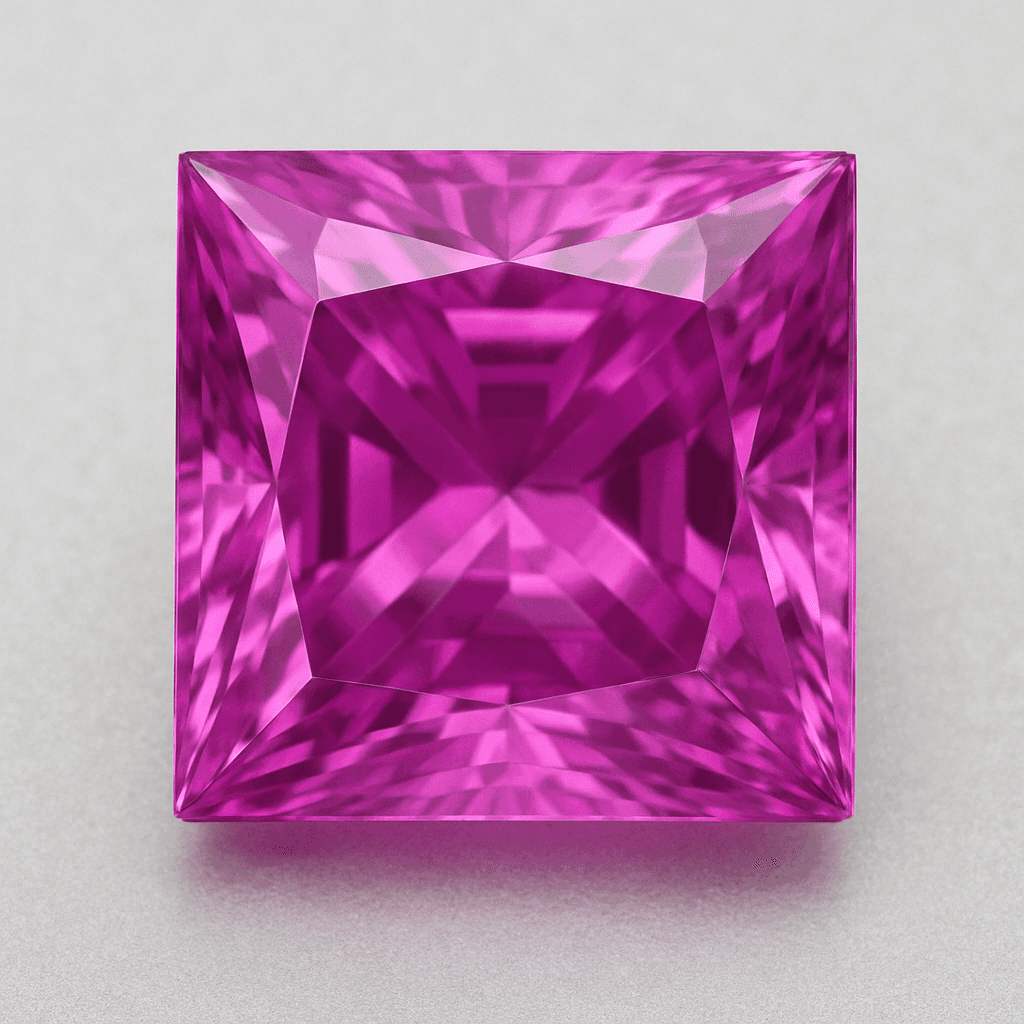
Pink Sapphire (Generated by Artificial Intelligence.)
Yellow sapphire gains its color from iron (Fe³⁺) ions incorporated into the crystal. The hue can vary from light lemon yellow to deep golden yellow. Yellow sapphires, especially those from Sri Lanka, are renowned and in Indian astrology are associated with the planet Jupiter under the name “Pukhraj.” It is believed that this stone enhances abundance, intelligence, and prosperity. Since its color can be intensified through heat treatment, most stones on the market have undergone such processing.
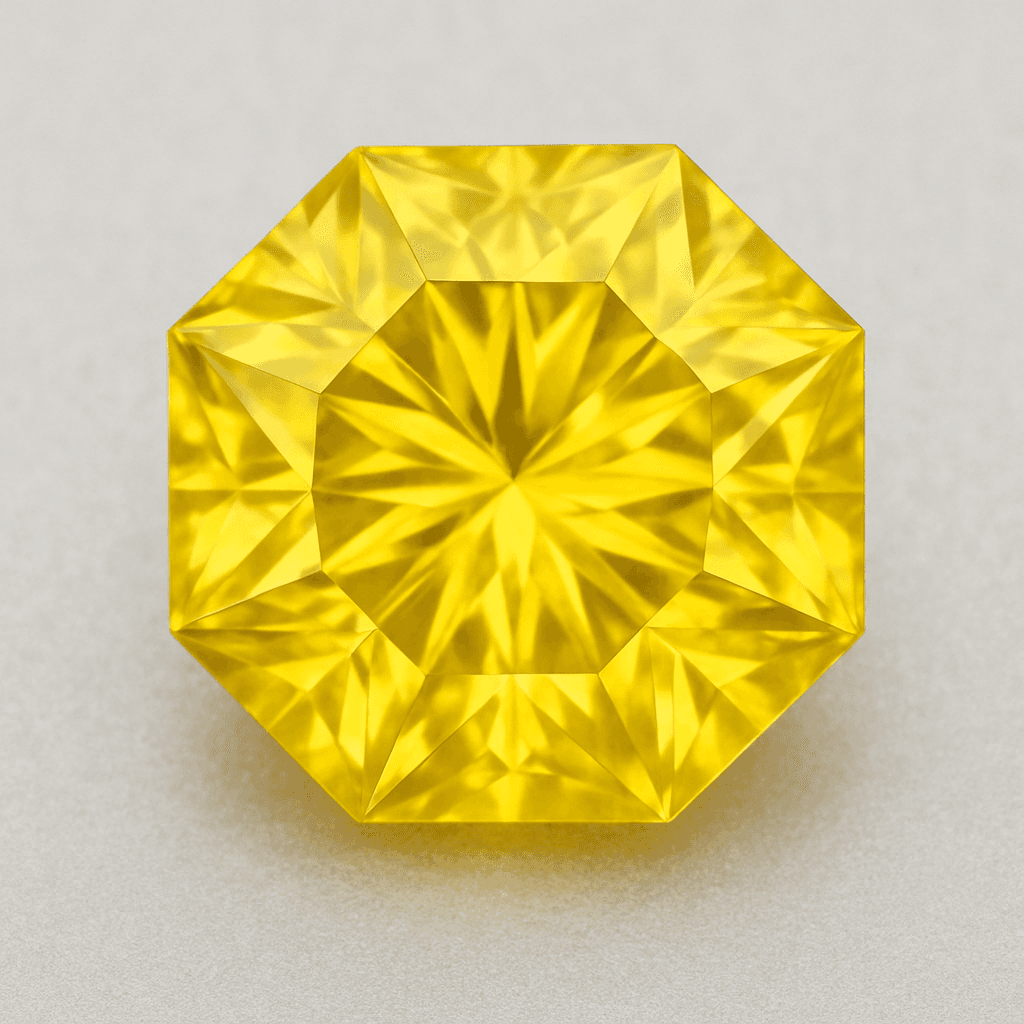
Yellow Sapphire (Generated by Artificial Intelligence.)
Green sapphire forms due to varying oxidation states of iron ions incorporated into the crystal structure. Although rarer than other colored sapphires, it occurs naturally. Its color ranges from olive green to grass green. The finest green sapphires originate from Australia and Madagascar. This stone symbolizes connection with nature, the heart chakra, and balance. Due to generally low internal inclusions, it often appears clear and brilliant.
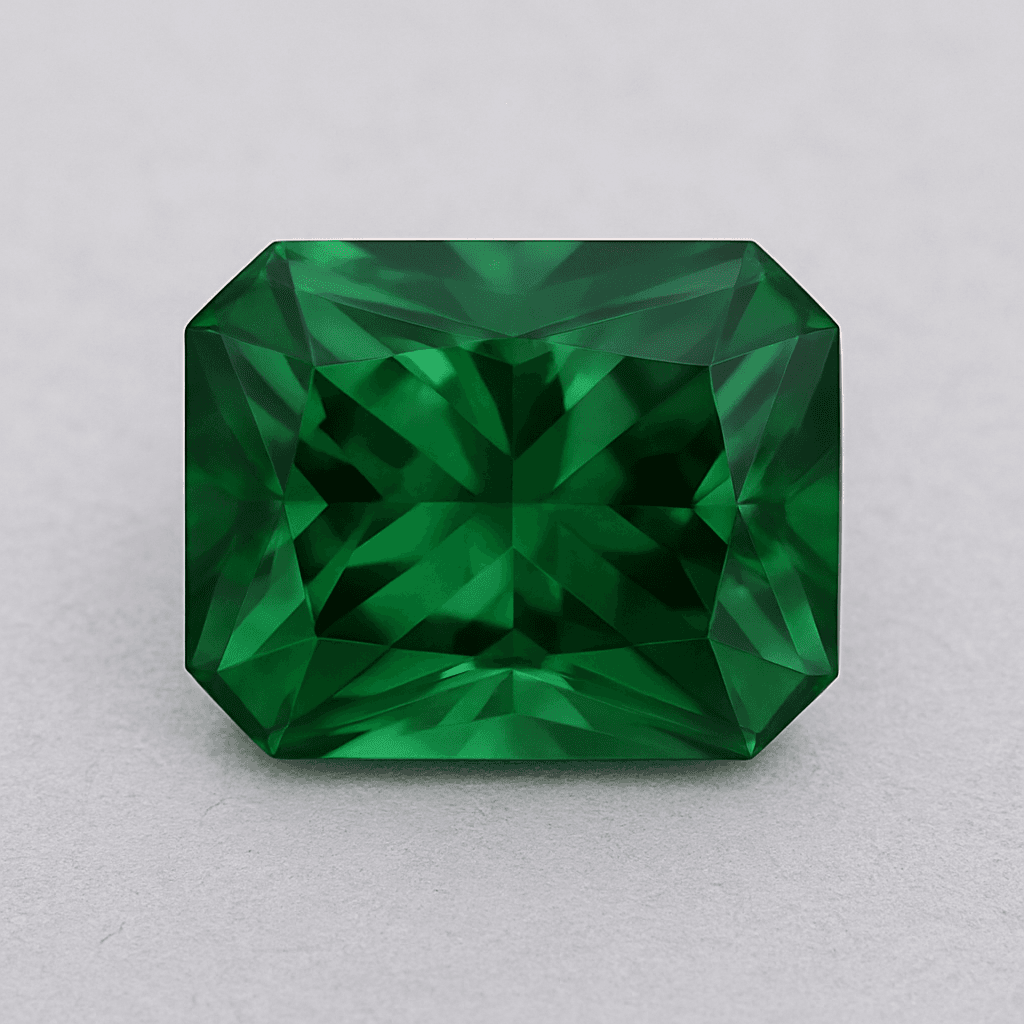
Green Sapphire (Generated by Artificial Intelligence.)
Purple or violet sapphires form when chromium and vanadium elements are incorporated into the crystal. They are quite rare. Purple sapphire exhibits a transitional hue between ruby and pink sapphire and is especially found in stones from Madagascar and Sri Lanka. In spiritual practices, it is associated with intuition, vision, and spiritual awareness. Due to its more affordable price compared to diamonds, it is also chosen as an alternative gemstone.
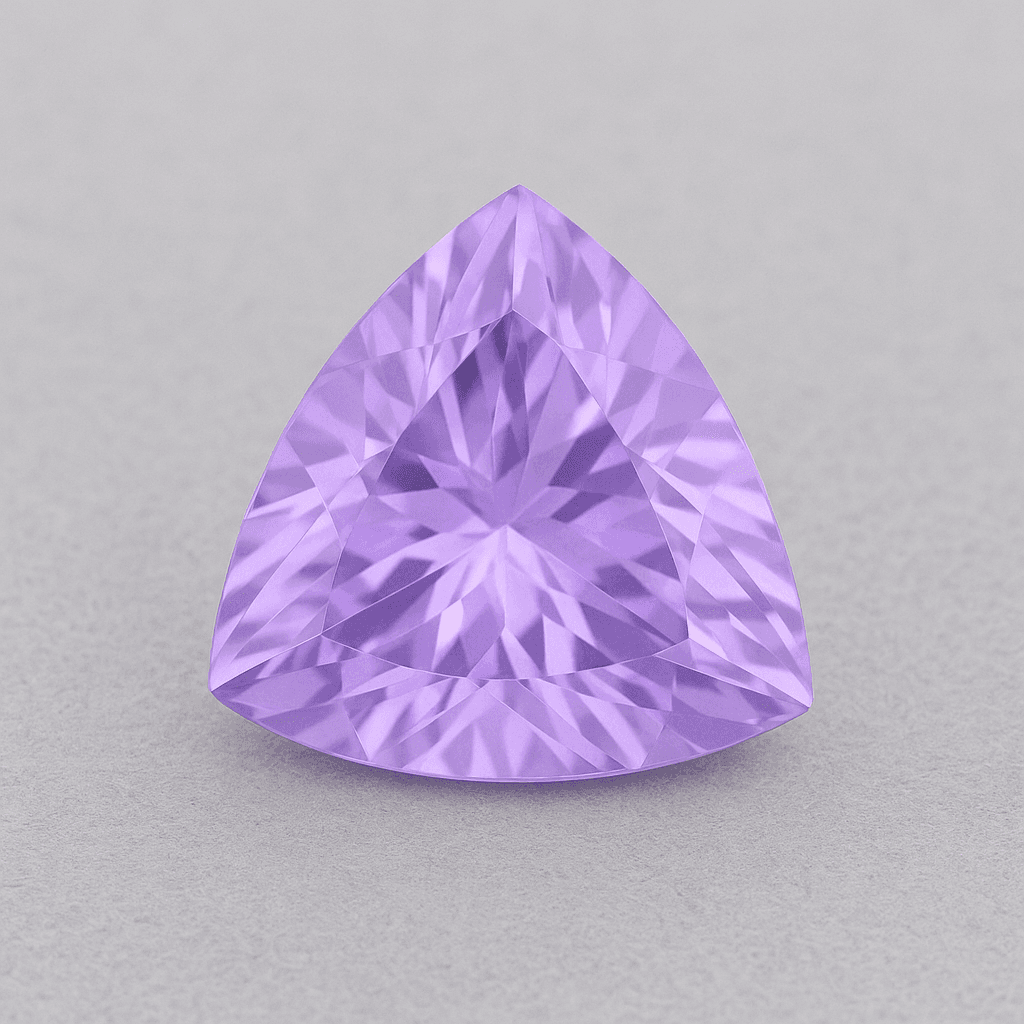
Purple Sapphire (Generated by Artificial Intelligence.)
“Padparadscha” means “lotus flower” in Sanskrit, and this type of sapphire possesses a unique color between salmon-orange and pink. It is one of the rarest and most valuable sapphire varieties. Natural padparadscha sapphires are found only in Sri Lanka, Madagascar, and a few deposits in Tanzania. Due to its rarity, its collector’s value is very high. Spectral analysis is required to distinguish genuine padparadscha from artificially colored pink-orange sapphires.
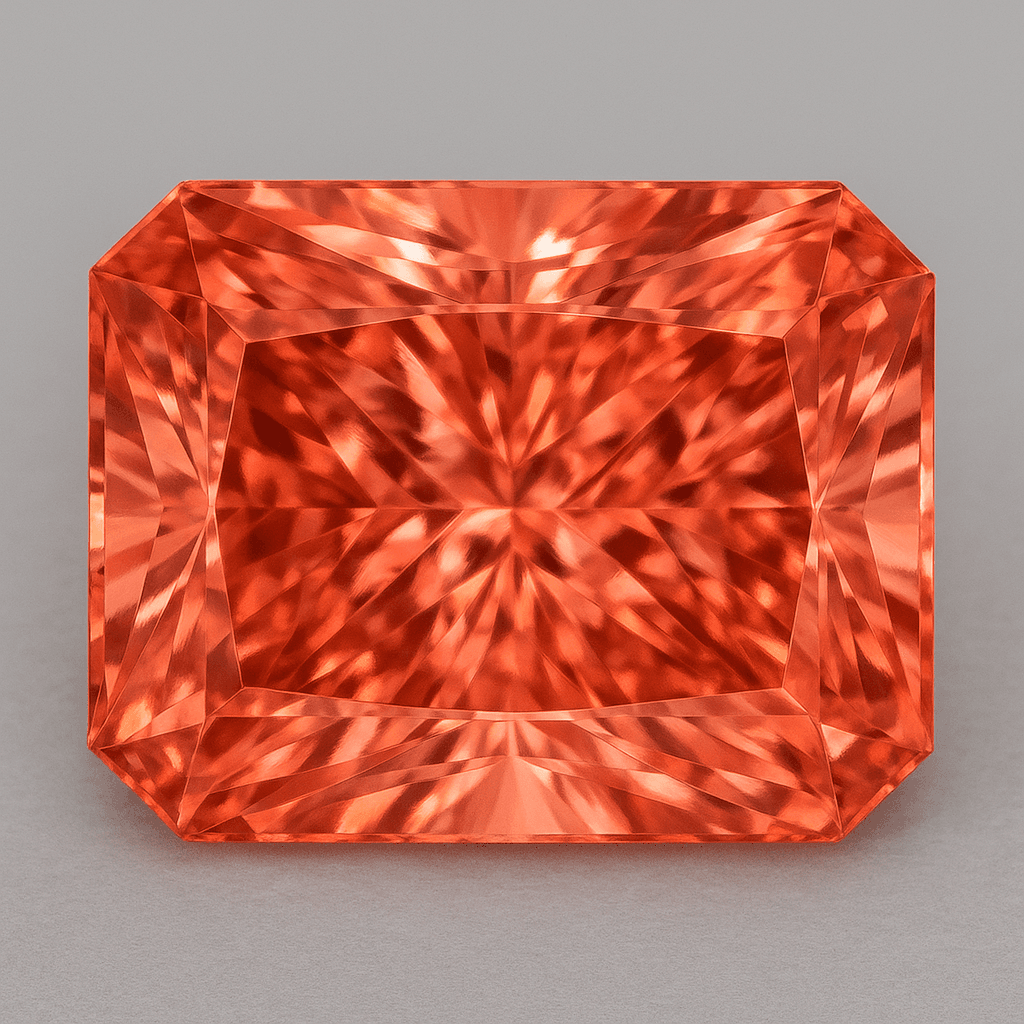
Padparadscha (Generated by Artificial Intelligence.)
Colorless sapphire, or “leucosapphire,” is composed of pure Al₂O₃ crystals without trace elements. In its purest form, it appears transparent and vitreous. It is used as an alternative to diamond because it shares the same hardness (Mohs 9) but is significantly more economical. The majority of colorless sapphires are produced synthetically, although they also occur naturally in places such as Sri Lanka. They symbolize purity and simplicity.
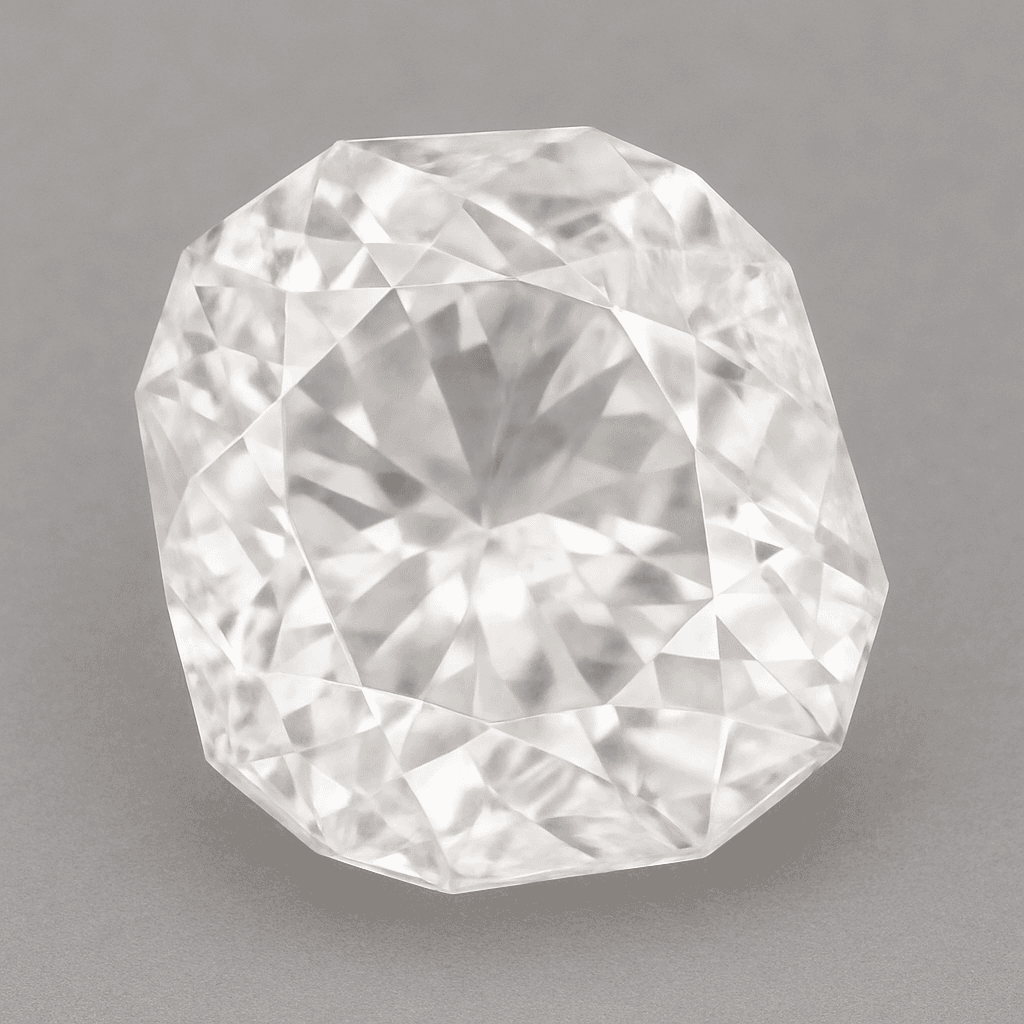
Colorless Sapphire (Generated by Artificial Intelligence.)
Sapphire can occur naturally or be produced in a laboratory. Natural sapphires form over millions of years through geological processes in igneous or metamorphic rocks. Crystals are typically mined in dense deposits in regions such as Sri Lanka, Myanmar (Burma), Thailand, Madagascar, and Australia. These stones contain various inclusions (internal structural flaws), color zoning, and trace elements formed over time by natural processes.
Synthetic sapphire, on the other hand, was first successfully produced in 1902 using the flame fusion method developed by Auguste Verneuil. Synthetic sapphire has identical chemical and physical properties to natural sapphire—the same hardness, refractive index, and color variety. However, synthetic sapphires are typically more transparent, have fewer inclusions, and can be produced in large quantities. They are commonly used in laboratory equipment, precision optical glass, and low-cost jewelry. Experts can distinguish natural from synthetic sapphire by examining inclusion patterns or growth traces under a microscope.
Throughout history, sapphire has held importance not only for its aesthetic value but also for its spiritual and symbolic meanings. Ancient civilizations viewed sapphire as a bridge between the sky and the divine. In medieval Europe, it was believed that blue sapphire carried the favor of God and was used to protect sacred relics. Kings and clergy wore sapphire rings for justice, honesty, and spiritual protection.
In Hindu culture, sapphire is associated with the planet Saturn (Shani). In particular, blue sapphire (Neelam) is considered a powerful astrological stone believed to influence karma and fate cycles. Because its influence is considered very strong, consultation is recommended before use. In modern crystal therapy and metaphysical practices, sapphire is regarded as a stone of mental clarity, focus, inner wisdom, fidelity, and protection. It is believed to support intuitive development and act as a shield against negative energies.
Sapphire is also recognized as the birthstone for the month of September. This stone, symbolizing love, fidelity, and truth, is the second most preferred gemstone for engagement rings after diamond. The iconic blue sapphire engagement ring once worn by Princess Diana and later passed on to Kate Middleton underscores the symbolic power of sapphire in modern culture.
Deer, W. A., R. A. Howie, and J. Zussman. An Introduction to the Rock-Forming Minerals. Harlow: Longman, 1992.
GIA. "Sapphire Quality Factors." GIA. Accessed April 17, 2025.https://www.gia.edu/sapphire-quality-factor
Hall, Judy. The Crystal Bible. London: Godsfield Press, 2003.
Hughes, Richard W. Ruby & Sapphire. Boulder, CO: RWH Publishing, 1997.
LAINGS. "The Story of an Iconic Piece of Jewellery: Princess Diana’s Engagement Ring." THE LAINGS JOURNAL. Accessed April 17, 2025. Accessed adresi.
Monson, Katie. “Where Is Sapphire Found?” Knox Jewelers, October 10, 2016. Accessed April 17, 2025.https://www.knoxjewelers.biz/blog/where-is-sapphire-found/
Nassau, Kurt. The Physics and Chemistry of Color: The Fifteen Causes of Color. New York: Wiley, 1980.
Ogden, Jack. Jewellery of the Ancient World. New York: Rizzoli, 1982.
Read, P. G. Gemmology. 3rd ed. Oxford: Butterworth-Heinemann, 2008.
Schumann, Walter. Gemstones of the World. 5th ed. New York: Sterling Publishing, 2009
“Safir.” *Geology Science*, July 1, 2024. Accessed April 17, 2025.https://tr.geologyscience.com/de%C4%9Ferli-ta%C5%9F/safir/

Ambassador
Category | Mineral | ||||||||
|---|---|---|---|---|---|---|---|---|---|
Chemical Formula | Al₂O₃ (Aluminum oxide) | ||||||||
Crystal System | Hexagonal | ||||||||
Hardness (Mohs) | 9 (one of the hardest minerals after diamond) | ||||||||
Density | ~4.0 g/cm³ | ||||||||
Color Scale | Mostly blue; also yellow, pink, green, colorless | ||||||||
Transparency | Transparent – translucent | ||||||||
Luster | Vitreous | ||||||||
Refractive Index | 1.76–1.77 | ||||||||
Physical and Chemical Properties
Color Varieties
Blue Sapphire
Pink Sapphire
Yellow Sapphire
Green Sapphire
Purple/Violet Sapphire
Padparadscha Sapphire
Colorless Sapphire (White/Colorless Sapphire)
Differences Between Natural and Synthetic Sapphire
Spiritual and Cultural Significance