


This article was automatically translated from the original Turkish version.
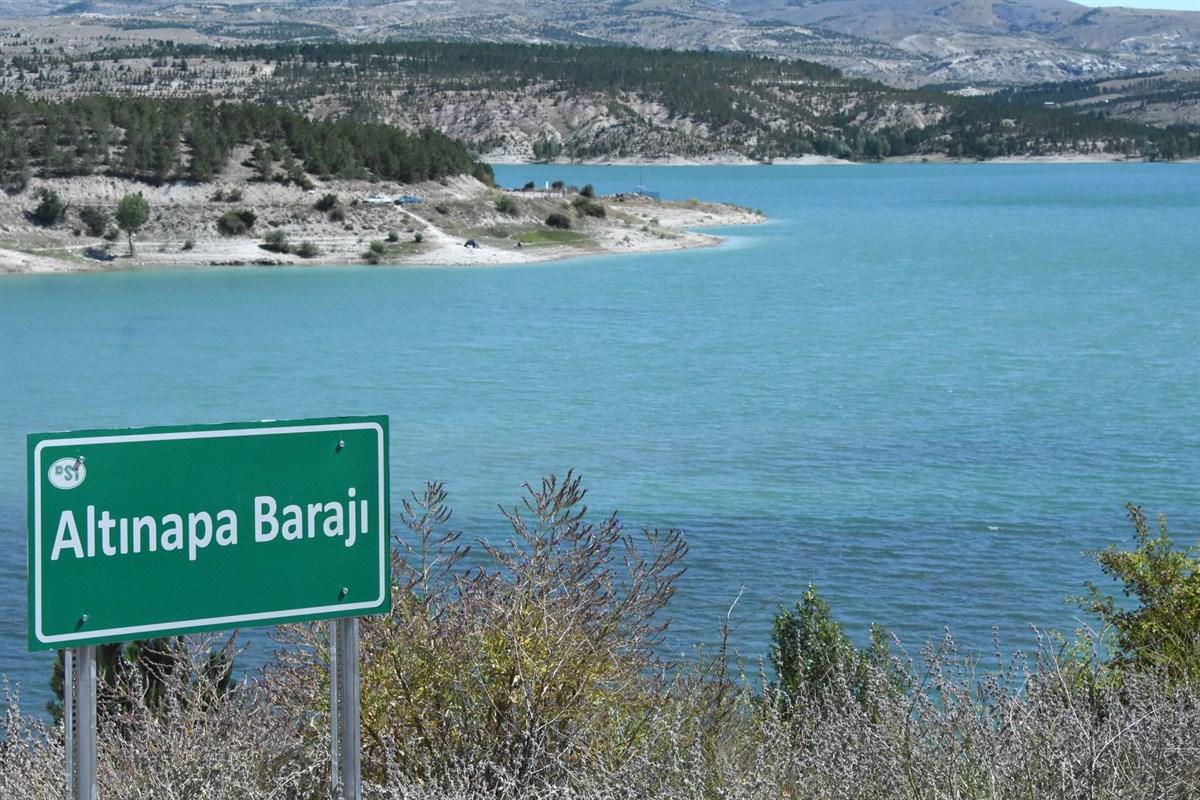
Altınapa Dam
Technical Specifications | Dam Height: 30.5 m Dam Volume: 975,000 m³ Water Storage Capacity: ~32 million m³ Reservoir Area: 2.2 km² Catchment Area: 598 km² Average Precipitation: 364 mm/year | ||||||||
|---|---|---|---|---|---|---|---|---|---|
Dam Type | Rockfill (earth and stone fill) | ||||||||
Commissioning | 1968 | ||||||||
Construction Year | Construction: 1963–1967 | ||||||||
Purpose of Use(s) | Drinking and utility water supply (38 million m³/year) Agricultural irrigation (1 400 hectares) Flood control Potential hydropower generation | ||||||||
Location | Meram Türkiye Konya | ||||||||
Altınapa Dam is located within the boundaries of the Meram district of Konya province in the Central Anatolia Region of Türkiye. It is situated approximately 20 km west of the city center of Konya, along the Konya–Beyşehir road, in the Uluçay Valley.
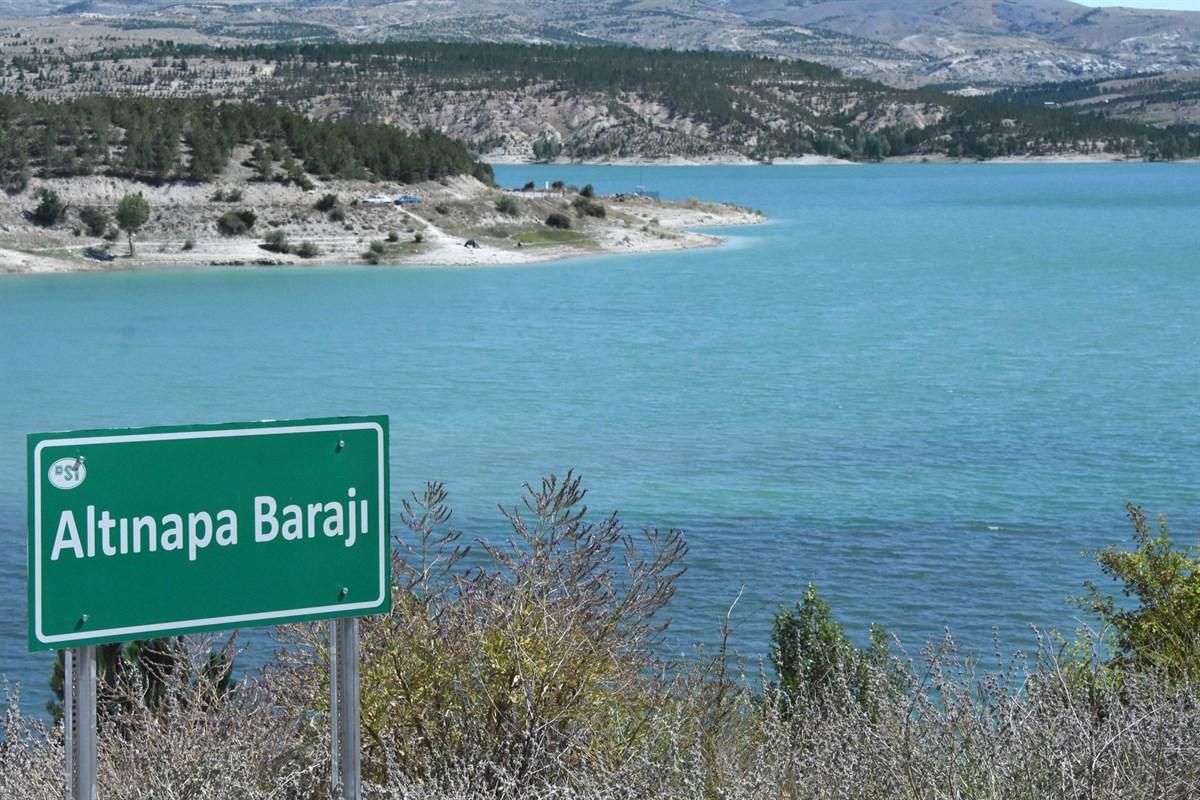
Altınapa Dam (Republic of Türkiye, Selçuklu District Governorship)
Construction of the dam began in 1960 and it was commissioned in 1967. The dam is of a rock-fill type with a volume of 975,000 m³ and a height of 30.5 meters from the thalweg. At normal pool level, its storage capacity is 32.3 hm³ and the surface area is approximately 2.2 km². Altınapa Dam was constructed to meet Konya province’s drinking water needs, for irrigation, and for flood control. Approximately 38 hm³ of drinking water is supplied annually from the dam, and an area of 1,400 hectares is irrigated.
The dam catchment area consists of rock formations extending from the Carboniferous to the Quaternary periods, forming a broad geological time zone. Clayey marls, marls, and tuffs of Upper Miocene–Pliocene age are widespread. Among the formations, tuffs, agglomerates, andesites, and dolomitic limestones stand out as volcanic and sedimentary units.
The dam catchment comprises four distinct geomorphological units: mountainous areas, plateaus, valleys, and valley floor plains. Elevations range between 1,250 and 2,339 meters. The northern section is mountainous, while the southern section features plateaus and hills.
Altınapa Dam has a large catchment area fed primarily by the Uluçay River, which originates in the Aladağ Mountains. This main tributary is nourished by several smaller streams including Değirmendere, Darboğaz, Barracks, Karadere, Taşboğaz, and Dilekçi. Most of the streams exhibit a pluvial regime, flowing only during the rainy seasons. Numerous slope springs are also found within the basin.
The basin has a semi-arid continental climate with an annual average temperature of 11.5 °C and annual precipitation of approximately 322 mm. Rainfall typically occurs in spring and autumn. These conditions have led to the dominance of steppe vegetation. In addition, scattered black pine forests, shrublands, and pasture areas are also present.
The Altınapa Dam catchment is one of the most problematic areas in Türkiye in terms of land land use and erosion. Approximately 89.2% of the catchment has experienced degradation due to wrong land use practices. Dryland farming on Class VI and VII lands, destruction of pasture areas, and overgrazing have intensified erosion. Land reclamation, afforestation, and public awareness campaigns are among the recommended measures.
Research conducted at Altınapa Dam indicates that the sedimentation process, which accelerated notably after 1980, has reduced the dam’s active storage capacity. Over a 25–28 year period, the total storage capacity of the dam has decreased by 12–13%. This situation poses a potential threat to both drinking water and irrigation services.
In recent years, Geographic Information Systems (GIS)-based studies have been carried out in and around Altınapa Dam. The reservoir floor has been modeled using bathymetric measurements, and sediment distribution has been tracked in three dimensions. This enables a more realistic assessment of the dam’s operational lifespan and capacity losses.
Altınapa Dam is one of Türkiye’s strategic important water resources, serving the region for years through its functions of drinking water supply, agricultural irrigation, and flood control. However, due to natural processes and human activities, negative changes have gradually occurred in the dam’s physical capacity and ecological balance. In this context, preserving Altınapa Dam and managing it efficiently and sustainably is of great importance supply for improving the quality of life for the region population and ensuring the sustainable active use of country resources. To ensure the long-term functionality of the dam, a comprehensive approach is required that integrates science-based monitoring, appropriate land use, erosion control, and public awareness initiatives. Word
Ağaçayak, Tevfik and Hakan Özşen. "Konya-Altınapa Barajı Suyunun İçme Suyu Olarak Kullanılmasında Çözünmüş Hava Flotasyonu (DAF) Yönteminin Uygulanabilirliği." KSÜ Fen ve Mühendislik Dergisi 7, no. 2 (2004): 43–47.
Bozyiğit, Recep and Baştürk Kaya. "Altınapa Barajı Havzasında (Konya) Arazi Kullanımı." Avrupa Bilim ve Teknoloji Dergisi 16 (2019): 688–700.
Bozyiğit, Recep and Baştürk Kaya. "Altınapa Barajı Havzasında (Konya) Erozyon ve Önlemler." Marmara Coğrafya Dergisi 36 (July 2017): 285–303.
Ekizoğlu, İlke. CBS Yardımıyla Batimetrik Haritaların Oluşturulması ve Değerlendirilmesi Üzerine Bir Çalışma: Altınapa Barajı (Konya) Örneği. Master's thesis, Selçuk Üniversitesi, 2011.
Köse, Faruk. Konya Altınapa Barajı ile Dere HES Bendi Arasındaki Düşüden Yararlanarak Bir Hidroelektrik Santralı Tasarımı ve Francis Tipi Türbin Projesi. Master's thesis, Selçuk Üniversitesi, 1987.
Onüçyıldız, Mustafa, İhsan Bostancı and Alpaslan Yarar. "Konya Altınapa Baraj Gölündeki Sedimantasyon Kaynaklı Kapasite Kaybının Coğrafi Bilgi Sistemleri Kullanılarak Hesaplanması." Selçuk Üniversitesi Sosyal ve Teknik Araştırmalar Dergisi 7 (2014): 12–26.
T.C. Selçuklu Kaymakamlığı Web Sitesi. "Altınapa Barajı" Accessed March 25, 2025.
Terzi, Özlem, Onur Özcanoğlu and Tahsin Baykal. "Veri Madenciliği Süreci Kullanılarak Altınapa Barajı’nın Rezervuar İşletme Modeli." SDU International Journal of Technological Science 9, no. 2 (2017): 39–49.

Altınapa Dam
Technical Specifications | Dam Height: 30.5 m Dam Volume: 975,000 m³ Water Storage Capacity: ~32 million m³ Reservoir Area: 2.2 km² Catchment Area: 598 km² Average Precipitation: 364 mm/year | ||||||||
|---|---|---|---|---|---|---|---|---|---|
Dam Type | Rockfill (earth and stone fill) | ||||||||
Commissioning | 1968 | ||||||||
Construction Year | Construction: 1963–1967 | ||||||||
Purpose of Use(s) | Drinking and utility water supply (38 million m³/year) Agricultural irrigation (1 400 hectares) Flood control Potential hydropower generation | ||||||||
Location | Meram Türkiye Konya | ||||||||
Construction and Technical Characteristics
Geological and Geomorphological Characteristics
Hydrography
Climate and Vegetation Cover
Land Use and Erosion
Sedimentation and Storage Capacity
GIS-Based Monitoring and Modeling