


This article was automatically translated from the original Turkish version.
+2 More
Alper Gezeravcı is a military pilot in the Turkish Air Forces and a member of the board of directors of the Turkish Space Agency (TUA). On 19 January 2024 at 00:49 (TSI), he was launched into space and became the first Turkish astronaut. Alper Gezeravcı conducted 13 different experiments on the International Space Station (ISS) that were prepared by Turkish scientists. These experiments cover areas such as microgravity and the space environment including human genetics human health and biology.
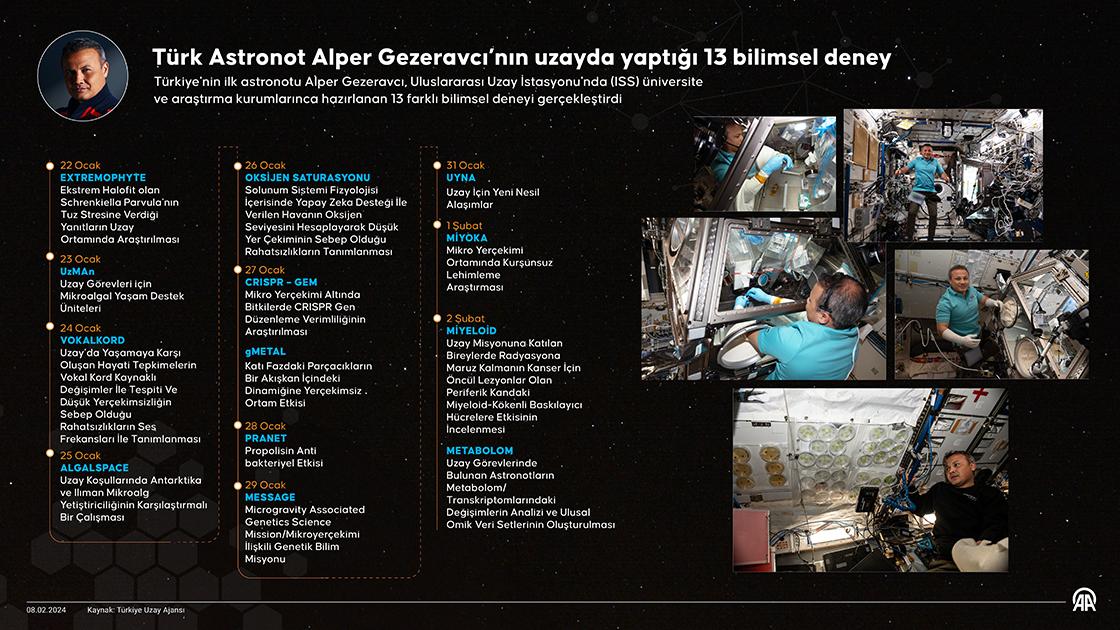
The 13 Experiments Conducted by Alper Gezeravcı in Space - Anadolu Agency
1. EXTRAMOPHYTE
Growing plants in space is essential not only for future lunar and Mars bases but also for missions to these bases to meet food and oxygen needs. Additionally plants will be required to recycle human waste water in space. Therefore cultivating plants efficiently under space conditions is vital for life support systems used in space missions. However the low gravity environment of space and the journey itself create significant stress for living organisms brought from Earth.
The ability of extremophiles—plants capable of surviving and thriving under harsh environmental conditions such as high temperature heavy metal pollution drought or salinity—to maintain their stress adaptation traits in the space environment had never been studied before.
For this purpose this experiment examined whether the salt tolerance exhibited by the plant Schrenkiella parvula endemic to Tuz Gölü and Arabidopsis thaliana (thale cress) could be sustained under microgravity.
Additionally the physiological and molecular responses of salt-sensitive and salt-tolerant plants to salt stress under microgravity were compared.
Responsible Institution and Project Manager: Ege University – Prof. Dr. İsmail Türkan
2. CRISPR-GEM
For humanity’s future in space a sustainable system must be established for long-duration missions. Growing plants efficiently in space is one of the most important steps toward overcoming this major challenge because plants form the backbone of controlled ecological life support systems that can provide food and oxygen during extended space missions.
Improving the health and productivity of plants in space through nutritional and oxygen support is a critical research area. The CRISPR-GEM project aims to cultivate healthier and more productive plants in space.
Living organisms possess genes—code-like structures inherited across generations—that play a crucial role in sustaining vital functions. CRISPR is a technique that enables modifications to genes. In CRISPR technology specially designed RNA and RNA-protein complexes are used to make targeted genetic changes.
In this experiment genetic changes in plants under space and Earth conditions were tested for the first time to assess the effectiveness of CRISPR technology in a microgravity environment. The goal was to enhance plant health and productivity using CRISPR thereby making a significant contribution to humanity’s space exploration efforts.
Responsible Institution and Project Manager: Yıldız Technical University – Tuğçe Celayir
3. UYNA
The production of next-generation medium- and high-entropy alloys which offer advantages such as resistance to high temperatures and physical loads is highly important for space aviation and defense industries.
In this experiment data were collected to support the production of next-generation space alloys typically composed of four or more elements in equal or near-equal atomic ratios.
In the experiment targeting the production of high-temperature and high-strength alloys the effects of a gravity-free environment on thermophysical properties such as density and thermal conductivity coefficient (a measure of how well a material conducts heat based on its structure) and crystallization processes during melting and solidification were investigated.
This experiment aims to significantly contribute to Türkiye’s capability to develop next-generation materials for its space aviation and defense industries.
Responsible Institution and Project Manager: TÜBİTAK MAM – Dr. Ömür Can Odabaş
4. gMETAL
In this experiment the effect of microgravity on the formation of a homogeneous mixture between solid particles (typically solid particles smaller than a millimeter in size) and their surrounding fluid medium under chemically inert conditions was observed.
This study aims to improve the efficiency of spacecraft propulsion systems in generating thrust.
Positive results from this experiment are expected to facilitate Mars missions and also provide an alternative energy source on the Martian surface alongside solar energy. This is anticipated to accelerate the development of the space economy.
The findings of this experiment are also expected to contribute to the search for sustainable energy sources on Earth. Converting metal particles into energy in a manner that does not produce greenhouse gases and therefore does not contribute to global warming offers humanity a second alternative to hydrogen for moving away from fossil fuel sources.
Responsible Institution and Project Manager: TÜBİTAK MAM – Prof. Dr. İskender Gökalp / Prof. Dr. Ahmet Yozgatlıgil
5. UzMAn
Microalgae are small plants that live in water. Microalgae can adapt to harsh conditions on Earth and possess photosynthetic functions that convert carbon dioxide into oxygen making them highly promising for life support systems in space.
In the UzMan experiment growth and resilience tests were conducted on microalgae species adapted to harsh conditions under microgravity. This enabled the analysis of metabolic changes and the determination of carbon dioxide (CO2) capture performance and oxygen (O2) production capacity.
Microalgae samples returned from the space station to Earth will be analyzed using RNA sequencing techniques. This analysis is expected to provide the scientific community with new insights into how microalgae metabolism changes under space conditions.
Data from this experiment will be used to develop a life support system in collaboration with TÜBİTAK MAM systems that enable astronauts to survive in space.
Responsible Institution and Project Manager: Boğaziçi University – Dr. Öğr. Üyesi Berat Haznedaroğlu – TÜBİTAK MAM
6. PRANET
Propolis is a substance collected by honeybees from the leaves stems and buds of various plants and mixed with beeswax and resin. Bees use propolis to sterilize their hives and insulate them from the external environment.
In the PRANET experiment the effect of propolis on bacteria under microgravity conditions was studied. With the results from both control and experimental groups the study will determine whether propolis produces similar effects in microgravity as it does under normal gravity.
If propolis is found to remain effective against bacteria under microgravity it will be recognized as a natural alternative antibacterial agent usable in space missions.
This experiment also aims to generate new insights regarding the bacterial flora aboard the International Space Station.
Responsible Institution and Project Manager: Muş Science and Art Center – Birsen Geçer
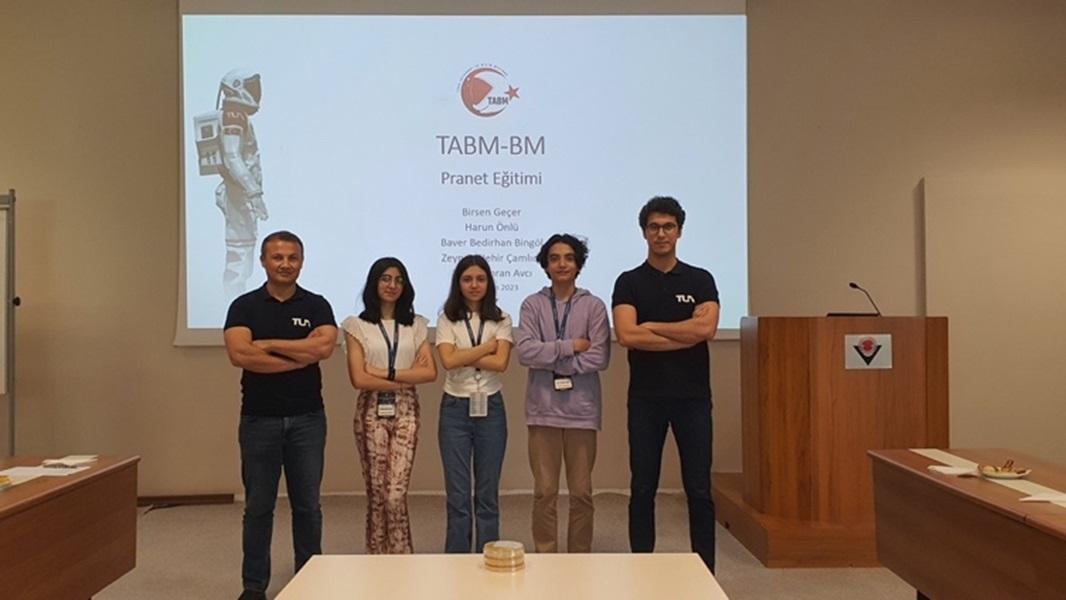
Muş Science and Art Center - TÜBİTAK Science Young
7. METABOLOM
Spaceflight is one of the most physically demanding activities for the human body. Astronauts are exposed to numerous environmental stressors during space missions. These include high g-forces during launch microgravity space radiation high or low oxygen levels sleep disturbances nutritional challenges and changing physical activity levels.
Through the METABOLOM experiment blood urine and saliva samples collected from Turkish astronauts will be analyzed in Türkiye to determine the effects of space conditions on human health.
The data obtained are expected to help identify potential risk factors affecting astronaut health.
This research also marks the first step toward establishing a molecular data bank to support future studies in Türkiye in the fields of gravitational physiology aerospace and space medicine.
It is also believed that the findings of this study could contribute to the development of new treatments and preventive measures for existing diseases.
Responsible Institution and Project Manager: Ankara University – Prof. Dr. Emel Emregül
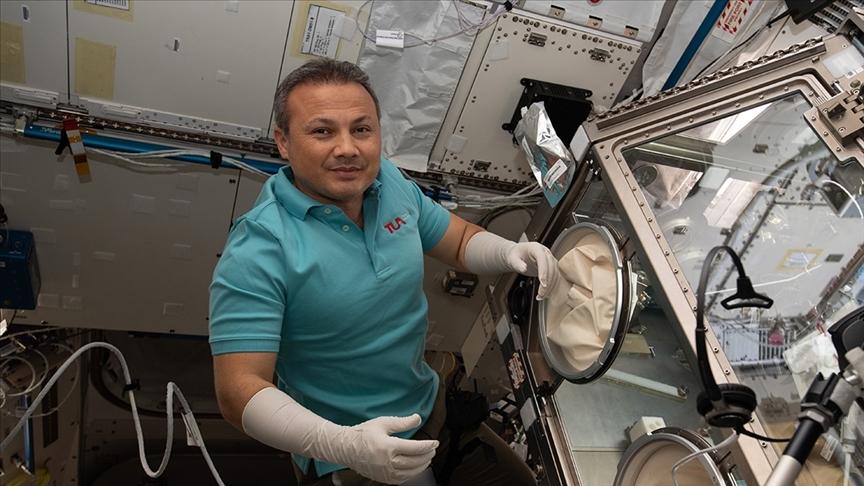
Alper Gezeravcı Conducting Experiments on the International Space Station (ISS) - Anadolu Agency
8. MİYELOİD
Chronic inflammation is a slow-developing inflammatory response lasting more than five to six weeks triggered by the immune system’s reaction to unwanted substances. Chronic inflammation can trigger numerous diseases including cancer Alzheimer’s heart disease diabetes and kidney disease.
Myeloid-derived suppressor cells (MDSCs) are cells produced in high levels during chronic inflammatory processes such as cancer that suppress the immune system and promote cancer progression and spread.
The MIYELİD experiment will determine how all the harsh factors astronauts are exposed to during spaceflight—including ultraviolet radiation galactic cosmic rays (a high-energy particle shower originating from the Solar System stars and even distant galaxies) changes in gravity the quality of inhaled air and the environment and the duration of travel—affect the astronauts’ immune systems and hematopoiesis.
Changes in the immune system will be studied specifically in myeloid-type blood cells. Comparisons of the characteristics and functions of these cells before and after the flight will help understand the potential effects of space travel on numerous immune-related diseases including cancer. The results are expected to represent a first in global scientific literature.
This experiment may also enable the development of countermeasures to mitigate the potential negative effects of space travel on the immune system. With Alper Gezeravcı’s return from space the first phase of the research has begun and additional space missions will be required to complete it.
Responsible Institution and Project Manager: Hacettepe University – Prof. Dr. Güneş Esendağlı
9. MESSAGE
Understanding how the immune system responds to long space journeys and lunar and Martian colonization efforts is crucial for maintaining astronaut health.
The MESSAGE experiment seeks to determine how the astronaut immune system responds to microgravity and how it adapts over time. Answers to these questions aim to improve the protection of astronaut health and strengthen plans for space colonization.
Through this experiment we will gain a better understanding of the fundamental aspects of life in space that affect human health enabling more confident planning of long-duration space missions. The samples collected from Alper Gezeravcı have formed the first phase of this research.
Responsible Institution and Project Manager: Üsküdar University – Dr. Öğr. Üyesi Cihan Taştan
10. MİYOKA
In the lead-free soldering experiment conducted under microgravity our first astronaut Alper Gezeravcı performed the assembly of lead-free components onto electronic circuit boards aboard the International Space Station.
The electronic circuit boards returned to Earth will be analyzed at TÜBİTAK SPACE Institute and the results regarding the effects of microgravity on lead-free soldering will be made available to researchers in relevant fields.
Through the MİYOKA experiment:
* Valuable data on lead-free soldering will be provided for the space and defense industries;
* Research on tin whiskering on pure tin will be conducted;
* Production processes planned for microgravity environments will be accelerated.
The gains from the MİYOKA experiment will support the development of electronic reprocessing repair and modification capabilities required for future long-duration human exploration missions.
Responsible Institution and Project Manager: TÜBİTAK SPACE – Hakan Asan
11. OXYGEN SATURATION
Oxygen saturation refers to the level of oxygen in the blood. In healthy individuals typical oxygen saturation levels range between 95% and 100%. In individuals with lung conditions these values may be slightly lower.
Early diagnosis is vital in disease treatment. This experiment enabled the identification of differences and disorders caused by microgravity by using artificial intelligence to calculate oxygen levels in the supplied air.
Responsible Institution and Project Manager: Nişantaşı University – Oğuzhan Aydemir
12. VOKALKORD
In the VOKALKORD experiment artificial intelligence was used to detect respiratory system disorders from frequency changes in the human voice and the effects of microgravity on the human voice were investigated.
Responsible Institution and Project Manager: Haliç University – Prof. Dr. Gökhan Aydemir
13. ALGALSPACE
Algae are aquatic organisms capable of photosynthesis. Microalgae are algae that can only be seen through a microscope.
In the ALGALSPACE experiment a comparative production study was conducted between extremophilic microalgae collected during Türkiye’s National Polar Science Expeditions—which are adapted to extreme environmental conditions such as temperature pH salinity and UV radiation—and microalgae adapted to temperate conditions under space conditions.
To date no research has been conducted on extremophilic microalgae in space. Through this experiment microalgae samples collected from Türkiye’s Antarctic research station were cultivated in space for the first time and compared with microalgae adapted to temperate conditions.
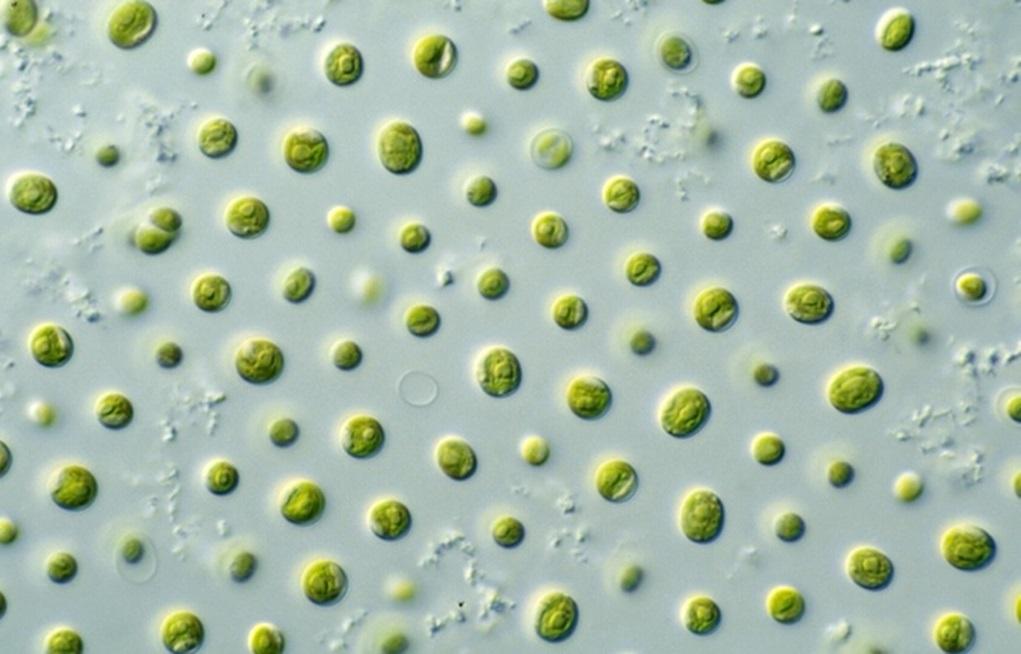
Achieving renewable and sustainable production of algae in space and demonstrating their potential will bring significant benefits for food health and environmental sustainability both in space and on Earth.
High-value products derived from algae are also critically important for economic and bio-economic development.
Responsible Institution and Project Manager: Yıldız Technical University – Prof. Dr. Didem Özçimen
Anadolu Ajansı. "Alper Gezeravcı Uluslararası Uzay İstasyonundaki Son Deneyini Yaptı." Accessedhttps://www.aa.com.tr/tr/bilim-teknoloji/alper-gezeravci-uluslararasi-uzay-istasyonundaki-son-deneyini-yapti/3126131.
Anadolu Ajansı. "Türkiye'nin İlk Astronotu Alper Gezeravcı'nın Uzay Görevine Dair Bilgiler." Accessedhttps://www.aa.com.tr/tr/info/infografik/38011.
TRT Haber. "İlk Astronot Gezeravcı Uzay İstasyonunda Hangi Deneyleri Yapacak?" Accessed [insert date].https://www.trthaber.com/haber/gundem/ilk-astronot-gezeravci-uzay-istasyonunda-hangi-deneyleri-yapacak-830688.html
TÜBİTAK Bilim Genç. *Alper Gezeravcı Uzayda Hangi Deneyleri Yapacak?* Accessedhttps://bilimgenc.tubitak.gov.tr/makale/alper-gezeravci-uzayda-hangi-deneyleri-yapacak.

No Discussion Added Yet
Start discussion for "Alper Gezeravcı's 13 Experiments in Space" article
Experiments Conducted by Alper Gezeravcı in Space